No-press Diplomacy is a complex strategy game involving both cooperation and competition that has served as a benchmark for multi-agent AI research. While self-play reinforcement learning has resulted in numerous successes in purely adversarial games like chess, Go, and poker, self-play alone is insufficient for achieving optimal performance in domains involving cooperation with humans. We address this shortcoming by first introducing a planning algorithm we call DiL-piKL that regularizes a reward-maximizing policy toward a human imitation-learned policy. We prove that this is a no-regret learning algorithm under a modified utility function. We then show that DiL-piKL can be extended into a self-play reinforcement learning algorithm we call RL-DiL-piKL that provides a model of human play while simultaneously training an agent that responds well to this human model. We used RL-DiL-piKL to train an agent we name Diplodocus. In a 200-game no-press Diplomacy tournament involving 62 human participants spanning skill levels from beginner to expert, two Diplodocus agents both achieved a higher average score than all other participants who played more than two games, and ranked first and third according to an Elo ratings model.
Despite much progress in training artificial intelligence (AI) systems to imitate human language, building agents that use language to communicate intentionally with humans in interactive environments remains a major challenge. We introduce Cicero, the first AI agent to achieve human-level performance in Diplomacy, a strategy game involving both cooperation and competition that emphasizes natural language negotiation and tactical coordination between seven players. Cicero integrates a language model with planning and reinforcement learning algorithms by inferring players' beliefs and intentions from its conversations and generating dialogue in pursuit of its plans. Across 40 games of an anonymous online Diplomacy league, Cicero achieved more than double the average score of the human players and ranked in the top 10% of participants who played more than one game.
Prior AI breakthroughs in complex games have focused on either the purely adversarial or purely cooperative settings. In contrast, Diplomacy is a game of shifting alliances that involves both cooperation and competition. For this reason, Diplomacy has proven to be a formidable research challenge. In this paper we describe an agent for the no-press variant of Diplomacy that combines supervised learning on human data with one-step lookahead search via regret minimization. Regret minimization techniques have been behind previous AI successes in adversarial games, most notably poker, but have not previously been shown to be successful in large-scale games involving cooperation. We show that our agent greatly exceeds the performance of past no-press Diplomacy bots, is unexploitable by expert humans, and ranks in the top 2% of human players when playing anonymous games on a popular Diplomacy website.
We propose a semantic parsing dataset focused on instruction-driven communication with an agent in the game Minecraft. The dataset consists of 7K human utterances and their corresponding parses. Given proper world state, the parses can be interpreted and executed in game. We report the performance of baseline models, and analyze their successes and failures.
In this document we describe a rationale for a research program aimed at building an open "assistant" in the game Minecraft, in order to make progress on the problems of natural language understanding and learning from dialogue.
This paper describes an implementation of a bot assistant in Minecraft, and the tools and platform allowing players to interact with the bot and to record those interactions. The purpose of building such an assistant is to facilitate the study of agents that can complete tasks specified by dialogue, and eventually, to learn from dialogue interactions.
Research on 2D and 3D generative models typically focuses on the final artifact being created, e.g., an image or a 3D structure. Unlike 2D image generation, the generation of 3D objects in the real world is commonly constrained by the process and order in which the object is constructed. For instance, gravity needs to be taken into account when building a block tower. In this paper, we explore the prediction of ordered actions to construct 3D objects. Instead of predicting actions based on physical constraints, we propose learning through observing human actions. To enable large-scale data collection, we use the Minecraft(1) environment. We introduce 3D-Craft, a new dataset of 2,500 Minecraft houses each built by human players sequentially from scratch. To learn from these human action sequences, we propose an order-aware 3D generative model called VoxelCNN. In contrast to other 3D generative models which either have no explicit order (e.g. holistic generation with 3D-GAN [35]), or follow a simple heuristic order (e.g. raster-scan), VoxelCNN is trained to imitate human building order with spatial awareness. We also transferred the order to other dataset such as ShapeNet[10]. The 3D-Craft dataset, models, and benchmark system will be made publicly available, which may inspire new directions for future research exploration.
We propose a large scale semantic parsing dataset focused on instruction-driven communication with an agent in Minecraft. We describe the data collection process which yields additional 35K human generated instructions with their semantic annotations. We report the performance of three baseline models and find that while a dataset of this size helps us train a usable instruction parser, it still poses interesting generalization challenges which we hope will help develop better and more robust models.
 Kavya Srinet合作论文数Facebook AI Research5
 Arthur Szlam合作论文数DeepMind5
 Yacine Jernite合作论文数Hugging Face4
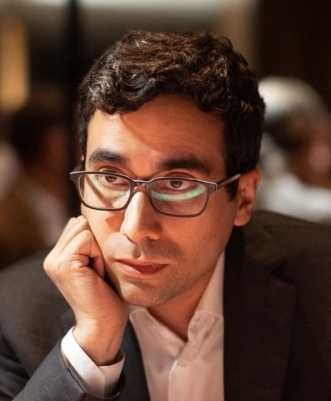 Noam Brown合作论文数OpenAI3
 Demi Guo合作论文数Stanford University;Pika3
 Haonan Yu合作论文数Horizon Robotics3
 Zhuoyuan Chen (Levin) (陈卓远)合作论文数xAI3
 Anton Bakhtin合作论文数Meta3
 Adam Lerer合作论文数Anthropic;OpenAI3
 Larry Zitnick合作论文数Fundamental AI Research Team, Meta AI3
 Siddharth Goyal合作论文数Facebook AI Res FAIR, Menlo Pk, CA 94025 USA2
 Athul Paul Jacob合作论文数Computer Science & Artificial Intelligence Laboratory, Schwarzman College of Computing, Massachusetts Institute of Technology;Google2
 Gabriele Farina合作论文数Operations Research Center, Massachusetts Institute of Technology2
 Alexander Holden Miller合作论文数Meta2Joe Spisak合作论文数1Dirk Rowe合作论文数1Colin Flaherty合作论文数1
 Danielle Rothermel合作论文数1
 Hengyuan Hu合作论文数Computer Science Department, Stanford University1
 Tong Xiao合作论文数Yutori1
 Emily Dinan合作论文数Meta1
 Jerry Ma合作论文数Perplexity1
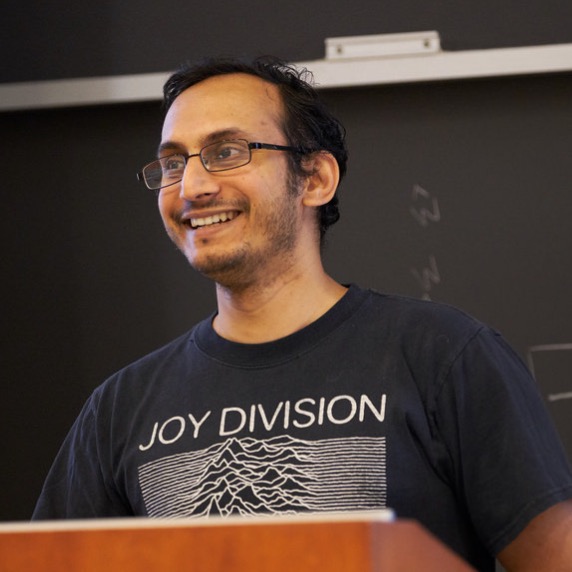 Adithya Renduchintala合作论文数Facebook AI Research Accel1
 Haoqi Fan合作论文数ByteDance Seed1
 Douwe Kiela合作论文数Contextual AI;Stanford University1
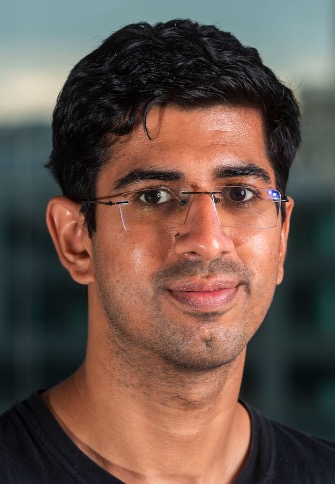 Shubham Tulsiani合作论文数Robotics Institute, Carnegie Mellon University1
 Gabriel Synnaeve合作论文数Meta1
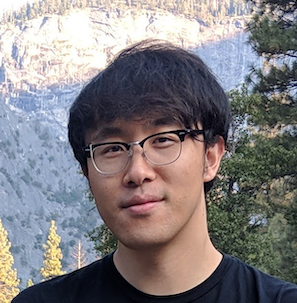 Saining Xie (谢赛宁)合作论文数Courant Institute of Mathematical Sciences, New York University;AMI Labs1
 Weiyan Shi合作论文数Conversation, Human-AI Technology, Security Lab, Northeastern University1
 Charles R. Qi (祁芮中台)合作论文数OpenAI1
 Minae Kwon合作论文数Stanford University;Anthropic1
 Mojtaba Komeili合作论文数Facebook AI Research1
 Alexander Wei合作论文数OpenAI1
 Jason Weston合作论文数Meta AI1
 Armand Joulin合作论文数Google DeepMind1
 Mike Lewis合作论文数Meta1
 Daniel Fried合作论文数Language Technologies Institute, School of Computer Science, Carnegie Mellon University1
 Hugh Zhang合作论文数Harvard University1
 David Wu合作论文数Department of Computer Science, The University of Texas at Austin1
 Xinlei Chen (陈鑫磊)合作论文数XAI1
 Stephen Roller合作论文数Thinking Machines Lab1




