Ideology and the Rationality of Domination: Nazi Germanization Policies in Poland By Gerhard Wolf. Translated by Wayne Yung. Bloomington: Indiana University Press, 2020. Pp. 432. Hardback $65.00. ISBN: 978-0253048073. - Volume 55 Issue 4
Kriegsbeziehungen. Intimität, Gewalt und Prostitution im besetzten Polen 1939–1945. By Maren Röger . Frankfurt/Main: S. Fischer Verlag, 2015. Pp. 304. Cloth €24.99. ISBN 978-3100022608. - Volume 50 Issue 1
Reconstructing Memory: The Holocaust in Polish Public Debates. By Piotr Forecki. Geschichte, Erinnerung, Politik: Posener Studien zur Geschichts-, Kultur- und Politikwissenschaft, no. 5. Frankfurt am Main: Peter Lang, 2013. 287 pp. Notes. Bibliography. $66.95, hard bound. - Volume 74 Issue 1
With the invasion of Poland on September 1, 1939, National Socialist Germany aimed to destroy the Polish nation and Polish national consciousness. The Nazi regime attempted to accomplish this in a variety of ways, including the destruction of Polish cultural institutions, forced resettlement, forced labor, incarceration in prisons and camps, random and systematic roundups of prisoners, and mass murder. To the German authorities in occupied Poland and to many Poles, it was obvious that the occupation would target the Polish Catholic Church with vigor and brutality. Catholicism was the religion of approximately 65 percent of interwar Poland's population: it dominated religious life, held tremendous wealth and political power, and its clergy were widely respected as members of the intelligentsia. More importantly for the Germans, the Catholic Church was a locus and symbol of Polish national identity.
An abstract is not available for this content so a preview has been provided. As you have access to this content, a full PDF is available via the ‘Save PDF’ action button.
An abstract is not available for this content so a preview has been provided. As you have access to this content, a full PDF is available via the ‘Save PDF’ action button.
Religious Studies ReviewVolume 38, Issue 4 p. 249-249 History of Christianity (Modern) Faith and Fatherland: Catholicism, Modernity, and Poland. By Brian Porter-Szücs. New York: Oxford University Press, 2011. Pp. ix + 484. $55.00. Jonathan Huener, Jonathan Huener University of VermontSearch for more papers by this author Jonathan Huener, Jonathan Huener University of VermontSearch for more papers by this author First published: 20 December 2012 https://doi.org/10.1111/j.1748-0922.2012.01653_6.xRead the full textAboutPDF ToolsRequest permissionExport citationAdd to favoritesTrack citation ShareShare Give accessShare full text accessShare full-text accessPlease review our Terms and Conditions of Use and check box below to share full-text version of article.I have read and accept the Wiley Online Library Terms and Conditions of UseShareable LinkUse the link below to share a full-text version of this article with your friends and colleagues. Learn more.Copy URL Share a linkShare onFacebookTwitterLinkedInRedditWechat No abstract is available for this article. Volume38, Issue4December 2012Pages 249-249 RelatedInformation
A detailed and innovative analysis, Phillip T. Rutherford's Prelude to the Final Solution traces the development and execution of Nazi Germanization efforts as they related to ethnic Poles in Polish territories annexed by the Third Reich. Focusing on the Reichsgau Wartheland, where Nazi "ethnic cleansing" against Poles was most aggressive, Rutherford guides the reader through the four main deportations between December 1939 and March 1941 that resulted in the brutal evacuations of some 300,000 people from this region to the Generalgouvernement. Under the ambitious leadership of Arthur Greiser, the Wartheland was to become a model of ethnopolitical transformation—a formidable challenge given that in 1939 there were more than ten times as many Poles as Germans in the Wartheland. The Nazi leadership attempted to accomplish this transformation in three ways: deporting hundreds of thousands of Poles to the Generalgouvernement, transferring hundreds of thousands of Germans from eastern and southeastern Europe to the Wartheland, and Germanizing a minority of Poles deemed racially fit for the process. The Germanization of the Wartheland largely failed due to the Reich's growing military and economic demands, but as Rutherford's title suggests, by the advent of the so-called final solution in 1941, the Nazis had become "seasoned practitioners of search, seizure, and transport" (11) and would apply much of what they had learned to the destruction of Europe's Jews.
fine book. The volume presents four appendices: “One World in Charity” (1947), the illegal German text; One World in Charity as published in English in Fargo in 1946; the basic U.S. document authorizing Muench to function as Liaison Representative to the American Military Government (a position he occupied from 1946 to 1949); and a historiographical essay on Pius XII and the Holocaust. The latter essay very nicely establishes the “state of the question” and concludes by placing the Muench papers into the context of what seems an unending stream of studies. In the final analysis, it is clear that both Pius and Muench exhibited myopic tendencies when confronting German Catholic complicity in Nazism, and that both shared in the antisemitism common at the time. Brown-Fleming’s book expands on the research connecting Catholics with powerful political and religious currents that shaped modernity. Her book adds to our understanding of this dark era and of the Catholic Church’s role in condoning the vehement antisemitism that culminated in the brutal Nazi assault on the Jewish people. The more that is learned of this subject, the more amazing the contemporary Jewish-Christian dialogue appears.
 Joan L. Clinefelter合作论文数1Barry A. Jackisch合作论文数1Michelle Mouton合作论文数1
 David Blackbourn合作论文数Department of History, College of Arts and Science, Vanderbilt University1Gideon Reuveni合作论文数1
 samuel koehne合作论文数Sch Hist & Philosoph Studies, Univ Melbourne1
 Stefan Krause合作论文数Institute of Applied Physics and Microstructure Research Center, University of Hamburg1
 Kathryn M. Edwards合作论文数Division of Pediatric Infectious Diseases, Department of Pediatrics, Vanderbilt University Medical Center1
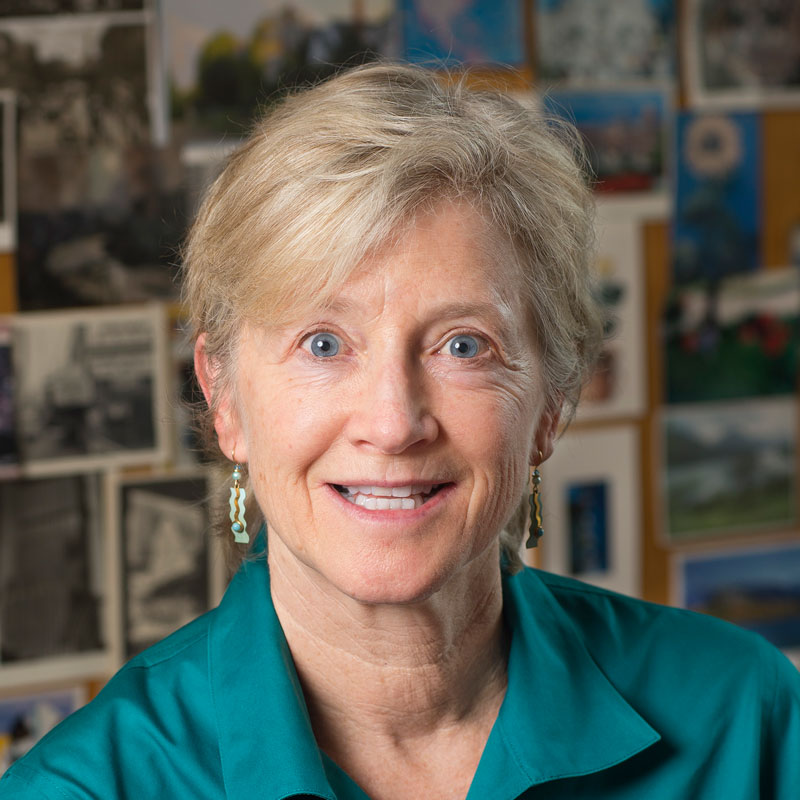 Donna Harsch合作论文数Department of History, Dietrich College of Humanities and Social Sciences, Carnegie Mellon University1
 Geoff Eley合作论文数Department of History, College of Literature, Science and The Arts, University of Michigan1
 Corey Ross合作论文数Department of History, School of History and Cultures, College of Arts and Law, University of Birmingham1Martin Woessner合作论文数1Katherine Aaslestad合作论文数1Kristin Semmens合作论文数1Francis R. Nicosia合作论文数1Marjorie Lamberti合作论文数1
 Benita Carol Blessing合作论文数History Department1Joseph W. Bendersky合作论文数1




