Energy access is often considered a catalyst for development. Yet, the binary classification of household electrification misses important variation in service quality and in how households use electricity. To examine the benefits of household electrification and illustrate the importance of using more nuanced classifications of energy access, this article develops a metric called the Energy Access Dividend (EAD), which quantifies the electrification benefits forgone due to slow and incomplete energy transitions. This framework is flexible, allowing for the estimation of a variety of electrification benefits such as reduced lighting and cell phone charging expenditures, environmental improvements, time use and asset ownership changes, and improvements associated with productive energy use. To demonstrate the applicability of this framework, we calculate the EAD for several proposed electrification trajectory alternatives in Honduras. We find that in Honduras, a country with high rates of basic electricity access, achieving immediate universal, high-quality electricity would generate nearly $697 million in benefits over the period leading up to 2050. We also estimate the EADs associated with more limited immediate electrification as well as geographically based electrification scenarios, demonstrating that these calculations can inform priorities for energy policy design.
In light of recent growth and falling costs of solar photovoltaic technology, this paper examines the barriers and opportunities facing off-grid development in Ethiopia, Kenya, Tanzania and Uganda, four countries whose off-grid sectors vary in maturity. We compare and link the perspectives of nearly 200 private companies to the development of the sector in each country, and measure trade-offs among different institutional designs for regulating and supporting off-grid investment. The survey reveals a set of common challenges but also considerable variation within and across countries. Development of the market is constrained by a lack of market information and technical capacity, insufficiently comprehensive regulation, and in specific countries, informal sector competition (Tanzania), the cost of doing business (Ethiopia), poor tariff policy (Tanzania), and lack of funding (Uganda). Moreover, firm responses emphasize the need for several policy supports: subsidy, financing, access to foreign exchange, technical assistance for regulatory matters, and capacity building. A discrete choice experiment clarifies these policy preferences, but reveals tradeoffs as well as country differences. Though the off-grid sector is growing in all four countries, many policy and regulatory obstacles remain, and these will continue to challenge achievement of SDG7: Sustainable, modern energy for all.
Traditionally, less rigid fixation techniques have been applied to the pediatric cervical spine. There is a lack of long-term outcome data for rigid fixation techniques. The purpose of this study was to define the clinical outcome and safety of posterior instrumented fusion in the pediatric population using adult posterior instrumentation. A multicenter, retrospective review of pediatric patients who underwent posterior cervical fusion using a 3.5 mm posterior cervical system for any indication was performed. Outcome parameters included complications, revision and fusion rates, operative time (OR), blood loss, and postoperative neurologic status. Outcomes were compared between patient groups (posterior only versus anterior/posterior approach, short versus intermediate versus long fusion, and between different etiologies) using Mann–Whitney and chi-square test. Seventy-nine patients with a mean age of 9.9 years and mean follow-up of 2.8 years were included. At baseline 44 (56
OBJECTIVE: The outcomes of conservative and operative treatment of os odontoideum in children remain unclear. Our objective was to study the outcomes of conservative and surgical treatment of idiopathic os odontoideum in children and compare these outcomes in age- and treatment-matched nonidiopathic children with os odontoideum. METHODS: A retrospective multicenter review identified 102 children with os odontoideum, of whom 44 were idiopathic with minimum 2-year follow-up. Ten patients were treated conservatively, and 34 underwent spinal arthrodesis. Both groups were matched with nonidiopathic patients by age and type of treatment. Cervical arthrodesis was recommended for patients with increased atlantoaxial distance or reduced space available for the cord in flexion-extension radiographs. RESULTS: All 20 children undergoing conservative treatment remained asymptomatic during follow-up, but 1 nonidiopathic patient developed cervical instability. The idiopathic group had significantly less severe radiographic cervical instability and less neurologic complications than the nonidiopathic group (P < 0.05 for all comparisons). Thirty-three (97%) patients in the idiopathic group and 32 (94%) patients in the nonidiopathic group (94%) had spinal fusion at final follow-up (P = 0.55). The risk of complications (15% vs. 41%; odds ratio 0.234, 95% confidence interval 0.072-0.757, P = 0.015) and nonunion (6% vs. 24%; odds ratio 0.203, 95% confidence interval 0.040-0.99, P = 0.040) were significantly lower in the idiopathic than in the nonidiopathic group. Idiopathic children undergoing rigid fixation achieved spinal fusion. CONCLUSIONS: Idiopathic patients with stable atlantoaxial joint at presentation remained asymptomatic and intact during conservative treatment. Idiopathic children with os odontoideum undergoing spinal arthrodesis had significantly fewer complications and nonunion than nonidiopathic children.
BACKGROUND: One recent survey of Level One Pediatric Trauma Centers shows only 46% of institutions utilize a standardized, written pediatric cervical spine clearance protocol. This study aims to create an expert, multi-disciplinary consensus statement and algorithm for pediatric cervical spine clearance by employing a modified Delphi method. METHODS: The Pediatric Cervical Spine Working Group is comprised of pediatric orthopaedic surgeons (n=15), pediatric emergency medicine physicians (n=3), pediatric trauma …
BACKGROUND:The aims of this study were to characterize the spinal deformity of patients with Escobar syndrome, describe results of growth-friendly treatments, and compare these results with those of an idiopathic early-onset scoliosis (EOS) cohort to determine whether the axial stiffness in Escobar syndrome limited correction.METHODS:We used 2 multicenter databases to review the records of 8 patients with EOS associated with Escobar syndrome who had at least 2-year follow-up after initiation of growth-friendly treatment from 1990 to 2016. An idiopathic EOS cohort of 16 patients matched for age at surgery (±1 y), postoperative follow-up (±1 y), and initial curve magnitude (±10 degrees) was identified. A randomized 1:2 matching algorithm was applied (α=0.05).RESULTS:In the Escobar group, spinal deformity involved 7 to 13 vertebrae and ranged from no vertebral anomalies in 3 patients to multiple segmentation defects in 6 patients. Mean age at first surgery was 5 years (range, 1.4 to 7.8 y) with a mean follow-up of 7.5 years (range, 4.0 to 10 y). Mean major curve improved from 76 degrees at initial presentation, to 43 degrees at first instrumentation, to 37 degrees at final follow-up (both P<0.001). Mean pelvic obliquity improved from 16 degrees (range, 5 to 31 degrees) preoperatively to 4 degrees (range, 0 to 8 degrees) at final follow-up (P=0.005). There were no differences in the mean percentage of major curve correction between the idiopathic EOS and Escobar groups at the immediate postoperative visit (P=0.743) or final follow-up (P=0.511). There were no differences between the cohorts in T1-S1 height at initial presentation (P=0.129) or in growth per month (P=0.211).CONCLUSIONS:Multiple congenital fusions and spinal curve deformity are common in Escobar syndrome. Despite large areas of congenital fusion, growth-friendly constructs facilitate spinal growth and improve curve correction. These results are comparable to those in idiopathic EOS.LEVEL OF EVIDENCE:Level III-case-control study.
Background: Treatment outcomes and risk factors for neurological deficits in pediatric patients with an os odontoideum are unclear. Methods: We reviewed the data for 102 children with os odontoideum who were managed at 11 centers between 2000 and 2016 and had a minimum duration of follow-up of 2 years. Thirty-one children had nonoperative treatment, and 71 underwent instrumented posterior cervical spinal arthrodesis for the treatment of C1-C2 instability. Nonoperative treatment consisted of observation (n = 29) or immobilization with a cervical collar (n = 1) or halo body jacket (n = 1). Surgical treatment consisted of atlantoaxial (n = 50) or occipitocervical (n = 21) arthrodesis. One patient also underwent transoral odontoidectomy. Results: Thirty children (29%) presented with neurological deficits, 28 of whom had radiographic atlantoaxial instability (atlantoaxial distance >5 mm) or limited space (≤13 mm) available for the spinal cord (risk ratio, 7.8 [95% confidence interval, 2.0 to 31] compared with children with no radiographic risk factors). The 27 children without neurological deficits or atlantoaxial instability at presentation underwent nonoperative treatment and remained asymptomatic. Of the initial nonoperative cohort, one child developed atlantoaxial instability, and another had a persistent neurological deficit; both children underwent spinal arthrodesis during the study period. One child with cervical instability declined surgery and remained asymptomatic. Spinal fusion occurred in 68 patients in the surgical group by the end of the study period (mean, 3.7 years; range, 2.0 to 11.8 years). Surgical complications occurred in 21 children, including nonunion in 12, new neurological deficits in 4, cerebrospinal fluid leak in 2, symptomatic instrumentation requiring removal 2, and vertebral artery injury in 1. Nine children underwent revision surgery. In the surgical group, Japanese Orthopaedic Association neurological function scores improved significantly from preoperatively to the latest follow-up for the upper extremities (p = 0.026) and lower extremities (p = 0.007). Conclusions: The risk of developing a neurological deficit was strongly associated with atlantoaxial instability and limited space available for the spinal cord in children with os odontoideum. Nonoperative treatment was safe for asymptomatic patients without atlantoaxial instability. Spinal arthrodesis resolved the neurological deficits of children with symptomatic os odontoideum. Level of Evidence: Therapeutic Level III . See Instructions for Authors for a complete description of levels of evidence.
Background: Pediatric asthma care is frequently fragmented and reactionary with poor guideline adherence. The Integrated Practice Unit (IPU) model is a popular framework for providing proactive, integrated, team-based care focused on a targeted condition. While such models have shown promise in highly selected populations, in real-world settings, low participation rates diminish their effectiveness. Our system sought to improve care by designing the Virtually Integrated Proactive (VIP) Asthma Care Program (Figure 1); a pediatric asthma IPU service relying on virtual visits, text messaging, and phone follow-up, as opposed to a brick-and-mortar …
Published by the Nicholas Institute for Environmental Policy Solutions in 2019. All Rights Reserved. Publication Number: NI PB 19-05 Summary As electricity companies in lowand middle-income countries move deeper into rural regions, the cost of new connections generally increases while the electricity demanded by these new customers remains lower than urban and peri-urban customers. This is a challenging dynamic for utilities looking to sustain their financial health as well as for governments tasked with engineering viable strategies for achieving universal electrification. Off-grid platforms like solar home systems and minigrids have entered this market, developing innovative approaches to serving these populations that promise to scale up to help meet the needs of the one billion people around the world still lacking electricity access. The creative partnerships and complementary services these off-grid providers are pursuing provide important lessons for larger utilities. Yet the primary driver for new electricity connections—the grid—will continue to play an important role in closing the access gap, especially in places where serving commercial, industrial, and other productive loads is a priority. Countries with national utility companies facing massive debt, stagnant revenue, and overcapacity must develop strategies for maintaining fiscal health, ideally in a manner that facilitates rural income growth and development.
Herman, Martin J. MD; Brown, Kristin O. MS; Sponseller, Paul D. MD; Phillips, Jonathan H. MD; Petrucelli, Philip M. MD; Parikh, Darshan J. BS; Mody, Kush S. BS; Leonard, Julie C. MD, MPH; Moront, Matthew MD; Brockmeyer, Douglas L. MD; Anderson, Richard C.E. MD; Alder, Adam C. MD; Anderson, John T. MD; Bernstein, Robert M. MD; Booth, Timothy N. MD; Braga, Bruno P. MD; Cahill, Patrick J. MD; Joglar, Jeanne M. MD; Martus, Jeffrey E. MD, MS; Nesiama, Jo-Ann O. MD; Pahys, Joshua M. MD; Rathjen, Karl E. MD; Riccio, Anthony I. MD; Schulz, Jacob F. MD; Stans, Anthony A. MD; Shah, Manish I. MD, MS; Warner, William C. Jr. MD; Yaszay, Burt MD Author Information
• Higher SHS prices—driven by import tariffs, valueadded tax, or profit motivations—have the same effect of slowing the electrification process and making it more difficult to reach national targets. Under a 20% import tariff scenario, households would likely purchase at least 58,100 fewer branded solar home systems every year in Kenya and Uganda, leading to approximately 300,000 fewer people gaining access to electricity every year. Though governments could generate some revenue from these tariffs, the tariff would be highly regressive. As companies would ultimately pass through higher costs to customers, the burden of the tariff would fall squarely on households lacking access to basic electricity.
This report includes three cases of occipitocervical (OC) dissociation in three siblings involved in a single, head-on, motor vehicle accident. The oldest sibling, a 9-year-old girl, required surgical fixation. The second sibling, a 6-year-old boy, was treated nonsurgically with a neck brace. The youngest sibling, a 5-year-old boy, sustained a fatal OC dissociation. CT and MRI findings are used to assess the reliability of the currently recommended diagnostic modalities for OC dissociation. The literature review focuses on the diagnosis of OC dissociation via CT measurements and proposed treatment recommendations using CT and MRI classification systems. In the 9-year-old girl, the mean atlanto-occipital joint width, the interspinous ratio, and space available for cord measurements indicated OC dissociation. However, on MRI evaluation, OC dissociation was observed in both living siblings and severe ligamentous injury was noted in the girl. The proposed CT measuring techniques for the diagnosis of OC dissociation were inconsistent in our cases. In the setting of clinically suspected OC dissociation with normal CT measurements, we recommend obtaining a cervical spine MRI to properly assess the extent of ligamentous injury.
BACKGROUND:Perioperative spinal cord injury and postoperative neurological deficits are the major complications in spinal surgery. Monitoring of spinal cord function is of crucial importance. Somatosensory evoked potentials and transcranial electric motor-evoked potentials are now widely used in cervical spine surgery. Although much has been written on spinal cord monitoring in adult spinal surgery, very little has been published on the incidence and management of monitoring of cervical spine surgery in the pediatric population. The goal of this research was to review the recognition, incidence, and management of spinal cord monitoring in pediatric patients undergoing cervical spine surgery over the course of twenty years in a single institution. We postulate spinal cord monitoring alerts in pediatric cervical spine surgery are underreported.METHODS:An IRB-approved retrospective single institution review of pediatric cervical spine cases from 1997 to 2017 was performed. Both the surgeon's dictated operative note and the neuromonitoring team's dictated note were reviewed for each case, and both were cross referenced and correlated with one another to ensure no alerts were missed. All monitoring changes were assumed to be significant and reported. The incidence of alerts, type of changes, and corrective maneuvers were noted. New postoperative neurological injuries were recorded.RESULTS:From 1997 to 2017 fifty-three patients underwent a total of 69 procedures involving the cervical spine. Fourteen procedures (20%) were not monitored, whereas 55 procedures were 80%. There were 12 procedures (21.8%) complicated by neuromonitoring alerts.CONCLUSIONS:The number of cases complicated by alerts doubles that previously reported, and it is important to note there were no new permanent neurological deficits recorded over the study period. Corrective strategies were implemented once the operating surgeon was notified of the neuromonitoring alert. Aborting the case was then considered if corrective strategies failed to restore baseline neurophysiology.LEVEL OF EVIDENCE:Level IV.
In 2007, Stevens and Klatt introduced the guided growth concept, which advanced the surgical treatment of knee deformities, particularly in the coronal plane. In the case of sagittal plane deformity, further analyses of guided growth are needed. The incorporation of a consistent and effective radiographic measuring technique to evaluate knee flexion contracture deformity (KFCD) angular correction does not currently exist and would greatly supplement patient evaluation. This retrospective study investigated the guided growth procedure via a novel radiographic measuring technique involving Blumensaat's line. The radiographs of 8 …
Background:The purpose of this study was to determine the rate of intraoperative neurological monitoring (IONM) alerts and neurological injury during vertical expandable prosthetic titanium rib (VEPTR) treatment and evaluate the utility of IONM during VEPTR expansion procedures in patients who have not previously had neurological injury or IONM alerts.Methods:After institutional review board approval, VEPTR procedures and IONM records were reviewed at 17 institutions for patients treated with VEPTR from 2005 to 2011. All consecutive cases in patients with minimum 2-year follow-up were included. Patients with prior history of growing rods or other invasive spine-based surgical treatment were excluded. Surgeries were categorized into implant, revision, expansion, and removal procedures. Cases with IONM alerts or neurological injury had additional detailed review. Descriptive statistics were used for data analysis.Results:In total, 2355 consecutive VEPTR procedures (352 patients) consisting of 299 implant, 377 revision, 1587 expansion, and 92 removal procedures were included. In total, 620 VEPTR procedures had IONM, and 539 of those had IONM records available for review. IONM alerts occurred in 9/539 procedures (1.7%): 3/192 implants (1.6%), 3/58 revisions (5.2%), and 3/258 expansions (1.2%). New neurological injury occurred in 3/2355 procedures (0.1%), 3/352 patients (0.9%). All 3 injuries were in implant procedures, only 1 had an IONM alert. All 3 had upper extremity motor deficits (1 had sensory deficit also). All had full recovery at 17, 30, and 124 days postinjury. One patient without prior neurological injury or IONM alert had an IONM alert during expansion that resolved after an increase in blood pressure. The remaining IONM alerts during expansions were all in children with prior IONM alerts during implant, revision, or exchange procedures.Conclusions:The highest rate of neurological injury in VEPTR surgery was found for implant procedures. There were no instances of neurological injury during VEPTR expansion, revision, or removal procedures. IONM did not identify new neurological injuries in patients undergoing VEPTR expansion who did not previously have a history of IONM signal change or neurologic injury.Level of Evidence:Level IVdiagnostic study.
Background: The objective of the research was to study the relevance of intraoperative neuromonitoring throughout all stages of surgical management in patients with progressive early-onset scoliosis (EOS). The routine monitoring of spinal cord potentials has gradually become standard of practice among spinal surgeons. However, there is not a consensus that the added expense of this technique necessitates monitoring in all stages of surgical management. Methods: A retrospective review of 180 surgical cases of 30 patients with EOS from July 2003 to July 2012 was performed. All monitoring alerts as judged by the neuromonitoring team were identified. Both somatosensory-evoked potentials and transcranial electric motor-evoked potentials were studied and no limiting thresholds for reporting electrophysiological changes were deemed appropriate. Results: Of 150 monitored cases there were 18 (12%) monitoring alerts. This represented 40% of the patient cohort over the 9-year study period. Conclusions: Index versus routine lengthening rate of alerts showed no significant difference in incidence of monitoring alerts. Conversely, several patients whose primary implantation surgeries were uneventful had monitoring alerts later in their treatment course. Intraoperative neuromonitoring is warranted throughout all stages of surgical management of EOS. Level of Evidence: Level IV. This study is a retrospective review of surgical cases of 30 patients with EOS.
 Herrera-Soto José A合作论文数9Paul D Sponseller合作论文数8Joshua M. Pahys合作论文数Shriners Hospitals for Children7Raymond Knapp合作论文数6
 Patrick J Cahill合作论文数Shriners Hospitals for Children6Burt Yaszay合作论文数6Varatharaj Mounasamy合作论文数University of Virginia Department of Orthopedics5
 Martus Jeffrey E合作论文数Department of Orthopaedic Surgery, University of Michigan4Ilkka J. Helenius合作论文数4Daniel J. Hedequist合作论文数4Denise Lopez合作论文数3Knapp Dennis R合作论文数3Stans Anthony A合作论文数3
 Robert M Bernstein合作论文数College of Physicians and Surgeons, Columbia University3Ruder John合作论文数3Fiona Langlands合作论文数3
 Amer F. Samdani合作论文数Shriners Hospitals for Children3
 Michael R Isley合作论文数3Karl Rathjen合作论文数3Kenneth S. Jeffers合作论文数3
 Annalise Noelle Larson合作论文数University of Minnesota3Martin J. Herman合作论文数3Firoz Miyanji合作论文数3Mark A. Birnbaum合作论文数2Gabriel D Glaun合作论文数2Kush Mody合作论文数2Tf Kling合作论文数2Jennifer M Bauer合作论文数2
 Marc A. Jeuland合作论文数Department of Civil & Environmental Engineering, Pratt School of Engineering, Duke University2
 Bram Verhofste合作论文数2Harvard Medical School2Crawford Haemish A合作论文数2
 Shah Suken A合作论文数Nemours Alfred I duPont Hosp Children2Glotzbecker Michael P合作论文数2
 Julie C. Leonard合作论文数Center for Injury Research and Policy, The Abigail Wexner Research Institute, Nationwide Children's Hospital;College of Medicine, Ohio State University2Riccio Anthony I合作论文数2Flynn John M合作论文数2Sturm Peter F合作论文数2Odent Thierry合作论文数2Wright Patrick B合作论文数Department of Orthopedic Surgery and Rehabilitation, University of Mississipi Medical Center2Knapp D Raymond合作论文数2
 Jahangir Asghar合作论文数2Behnam Myers合作论文数2
 Sumeet Garg合作论文数School of Medicine, Washington University2
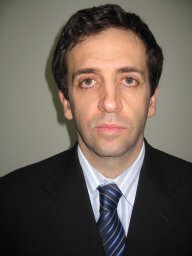 Bruno Perocco Braga合作论文数2
 Douglas L. Brockmeyer合作论文数Division of Pediatric Neurosurgery, Primary Children's Hospital, University of Utah2
 Richard C. E. Anderson合作论文数2Walter F. Krengel合作论文数2Michael G. Vitale合作论文数2
 William C Warner合作论文数2




