This paper explores research associated with WhatsApp, to see if there are lessons to be learned about the use of WhatsApp in educational settings. The research emerged from the researcher’s experiences as a parent of a child with various labels, including Down syndrome, and his experiences with WhatsApp. The background is a long period of investment in information technology which has not brought the anticipated returns. Alongside this lack of progress is a clear digital divide for disabled learners and an ongoing lack of expertise amongst teachers. Data for this study was collected through a systematic search of the literature, and analysed thematically through open-coding and constant comparison. Only 8 studies met the inclusion/exclusion criteria, despite these being broad in nature, and many of these studies were outside school and involved an adult population. Evidently WhatsApp has the potential to be an accessible and useful pedagogic tool, but there is very little guidance or research to inform the practice of class teachers and to influence the decisions of policy makers. As a parent and experienced academic, the researcher felt surprise at trying to understand something that was conspicuous by its absence. The lack of consideration of this issue raises fundamental questions about how we draw boundaries around the possible and the practical, providing an insight into how institutional discrimination can arise and be sustained.
Fathers' relationships with their disabled children is a neglected topic in the academic literature. This article is the first review of studies in the field, comprising a comprehensive overview of research published since 1980. Forty-five studies met the inclusion criteria. Although fathers emphasise positive aspects of their relationships, existing research foregrounds more negative aspects. These studies tend to identify five themes that signal positive father-child relationships. These themes are: an evolving relationship; caregiving practices; relational aspects of caregiving; recognising and supporting their children's agency; and (inter)connectedness. While fathers' relationships with their disabled children is an under-researched topic, the existing literature on the topic focuses on the negative impact of having a disabled child. Understanding the complexity and rewarding aspects of fathers' engagement warrants further research.
This chapter examines the roots of special and needs and the inherent challenges it presents and faces in delivering its own goals. This chapter presents a practical set of alternatives based around the principle of uncertainty which can allow us to move beyond the constraints of both special and needs.
Background: The terms idiot, imbecile, and moron are generally associated with notions of intelligence, having served both scientific and mundane roles across cultural ‐ historical contexts and in many different countries. This study seeks to explore the degree to which the use of these terms is an everyday part of our lives and to map out the meanings being attached to them. Methods: This study reports on their current usage in two arenas: within 29 academic papers published from 2016 to 2021, reporting on interviews or observations undertaken in educational contexts; and within 134 articles from four English language newspapers published in the first three months of 2021. Using a discursive and thematic approach to the analysis, it considers the degree to which these may be considered slur or taboo words, and whether they can be linked to discriminatory practices frequently experienced by groups with whom they are associated. Findings: It is evident is that people use the terms differently in different arenas. However, they see them as negative, associate them with stereotypical characteristics, are happy to apply them to others, but want to avoid having them applied to themselves. Conclusion: This study shows how widely these words are used across social contexts, and suggests that as with other historical terms for marginalized populations we need to regard them as slurs and treat them as taboo.
The movement towards inclusive education is undoubtedly an international phenomenon, and it has resulted in the development of policy initiatives impacting on schools in all nations. This informative, wide-ranging text brings together key illustrative material from an international field. It adopts a critical perspective on policy issues, but goes beyond this by making explicit the assumptions that drive policy and development. Readers will be encouraged to develop their own framework, allowing them to conduct policy analysis and evaluation within their own educational context.
This paper examines the use of vignettes as a research method in a comparative exploration of the provision for children with special educational needs across eleven countries. The investigation selected in-country researchers, who responded to questions with respect to children described in 14 vignettes. The questions related to school placement options; assessment processes; support arrangements; service provision; curriculum responses and those involved in placement decisions. The vignette findings were able to highlight differences in placement decisions between the countries; the general lack of pupil voice in decision making and the ubiquitous influence of medical categories within educational settings. The utility of using vignettes in this type of research is discussed in relation to reflecting the complex reality of educational practice in different countries. Keywords: vignette study, special educational needs, international comparisons school placement, pupil voice
This chapter examines a museum access project called Accessible Resources for Cultural Heritage EcoSystems (ARCHES), which used an emancipatory paradigm and participatory methodology to inform arts technologies and information in an effort to make cultural heritage in Europe more accessible, this will be referred to as emancipatory participatory methodology for convenience. The first era, from the end of the eighteenth century until the middle of the twentieth century, was that of teachers breaking with tradition and accepting the abilities of their students. The second era of this access and inclusion was that of scientists starting to challenge the accessible practices of art institutions, schools, colleges, and museums. The ARCHES sessions looked at the feasibility of creating a web platform, interactive and multi-media touch technologies, a sign language avatar and an app for smartphones and tablets, and several on-site activities with the final purpose of making museums more accessible for people with sensory and learning disabilities.
The involvement of all participants within all aspects of the research process is a well-established challenge for participatory research. This is particularly evident in relation to data analysis and dissemination. A novel way of understanding and approaching this challenge emerged through a large-scale international, 3-year participatory research project involving over 200 disabled people. This approach enabled people to be involved at all stages of the research in a manner that was collectively recognised to be participatory and also delivered high-quality findings. At the heart of this emergent approach to participatory research is an engagement with risk. This research note explores the types of risks involved in delivering research that seeks to be authentically participatory.
Purpose This paper aims to explore the experience of working with different conceptualisations of participation and participatory practice. This is done through an examination of the involvement of a technology company within a multinational, 3-years participatory research project involving 13 partners and over 200 disabled people. Design/methodology/approach This paper provides a case study, narrative account of a range of activities undertaken within the project, presenting a rare and much-needed explicit insight into the emergence of participatory ways of working and the reasoning and tensions behind them. Findings Through the case study gaze of one of the technology companies involved, it explicates the underpinning processes of the participatory approach and how these challenged the notions of various partners. Originality/value This paper shows how engaging in meaningfully participatory research creates profound institutional challenges for technology developers. The subsequent need to make hard decisions and compromises throughout disrupts traditional ways of working and anticipated outcomes. However, it also reveals opportunities for delivering unanticipated and transformative outcomes, highlighting the need for greater flexibility in funding research that aims to be participatory.
This paper reports on a systematic review of how intelligence-based classification within schools shapes lives and identities of individuals, families and communities. Formal education has long divided learners, formally and informally between and within schools. These practices have remained in place despite strong evidence to suggest they are problematic, both in relation to the equitable nature of the practices involved and in their impact upon pedagogy, expectations and outcomes. This review examined what was known about the impact of intelligence-based selection upon people's lived experience, in the short term and longitudionally.
Authentic participation involving jointly undertaken analysis of data and dissemination of findings is rarely evident in participatory research involving disabled people. This paper examines analysis and dissemination which offers greater participation, providing a theoretical underpinning for this approach. This conceptualization arises from ARCHES, a museum education and access research project involving over 200 disabled people and a systematic review undertaken as part of this project. A few studies, including ARCHES, have moved beyond traditional research analysis to recognize the evolving nature of the ‘messy space’ and how this may inform approaches to data and dissemination. This paper frames this space as the While of participation, a concept which emerged from the systematic literature review and from working within ARCHES. It explores how the While of participation is experienced in practice, in relation to analysis and dissemination. In particular it focuses upon its emergent nature. Within this project and occasionally elsewhere in the literature, data analysis and dissemination are not retrospective or separated activities, but arise as part of the ongoing participatory process, where immersion and dialogue are at the root of all knowledge development and sharing.
The underpinning tensions, outcomes and component parts can be seen as multiple interactions which create and are created by participation. Participation is the experience that occurs in the moment, and it defines our experience of that moment; the experience that emerges from and creates the boundaries in which people find themselves. Inclusion can be seen as an "assault on oppressive vestiges of the past as a way of contributing to alternative futures". It involves adopting a pedagogy which is underpinned by a principle of transformability, perhaps using a curriculum based upon values and rights, and requiring changes in the 'behaviour' of adults. 'Valid' participation is not situated in a singular or neatly defined space. It is based on continual negotiation, with participants needing to move to where others are. Good teaching is widely regarded to be active, highly skilled and providing rich opportunities for students within a well-planned and organised setting.
 Kieron Sheehy合作论文数38
 Melanie Nind合作论文数University of Southampton16
 katy simmons合作论文数15
 Jane Katherine Seale合作论文数School of Education, University of Southampton14
 Simon Hayhoe合作论文数13Alice Paige-Smith合作论文数10john parry合作论文数9
 Helena Garcia Carrizosa合作论文数9Kathy Hall合作论文数8
 Martin Crisp合作论文数5rajni kumrai合作论文数5amanda harper合作论文数5Felicity Fletcher-Campbell合作论文数5Helena Garcia Carrisoza合作论文数4
 Chris Walsh合作论文数4
 Janice Wearmouth合作论文数4alice matthews合作论文数2
 Peter Twining合作论文数Open Univ, CREET, Milton Keynes MK7 6AA, Bucks, England2Janet Collins合作论文数2Ticky Lowe合作论文数2Ian Eyres合作论文数2
 Anna Craft合作论文数Graduate School of Education, University of Exeter2Gill Clifton合作论文数1Nigel Ingham合作论文数1Cornelia Travnicek合作论文数1
 Memory Malibha-Pinchbeck合作论文数1
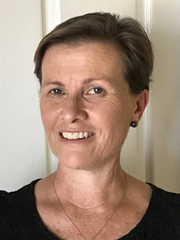 Cathy Little合作论文数Sydney School of Education and Social Work, Faculty of Arts and Social Sciences, The University of Sydney1
 Renske de Leeuw合作论文数1
 Martin Robb合作论文数Department of Human Sciences;Loughborough University;Department of Human Sciences, Loughborough University1Helen Jones合作论文数1
 Andreas Reichinger合作论文数VRVis Research Center1




