PROBLEM:With less than 25% of PhD-trained scientists in the United States securing a tenure-track faculty position following training, nonacademic careers have become common. As the academic research enterprise has increased, business-oriented careers have emerged. The Research Operations, Management, and Strategy (ROMS) Fellowship was developed to increase awareness of and prepare life sciences PhD graduates for business-focused careers. APPROACH:The ROMS Fellowship was developed from March through December 2018 by the University of Michigan Medical School. Launched in 2019 and based on real-world experiences, the 2-year ROMS Fellowship combines immersion rotations and project work to develop an understanding of foundational infrastructure across the full spectrum of research. OUTCOMES:From 2019 to 2022, there were 4 ROMS Fellowship recruitment cycles, with a mean of 7 applicants per cycle and 2 fellows selected each year. Of the 8 fellows recruited, 5 (62.5%) joined directly from PhD training, whereas 3 (37.5%) had 2 to 6 years of postdoctoral training. Fellows have worked with 26 departments on 44 rotation projects and 30 impact projects and self-reported significant skill development in communicating with diverse stakeholders, strategic thinking, using new tools and resources, developing and scoping a project plan, and managing and leading a project. To date, 4 fellows have completed the program and were hired immediately into full-time positions at the University of Michigan Medical School. NEXT STEPS:Early feedback indicates that the program has been well received and effective. Previously, program refinement was directed by qualitative input from fellows and unit directors. However, for future cohorts, assessment tools will be implemented to capture qualitative and quantitative data to measure acquired skills and how program components contribute to professional development and career placement. A longitudinal follow-up will also be conducted with program alumni to track longer-term outcomes and career pathways.
OBJECTIVES/GOALS: The Virtual CTSA Visiting Scholars Program allows KL2 scholars to serve as visiting professors at host CTSA consortium institutions. This program facilitates connections with faculty outside scholars home institutions, as well as fostering collaboration among different CTSA hubs. Stanford aimed to incorporate participants into its KL2 program. METHODS/STUDY POPULATION: Stanford is one of 57 host institutions for the Virtual CTSA Visiting Scholars Program. The program includes a virtual meeting between each participant and a chosen faculty at the host institution. Program participants also give a virtual Grand Rounds lecture, open to the entire CTSA consortium. As well as encouraging Spectrum KL2 Scholars to participate in the virtual exchange, the Spectrum KL2 program incorporated the visiting scholars into weekly activities over the course of 3 months. Visiting scholars were invited to participate virtually in KL2 educational sessions, which provide career development training and mentoring. As meetings transitioned to in-person, KL2 scholars were allowed to attend virtually when needed. Hybrid in-person sessions were also conducive to participation by visiting scholars. RESULTS/ANTICIPATED RESULTS: Stanfords Spectrum KL2 program was virtual (Zoom) for academic year 2020-2021 and included 1:1 mentoring sessions, weekly career development seminars, and 1:1 peer virtual lunches to integrate the 9 junior faculty scholars. Visiting scholars joined the weekly Zoom meetings when their schedules allowed. KL2 faculty mentored visiting scholars for 3 months, exchanging ideas and forming collaborations. Each visiting participant was paired with a KL2 Scholar, who provided 1:1 peer mentorship. In addition, visiting scholars presented a work-in-progress seminar, to obtain feedback before the more formal Grand Rounds lecture. For academic year 2021-2022, Spectrum KL2 meetings include virtual and hybrid in-person sessions, allowing visiting scholars to join by Zoom during the 3-month virtual exchange program. DISCUSSION/SIGNIFICANCE: What set Stanfords Virtual CTSA Visiting Scholars Program apart was faculty engagement and mentorship provided to visiting participants. By incorporating visiting scholars virtually into the ongoing KL2 education program, participants could engage fully with mentors and scholars, even surpassing opportunities of pre-pandemic on-site visits.
OBJECTIVES/GOALS: Use an easily accessible medium to educate life science researchers and academic innovators interested in the commercialization of academic research at the University of Michigan (UM). METHODS/STUDY POPULATION: Life science research investigators and academic innovators interested in research commercialization and technology development from across the state of Michigan were invited to attend the Idea to Impact: The Translation & Commercialization of Academic Research webinar series, presented by Fast Forward Medical Innovation at the University of Michigan. The webinar series outlined the significance and critical milestones of developing novel therapeutics, medical devices, diagnostics, and digital health innovations, as well as essential collaborations with industry partners to translate a research-based idea into a product of impact. RESULTS/ANTICIPATED RESULTS: 113 investigators and innovators from 28 different institutions, organizations, and companies, registered for the webinar series. Results (N=24) of an evaluation immediately following each webinar revealed that 100% of respondents strongly agreed or agreed that the series was effective in helping them to identify and describe commercialization resources, including funding, education, and mentorship, available at the University of Michigan and within the state. Participants stated that they “loved the practical information” “shared” and that the series was a “great overview that inspired a lot more questions.” The Fast Forward Medical Innovation team was then able to consult with participants to connect them with additional resources. DISCUSSION/SIGNIFICANCE: The data suggests that easily accessible and digestible commercialization education can make navigating the academic entrepreneurial ecosystem easier for investigators and innovators. The recorded webinar series, Idea to Impact: The Translation & Commercialization of Academic Research, serves this purpose.
Traditional training and funding mechanisms in academic health centers often do not support its faculty, staff, and trainees in evaluating and implementing innovative ideas, necessitating supplemental innovation programming. The University of Michigan (U-M) Frankel Cardiovascular Center partnered with U-M Fast Forward Medical Innovation (FMMI), a biomedical innovation and commercialization unit funded in part by the Clinical and Translational Science Award awarded to the Michigan Institute for Clinical & Health Research, to provide training and resources to advance ideas toward impacting patients. The program recruited faculty, trainees, staff, patients, and family members from multidisciplinary backgrounds. Engaging patients and family members expanded the ideas generated and furthered clinical relevance. Over two years, 11 project teams completed an 11-week, 16-session course on innovation and entrepreneurship concepts that incorporated workshops to progress ideas and develop a pitch for development funding. An increase in knowledge was reported in key innovation topics, such as customer discovery, assessing markets, and intellectual property. Participants reported an increase in project preparation, including obtaining stakeholder support, preparation of a development plan, readiness to apply for funding, and filing invention disclosures. This program can serve as a model for implementing training and funding mechanisms to advance innovative ideas.
ABSTRACT IMPACT: The successful conversion of an in-person biomedical research commercialization education course to a fully virtual and flipped experience (self-paced) allows greater participation from faculty investigators at CTSA institutions and serves as a model for similar educational programs intended to accelerate the translation of biomedical innovations to products of impact. OBJECTIVES/GOALS: Due to COVID-19, University of Michigan’s Fast Forward Medical Innovation developed new educational resources and leveraged virtual learning tools to convert a successful in-person research commercialization course to a fully virtual, flipped format and evaluated the effectiveness of the converted course compared to the in-person equivalent. METHODS/STUDY POPULATION: Two novel interactive modules (intellectual property and FDA regulation) and five instructional videos (customer discovery, value proposition, opportunity sizing, target product profile, and patent searches) were developed while Constant Contact and Zoom were used for a weekly progression of content delivery and to flip the course: (1) forming/testing value propositions, (2) intellectual property, (3) regulatory, (4) medical reimbursement, (5) business case development. A total of 32 faculty and graduate students completed the virtual, flipped course and submitted a post-course evaluation. Results of the converted course were compared to evaluation results from the in-person course. RESULTS/ANTICIPATED RESULTS: Open rates for the weekly email content were: (1)61%, (2)67%, (3)65%, (4)67%, and (5)59 %. Total views for the modules and videos were: IP-28, regulation-19, customer discovery-62, value proposition-21, opportunity sizing-66, target product profile-11, and patent searches-29. Evaluation results from the virtual course (n=22) were compared to mean results from the 5 previous in-person courses (n=42); 86% of virtual course respondents stated the course met the objectives compared to 85% of in-person respondents; 87% of virtual respondents stated the course met their expectations compared to 100% of in-person; 87% of virtual respondents said they would participate in a follow-up program compared to 94% in-person; 91% of virtual respondents would recommend the course to others compared to 97% of in-person. DISCUSSION/SIGNIFICANCE OF FINDINGS: Email open rates and content views suggest positive flipped participation. Overall, the converted course was comparable to the in-person course at meeting objectives, suggesting the virtual format is effective at delivering the course content and holds the potential for engaging a broader audience.
Healthcare providers are expected to deliver care improvement solutions that not only provide high quality patient care, but also improve outcomes, reduce costs, ensure safety, and increase patient satisfaction. Human-centered design methodologies, such as design thinking, allow providers to collaboratively ideate solutions with patients and family members. We describe a pilot workshop designed to teach providers the stages of design thinking while working on improving patient-provider communication. Twenty-four providers (physicians, nurses, technical staff, and administrative staff) from multiple cardiovascular units attended the workshop with five former patients and family members from those units. The workshop educated on and guided teams of providers patients and family members through the stages of design thinking (empathy, define, ideate, prototype, test). Pre- and post-event assessments indicated an increase in knowledge of the design thinking methodology and participants' ability to apply it to a clinical problem. We also present recommendations for designing a successful design thinking workshop.
BACKGROUND:Continuous quality improvement is a pillar of all surgical groups. Innovation is a critical aspect to continuously improve, but traditional staff retreats have several disadvantages which limit their utility in identifying needs and developing innovative solutions. To address these challenges, we designed the novel Think Tank Program to spur innovation and strategic planning for an academic ophthalmology department including the Kellogg Eye Center 6 operating rooms.METHODS:The Think Tank program is a structured seven-phase program for faculty in small teams to identify, innovate, and implement meaningful change. Participants brainstormed problems and possible solutions to those problems, formed teams, acquired data, and implemented meaningful change in clinical care, research, education, and administration.RESULTS:The program generated 19 novel proposals and significant faculty engagement and discussion in improving the department. A case example of improving the operating room (OR) utilization resulted in improved OR utilization from 63.8% to 74.6% over a 3 month period before and after implementation. It also resulted in a reduction of cancelled or rescheduled surgeries within 2 weeks or surgery from 29.8% to 15.2%. This resulted in an estimated positive financial margin of over $141,000 to the institution in addition to improvement in patient, surgeon, and staff satisfaction with the quality of care.CONCLUSIONS:Engaged faculty, critical data analysis, and value proposition analysis with data-driven metrics and accountability can result in a significant increase in OR utilization and reduction in surgical cancellations. Think Tank serves as a model transformative program to assist practices and institutions to best fulfill their mission while actively engaging and retaining their members.
OBJECTIVE: Surgeons are continually engaged in the incorporation of new technologies in their practice. In the operating room and beyond, they combine technical skill with creative problem solving to improve tools and techniques for patient care, making them natural innovators. However, despite their innovative tendencies, education on entrepreneurship and commercialization is severely lacking. Moreover, with increasing pressure to meet productivity metrics, their availability to learn the complexities of commercialization is limited. To address these challenges, we designed the Surgery Innovation and Entrepreneurship Development Program (SIEDP) with the objective to advance faculty innovations, develop new departmental innovation initiatives, and improve faculty education in the area of innovation, entrepreneurship, and commercialization. DESIGN: The SIEDP is a first-of-its-kind experiential learning program specifically designed for busy clinical and research faculty in a major academic surgery department. Participants ideated and formed teams around health care innovations as they progressed through a 9 -month curriculum of expert guest lectures and interactive workshops. A postprogram evaluation and outcome tracking method was used to evaluate attainment of educational objectives and project development milestones. SETTING: The Department of Surgery, University of Michigan Medical School, Ann Arbor, Michigan. PARTICIPANTS: Eleven surgery faculty of varying academic rank and surgical subspecialties. RESULTS: The program generated 2 faculty startup companies, 1 departmental commercial product, 3 patent disclosures, and 3 innovations that received additional funding. All participants in the program reported a significant increase in their understanding of innovation and entrepreneurship and that participation was a worthwhile faculty development activity. CONCLUSION: Despite the various challenges and time constraints of surgical practices, programs like SIEDP can educate surgeons and other academicians on innovation, entrepreneurship, and commercialization and add value to the academic mission of providing excellent education, research, and clinical care. (C) 2017 The Authors. Published by Association of Program Directors in Surgery All rights reserved.
Introduction The Institute of Medicine recommended the advance of innovation and entrepreneurship training programs within the Clinical & Translational Science Award (CTSA) program; however, there remains a gap in adoption by CTSA institutes. The University of Michigan’s Michigan Institute for Clinical & Health Research and Fast Forward Medical Innovation (FFMI) partnered to develop a pilot program designed to teach CTSA hubs how to implement innovation and entrepreneurship programs at their home institutions. Materials and methods The program provided a 2-day onsite training experience combined with observation of an ongoing course focused on providing biomedical innovation, commercialization and entrepreneurial training to a medical academician audience (FFMI fastPACE). Results All 9 participating CTSA institutes reported a greater connection to biomedical research commercialization resources. Six launched their own version of the FFMI fastPACE course or modified existing programs. Two reported greater collaboration with their technology transfer offices. Conclusion The FFMI fastPACE course and training program may be suitable for CTSA hubs looking to enhance innovation and entrepreneurship within their institutions and across their innovation ecosystems.
PROBLEM:Research produced by medical academicians holds promise for developing into biomedical innovations in therapeutics, devices, diagnostics, and health care information technology; however, the road to biomedical innovation is fraught with risk, including the challenge of moving from basic research insight onto a viable commercialization path. Compounding this challenge is the growing demand on medical academicians to be more productive in their clinical, teaching, and research duties within a resource-constrained environment.APPROACH:In 2014, the University of Michigan (UM) Medical School and College of Engineering codesigned and implemented an accelerated, biomedical-focused version of the National Science Foundation (NSF) Innovation Corps (I-Corps) program. The UM Early Tech Development (ETD) Course, designed for medical academicians exploring the commercial potential of early-stage ideas, covers the NSF I-Corps concept; supports the formation of teams of faculty, graduate, and medical students; and accommodates medical academicians' schedules.OUTCOMES:From 2014 to 2015, the ETD Course graduated 39 project teams from UM and other institutions. One-third of the teams have continued to pursue their projects, receiving additional funding, engaging industry partners, or enrolling in the NSF I-Corps program.NEXT STEPS:The ETD Course, a potential pipeline to the NSF I-Corps program, captures a target audience of medical academicians and others in academic medicine. To better understand the long-term effects of the course and its relationship to the NSF I-Corps program, the authors will conduct a study on the careers of all ETD Course graduates, including those who have enrolled in NSF I-Corps versus those who have not.
 Bradley J Martin PhD合作论文数4Connie Chang合作论文数3Samantha Cook合作论文数3
 Meghan Cuddihy合作论文数3David C. Olson合作论文数2Michelle Larkin合作论文数2Jonathan Fay合作论文数2
 Chandu Vemuri合作论文数Section of Vascular Surgery, Department of Surgery, Medical School, University of Michigan-Ann Arbor2
 Hamid Ghanbari合作论文数Division of Cardiovascular Medicine, Department of Internal Medicine, Medical School, University of Michigan-Ann Arbor2
 Kim Allen Eagle合作论文数Department of Health Management and Policy, School of Public Health, University of Michigan2Kevin Ward合作论文数2Kelly R Vandenberg合作论文数1david p olson合作论文数1Joyce Lee MD, MPH合作论文数1Kaylee Steen合作论文数1Yixin Yu合作论文数1
 George A. Mashour合作论文数Michigan Neuroscience Institute, University of Michigan1
 Yannis M. Paulus合作论文数Paulus Advanced Retinal Imaging and Laser Laboratory, Department of Ophthalmology and Visual Sciences, Medical School, University of Michigan1
 K. Thiran Jayasundera合作论文数Department of Ophthalmology and Visual Sciences, Kellogg Eye Center, Medical School, University of Michigan-Ann Arbor1
 Kari Branham合作论文数Ophthalmology, Department of Ophthalmology and Visual Sciences, Kellogg Eye Center, University of Michigan1
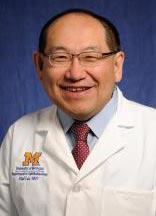 Paul P. Lee合作论文数Department of Ophthalmology and Visual Sciences, Kellogg Eye Center, Michigan Medicine;Glaucoma Clinic, Kellogg Eye Center1
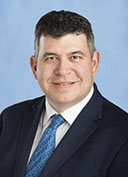 Mark Cohen合作论文数Department of Human Genetics, Medical School, University of Michigan1
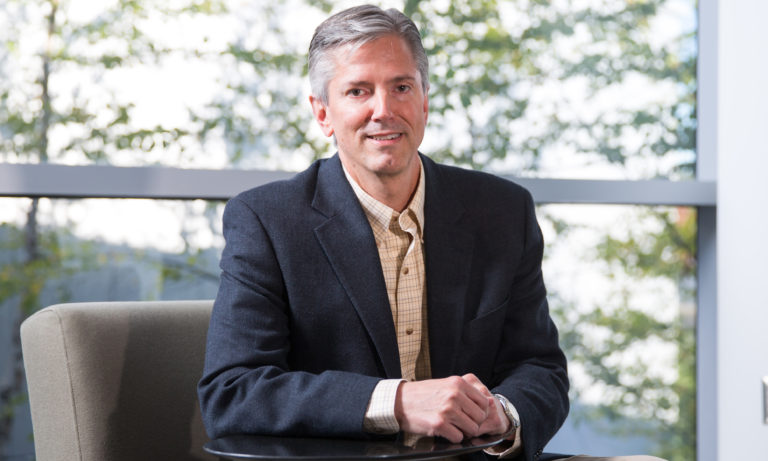 Kevin R. Ward合作论文数Department of Biomedical Engineering, College of Engineering, University of Michigan-Ann Arbor1
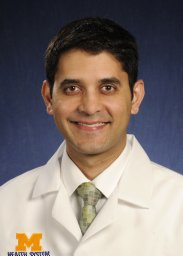 Ghodasra Devon H合作论文数Division of Ophthalmology, Children's Hospital of Philadelphia1Beach Jamie合作论文数1
 Michael W. Mulholland合作论文数Department of Surgery, University of Michigan1Shoba Subramanian合作论文数Department of Biological Sciences;Carnegie Mellon University;Department of Biological Sciences, Carnegie Mellon University1




