Extracting clinical terms from free-text format radiology reports is a first important step toward their secondary use. However, there is no general consensus on the kind of terms to be extracted. In this paper, we propose an information model comprising three types of clinical entities: observations, clinical findings, and modifiers. Furthermore, to determine its applicability for in-house radiology reports, we extracted clinical terms with state-of-the-art deep learning models and compared the results. We trained and evaluated models using 540 in-house chest computed tomography (CT) reports annotated by multiple medical experts. Two deep learning models were compared, and the effect of pre-training was explored. To investigate the generalizability of the model, we evaluated the use of other institutional chest CT reports. The micro F1-score of our best performance model using in-house and external datasets were 95.36% and 94.62%, respectively. Our results indicated that entities defined in our information model were suitable for extracting clinical terms from radiology reports, and the model was sufficiently generalizable to be used with dataset from other institutions.
Transformer-based language models (TLMs), such as BERT, ALBERT and GPT-3, have shown strong performance in a wide range of NLP tasks and currently dominate the field of NLP. However, many researchers wonder whether these models can maintain their dominance forever. Of course, we do not have answers now, but, as an attempt to find better neural architectures and training schemes, we pretrain a simple CNN using a GAN-style learning scheme and Wikipedia data, and then integrate it with standard TLMs. We show that on the GLUE tasks, the combination of our pretrained CNN with ALBERT outperforms the original ALBERT and achieves a similar performance to that of SOTA. Furthermore, on open-domain QA (Quasar-T and SearchQA), the combination of the CNN with ALBERT or RoBERTa achieved stronger performance than SOTA and the original TLMs. We hope that this work provides a hint for developing a novel strong network architecture along with its training scheme. Our source code and models are available at https://github.com/nict-wisdom/bertac.
This paper proposes a novel method for generating compact answers to open-domain why-questions, such as the following answer, "Because deep learning technologies were introduced," to the question, "Why did Google's machine translation service improve so drastically?" Although many works have dealt with why-question answering, most have focused on retrieving as answers relatively long text passages that consist of several sentences. Because of their length, such passages are not appropriate to be read aloud by spoken dialog systems and smart speakers; hence, we need to create a method that generates compact answers. We developed a novel neural summarizer for this compact answer generation task. It combines a recurrent neural network-based encoder-decoder model with stacked convolutional neural networks and was designed to effectively exploit background knowledge, in this case a set of causal relations (e.g., "[Microsoft's machine translation has made great progress over the last few years ] effect since [it started to use deep learning.] cause ") that was extracted from a large web data archive (4 billion web pages). Our experimental results show that our method achieved significantly better ROUGE F-scores than existing encoder-decoder models and their variations that were augmented with query-attention and memory networks, which are used to exploit the background knowledge.
We propose new BERT-based methods for recognizing event causality such as "smoke cigarettes" -> "die of lung cancer" written in web texts. In our methods, we grasp each annotator's policy by training multiple classifiers, each of which predicts the labels given by a single annotator, and combine the resulting classifiers' outputs to predict the final labels determined by majority vote. Furthermore, we investigate the effect of supplying background knowledge to our classifiers. Since BERT models are pre-trained with a large corpus, some sort of background knowledge for event causality may be learned during pre-training. Our experiments with a Japanese dataset suggest that this is actually the case: Performance improved when we pre-trained the BERT models with web texts containing a large number of event causalities instead of Wikipedia articles or randomly sampled web texts. However, this effect was limited. Therefore, we further improved performance by simply adding texts related to an input causality candidate as background knowledge to the input of the BERT models. We believe these findings indicate a promising future research direction.
In this paper, we propose a method for why-question answering (why-QA) that uses an adversarial learning framework. Existing why-QA methods retrieve answer passages that usually consist of several sentences. These multi-sentence passages contain not only the reason sought by a why-question and its connection to the why-question, but also redundant and/or unrelated parts. We use our proposed Adversarial networks for Generating compact-answer Representation (AGR) to generate from a passage a vector representation of the non-redundant reason sought by a why-question and exploit the representation for judging whether the passage actually answers the why-question. Through a series of experiments using Japanese why-QA datasets, we show that these representations improve the performance of our why-QA neural model as well as that of a BERT-based why-QA model. We show that they also improve a state-of-the-art distantly supervised open-domain QA (DS-QA) method on publicly available English datasets, even though the target task is not a why-QA.
This paper proposes a neural network-based method for generating compact answers to open-domain why-questions (e.g., "Why was Mr. Trump elected as the president of the US?"). Unlike factoid question answering methods that provide short text spans as answers, existing work for why-question answering have aimed at answering questions by retrieving relatively long text passages, each of which often consists of several sentences, from a text archive. While the actual answer to a why-question may be expressed over several consecutive sentences, these often contain redundant and/or unrelated parts. Such answers would not be suitable for spoken dialog systems and smart speakers such as Amazon Echo, which receive much attention in these days. In this work, we aim at generating non-redundant compact answers to why-questions from answer passages retrieved from a very large web data corpora (4 billion web pages) by an already existing open-domain why-question answering system, using a novel neural network obtained by extending existing summarization methods. We also automatically generate training data using a large number of causal relations automatically extracted from 4 billion web pages by an existing supervised causality recognizer. The data is used to train our neural network, together with manually created training data. Through a series of experiments, we show that both our novel neural network and auto-generated training data improve the quality of the generated answers both in ROUGE score and in a subjective evaluation.
Why-question answering (why-QA) is a task to retrieve answers (or answer passages) to why-questions (e.g., "why are tsunamis generated?") from a text archive. Several previously proposed methods for why-QA improved their performance by automatically recognizing causalities that are expressed with such explicit cues as "because" in answer passages and using the recognized causalities as a clue for finding proper answers. However, in answer passages, causalities might be implicitly expressed, (i.e., without any explicit cues): "An earthquake suddenly displaced sea water and a tsunami was generated." The previous works did not deal with such implicitly expressed causalities and failed to find proper answers that included the causalities. We improve why-QA based on the following two ideas. First, implicitly expressed causalities in one text might be expressed in other texts with explicit cues. If we can automatically recognize such explicitly expressed causalities from a text archive and use them to complement the implicitly expressed causalities in an answer passage, we can improve why-QA. Second, the causes of similar events tend to be described with a similar set of words (e.g., "seismic energy" and "tectonic plates" for "the Great East Japan Earthquake" and "the 1906 San Francisco Earthquake"). As such, even if we cannot find in a text archive any explicitly expressed cause of an event (e.g., "the Great East Japan Earthquake") expressed in a question (e.g., "Why did the Great East Japan earthquake happen?"), we might be able to identify its implicitly expressed causes with a set of words (e.g., "tectonic plates") that appear in the explicitly expressed cause of a similar event (e.g., "the 1906 San Francisco Earthquake"). We implemented these two ideas in our multi-column convolutional neural networks with a novel attention mechanism, which we call causality attention. Through experiments on Japanese why-QA, we confirmed that our proposed method outperformed the state-of-the-art systems.
We propose a method for recognizing such event causalities as "smoke cigarettes" → "die of lung cancer" using background knowledge taken from web texts as well as original sentences from which candidates for the causalities were extracted. We retrieve texts related to our event causality candidates from four billion web pages by three distinct methods, including a why-question answering system, and feed them to our multi-column convolutional neural networks. This allows us to identify the useful background knowledge scattered in web texts and effectively exploit the identified knowledge to recognize event causalities. We empirically show that the combination of our neural network architecture and background knowledge significantly improves average precision, while the previous state-of-the-art method gains just a small benefit from such background knowledge.
We demonstrate our large-scale NLP systems: WISDOM X, DISAANA, and D-SUMM. WISDOM X provides numerous possible answers including unpredictable ones to widely diverse natural language questions to provide deep insights about a broad range of issues. DISAANA and D-SUMM enable us to assess the damage caused by large-scale disasters in real time using Twitter as an information source.
We propose a semi-supervised learning method for improving why-question answering (why-QA). The key of our method is to generate training data (question-answer pairs) from causal relations in texts such as "[Tsunamis are generated] effect because [the ocean's water mass is displaced by an earthquake] cause ." A naive method for the generation would be to make a question-answer pair by simply converting the effect part of the causal relations into a why-question, like "Why are tsunamis generated?" from the above example, and using the source text of the causal relations as an answer. However, in our preliminary experiments, this naive method actually failed to improve the why-QA performance. The main reason was that the machine-generated questions were often incomprehensible like "Why does (it) happen?", and that the system suffered from overfitting to the results of our automatic causality recognizer. Hence, we developed a novel method that effectively filters out incomprehensible questions and retrieves from texts answers that are likely to be paraphrases of a given causal relation. Through a series of experiments, we showed that our approach significantly improved the precision of the top answer by 8% over the current state-of-the-art system for Japanese why-QA.
This paper proposes a method for intra-sentential subject zero anaphora resolution in Japanese. Our proposed method utilizes a Multi-column Convolutional Neural Network (MCNN) for predicting zero anaphoric relations. Motivated by Centering Theory and other previous works, we exploit as clues both the surface word sequence and the dependency tree of a target sentence in our MCNN. Even though the F-score of our method was lower than that of the state-of-the-art method, which achieved relatively high recall and low precision, our method achieved much higher precision ( > 0.8) in a wide range of recall levels. We believe such high precision is crucial for real-world NLP applications and thus our method is preferable to the state-of-the-art method.
We propose a novel method for acquiring entailment pairs of binary patterns on a large-scale.This method exploits the transitivity of entailment and a self-training scheme to improve the performance of an already strong supervised classifier for entailment, and unlike previous methods that exploit transitivity, it works on a largescale.With it we acquired 138.1 million pattern pairs with 70% precision with such non-trivial lexical substitution as "use Y to distribute X"→"X is available on Y" whose extraction is considered difficult.This represents 50.4 million more pattern pairs (a 57.5% increase) than what our supervised baseline extracted at the same precision.
In this work, we improve the performance of intra-sentential zero anaphora resolution in Japanese using a novel method of recognizing subject sharing relations.In Japanese, a large portion of intrasentential zero anaphora can be regarded as subject sharing relations between predicates, that is, the subject of some predicate is also the unrealized subject of other predicates.We develop an accurate recognizer of subject sharing relations for pairs of predicates in a single sentence, and then construct a subject shared predicate network, which is a set of predicates that are linked by the subject sharing relations recognized by our recognizer.We finally combine our zero anaphora resolution method exploiting the subject shared predicate network and a state-ofthe-art ILP-based zero anaphora resolution method.Our combined method achieved a significant improvement over the the ILPbased method alone on intra-sentential zero anaphora resolution in Japanese.To the best of our knowledge, this is the first work to explicitly use an independent subject sharing recognizer in zero anaphora resolution.
Event causality knowledge is indispensable for intelligent natural language understanding. The problem is that any method for extracting event causalities from text is insufficient; it is likely that some event causalities that we can recognize in this world are not written in a corpus, no matter its size. We propose a method of hypothesizing unseen event causalities from known event causalities extracted from the web by the semantic relations between nouns. For example, our method can hypothesize "deploy a security camera" -> "avoid crimes" from "deploy a mosquito net" -> "avoid malaria" through semantic relation . Our experiments show that, from 2.4 million event causalities extracted from the web, our method generated more than 300,000 hypotheses, which were not in the input, with 70% precision. We also show that our method outperforms a state-of-the-art hypothesis generation method.
We propose a supervised method of extracting event causalities like conduct slash-and-burn agriculture -> exacerbate desertification from the web using semantic relation (between nouns), context, and association features. Experiments show that our method outperforms baselines that are based on state-of-the-art methods. We also propose methods of generating future scenarios like conduct slash-and-burn agriculture -> exacerbate desertification -> increase Asian dust (from China)-> asthma gets worse. Experiments show that we can generate 50,000 scenarios with 68% precision. We also generated a scenario deforestation continues -> global warming worsens -> sea temperatures rise -> vibrio parahaemolyticus fouls (water), which is written in no document in our input web corpus crawled in 2007. But the vibrio risk due to global warming was observed in Baker-Austin et al. (2013). Thus, we "predicted" the future event sequence in a sense.
We manually created a semantic taxonomy called Phased Predicate Template Taxonomy (PPTT) that covers 12,023 predicate templates (i.e., predicates with one argument slot like “rescue X”) and derived from it various semantic relations between these templates on a million-instance scale (70%-80% precision level). The derived relations include entailment (e.g., rescue X⊃X is alive), happens-before (e.g., buy X⇒drink X), and a novel relation type anomalous obstruction (e.g., X is sold out;cannot buy X). Such derivation became possible thanks to PPTT’s design and the use of statistical methods.
The 2011 Great East Japan Earthquake caused a wide range of problems, and as countermeasures, many aid activities were carried out. Many of these problems and aid activities were reported via Twitter. However, most problem reports and corresponding aid messages were not successfully exchanged between victims and local governments or humanitarian organizations, overwhelmed by the vast amount of information. As a result, victims could not receive necessary aid and humanitarian organizations wasted resources on redundant efforts. In this paper, we propose a method for discovering matches between problem reports and aid messages. Our system contributes to problem-solving in a large scale disaster situation by facilitating communication between victims and humanitarian organizations.
 Kentaro Torisawa合作论文数National Institute of Information and Communications Technology (NICT),33
 Chikara Hashimoto合作论文数Rakuten Institute of Technology, Rakuten Group, Inc22
 Key-Sun Choi合作论文数Computer Science Department, KAIST20Julien Kloetzer合作论文数School of Information Science, Japan Advanced Institute of Science and Technology17
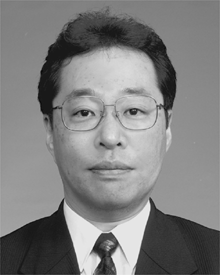 Hitoshi Isahara合作论文数National Institute of Information and Communications Technology15Stijn De Saeger合作论文数14Ryu Iida合作论文数Nara Institute of Science and Technology9Motoki Sano合作论文数7
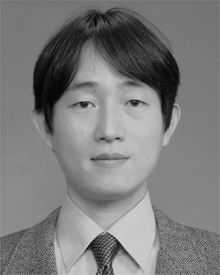 Kiyotaka Uchimoto合作论文数National Institute of Information and Communications Technology6
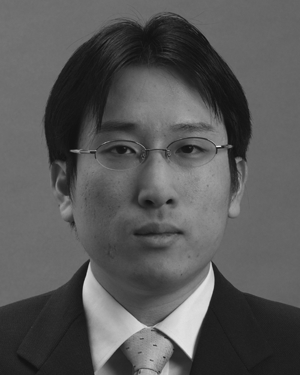 Jun'Ichi Kazama合作论文数5
 Ichiro Yamada合作论文数university of tokyo5
 István Varga合作论文数Computer and Automation Research Institute, Hungarian Academy of Sciences4
 Kiyonori Ohtake合作论文数NICT, Kyoto, Japan4
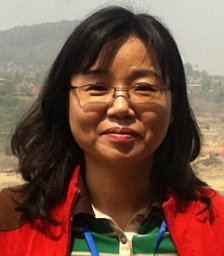 Kyung-Soon Lee合作论文数NII (National Institute of Informatics), Chiyoda-ku, Tokyo, Japan4Takuya Kawada合作论文数4Canasai Kruengkrai合作论文数Yamagishi Lab, Digital Content and Media Sciences Research Division, National Institute of Informatics4
 Daisuke Kawahara (河原大輔)合作论文数Department of Intelligence Science and Technology, Graduate School of Informatics, Kyoto University;Design School, Kyoto University3Duck-Yong Sung合作论文数3Masahiro Tanaka合作论文数Department of Information Science and Systems Engineering
Faculty of Science and Engineering
Konan University3Masaaki Tsuchida合作论文数Innovation Res . Lab3Hyeong-Seop Yeom合作论文数3junichi kazama合作论文数2Namjung Huh合作论文数2Kazuma Kadowaki合作论文数2Ryo Ishida合作论文数Natl Inst Informat Commun Technol2
Daisuke Kawahara (河原大輔)合作论文数Department of Intelligence Science and Technology, Graduate School of Informatics, Kyoto University;Design School, Kyoto University3Duck-Yong Sung合作论文数3Masahiro Tanaka合作论文数Department of Information Science and Systems Engineering
Faculty of Science and Engineering
Konan University3Masaaki Tsuchida合作论文数Innovation Res . Lab3Hyeong-Seop Yeom合作论文数3junichi kazama合作论文数2Namjung Huh合作论文数2Kazuma Kadowaki合作论文数2Ryo Ishida合作论文数Natl Inst Informat Commun Technol2 Yongseok Choi合作论文数Division of Biotechnology, Korea University2
 Yiou Wang合作论文数2Kukjin Kang合作论文数2
 Seungjin Choi合作论文数Machine Learning Lab, Intellicode2Jong-Hoon Ahn合作论文数2
 Kyung-Hoon Kwon合作论文数2Jun'ichi Kazama合作论文数1Kwang Hyung Lee合作论文数1Asuka Yamahata合作论文数1Juho Lee合作论文数1Kwang-Min Lee合作论文数1minki yang合作论文数1
 Seunghwan Kim合作论文数1B. Kim合作论文数1Noriyuki Tomiyama合作论文数1
 Junta Mizuno合作论文数1Shoya Wada合作论文数Osaka Univ, Dept Med Informat, Grad Sch Med, Suita, Osaka, Japan1Kento Sugimoto合作论文数Department of Medical Informatics, Osaka University Graduate School of Medicine1Shozo Konishi合作论文数1
 jinxia huang合作论文数Language Intelligent Research Section, Electronics and Telecommunications Research Institute (ETRI), Daejeon, Republic of Korea1
 Qing Ma (馬青)合作论文数Department of Applied Mathematics and Informatics, Faculty of Science and Technology, Ryukoku University1Jaeho Kim合作论文数1




