The partial androgen deficiency in aging male (PADAM) has been of great interest to investigators and the public in the last few years. For males, androgens are said to be essential for the maintenance of quality of life (QoL) but there are no data available with respect to QoL and PADAM yet. In order to evaluate changes of individual well-being of males older than 50 years and with subnormal levels of free testosterone (FT) (< 200 pmol l(-1)), these men were asked to fill in a questionnaire regarding QoL. The objective of this study was to compare age-matched males with androgen deficiency (group 1; n = 24) and normoandrogenic elderly men (group 2; n = 24) with respect to QoL and somatic indicators of the endocrine status. Participants suffered from benign prostatic hyperplasia (BPH) and were hospitalized for prostate surgery. Health-related QoL was assessed by the SF-12 Health Survey, including the physical health index and the mental health index. The SF-12 was enlarged by the scales 'vitality' and 'psychological well-being' of the SF-36. Additionally, patients were asked about social and clinical items. There were no statistically significant differences between the two groups regarding social and clinical parameters. The physical health index was reduced in group 1 (P < 0.05; effect size was medium (d = 0.57)) whereas the mental health index was similar in both groups. The correlation between the two health indices was very low and not statistically significant (r = 0.05, P = 0.72). Patients of group 1 described a lower vitality compared to group 2 (P < 0.05), but no differences could be observed regarding psychological well-being. Therefore, androgen-deficient patients seem to have the impression of a reduced physical ability. Our data emphasize that the subjective description of health-related aspects of QoL is a very sensitive methodological approach to discover psychological differences between patients. For the differentiation between androgen-deficient patients and those with normal testosterone levels the physical health index seems to be more sensitive than the mental health index. A question of interest is whether this difference remains detectable if testosterone is supplemented to androgen-deficient men. Whether testosterone supplementation is beneficial to these patients has to be carefully considered.
Laryngopharyngeale Reflux (LPR) gilt als Ursache für supraösophageale Symptome (SÖS) bei der gastroösophagealen Refluxkrankheit (GERD). Seine Bedeutung und exakte Diagnose sind umstritten. Ziel unserer Studie war die Validierung der Zweikanal-pH-Metrie als ein Werkzeug zur Diagnose des LPR. Methode: 58 konsekutive Patienten (41,9% männlich, 54[22–79] Jahre) wurden prospektiv evaluiert. Davon wurden 34 aufgrund von gastroösophagealen Refluxbeschwerden (GERD-Gruppe) und 24 weitere zur Diagnostik unklarer laryngealer Symptome mit V.a. GERD untersucht (HNO-Gruppe). Das Screening beinhaltete Ösophagusmanometrie, Zweikanal–24h-pH-Metrie, GERD-Health Related Quality of Life (HRQL)-Fragebogen, einen standardisierten Refluxfragebogen mit Erfassung von SÖS (Husten, Heiserkeit, Asthma) und eine Laryngoskopie. Letztere wurde von einem erfahrenen Phoniater durchgeführt, der gegenüber den weiteren Untersuchungsergebnissen verblindet war. Die Laryngoskopie ergab die Erfassung des Reflux Finding Score (RFS)¹. Ein RFS≥7 wurde als pathologisch gewertet. 16 Patienten mit einem RFS <7 dienten als Kontrollgruppe (CONT). Ergebnisse: Patienten der HNO-Gruppe hatten im Vergleich zu Kontrollen und GERD-Patienten einen signifikant höheren RFS (10,7±3,7 vs. 4,4±3,5 bei GERD p<0,001 vs. 4,2±1,7 bei CONT, p<0,001) und im Vergleich zu GERD-Patienten einen niedrigeren GERD-HRQL (9,3±11,6 vs. 22,1±16,2 p=0,014; CONT: 14,9±11,6; p=0,2) und eine geringere distale Säureexposition (%pH<4: 6,1±4,7 vs. 12,0±8,8, p=0,004 CONT: 9,5±10,4; p=0,72). Alle Patientengruppen unterschieden sich nicht bezüglich der proximalen Säureexposition (1,4±1,6% für HNO vs. 2,0±2,3% für GERD vs. 1,5±1,9% für CONT, p>0,05). Außerdem unterschieden sich Patienten mit SÖS (n=44) bezüglich des proximalen Refluxes nicht von Patienten ohne SÖS (n=11; 1,4±0,9 für Pt. mit SÖS vs. 2,0±2,4 für Pt. ohne SÖS, p=0,939). Es bestand keine signifikante Korrelation zwischen proximaler Refluxzeit, RFS, SÖS oder dem Druck im unteren ösophagealen Sphinkter (Spearman Rho-Test). Schlussfolgerung: Unsere Daten stützen weder die Hypothese, dass laryngophahryngealer Reflux Ursache für laryngeale Symtome ist noch dass der RFS refluxassoziierte Veränderungen misst. Die Zweikanal-pH-Metrie bringt für klinische Fragestellungen keinen Nutzen.
Objective: To evaluate the risk of testicular damage from testicular biopsies that are carried out for testicular sperm extraction (TESE) in infertile men.Design: Prospective controlled clinical study.Setting: Academic hospital.Patient(s): Forty infertile males with azoospermia.Intervention(s): Examination of the clinical, endocrine, biochemical, and sonographic data in average after 18 months after TESE was performed.Main Outcome Measure(s): Measurements before and after TESE: hormone values, testicular size, morphologic characteristics, and power Doppler after scrotal sonography.Result(s): Comparison of preoperative and postoperative values of basal testosterone, FSH, LH, and estradiol levels did not reveal any differences. Twelve of 26 patients had subnormal testosterone values before TESE; 14 of 39 patients had subnormal levels afterward. Postoperative sonographic measurements showed no significant difference of the testicular volume as compared with the preoperative values. Results of power Doppler sonography revealed pathological conditions (n = 5) in patients with former iliacal or testicular operations.Conclusion(s): Endocrine testicular function and testicular size were not impaired after testicular biopsy when compared with preoperative data. However, patients with nonobstructive azoospermia seem to be at risk for androgen deficiency due to primary testicular failure after repeated testicular biopsies. (C) 2003 by American Society for Reproductive Medicine.
Stenosis of the laryngotracheal section is in most cases a sequel of intensive care treatment. Most of the children presenting with such stenoses need tracheostomy that in consequence impedes their physical, social and language development. Surgical treatment of stenosis and closure of tracheostomy as early as possible should be strived for. Reconstructive techniques using autogenous cartilage grafts have proved very effective. The aim of our study was to examine the influence of different methods on the structure and function of reconstructed airways. In 23 children between 2 and 16 years suffering from laryngotracheal stenosis we reconstructed the stenotic segments by insertion of autogenous cartilage grafts. Enlargement was achieved by cartilage implantation as a stent into the split cricoid plate in 16 children; in 3 cases we performed enlargement of the anterior wall and in 5 cases instable lateral walls of the trachea had to be reinforced. One child had to be treated with all three techniques at once. In another case the overstretched and soft posterior tracheal wall had to be stabilized. Enlargement of the cricoid plate has proved excellent in cases of a high degree of stenosis of the posterior commissure (Type III and IV of the Cotton classification). Subglottic stenoses Type II can be treated with anterior insertion of cartilage. The use of cartilage in surgical treatment of laryngotracheal stenosis in childhood leads to safe and sufficiently satisfactory results that do not hamper further development of either larynx or trachea.
Nächtliche Tumeszenzmessung mittels der volumetrischen Elektrobioimpedanzmessung zur Begutachtung der erektilen Dysfunktion
Objective: To determine the feasibility of using frozen-thawed testicular spermatozoa for intracytoplasmic sperm injection.Design: Prospective clinical study.Setting: A university hospital.Patient(s): One hundred seventy-five azoospermic men participating in a routine intracytoplasmic sperm injection program.Intervention(s): The men under went testicular biopsy for cryopreservation of tissue to be used in consecutive intracytoplasmic sperm injection treatment cycles. Their female partners underwent controlled ovarian hyperstimulation for conventional IVF treatment.Main Outcome Measure(s): Fertilization and pregnancy rates.Result(s): In 77% of the patients, spermatozoa could be harvested from the testis by an open testicular biopsy technique and used for intracytoplasmic sperm injection after freezing and thawing of testicular tissue. Histopathologic evaluation revealed a Sertoli cell-only pattern in 21%, maturation arrest in 60%, and hypospermatogenesis in 19% of the patients. In 2.9% of the patients, carcinoma in situ or a germ cell tumor was detected. In all patients, viable spermatozoa could be visualized after the tissue samples were thawed. One hundred thirty-five intracytoplasmic sperm injection treatment cycles were performed, with a fertilization rate of 45% and a clinical pregnancy rate of 30% per oocyte retrieved.Conclusion(s): The use of frozen-thawed testicular tissue allows ovarian stimulation of the female partner to be timed and avoids cancellation of ovum pick-up when spermatozoa cannot be retrieved. (C) 2000 by American Society for Reproductive Medicine.
The primary patient age group for malignant germ cell tumors is 20-35 years. In this group testicular cancer is the most common tumor. Germ cell cancer has long been a model for curable neoplasm, and multimodal therapy regimes lead to cure rates of approximately 100%. Testicular intraepithelial neoplasia (TIN) is recognized as a precursor of seminomatous and nonseminomatous germ cell tumors and is found by testicular biopsy with a diagnostic sensitivity of 99.5%. After 57 years, patients with TIN, if left untreated, have invasive growth in 50-70% of cases. At the time of diagnosis, 60% of patients with germ cell cancer show severe impairment of fertility,as it is the case in 25% of cases after successful therapy. Current case control studies and reports from andrological centers reveal an increased risk for testicular cancer in patients with impaired fertility. We found TIN in 5.3% of our andrological patients (n = 114). Radiotherapy (18-20 Gy) was offered to patients with bilateral TIN or TIN in a single testis, and orchiectomy was performed in cases of inconspicuous contralateral testis. Both forms of therapy lead to cure rates of 100%. In selected patients with high risk for testicular cancer, TIN must be excluded by testicular biopsy when operative procedures on infertility are performed.
Objective: To investigate the ICSI outcome of the patients who produced four follicles or less after ovarian stimulation using frozen-thawed surgically obtained spermatozoa. Study design: The patient cohort of this study was composed of a carefully selected group of 20 men suffering from obstructive and non-obstructive azoospermia and in whom spermatozoa had been seen in their harvested epididymal aspirates and testicular tissues and the cryopreserved specimens had been used for subsequent ICSI cycles. This group of men represent those in whom the female partners produced only four follicles or less after ovarian stimulation. Results: For the cases of obstructive azoospermia with MESA (n = 6) a total of nine cycles was carried out. Four couples went through one cycle, one couple underwent two cycles, one couple accomplished three cycles. Out of the nine cycles, seven went to embryo transfer. No pregnancy occurred in the MESA-ICSI group of patients. The mean +/- S.D. number of oocytes per cycle was 2.556 +/- 1.236, the mean +/- S.D, number of embryos per transfer was 1.444 +/- 1.014. Two couples did not have an embryo replacement because of absence of fertilisatian. The mean +/- S.D. number of gonadotropin ampoules was 53.88 +/- 37.30 and the mean +/- S.D. duration of ovarian stimulation was 13.38 +/- 4.534 days. For the cases of non-obstructive azoospermia with TESE (n = 14) a total of 16 cycles was carried out. Thirteen couples went through one cycle, one couple accomplished three cycles. Out of the 16 cycles, 11 cycles went to embryo transfer. One pregnancy occurred in;he TESE-ICSI group of patients, which produced live offspring. The mean +/- S.D. number of oocytes per cycle was 3.00 +/- 1.211, the mean +/- S.D. number of embryos per transfer was 1.313 +/- 1.195. Five couples did not have an embryo replacement, four of them because of absence of fertilisation and one because of abnormal fertilisation (3 PN). The mean +/- S.D. number of gonadotropin ampoules was 81.77 +/- 53.40 and the mean +/- S.D. duration of ovarian stimulation was 16.71 +/- 3.667 days: Conclusion: In our opinion, these data show that it is possible to achieve satisfactory fertilisation rates using frozen-thawed epididymal and testicular spermatozoa obtained from men with obstructive or non-obstructive azoospermia, but the limiting factor in reaching the stage of embryo transfer is the poor ovarian response to stimulation induction. It therefore seems preferable to cancel these cycles, in the hope that a better response might be obtained in a subsequent cycle, avoiding in this way financial and emotional implications. (C) 2000 Elsevier Science Ireland Ltd. All rights reserved.
Purpose: Since the introduction of intracavernosal injection of prostavasin, measurement of nocturnal tumescence has no longer been an integral part of the diagnostic procedure in patients with erectile dysfunction. A new technique for nocturnal tumescence measurement was tested to determine its value for the diagnosis of erectile dysfunction. Material and Method: The NEVA system consists of three measuring electrodes which are affixed at the thigh, the base of the penis and at the sulcus coronarius. The system measures changes in conducting ability and calculates alterations in penis length, diameter, blood flow and duration of erection. We examined 8 patients between the ages of 31 and 75, who consulted us for the first time between September 6th and 8th, 1999 because of erection disturbances. Results: The nightly measurements yielded protocols over a period of between 5 and 7.4 hours. A maximum of 4 erections with a duration of 4-55 minutes were measured. Peripheral blood Flow varied from 1.33 to 181.5. The change in penile volume ranged between 0% and 316%. Erectile dysfunction after pelvic trauma claimed by two patients could not be confirmed. One patient showed vascular causes, five patients showed differing degrees of erectile dysfunction that suggested psychogenic causes. Conclusions: The NEVA system permits valid measurement of nocturnal erections that can be represented graphically and in tabular form. It is noninvasive, simple to use both for patients and doctors, and provides results that facilitate the distinction between organic and psychogenic causes of erectile dysfunction as well as normal erectile function.
Zusammenfassung Maligne Keimzelltumoren des Hodens stellen in der Altersgruppe der 20- bis 35-jährigen Männer die häufigste Tumorerkrankung dar. Multimodale Therapiekonzepte machen den Keimzelltumor mit Heilungsraten bis zu annähernd 100% zum Modell einer heilbaren Krebserkrankung. Gemeinsamer Ausgangspunkt der Germinalzelltumoren ist die testikuläre intraepitheliale Neoplasie (TIN), die in Risikogruppen mit einer Sensitivität von 99,5% durch eine ungezielte Hodenbiopsie nachgewiesen werden kann. Unbehandelt entwickelt sich bei diesen Patienten in 50–70% der Fälle nach 5–7 Jahren ein invasiver Tumor. Zum Zeitpunkt der Diagnosestellung weisen Patienten mit einem Keimzelltumor in 60% der Fälle eine schwerwiegende Störung der Fertilität auf, nach Therapieabschluss sind dies noch 25%. Umgekehrt zeigen aktuelle Fallkontrollstudien und Berichte andrologischer Zentren ein statistisch erhöhtes Risiko für das Auftreten von Keimzelltumoren bei Patienten mit Fertilitätsstörungen. Im eigenen andrologischen Patientengut wurde bei 5,3% der Patienten eine TIN gefunden. Durch eine lokale Radiatio (18–20 Gy) bei Einzel- oder Resthoden oder Ablatio testis (bei unauffälligem kontralateralen Hoden) wurde in allen Fällen eine Kuration erreicht.
of 2.7 embryos and a mean cumulative embryo score of 18.3 per transfer.The clinical pregnancy and implantation rates per transfer for cryopreserved pronucleated oocytes (23.5 and 8.3% respectively) were comparable with those of fresh embryo transfers (35.7 and 12.7% respectively) with a mean number of 2.7 embryos and a mean cumulative embryo score of 28.7 per transfer.Abortion rates, although higher with cryopreserved PN oocytes, were not different statistically (25 versus 16.7%) nor the cleavage rates of the embryos (96.9 versus 96.2%).ICSI cycles with frozen thawed testicular spermatozoa which offered supernumerary PN oocytes for cryopreservation had higher fertilization rates than those which did not (68.3versus 54.6%).If the remaining 147 supernumerary frozen PN oocytes in hand are also transferred in the future, a maximum of additional 12 singleton pregnancies can be expected on the basis of our implantation and clinical pregnancy rates. Conclusion:The cryopreservation of testicular tissue for future ICSI cycles, if it is found to harbour Ss in cases of nonobstructive azoospermia, avoids both repetitive biopsies and unexpected cycle cancellations while yielding high fertilization and clinical pregnancy rates.This approach even provides supernumerary embryos for cryopreservation that also yields additional pregnancies after thawing and transferring in such a severely defective spermatogenetic population of males.To our knowledge these are the first pregnancies yet reported, by embryo transfer of cryopreserved pronuclear oocytes obtained from cryo-testicular sperm extraction.
Fragestellung: Heute ist die intrazytoplasmatische Spermatozoeninjektion (ICSI) die Methode der Wahl bei der Behandlung schwerer Formen männlicher Infertilität. Neuere Untersuchungen haben ergeben, daß eine Fertilisierung und Teilung von Oozyten sowohl durch Injektion von ejakulierten Rundspermatiden als auch von testikulären runden und elongierten Spermatiden erzielt werden kann.
Purpose: The ICSI procedure is established as the method of choice in the treatment of severe male factor infertility. Recent studies have shown that fertilisation and cleavage can be achieved by injection of ejaculated round spermatids as well as testicular round and elongated spermatids into oocytes.Methods: In this study, attempt was made to establish this procedure in our laboratory to include patients with spermatogenetic maturation arrest in our ICSI programme. Six patients were diagnosed to have complete Sertoli-Cell-Only syndrome after a first testis biopsy. After an additional second biopsy in all cases focal functional spermatogenesis either at the stage of round or elongated spermatids was found. The tissues were cryopreserved until the time of follicle puncture. Women were stimulated using the long protocol by gonadotropine injections after downregulation with GnRH-agonist. ICSI procedure was the same using an injection pipette of 8 - 10 mu m diameter.Results: 66 metaphase-ll oocytes were harvested. In two patients cryopreserved elongated spermatides were successfully injected while in the other four cases cryopreserved round spermatids were possible to be injected into the oocytes. 10 out of 18 oocytes were fertilised in the first group while only 9 out of 48 injected oocytes showed fertilisation and cleavage in the second group. Two clinical pregnancies were achieved with elongated spermatids, while in case of round spermatids, no pregnancy could be established.Conclusions: This study confirms that fertilisation and cleavage could be successfully achieved in cases with spermatogenetic maturation arrest by injecting cryopreserved elongated as well as round spermatides into oocytes. However, pregnancies occurred only after injection of elongated spermatids.
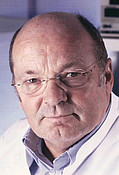 Klaus Diedrich合作论文数Universität Lübeck;Medizinischen Universität zu Lübeck;Universitätsklinikums Schleswig-Holstein13
 M. Bals-Pratsch合作论文数13
 Dieter Jocham合作论文数13Rainer Johannisson合作论文数11Wolfgang Kupker合作论文数8S. Al-Hasani合作论文数7
 Hartwig Buttner合作论文数6T Schill合作论文数6Ruth Lindmar合作论文数5Konrad Löffelholz合作论文数4R. Eichenauer合作论文数3Karl H. Jakobs合作论文数3
 Richard Wurtman合作论文数Massachusetts Institute of Technology3Beate Schopper合作论文数3R Sturm合作论文数3
 Sabreen Hasani合作论文数2D Homann合作论文数2Birgit Fasselt合作论文数2Muller Ulrich合作论文数2Voderholzer W A合作论文数2H Müller合作论文数2Herbert Lochs合作论文数2
 Christian Doehn合作论文数2Thomas Fiedler合作论文数2Andreas Wirger合作论文数2Otmar Bauer合作论文数2D. Verges合作论文数2P Darb-Esfahani合作论文数2Wolfram Seidner合作论文数2E Bombien合作论文数1S M Hüwe合作论文数1I Wessler合作论文数1K Spicher合作论文数1
 Heidi Olze合作论文数1B Kreft合作论文数1
 Martina E Schmidt合作论文数Dept Mol Pharmacol, Univ Groningen1
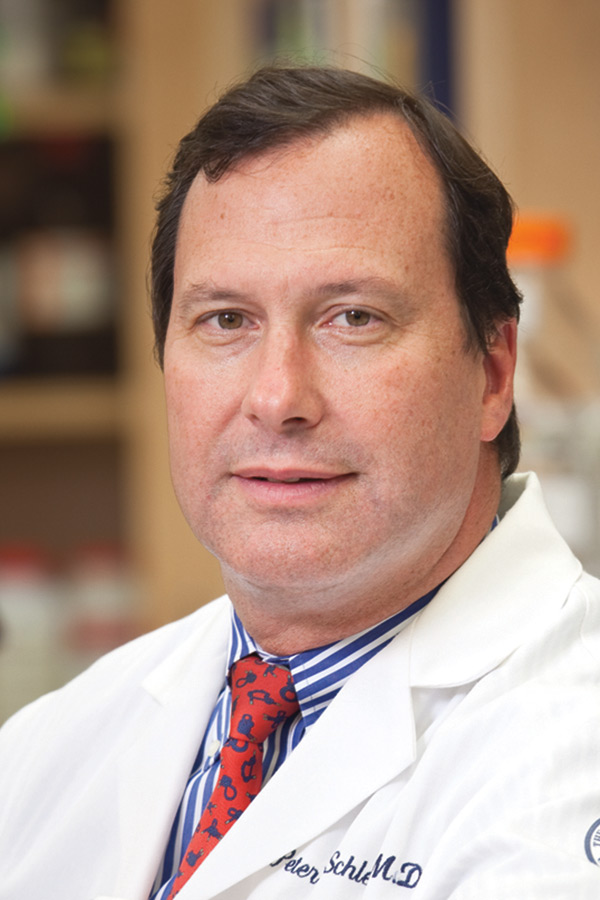 Peter N. Schlegel合作论文数New York Men’s Health Medical, PLLC1S Kumar合作论文数1Böhmer T合作论文数1Hüppe M合作论文数1
 Paolo Fornara合作论文数Martin-Luther-Universität Halle-Wittenberg;Nierentransplantationszentrum, Universitätsklinik und Poliklinik für Urologie;Uroonkologisches Zentrum, Universitätsklinik und Poliklinik für Urologie;Prostatakarzinomzentrum, Universitätsklinik und Poliklinik für Urologie1T. Schill合作论文数1
 Peter Schmucker合作论文数1
 Stefan Offermanns合作论文数Department of Pharmacology, Max Planck Institute for Heart and Lung Research;Goethe University1
 Guenter Schultz合作论文数Institute for Pharmacology, Freie Universität Berlin1M. Ludwig合作论文数1Tobias Pottek合作论文数Abteilung Urologie, Bundeswehrkrankenhaus Hamburg1Ulrich Rümenapp合作论文数1




