Automated calibration is a crucial stage when validating non-linear dynamic systems. The modeler must control the calibration results and analyze parameter values in an iterative way. In many non-linear models, it is usual to find sets of configuration parameters that may obtain the same model fitting. In these cases, the modeler needs to understand the results’ implications and run a sensitivity analysis to check the model validity. This paper presents a framework based on niching genetic algorithms to provide modeler with a set of alternative calibration solutions which also ease the analysis of their parameters, model’s response, and sensitivity analysis. The framework is called MOMCA, an integral and interactive solution for model validation which facilitates the implication of decision makers. The core component of MOMCA is its niching genetic algorithm, able to reach various optima in multimodal optimization problems by keeping the necessary diversity. The proposed framework is applied to two different case studies. The first case study is a biological growth model and the second one is a managerial model to improve brand equity. Both applications show the benefits of the framework when providing a set of calibrated models and a way to analyze and perform sensitivity analysis based on the set of solutions.
Real-world applications demand effective methods to estimate the class distribution of a sample. In many domains, this is more productive than seeking individual predictions. At a first glance, the straightforward conclusion could be that this task, recently identified as quantification, is as simple as counting the predictions of a classifier. However, due to natural distribution changes occurring in real-world problems, this solution is unsatisfactory. Moreover, current quantification models based on classifiers present the drawback of being trained with loss functions aimed at classification rather than quantification. Other recent attempts to address this issue suffer certain limitations regarding reliability, measured in terms of classification abilities. This paper presents a learning method that optimizes an alternative metric that combines simultaneously quantification and classification performance. Our proposal offers a new framework that allows the construction of binary quantifiers that are able to accurately estimate the proportion of positives, based on models with reliable classification abilities.
System dynamics provides the means for modelling complex systems such as those required to analyse many economic and marketing phenomena. When tackling highly complex problems, modellers can soundly increase their understanding of these systems by automatically identifying the key variables that arise from the model structure. In this work we propose the application of social network analysis metrics, like degree, closeness or centrality, to quantify the relevance of each variable. These metrics shall assist modellers in identifying the most significant variables of the system. We apply our proposed key variable detection algorithm to a brand management problem modelled via system dynamics. Simulation results show how changes in these variables have an noteworthy impact over the whole system.
Several meta-learning techniques for multi-label classification (MLC), such as chaining and stacking, have already been proposed in the literature, mostly aimed at improving predictive accuracy through the exploitation of label dependencies. In this paper, we propose another technique of that kind, called dependent binary relevance (DBR) learning. DBR combines properties of both, chaining and stacking. We provide a careful analysis of the relationship between these and other techniques, specifically focusing on the underlying dependency structure and the type of training data used for model construction. Moreover, we offer an extensive empirical evaluation, in which we compare different techniques on MLC benchmark data. Our experiments provide evidence for the good performance of DBR in terms of several evaluation measures that are commonly used in MLC.
In many applications, the mistakes made by an automatic classifier are not equal, they have different costs. These problems may be solved using a cost-sensitive learning approach. The main idea is not to minimize the number of errors, but the total cost produced by such mistakes. This brief presents a new multiclass cost-sensitive algorithm, in which each example has attached its corresponding misclassification cost. Our proposal is theoretically well-founded and is designed to optimize cost-sensitive loss functions. This research was motivated by a real-world problem, the biomass estimation of several plankton taxonomic groups. In this particular application, our method improves the performance of traditional multiclass classification approaches that optimize the accuracy.
One approach to multi-class classification consists in decomposing the original problem into a collection of binary classification tasks. The outputs of these binary classifiers are combined to produce a single prediction. Winner-takes-all, max-wins and tree voting schemes are the most popular methods for this purpose. However, tree schemes can deliver faster predictions because they need to evaluate less binary models. Despite previous conclusions reported in the literature, this paper shows that their performance depends on the organization of the tree scheme, i.e. the positions where each pairwise classifier is placed on the graph. Different metrics are studied for this purpose, proposing a new one that considers the precision and the complexity of each pairwise model, what makes the method to be classifier-dependent. The study is performed using Support Vector Machines (SVMs) as base classifiers, but it could be extended to other kind of binary classifiers. The proposed method, tested on benchmark data sets and on one real-world application, is able to improve the accuracy of other decomposition multi-class classifiers, producing even faster predictions.
This paper presents a new approach for solving binary quantification problems based on nearest neighbor (NN) algorithms. Our main objective is to study the behavior of these methods in the context of prevalence estimation. We seek for NN-based quantifiers able to provide competitive performance while balancing simplicity and effectiveness. We propose two simple weighting strategies, PWK and PWKα, which stand out among state-of-the-art quantifiers. These proposed methods are the only ones that offer statistical differences with respect to less robust algorithms, like CC or AC. The second contribution of the paper is to introduce a new experiment methodology for quantification.
The goal of multilabel (ML) classification is to induce models able to tag objects with the labels that better describe them. The main baseline for ML classification is binary relevance (BR), which is commonly criticized in the literature because of its label independence assumption. Despite this fact, this paper discusses some interesting properties of BR, mainly that it produces optimal models for several ML loss functions. Additionally, we present an analytical study of ML benchmarks datasets and point out some shortcomings. As a result, this paper proposes the use of synthetic datasets to better analyze the behavior of ML methods in domains with different characteristics. To support this claim, we perform some experiments using synthetic data proving the competitive performance of BR with respect to a more complex method in difficult problems with many labels, a conclusion which was not stated by previous studies.
The Model-Driven Engineering paradigm is aimed at raising the abstraction level of Software Engineering approaches through the systematic use of models as primary artifacts, not only in software design and development, but also to understand, interact, configure, and modify the runtime behavior of software. It tries to overcome the wall between the documentation and the real state of the implementation. For that matter, our long-term goal seeks to reach a higher degree of interoperability among available meta-modeling technologies through bridges among technological spaces (TS bridges). The proposed system provides several ATL (ATLAS Transformation Language) transformations that enable the application of measuring operations over ATL transformation models and rules, and the generation of different complementary end-user models, such as SVG charts and (X)HTML reports. For this work, we have evaluated a set of meta-modeling TS bridges among UML, MOF, Ecore, KM3, and Microsoft DSL Tools. These results provide quantitative measurements of the declarative and imperative constructs of these transformations and relative quality factors as well. In addition to this, all the top-level results extracted from the measurement of these TS bridges are merged into one unique model in order to assist in performing a comparative study among them. This comparative study suggests that it is feasible to apply automatic transformations over transformation models, i.e. meta-transformations. In this regard, there are many open research trends towards complete management, validation, optimization, and inference of TS bridges between complementary meta-modeling technologies. Copyright (C) 2010 John Wiley & Sons, Ltd.
Since the concept of fuzzy set was defined in 1965 by Zadeh, numerous papers on fuzzy topics have been published and many of his seminal ideas have evolved in different directions. However, there is lack of natural and intuitive procedures to capture fuzzy perceptions from non-expert users. In this paper, we propose an innovative approach to solve this problem with a straightforward and repeatable mechanism based on a web gadget. The key benefit of this approach is that users obtain an immediate feedback thanks to the use of a visual spray pen metaphor. We also propose several algorithms to model these fuzzy perceptions with trapezoidal fuzzy set approximations. These algorithms are then evaluated though a real case study in order to test the usability and usefulness of the proposed gadget. One of the main conclusions extracted from this work suggests that the evaluation of the fitness of these approximations is intrinsically subjective, requiring further development and research.
Nowadays there is a growing need of ubiquity for learning, research and development tools, due to the portability and availability problems concerning traditional desktop applications. In this paper, we suggest an approach to avoid any further download or installation. The main goal is to offer a collaborative and extensible web environment which will cover a series of domains highly demanded by different kinds of working groups, in which it is crucial to have tools which facilitate the exchange of information and the collaboration among their members. The result of those interactions would be the development of one or several diagrams accessible from any geographical location, independently of the device employed. The environment can be adapted through personalized components, depending on the type of diagram that the user wants to interact with and the users can also create new elements or search and share components with other users of the community. By means of this environment, it will be possible to do research on the usability of collaborative tools for design diagrams, as well as research on the psychology of group interactions, assessing the results coming from the employment of known methodologies, techniques, paradigms or patterns, both at an individual and at a collaborative group level.
Models are becoming first-class artifacts in Software Engineering because they provide better productivity and quality. In this paper we present a framework for developing all kinds of applications, mainly by following the best practices of the two main approaches to Model-Driven Engineering (MDE). On one hand is MDA (Model-Driven Architecture), proposed by the OMG (Object Management Group) and on the other hand are the Software Factories, proposed by Microsoft. Both approaches have their pros and cons and that is why we want to mix them into a single framework by selecting the best that each of them can give us. TALISMAN MDE Framework is based on the opinion of recognized experts in MDE and on the lessons learned in our previous work, TALISMAN MDA.
Models and transformations between models are provided as the core of Model-Driven Engineering, offering reusability of knowledge and processes. In order to establish the basis of future advances in this emerging paradigm, this paper is focused on the principles of meta-models and transformation models. Moreover, the concept of meta-model is becoming an essential artifact for MDE based solutions, thus we have centered our background review in the state of art related to meta-model specifications and model transformation technologies. Our research is aimed at getting a higher degree of interoperability among available meta-model specifications by raising the transformation models to the upper meta-layers. Some conclusions extracted suggest that this is still an early solution which demands greater efforts in terms of research, development and specification, with many interesting open subjects like design of generic editors for model-agnostic visual modeling, integration of model instances from different meta-models, improvements of the semantic knowledge offered by present modeling languages or even the evaluation of the applicability of graph transformation techniques towards formal transformation models.
Driver development is a tedious and complex task, which involves deep knowledge of the operating system and the programming language needed to communicate with hardware devices. Due to the vertiginous advances inside the hardware industry, it is very important to develop drivers in an easy and fast way. But the reality shows that when we develop a driver there is little information available and, what is worse, that information is wrong or inaccurate. Thus, trying to implement hardware programs became almost impossible.
 Vicente García-Díaz合作论文数Department of Computer Science, University of Oviedo6
 Juan José Del Coz合作论文数Centro de Inteligencia Artificial, Universidad de Oviedo at Gijón6
 Jorge Diez合作论文数Centro de Inteligencia Artificial, Universidad de Oviedo at Gijón5
 Juan Manuel Cueva Lovelle合作论文数Departamento de Inform??tica;Universidad de Oviedo5Sheila Mendez Nunez合作论文数4
 Oscar Sanjuán Martínez合作论文数Department of Computer Science, University of Oviedo4
 Ignacio González Alonso合作论文数3
 Ruben Gonzalez Crespo合作论文数Sch Engn & Technol, Univ Int La Rioja3M. P. Almudena García Fuente合作论文数3Gloria García Fernández合作论文数3B. Cristina Pelayo G-Bustelo合作论文数2
 Pablo Gonzalez合作论文数2Paula Suárez De Francisco合作论文数2
 Manuel Chica合作论文数European Centre for Soft Computing2
 Sergio Damas合作论文数Research Unit "Applications of Fuzzy Logic and Evolutionary Algorithms"2
 Oscar Cordón合作论文数Department of Computer Science and Artificial Intelligence,University of Granada (UGR)2
 Elena Montañés合作论文数Artificial Intelligence Center, University of Oviedo2Daniel Zapico Palacio合作论文数1Sergio Garcia Caso合作论文数1
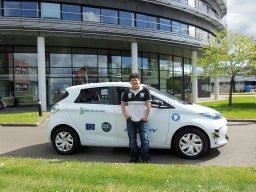 Salvador Dominguez合作论文数Ecole Cent Nantes, LS2N, 1 Rue Noe, F-44321 Nantes, France1
 Patricia Ordóñez De Pablos合作论文数Facultad de Economía y Empresa, Universidad de Oviedo1
 Antonio Bahamonde合作论文数Department of Informatics, Universidad de Oviedo1
 Tomasz Kajdanowicz合作论文数Department of Artificial Intelligence, Faculty of Information and Communication Technologies, Wroclaw University of Science and Technology1
 B. Cristina Pelayo Garcia-Bustelo合作论文数1
 Robin Senge合作论文数Department of Mathematics;Computer Science, and;University of Marburg;Department of Mathematics|and Computer Science, University of Marburg1
 Angel Lopez-Urrutia合作论文数1Héctor Fernández-Fernández合作论文数1
 Enrique Nogueira合作论文数1
 Eyke Hüllermeier合作论文数Heinz Nicdorf Institute, Paderborn University;Department of Computer Science, Paderborn University;Institute of Informatics, Faculty of Mathematics, Informatics and Statistics, Ludwig-Maximilians-Universität München1
 Oscar Luaces合作论文数Artificial Intelligence Center, University of Oviedo at Gijon1
 Eduardo Zalama Casanova合作论文数Departamento de Ingeniería de Sistemas y Automática, Instituto de las Tecnologías de la Producción, Escuela de Ingenierías Industriales, Universidad de Valladolid1
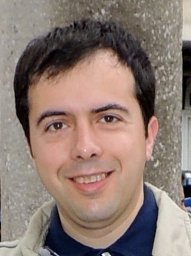 José Ramón Quevedo合作论文数Artificial Intelligence Center, University of Oviedo at Gijón1Santiago Rodriguez Fernandez合作论文数1Ana B. Martínez合作论文数1Silvia Martin合作论文数1
 Elias Palacios-Gonzalez合作论文数1
 Jose Emilio Labra Gayo合作论文数University of Oviedo1
 Eva Alvarez合作论文数Centre National de la Recherche Scientifique (CNRS),, Institut National de la Recherche Agronomique (INRA),1
 Sergio Guadarrama合作论文数Google DeepMind1
 Rafael Gonzalez-Quiros合作论文数Unidad de Ecología, Universidad de Oviedo1




