There are many scenarios where we may want to find pairs of textually similar documents in a large corpus (e.g. a researcher doing literature review, or an R&D project manager analyzing project proposals). To programmatically discover those connections can help experts to achieve those goals, but brute-force pairwise comparisons are not computationally adequate when the size of the document corpus is too large. Some algorithms in the literature divide the search space into regions containing potentially similar documents, which are later processed separately from the rest in order to reduce the number of pairs compared. However, this kind of unsupervised methods still incur in high temporal costs. In this paper, we present an approach that relies on the results of a topic modeling algorithm over the documents in a collection, as a means to identify smaller subsets of documents where the similarity function can then be computed. This approach has proved to obtain promising results when identifying similar documents in the domain of scientific publications. We have compared our approach against state of the art clustering techniques and with different configurations for the topic modeling algorithm. Results suggest that our approach outperforms (> 0.5) the other analyzed techniques in terms of efficiency.
Multilingual BERT (mBERT) has shown reasonable capability for zero-shot cross-lingual transfer when fine-tuned on downstream tasks. Since mBERT is not pre-trained with explicit cross-lingual supervision, transfer performance can further be improved by aligning mBERT with cross-lingual signal. Prior work proposes several approaches to align contextualised embeddings. In this paper we analyse how different forms of cross-lingual supervision and various alignment methods influence the transfer capability of mBERT in zero-shot setting. Specifically, we compare parallel corpora vs. dictionary-based supervision and rotational vs. fine-tuning based alignment methods. We evaluate the performance of different alignment methodologies across eight languages on two tasks: Name Entity Recognition and Semantic Slot Filling. In addition, we propose a novel normalisation method which consistently improves the performance of rotation-based alignment including a notable 3% F1 improvement for distant and typologically dissimilar languages. Importantly we identify the biases of the alignment methods to the type of task and proximity to the transfer language. We also find that supervision from parallel corpus is generally superior to dictionary alignments.
Searching for similar documents and exploring major themes covered across groups of documents are common activities when browsing collections of scientific papers. This manual knowledge-intensive task can become less tedious and even lead to unexpected relevant findings if unsupervised algorithms are applied to help researchers. Most text mining algorithms represent documents in a common feature space that abstract them away from the specific sequence of words used in them. Probabilistic Topic Models reduce that feature space by annotating documents with thematic information. Over this low-dimensional latent space some locality-sensitive hashing algorithms have been proposed to perform document similarity search. However, thematic information gets hidden behind hash codes, preventing thematic exploration and limiting the explanatory capability of topics to justify content-based similarities. This paper presents a novel hashing algorithm based on approximate nearest-neighbor techniques that uses hierarchical sets of topics as hash codes. It not only performs efficient similarity searches, but also allows extending those queries with thematic restrictions explaining the similarity score from the most relevant topics. Extensive evaluations on both scientific and industrial text datasets validate the proposed algorithm in terms of accuracy and efficiency.
With the ongoing growth in number of digital articles in a wider set of languages and the expanding use of different languages, we need annotation methods that enable browsing multi-lingual corpora. Multilingual probabilistic topic models have recently emerged as a group of semi-supervised machine learning models that can be used to perform thematic explorations on collections of texts in multiple languages. However, these approaches require theme-aligned training data to create a language-independent space. This constraint limits the amount of scenarios that this technique can offer solutions to train and makes it difficult to scale up to situations where a huge collection of multi-lingual documents are required during the training phase. This paper presents an unsupervised document similarity algorithm that does not require parallel or comparable corpora, or any other type of translation resource. The algorithm annotates topics automatically created from documents in a single language with cross-lingual labels and describes documents by hierarchies of multi-lingual concepts from independently-trained models. Experiments performed on the English, Spanish and French editions of JCR-Acquis corpora reveal promising results on classifying and sorting documents by similar content.
Cross-lingual annotations of legislative texts enable us to explore major themes covered in multilingual legal data and are a key facilitator of semantic similarity when searching for similar documents. Multilingual probabilistic topic models have recently emerged as a group of semi-supervised machine learning models that can be used to perform thematic explorations on collections of texts in multiple languages. However, these approaches require theme-aligned training data to create a language-independent space, which limits the amount of scenarios where this technique can be used. In this work, we provide an unsupervised document similarity algorithm based on hierarchies of multi-lingual concepts to describe topics across languages. The algorithm does not require parallel or comparable corpora, or any other type of translation resource. Experiments performed on the English, Spanish, French and Portuguese editions of JCR-Acquis corpora reveal promising results on classifying and sorting documents by similar content.
Summaries and abstracts of research papers have been tra- ditionally used for many purposes by scientists, research practitioners, editors, programme committee members or reviewers (e.g. to identify relevant papers to read or publish, cite them, explore new fields and disciplines). As a result, many paper repositories only store or expose abstracts, what may limit the capacity of finding the right paper for a specific research purpose. Given the size limitations and the concise nature of abstracts, they usu- ally omit explicit references to some contributions and impacts of the paper. Therefore for certain information retrieval tasks they cannot be considered as the most appropriate excerpt of the paper to base these operations on. In this paper we have studied other kinds of summaries, built upon textual fragments falling under certain categories of the sci- entific discourse, such as outcome, background, approach, etc, in order to decide which one is more appropriate in order to substitute the origi- nal text. In particular, two novel measures are proposed: (1) internal- representativeness, which evaluates how well a summary describes what the full-text is about and (2) external-representativeness, which evaluates the potential of a summary to discover related texts. Results suggest that summaries explaining the method of a scientific article express a more accurate description of the full-content than oth- ers. In addition, more relevant related articles are also discovered from summaries describing the method, together with those containing the background knowledge or the outcomes of the research paper.
Code and results associated to the experiments described in the paper An Initial Analysis of Topic-based Similarity among Scientific Documents based on their Rhetorical Discourse Parts, Badenes-Olmedo C., Redondo-Garcia JL, Corcho O. Corpus created by combining journals in different scientific domains such as 'Advances in Space Research', 'Procedia Chemistry', 'Journal of Pharmaceutical Analysis' and 'Journal of Web Semantics'.
We present librAIry, a novel architecture to store, process and analyze large collections of textual resources, integrating existing algorithms and tools into a common, distributed, high-performance workflow. Available text mining techniques can be incorporated as independent plug&play modules working in a collaborative manner into the framework. In the absence of a pre-defined flow, librAIry leverages on the aggregation of operations executed by different components in response to an emergent chain of events. Extensive use of Linked Data (LD) and Representational State Transfer (REST) principles are made to provide individually addressable resources from textual documents. We have described the architecture design and its implementation and tested its effectiveness in real-world scenarios such as collections of research papers, patents or ICT aids, with the objective of providing solutions for decision makers and experts in those domains. Major advantages of the framework and lessons-learned from these experiments are reported.
Planning a visit to Expo Milano 2015 or simply touring in Milan are activities that require a certain amount of a priori knowledge of the city. In this paper, we present the process of building such a comprehensive knowledge base, the 3cixty KB, that contains descriptions of events, places, transportation facilities and social activities, collected from numerous static, nearand real-time local and global data providers, including Expo Milano 2015 official services and several social media platforms. Entities in the 3cixty KB are deduplicated, interlinked and enriched using semantic technologies. The 3cixty KB is empowering the ExplorMI 360 multi-device application, which has been officially endorsed by the E015 Technical Management Board and has gained the patronage of Expo Milano 2015, thus offering a unique testing scenario for the 20 million expected visitors along the 6 months of the exhibit. As of September 7th, 2015 the 3cixty KB contains unique descriptions of 18, 665 events, 758 artists, 225, 552 places, 9, 342 transportation facilities, 95, 570 illustrating photos and 94, 789 reviews contributed by 81, 944 users. The 3cixty KB is accessible at http://3cixty.eurecom.fr/sparql while ExplorMI 360 at https://www.3cixty.com.
The Web enables to have access to silo-ed information describing news articles, often offering a multitude of viewpoints that, once combined, can provide a broader picture of the story being reported on the news. In this paper, we propose an approach that automatically extracts representative features of a news item, namely named entities, from textual content attached to a video item (subtitles) and from a set of documents from the Web collected using entity expansion techniques. Approaches relying on entity expansion generally try to collect and process the important facts behinds a particular news item, but they are often too dependent on frequency-based functions and information retrieval techniques thus neglecting the multi-dimensional relationships that are established among the entities. We propose a concentric-based approach that enables to represent the context of a news item, by harmonizing into a single model the representative entities, which can be extracted using information retrieval and natural language processing techniques (Core), and other entities that get prominent according to different dimensions such as informativeness, semantic connectivity, or popularity (Crust). We compare our approach with a baseline by analyzing the compactness of the generated summary on an existing gold standard available on the Web. Results of the experiments show that our approach converges faster to the ideal compact news snapshot with an improvement of 36.9% over the baseline.
We live in a constantly evolving world where news stories and relevant facts are happening every moment. For each of those stories, numerous news articles, posts, and social media reactions are created, offering a multitude of viewpoints about what is happening around us. Many applications have tried to deal with this complexity from very different angles, targeting particular needs, reconstructing certain parts of the story, and exploiting certain visualization paradigms. In this paper, we identify those challenges and study how an adequate news story representation can effectively support the different phases of the news consumption process. We propose an innovative model called News Semantic Snapshot (NSS) that is designed to capture the entire context of a news item. This model can feed very different applications assisting the users before, during, and after the news story consumption. It formalizes a duality in the news annotations that distinguishes between representative entities and relevant entities, and considers different relevancy dimensions that are incorporated into the model in the form of concentric layers. Finally, we analyze the impact of this NSS on existing prototypes and how it can support future ones.
TV newscasts report about the latest event-related facts occurring in the world. Relying exclusively on them is, however, insufficient to fully grasp the context of the story being reported. In this paper, we propose an approach that retrieves and analyzes related documents from the Web to automatically generate semantic annotations that provide viewers and experts comprehensive information about the news. We detect named entities in the retrieved documents that further disclose relevant concepts that were not explicitly mentioned in the original newscast. A ranking algorithm based on entity frequency, popularity peak analysis, and domain experts' rules sorts those annotations to generate what we call Semantic Snapshot of a Newscast (NSS). We benchmark this method against a gold standard generated by domain experts and assessed via a user survey over five BBC newscasts. Results of the experiments show the robustness of our approach holding an Average Normalized Discounted Cumulative Gain of 66.6%.
Planning a visit to Expo Milano 2015 or simply touring in Milan are activities that require a certain amount of a priori knowledge of the city. In this paper, we present the process of building such a comprehensive knowledge base, the 3cixty KB, that contains descriptions of events, places, transportation facilities and social activities, collected from numerous static, near-and real-time local and global data providers, including Expo Milano 2015 official services and several social media platforms. Entities in the 3cixty KB are deduplicated, interlinked and enriched using semantic technologies. The 3cixty KB is empowering the Ex-plorMI 360 multi-device application, which has been officially endorsed by the E015 Technical Management Board and has gained the patronage of Expo Milano 2015, thus offering a unique testing scenario for the 20 million expected visitors along the 6 months of the exhibit. As of Septem-ber 7th, 2015 the 3cixty KB contains unique descriptions of 18, 665 events, 758 artists, 225, 552 places, 9, 342 transportation facilities, 95, 570 illustrating photos and 94, 789 reviews contributed by 81, 944 users. The 3cixty KB is accessible at http://3cixty.eurecom.fr/sparql while Ex-plorMI 360 at https://www.3cixty.com.
This paper presents a system that detects and enables the exploration of relevant fragments (called Hot Spots) inside educational online videos. Our approach combines visual analysis techniques and background knowledge from the web of data in order to quickly get an overview about the video content and therefore promote media consumption at the fragment level. First, we perform a chapter segmentation by combining visual features and semantic units (paragraphs) available in transcripts. Second, we semantically annotate those segments via Named Entity Extraction and topic detection. We then identify consecutive segments talking about similar topics and entities that we merge into bigger and semantic independent media units. Finally, we rank those segments and filter out the lowest scored candidates, in order to propose a summary that illustrates the Hot Spots in a dedicated media player. An online demo is available at http://linkedtv.eurecom.fr/ mediafragmentplayer.
Describing multimedia content in general and TV programs in particular is a hard problem. Relying on subtitles to extract named entities that can be used to index fragments of a program is a common method. However, this approach is limited to what is being said in a program and written in a subtitle, therefore lacking a broader context. Furthermore, this type of index is restricted to a flat list of entities. In this paper, we combine the power of non-structured documents with structured data coming from DBpedia to generate a much richer, context aware metadata of a TV program. We demonstrate that we can harvest a rich context by expanding an initial set of named entities detected in a TV fragment. We evaluate our approach on a TV news show.
We present an approach that leverages on the knowledge present on the Web for identifying and enriching relevant items inside a News video and displaying them in a timely and user friendly fashion. This second screen prototype (i) collects and offers information about persons, locations, organizations and concepts occurring in the newscast, and (ii) combines them for enriching the underlying story along five main dimensions: expert's opinions, timeline, in depth, in other sources, and geo-localized comments from other viewers. Starting from preliminary insights coming from the named entities spotted on the subtitles, we expand this initial context to a broader event representation by relying in the knowledge of other Web documents talking about the same fact. An online demo of the proposed solution is available at http://www.linkedtv.project.cwi.nl/news/.
Nowadays, more and more information on the Web is becoming available in a structured and easily searchable way. Multimedia and particularly television content has to adopt those same Web principles in order to make the consumption of media items and Web browsing seamlessly interconnected, no matter if the content is coming live from a local broadcaster or from an online video streaming service. This research proposes the creation of a methodology for representing, searching and interlinking multimedia items with other existing resources. This model has to be easily extensible and Web compliant in order to make the generated annotations available to the outside world and reused in other similar applications.
Social networks play an increasingly important role for sharing media items related to human's activities, feelings, emotions and conversations opening a window to the world in real-time. However, these images and videos are spread over multiple social networks. In this paper, we first describe a so-called media server that collect recent images and videos which can be potentially attached to an event. These media items can then be used for the automatic generation of visual summaries. However, making sense out of the resulting media galleries is an extremely challenging task. We present a framework that leverages on: ( i ) visual features from media items for near-deduplication and ( ii ) textual features from status updates to enrich, cluster and generate storyboards. A prototype is publicly available at http://mediafinder.eurecom.fr.
This deliverable presents an update of the LinkedTV metadata model as part of the WP2 of the LinkedTV project. It includes a set of mappings with other ontologies such as LUMO used in WP4. Second, we describe the converter module named TV2RDF, implemented as a REST service, that populates the LinkedTV triple store with RDF data resulting from the automatic conversion of legacy metadata provided by the content provider, of automatic analysis results generated by WP1, and of named entity recognition and disambiguation applied on subtitles provided with the content. Third, we describe the model and the service that aims to provide enrichments for particular media fragments of a seed video content. Finally, we present a number of useful SPARQL queries that are typically needed by the LinkedTV player or other clients that wish to reuse this semantic dataset.
With the steady increase of videos published on media sharing platforms such as Dailymotion and YouTube, more and more efforts are spent to automatically annotate and organize these videos. In this paper, we propose a framework for classifying video items using both textual features such as named entities extracted from subtitles, and temporal features such as the duration of the media fragments where particular entities are spotted. We implement four automatic machine learning algorithms for multiclass classification problems, namely Logistic Regression (LG), K-Nearest Neighbour (KNN), Naive Bayes (NB) and Support Vector Machine (SVM). We study the temporal distribution patterns of named entities extracted from 805 Dailymotion videos. The results show that the best performance using the entity distribution is obtained with KNN (overall accuracy of 46.58%) while the best performance using the temporal distribution of named entities for each type is obtained with SVM (overall accuracy of 43.60%). We conclude that this approach is promising for automatically classifying online videos.
 Raphaël Troncy合作论文数Data Science Department, Eurecom17
 Giuseppe Rizzo合作论文数LINKS Foundation12
 Adolfo Lozano-Tello合作论文数Computer and Science Department, Universidad de Extremadura11
 Oscar Corcho合作论文数Ontology Engineering Group, Departamento de Inteligencia Artificial, Universidad Politécnica de Madrid;LibrAIry_eu;DIH - AIR4S;LocaliData9
 Carlos Badenes-Olmedo合作论文数Univ Politecn Madrid7
 Thomas Steiner合作论文数Google4
 Rik Van De Walle合作论文数IDLAB - Internet Technology and Data Science Lab, Faculty of Engineering and Architecture, Ghent University;CESAER4
 Alvaro E. Prieto合作论文数Quercus Software Engineering Group, University of Extremadura4
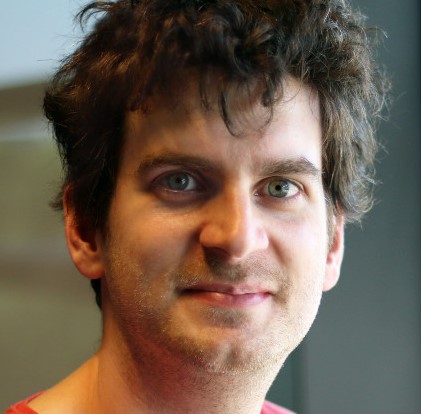 Ruben Verborgh合作论文数Internet Technology and Data Science Lab, Ghent University3
 Vuk Milicic合作论文数3Vicente Botón-Fernández合作论文数3Kai-Dominik Kuhn合作论文数2Juan Carlos Ballesteros Hermida合作论文数2Emiliano Sergio Verga合作论文数2christian scanu合作论文数2Adrian Spirescu合作论文数2
 Catalin-Mihai Barbu合作论文数University of Duisburg-Essen2
 Anthony Jameson合作论文数German Research Center for Artificial Intelligence2
 Matteo Rossi合作论文数Polytechnic University of Milan,Department of Electronics, Information and Bioengineering2
 Michiel Hildebrand合作论文数CWI2
 Rachit Agarwal合作论文数Department of Computer Science at Cornell University2Pablo A. Valiente-Rocha合作论文数2
 Ahmad Assaf合作论文数SAP Research2
 Animesh Pathak合作论文数Politecnico di Milano;University of Southern California;University of Trento;University of Southern California, University of Trento2
 Massimo Valla合作论文数Science Department, Computer2
 Irene Celino合作论文数CEFRIEL - Politecnico di Milano2
 José-Luis González-Sánchez合作论文数2
 Lilia Perez Romero合作论文数Eindhoven University of Technology2
 Javier Corral Garcia合作论文数CénitS (Centro Extremeño de iNvestigación, Innovación Tecnológica y Supercomputación), Calle Sola, Trujillo - Extremadura - España2yunjia li合作论文数1
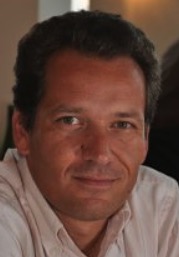 Benoit Huet合作论文数Median Technologies1
 Pasquale Lisena合作论文数Data Science Department, EURECOM1Mariella Sabatino合作论文数1
 Gary Wills合作论文数University of Southampton1
 Erik Mannens合作论文数Internet Technology and Data Science Lab, Faculty of Engineering and Architecture, Ghent University;Department of Electronics and information systems, Faculty of Engineering and Architecture, Ghent University;University of Antwerp;Imec, Ghent University1
 Daniel Stein合作论文数RWTH Aachen University1Carlos-Jorge Del Arco González合作论文数1
 Ching-Yun Chang合作论文数Amazon1
 Julien Plu合作论文数Lettria1Alfonso Gazo-Cervero合作论文数1
 Timber Haaker合作论文数Delft University of Technology1
 Saurabh Kulshreshtha合作论文数Department of Computer Science, University of Massachusetts Lowell1
 Evlampios Apostolidis合作论文数Information Technologies Institute, Centre for Research and Technology Hellas1
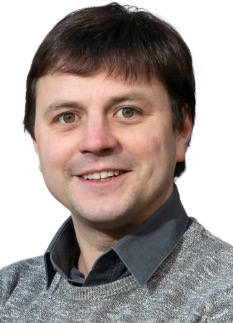 Laurens De Vocht合作论文数Azumuta1B. Cervenkova合作论文数1
 Miroslav Vacura合作论文数University of Economics1Lukás Pikora合作论文数1
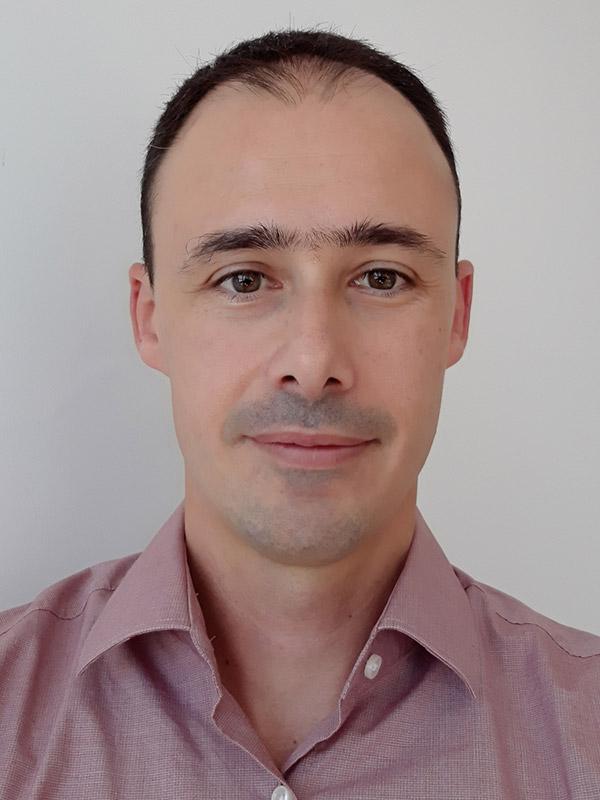 Vasileios Mezaris合作论文数Information Technologies Institute, Centre for Research and Technology Hellas1
 Mike Wald合作论文数School of Electronics and Computer Science, University of Southampton1




