In the US, `black box' studies are increasingly being used to estimate the error rate of forensic disciplines. A sample of forensic examiner participants are asked to evaluate a set of items whose source is known to the researchers but not to the participants. Participants are asked to make a source determination (typically an identification, exclusion, or some kind of inconclusive). We study inconclusives in two black box studies, one on fingerprints and one on bullets. Rather than treating all inconclusive responses as functionally correct (as is the practice in reported error rates in the two studies we address), irrelevant to reported error rates (as some would do), or treating them all as potential errors (as others would do), we propose that the overall pattern of inconclusives in a particular black box study can shed light on the proportion of inconclusives that are due to examiner variability. Raw item and examiner variances are computed, and compared with the results of a logistic regression model that takes account of which items were addressed by which examiner. The error rates reported in black box studies are substantially smaller than “failure rate" analyses that take inconclusives into account. The magnitude of this difference is highly dependent on the particular study at hand.
Measures of association in contingency tables, such as odds ratios and their generalizations, are often studied under different sampling schemes that either fix or leave random the margins of the table. While classical results show that certain odds ratios are unaffected by constraining the margins, it is less clear when this invariance holds more generally. This paper studies posterior inference for a broad class of multiplicative contrasts of multinomial cell probabilities, which we refer to as generalized odds ratios, and addresses exactly when fixing a margin alters inference about them. We consider Bayesian inference under multinomial sampling and under models in which partition sums of the table are fixed in advance, and assume that the marginal and conditional parameters are independent a priori. Under additional mild assumptions, we show that the posterior distribution of a generalized odds ratio is invariant to fixing a margin if and only if the coefficients defining the contrast sum to zero within the margin.
Each patient is simultaneously given several binary tests for a disease. The tests are partitioned into disjoint groups, assumed to be conditionally independent between groups, but allowed to have arbitrary dependence within a group. The groups are intended to capture similar biological features of the tests. A Dirichlet-multinomial model is employed with a Gibbs Sampler to estimate the sensitivity and specificity of the tests. The model is exemplified by data on four tests for Chlamydia, both with complete data and with a random 10% of the data treated as missing.
We compare three graphical methods for displaying evidence in a legal case: Wigmore Charts, Bayesian Networks, and Chain Event Graphs. We find that these methods are aimed at three distinct audiences, respectively, lawyers, forensic scientists and the police. The methods are illustrated using part of the evidence in the case of the murder of Meredith Kercher. More specifically, we focus on representing the list of propositions, evidence, testimony, and facts given in the first trial against Raffaele Sollecito and Amanda Knox with these graphical methodologies.
We investigate techniques for applying strictly proper scoring rules to elicit arbitrary sets of probabilities for an event and for eliciting sets of countably additive (finite dimensional) joint distributions. We contrast E-admissibility, Maximality, and Gamma-Maximin as three IP decision rules for these elicitations. The techniques we investigate apply with sets of probabilities that need not be convex or even connected, and with distributions that may lack moments. We address some challenges to applying these techniques for eliciting merely finitely additive probability distributions.
In most western legal systems, only the fact-finder (judge or jury) is entrusted to make the ultimate decision in a criminal case. A forensic expert can help the fact-finder by opining on the weight of the forensic evidence given the hypotheses relevant to the case, but is not qualified to give an opinion about the ultimate question(s). When the question is reduced to two simple hypotheses, a Bayes Factor can express the expert's opinion about the extent to which the forensic evidence favours each hypothesis. This paper addresses the situation in which one or both of the hypotheses are composite, that is, embrace more than one possibility. It offers an interval of Bayes Factors, and shows that the proposed interval includes those values, and only those values, of the Bayes Factor supported by possible beliefs of the fact-finder. Shoe prints, tool marks and DNA are discussed in this light if the hypotheses used in the Bayes Factor are composite.
In this paper, we show how to represent a non-Archimedean preference over a set of random quantities by a nonstandard utility function. Non-Archimedean preferences arise when some random quantities have no fair price. Two common situations give rise to non-Archimedean preferences: random quantities whose values must be greater than every real number, and strict preferences between random quantities that are deemed closer in value than every positive real number. We also show how to extend a non-Archimedean preference to a larger set of random quantities. The random quantities that we consider include real-valued random variables, horse lotteries, and acts in the theory of Savage. In addition, we weaken the state-independent utility assumptions made by the existing theories and give conditions under which the utility that represents preference is the expected value of a state-dependent utility with respect to a probability over states.
In the longstanding foundational debate whether to require that probability is countably additive, in addition to being finitely additive, those who resist the added condition raise two concerns that we take up in this paper. (1) Existence : Settings where no countably additive probability exists though finitely additive probabilities do. (2) Complete Additivity : Where reasons for countable additivity don’t stop there. Those reasons entail complete additivity—the (measurable) union of probability 0 sets has probability 0, regardless the cardinality of that union. Then probability distributions are discrete, not continuous. We use Easwaran’s (Easwaran, Thought 2:53–61, 2013) advocacy of the Comparative principle to illustrate these two concerns. Easwaran supports countable additivity, both for numerical probabilities and for finer, qualitative probabilities, by defending a condition he calls the Comparative principle [ 𝒞 ]. For numerical probabilities, principle 𝒞 contrasts pairs, P 1 and P 2 , defined over a common partition ∏ = a i : i ∈ I of measurable events. 𝒞 requires that no P 1 may be pointwise dominated, i.e., no (finitely additive) probability P 2 exists such that for each i ∈ I, P 2 (a i ) > P 1 (a i ). By design, the cardinality of ∏ is not limited in 𝒞 , which Easwaran asserts is important when arguing that the principle does not require more, or less, than that probability is countably additive. We agree that a numerical probability P satisfies principle 𝒞 in all partitions just in case P is countably additive. However, we show that for numerical probabilities, by considering the size of the algebra of events to which probability is applied, principle 𝒞 is subject to each of the above concerns, (1) and (2). Also, Easwaran considers principle 𝒞 with non-numerical, qualitative probabilities, where a qualitative probability may be finer than an almost agreeing numerical probability P. A qualitative probability is regular if possible events are strictly more likely than impossible events. Easwaran motivates and illustrates regular qualitative probabilities using a continuous, almost agreeing quantitative probability that is uniform on the unit interval. We make explicit the conditions for applying principle 𝒞 with qualitative probabilities and show that 𝒞 restricts regular qualitative probabilities to those whose almost agreeing quantitative probabilities are completely additive. For instance, Easwaran’s motivating example of a regular qualitative probability is precluded by principle 𝒞 .
Odds ratios have several advantages over other methods of measuring the degree of under-representation of cognizable classes of potential jurors. In particular, its advantage over comparative disparity is that it does not measure the extent of under-representation of some groups against an aggregate that includes the very group in question. Odds ratios in jury analysis are directly interpretable as the factor by which one's probability of being on the jury is advanced or diminished by membership in a specified group.
Two recent Massachusetts Supreme Court cases, and , have made it easier for defendants to successfully challenge police stops allegedly based on race or another protected class. Such challenges often consist, at least in part, of demonstrating that the racial distribution of those stopped by police differs meaningfully from the racial distribution of an appropriate reference population. We describe a series of cases, culminating in Long and Van Rader, that have clarified the legal standard required to mount a successful racial profiling challenge in Massachusetts as well as the nature of appropriate reference populations. In some of these cases, we served as expert witnesses.
Techniques used in forensic analysis have to find an appropriate balance between fairness to the defendant and efficiency and safety for forensic personnel. Safety issues are particularly acute in analyzing large seizures of bags likely containing heroin, possibly laced with fentanyl. National and local law specifies penalties that depend on the weight of seized powder containing heroin. Local custom makes available to the prosecution and the defense a preliminary report showing the presence of heroin and an indication of the powder weight seized. Such a report, even if it involves uncertainty, can be useful to both parties in understanding the likely sentencing range, with a view toward plea bargaining. An earlier methodological paper demonstrates how data from a sample of bags can be used to create a probability distribution for the weight of seized powder. The aim of this paper is to study whether sampling itself creates substantial additional uncertainty. To this end, we apply the above method to four populations with weights known for each item in the population. We draw eight random samples of size five from each population. Applying the proposed method to each sample, the results show that the variation created by drawing these samples is trivial. We conclude that the proposed method, which is convenient and safer for personnel, can be used without prejudice against the defendant.
In dynamic learning, a rational agent must revise their credence about a question of interest in accordance with the total evidence available between the earlier and later times. We discuss situations in which an observable event F that is sufficient for the total evidence can be identified, yet its probabilistic modeling cannot be performed in a precise manner. The agent may employ imprecise (IP) models of reasoning to account for the identified sufficient event, and perform change of credence or sequential decisions accordingly. Our proposal is illustrated with four case studies: the classic Monty Hall problem, statistical inference with non-ignorable missing data, frequentist hypothesis testing, and the use of forward induction in a two-person sequential game.
This is a story of a lawsuit in Japan, about an alleged incident in America thirty years before. The focus of the analysis is comparing the rates of skips in ballpoint pen writing in a diary. Chernoff proposed several methods to address the comparison between the skips observed in different passages in the diary. I also give my own alternative analysis of the data.
A Correction to this paper has been published: 10.1007/s00186-015-0499-8
This is a study of the behavior under partition of the sample space of three multivariate distributions: multinomial, multinomial-Dirichlet, and Dirichlet. A general theorem is given, of which all three are special cases.
For Bayesian inference to be useful to a court, it is essential that the priors used should be neutral between the parties. 'Neutrality' reflects the idea that the fact-finder would want the statistical analyses to be fair to both parties. It is neither the same as the legal designation of which party has the burden of proof with respect to a particular matter, nor the standard of proof that must be met for that party to prevail. The recent case of Idaho v. Ish raises the question of how to find such priors, particularly in a doubly constrained 2 x 2 table with a zero. This article re-examines this issue. It also offers reflection on whether, given a zero in the table (which here means that all members of a particular race or sex are excluded from jury service), it matters how many are excluded.
A familiar defense of Personalist or Subjective Bayesian theory is that, under a variety of sufficient conditions, asymptotically—with increasing shared evidence—almost surely, each non-extreme, countably additive Bayesian opinion, when updated by conditionalization, converges to certainty that is veridical about the truth/falsity of hypotheses of interest. Then, with probability 1 over possible evidential histories, personal probabilities track the truth. In this note we examine varieties of failures of these asymptotics. In an extreme case, conditional probabilities are deceptive when they converge to certainty for a false hypothesis. We establish that proposals for so-called “modest” credences, offered by Elga (2016) and by Nielsen and Stewart (2019) in response to a concern about Bayesian orgulity raised by Belot (2013), instead support deceptive credences. We argue that deceptive credences are not modest, but for a reason different than Belot adduces.
We show that there is a nonempty class of finitely additive probabilities on $\mathbb{N}^{2}$ such that for each member of the class, each set with limiting relative frequency $p$ has probability $p$. Hence, in that context the probability that two random integers are coprime is $6/\pi ^{2}$. We also show that two other interpretations of “random integer,” namely residue classes and shift invariance, support any number in $[0,6/\pi ^{2}]$ for that probability. Finally, we specify a countably additive probability space that also supports $6/\pi ^{2}$.
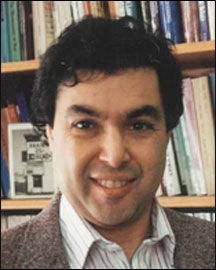 Teddy Seidenfeld合作论文数Department of Philosophy, Dietrich College of Humanities and Social Sciences, Carnegie Mellon University/Department of Statistics&Data Science, Dietrich College of Humanities and Social Sciences, Carnegie Mellon University61
 Mark J. Schervish合作论文数Department of Statistics & Data Science, Dietrich College of Humanities and Social Sciences, Carnegie Mellon University59
 Rafael Bassi Stern合作论文数Dept Stat, Univ Fed Sao Carlos12
 Peter Boatwright合作论文数Mechanical Engineering, Carnegie Mellon University/Marketing Faculty, Tepper School of Business, Carnegie Mellon University10
 Luke Tierney合作论文数Department of Statistics and Actuarial Science, College of Liberal Arts and Sciences, University of Iowa9
 Larry Wasserman合作论文数Department of Statistics & Data Science, Dietrich College of Humanities and Social Sciences, Carnegie Mellon University;Department of Machine Learning, Dietrich College of Humanities and Social Sciences, Carnegie Mellon University8
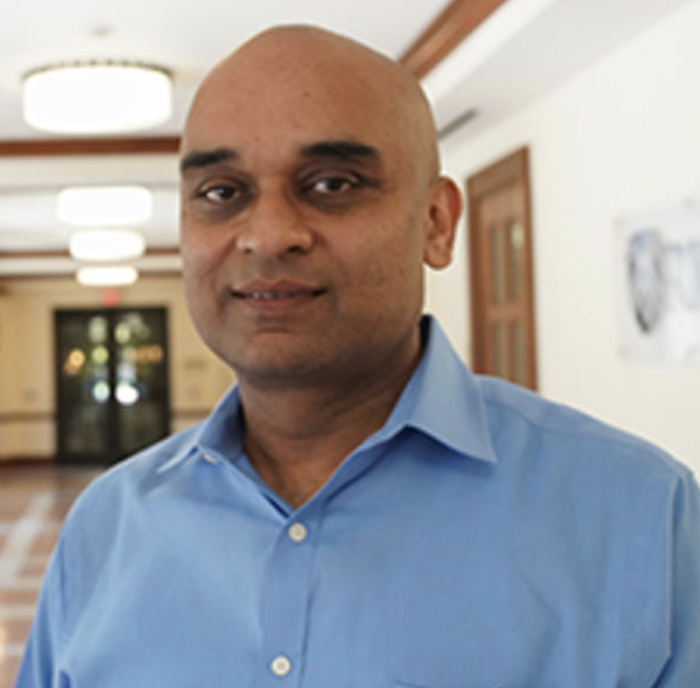 Sharad Borle合作论文数Jesse H. Jones Graduate School of Business, Rice University8
 Morris H. Degroot合作论文数Graduate School of Industrial Administration, Carnegie-Mellon University7
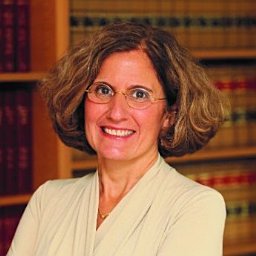 Beth Osborne Daponte合作论文数Office of Child Development;Center for Social and Urban Research, University;University of Pittsburgh;University Center for Social and Urban Research, University of Pittsburgh7gordon h lewis合作论文数6
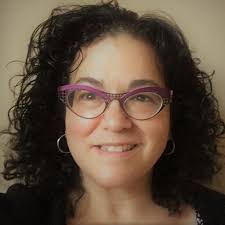 Lara J. Wolfson合作论文数MSD Innovation & Development6
 Robert E. (Rob) Kass合作论文数Department of Statistics & Data Science, Dietrich College of Humanities and Social Sciences, Carnegie Mellon University;Machine Learning Department, Carnegie Mellon University;Neuroscience Institute, Carnegie Mellon University6
 Ruobin Gong合作论文数Rutgers University, Rutgers University5
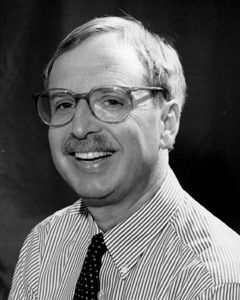 Tom Leonard合作论文数UC Berkeley School of Journalismc5
 Robert L. Winkler合作论文数Department of Statistical Science, Duke University;Fuqua School of Business, Duke University5
 Stephen E. Fienberg合作论文数Carnegie Mellon University5
 Mitchell J. Small (Mitchell Small)合作论文数Departments of Civil & Environmental Engineering, College of Engineering, Carnegie Mellon University;Department of Environmental and Occupational Health, Graduate School of Public Health, University of Pittsburgh5David Schum合作论文数5
 Galit Shmueli (徐茉莉)合作论文数Institute of Service Science, College of Technology Management, National Tsing Hua University4
 Robert H. Swendsen合作论文数Department of Physics, Mellon College of Science, Carnegie Mellon University4
 Bret Larget合作论文数Mathematics and Computer Science, of;Duquesne University;Mathematics and Computer Science, Duquesne University4Nanjun Chu合作论文数4
 Cliff Davidson合作论文数Syracuse University4
 Anthony Brockwell合作论文数Polymer Capital US4HA Simon合作论文数3Jessi Cisewski Kehe合作论文数3
 Alexander Philip Dawid合作论文数Faculty of Mathematics, University of Cambridge3
 Richard Mayer合作论文数University of California, Santa Barbara3
 Thomas P. Minka合作论文数3
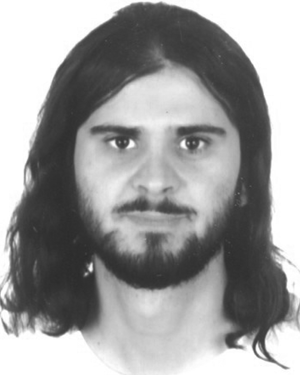 Elías Moreno合作论文数Departamento de Estadística Granada Spain, Universidad de Granada3Parthasarathy Bagchi合作论文数3
 Brian S. Diggs合作论文数Department of Surgery, Oregon Health & Science University3Dennis V. Lindley合作论文数3
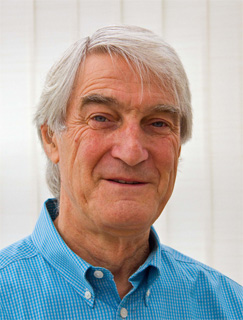 Anthony O'Hagan合作论文数School of Mathematics and Statistics, The University of Sheffield3Jill H. Larkin合作论文数No description available of Jill H. Larkin3Donald L. Simon合作论文数The University of Texas3
 Chris Genovese合作论文数Department of Statistics, Dietrich College of Humanities and Social Sciences, Carnegie Mellon University3James M. Dickey合作论文数3A. E. Brockwell合作论文数2irving john good合作论文数2Pantelis K. Vlachos合作论文数2Mary S. Fowler合作论文数2Gabriella Salinetti合作论文数2galit shmeuli合作论文数2michael spece合作论文数2
 Surya Tapas Tokdar合作论文数Department of Statistical Science, Trinity College of Arts & Sciences, Duke University2
 John Dickey合作论文数University of Tasmania2
 Brad Carlin合作论文数PhaseV Trials, Inc.;Cencora-PharmaLex;Counterpoint Statistical Consulting, LLC2Zora Jennifer E合作论文数2




