The shift toward neurobiological imaginary in lay perspectives is the most general finding of the study, the pattern behind the other patterns of meaning. An "imaginary" is not a professional discourse or system of theoretical understandings, but largely tacit and socially shared meanings that animate and legitimate common practices and understandings. This chapter explores the most prominent indicators of the shift from a more psychological to a more medicalized viewpoint. The clearest indicator comes from participant prioritizing of brain states—for example, "chemical imbalance," "misfiring brain circuitry"—as the effective cause of suffering. Even many people who did not refer to the brain directly spoke in terms that pointed toward a mechanistic, nonpersonal way of imagining the cause of their struggles. Another indicator, suggested by dismissive views of psychotherapy and presumptions of medication effectiveness, was a way of imagining suffering without temporality, social context, or meaning. The common thread was an approach to predicament resolution that comported with a strong view of self as self-defining. Other survey and time-trend studies of public and patient views toward questions of problem cause, medication, and psychotherapy have shown similar medicalizing views, and the chapter concludes with a brief review of these.
Abstract The neurobiological, as revealed in participant stories, is a way to imagine ourselves, with the aid of techniques and technologies, as truly disengaged, to think of and enact ourselves or crucial aspects of ourselves independently of our situatedness, and to author our own story, free of constraints. A self-mastery is the promise and the appeal. This self-mastery, rooted in a mechanistic view of ourselves, comes at a high cost. It subserves the aspiration of liberal selfhood, yet in a way that diminishes the person. We can see this propensity articulated in the mechanistic and disengaged perspective of the person eminating from various academic fields, including popular neuroscience and the postmodern humanities. The alternative languages they speak in do not offer a more penetrating account of our situation and move toward the de facto authorization of a solitary and empty conception of the will. This is one affect of imagining ourselves through the prism of the neurobiological. Other affects involve our relationship to social norms and ideals, our recourse to other evaluative frameworks, our self-understanding and relation to others, and our attitude to suffering. In these ways, the imaginary closes off and inhibits.
An abstract is not available for this content so a preview has been provided. As you have access to this content, a full PDF is available via the ‘Save PDF’ action button.
An implicit finite difference scheme based on the Newton-Kantorovich technique was developed for the numerical solution of the nonsteady, incompressible, two-dimensional Navier-Stokes equations in conservation-law form. The algorithm was second-order-time accurate, noniterative with regard to the nonlinear terms in the vorticity transport equation except at the earliest few time steps, and spatially factored. Numerical results were obtained with the technique for a circular cylinder at Reynolds number 15. Results indicate that the technique is in excellent agreement with other numerical techniques for all geometries and Reynolds numbers investigated, and indicates a potential for significant reduction in computation time over current iterative techniques.
 Jennifer L. Cadnum合作论文数1kerri huber合作论文数1Rachel Moseley合作论文数1Helga Paula合作论文数1Joan Hebden合作论文数1kristy weinshel合作论文数1María Inés Staneloni合作论文数1Chimanjita Phukan合作论文数1Lisa Marsh合作论文数1
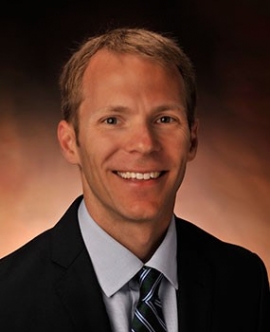 Jeffrey Stephen Gerber合作论文数Department of Biostatistics, Epidemiology and Informatics, Perelman School of Medicine, University of Pennsylvania1Mougkou Katerina合作论文数1
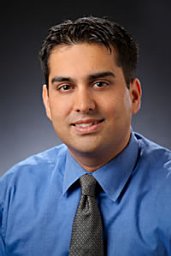 Chitnis Amit S合作论文数Centers for Disease Control and Prevention, National Center for Emerging and Zoonotic Infectious Diseases1
 Will Fischer合作论文数1Kronman Matthew P合作论文数Div Infect Dis, Univ Washington1
 Pennan Barry合作论文数Division of Infectious Diseases, Department of Medicine, School of Medicine, University of California San Francisco;California Department of Public Health1
 Shashank Ghantoji合作论文数Department of Infectious Diseases, Infection Control, and Employee Health, The University of Texas MD Anderson Cancer Center;Department of Infectious Diseases, Infection Control, and Employee Health, The University of Texas MD Anderson Cancer Center1Dimpy P Shah合作论文数Department of Infectious Diseases, Infection Control, and Employee Health, The University of Texas MD Anderson Cancer Center1Ariza-Heredia Ella J合作论文数1Michailidis L合作论文数1Gümbel Denis合作论文数1von Podewils Sebastian合作论文数1
 Matthias Napp合作论文数1
 Dramowski Angela合作论文数1
 Lior Nesher合作论文数Division of Internal Medicine, Soroka University Medical Center1Cynthia Argani合作论文数1
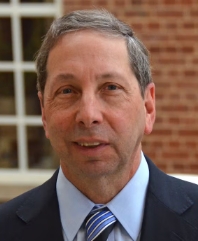 David Jay Weber合作论文数Department of Epidemiology, Gillings School of Global Public Health, University of North Carolina;Department of Medicine, University of North Carolina School of Medicine1Tomas Myreen合作论文数1Preas Michael Anne合作论文数1Spitzmueller Romy合作论文数1
 Leonard A. Mermel合作论文数Warren Alpert Medical School, Brown University;Department of Epidemiology and Infection Control, Rhode Island Hospital;Department of Medicine, Brown University1
 Jacques Azzi合作论文数1Rachael Ross合作论文数Division of Infectious Diseases and the Center for Pediatric Clinical Effectiveness, The Children's Hospital of Philadelphia1
 Annette L. Jencson合作论文数1
 Michael Junger合作论文数Clinic and Polyclinic for Skin Diseases, Greifswald University Medical Centre;Uniklinikum Greifswald1
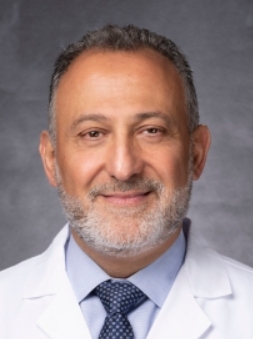 Roy F. Chemaly合作论文数Department of Infectious Diseases, Infection Control, and Employee Health, Division of Internal Medicine, The University of Texas MD Anderson Cancer Center;The University of Texas School of Public Health;Baylor College of Medicine1
 Basudha Khanal合作论文数B.P. Koirala Institute of Health Sciences1Nalini Singh合作论文数1Barbara Tribl合作论文数1Magda Diab-Elschahawi合作论文数1
 Surbhi Leekha合作论文数1
 Georg Daeschlein合作论文数1Gisela F. Schecter合作论文数1Adam L. Hersh合作论文数Center for the Evaluative Clinical Sciences, Dartmouth Medical School (Hersh, Tosteson), Hanover, New Hampshire, USA1
 Unmeel Mehta合作论文数1
 Peter Hinz合作论文数1
 David Wohl合作论文数Division of Infectious Diseases, Department of Medicine, School of Medicine, The University of North Carolina at Chapel Hill;Infectious Diseases Clinical Research Trials Unit, The University of North Carolina at Chapel Hill1
 Curtis J. Donskey合作论文数Department of Medicine, Louis Stokes Cleveland VA Medical Center;Case Western Reserve University1Jennifer Flood合作论文数1
 Jason G. Newland合作论文数Children's Mercy Hospital, University of Missouri–Kansas City1




