We present the combination of optical data from the Science Verification phase of the Dark Energy Survey (DES) with near-infrared (NIR) data from the European Southern Observatory VISTA Hemisphere Survey (VHS). The deep optical detections from DES are used to extract fluxes and associated errors from the shallower VHS data. Joint seven-band (grizYJK) photometric catalogues are produced in a single 3 sq-deg dedicated camera field centred at 02h26m-04d36m where the availability of ancillary multiwavelength photometry and spectroscopy allows us to test the data quality. Dual photometry increases the number of DES galaxies with measured VHS fluxes by a factor of similar to 4.5 relative to a simple catalogue level matching and results in a similar to 1.5 mag increase in the 80 per cent completeness limit of the NIR data. Almost 70 per cent of DES sources have useful NIR flux measurements in this initial catalogue. Photometric redshifts are estimated for a subset of galaxies with spectroscopic redshifts and initial results, although currently limited by small number statistics, indicate that the VHS data can help reduce the photometric redshift scatter at both z < 0.5 and z > 1. We present example DES VHS colour selection criteria for high-redshift luminous red galaxies (LRGs) at z similar to 0.7 as well as luminous quasars. Using spectroscopic observations in this field we show that the additional VHS fluxes enable a cleaner selection of both populations with <10 per cent contamination from galactic stars in the case of spectroscopically confirmed quasars and <0.5 per cent contamination from galactic stars in the case of spectroscopically confirmed LRGs. The combined DES+VHS data set, which will eventually cover almost 5000 sq-deg, will therefore enable a range of new science and be ideally suited for target selection for future wide-field spectroscopic surveys.
We present the results of a study of selection criteria to identify Type Ia supernovae photometrically in a simulated mixed sample of Type Ia supernovae and core collapse supernovae. The simulated sample is a mockup of the expected results of the Dark Energy Survey. Fits to the MLCS2k2 and SALT2 Type Ia supernova models are compared and used to help separate the Type Ia supernovae from the core collapse sample. The Dark Energy Task Force Figure of Merit (modified to include core collapse supernovae systematics) is used to discriminate among the various selection criteria. This study of varying selection cuts for Type Ia supernova candidates is the first to evaluate core collapse contamination using the Figure of Merit. Different factors that contribute to the Figure of Merit are detailed. With our analysis methods, both SALT2 and MLCS2k2 Figures of Merit improve with tighter selection cuts and higher purities, peaking at 98% purity.
Supernova (SN) cosmology without spectroscopic confirmation is an exciting new frontier, which we address here with the Bayesian Estimation Applied to Multiple Species (BEAMS) algorithm and the full three years of data from the Sloan Digital Sky Survey II Supernova Survey (SDSS-II SN). BEAMS is a Bayesian framework for using data from multiple species in statistical inference when one has the probability that each data point belongs to a given species, corresponding in this context to different types of SNe with their probabilities derived from their multi-band light curves. We run the BEAMS algorithm on both Gaussian and more realistic SNANA simulations with of order 104 SNe, testing the algorithm against various pitfalls one might expect in the new and somewhat uncharted territory of photometric SN cosmology. We compare the performance of BEAMS to that of both mock spectroscopic surveys and photometric samples that have been cut using typical selection criteria. The latter typically either are biased due to contamination or have significantly larger contours in the cosmological parameters due to small data sets. We then apply BEAMS to the 792 SDSS-II photometric SNe with host spectroscopic redshifts. In this case, BEAMS reduces the area of the Ωm, ΩΛ contours by a factor of three relative to the case where only spectroscopically confirmed data are used (297 SNe). In the case of flatness, the constraints obtained on the matter density applying BEAMS to the photometric SDSS-II data are ΩBEAMSm = 0.194 ± 0.07. This illustrates the potential power of BEAMS for future large photometric SN surveys such as Large Synoptic Survey Telescope.
MSH 11–62 (G291.0–0.1) is a composite supernova remnant for which radio and X-ray observations have identified the remnant shell as well as its central pulsar wind nebula. The observations suggest a relatively young system expanding into a low-density region. Here, we present a study of MSH 11–62 using observations with the Chandra, XMM-Newton, and Fermi observatories, along with radio observations from the Australia Telescope Compact Array. We identify a compact X-ray source that appears to be the putative pulsar that powers the nebula, and show that the X-ray spectrum of the nebula bears the signature of synchrotron losses as particles diffuse into the outer nebula. Using data from the Fermi Large Area Telescope, we identify γ-ray emission originating from MSH 11–62. With density constraints from the new X-ray measurements of the remnant, we model the evolution of the composite system in order to constrain the properties of the underlying pulsar and the origin of the γ-ray emission.
The Dark Energy Survey Collaboration has completed construction of the Dark Energy Camera (DECam), a 3 square degree, 570 Megapixel CCD camera which will be mounted on the Blanco 4-meter telescope at CTIO. DECam will be used to perform the 5000 sq. deg. Dark Energy Survey with 30% of the telescope time over a 5 year period. During the remainder of the time, and after the survey, DECam will be available as a community instrument. All components of DECam have been shipped to Chile and post-shipping checkout finished in Jan. 2012. Installation is in progress. A summary of lessons learned and an update of the performance of DECam and the status of the DECam installation and commissioning will be presented.
The physical boundaries of a fully-depleted CCD can lead to distorted field lines and non-uniform response. We study this response with a beam of X-rays constrained to a width of less than one pixel (15 \(\upmu\)m), and a system to map the CCD response as a function of transverse position.
Large planned photometric surveys will discover hundreds of thousands of supernovae (SNe), outstripping the resources available for spectroscopic follow-up and necessitating the development of purely photometric methods to exploit these events for cosmological study. We present a light-curve fitting technique for SN Ia photometric redshift (photo-z) estimation in which the redshift is determined simultaneously with the other fit parameters. We implement this "LCFIT+Z" technique within the frameworks of the MLCS2k2 and SALT-II light-curve fit methods and determine the precision on the redshift and distance modulus. This method is applied to a spectroscopically confirmed sample of 296 SNe Ia from the SDSS-II Supernova Survey and 37 publicly available SNe Ia from the Supernova Legacy Survey (SNLS). We have also applied the method to a large suite of realistic simulated light curves for existing and planned surveys, including SDSS, SNLS, and LSST. When intrinsic SN color fluctuations are included, the photo-z precision for the simulation is consistent with that in the data. Finally, we compare the LCFIT+Z photo-z precision with previous results using color-based SN photo-z estimates.
 Masao Sako合作论文数Department of Physics and Astronomy, School of Arts & Sciences, University of Pennsylvania8
 D. A. Finley合作论文数7S. Kuhlmann合作论文数6Harold Spinka合作论文数Argonne National Laboratory6
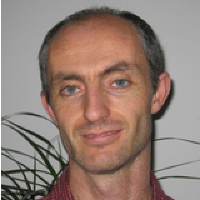 Francisco Javier Castander合作论文数Institut de Ciencies de l'Espai, ICE, CSIC;Institut d'Estuids Espacials de Catalunya, IEEC;Facultat de Ciències, Universitat Autònoma de Barcelona;Spanish Consortium for Euclid6A. Kim合作论文数6Richard Kessler合作论文数6
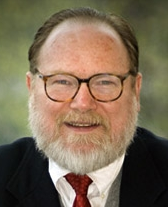 Ronald C. Kessler合作论文数Department of Health Care Policy, Harvard Medical School;Department of Mental Health, Bloomberg School of Public Health, Johns Hopkins University;Department of Sociology, Survey Research Center, University of Michigan6R. Cane合作论文数5R. Biswas合作论文数5
 Hiranya Peiris合作论文数Department of Physics and Astronomy, University College London;Department of Physics, Stockholm University5
 Eun-Young Erin Ahn合作论文数Mitchell Cancer Institute, University of South Alabama;College of Medicine, University of South Alabama;Mitchell Cancer Institute, University of South Alabama5
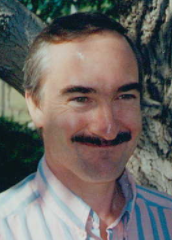 John P. (Jack) Hughes合作论文数Department of Physics and Astronomy, School of Arts and Sciences, Rutgers University5
 Bob Nichol合作论文数School of Mathematics and Physics, Faculty of Engineering and Physical Sciences, University of Surrey5salma kuhlmann合作论文数4K. Paech合作论文数4
 M. March合作论文数Dept Phys & Astron, Univ Penn4E. Kovacs合作论文数4k kuehn合作论文数4
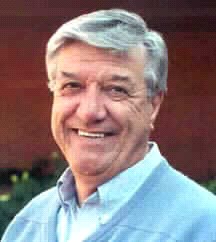 David Leith合作论文数Stanford Linear Accelerator Center4
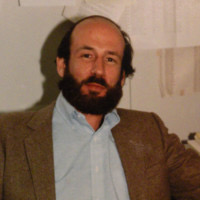 Arthur Wicklund合作论文数Argonne National Laboratory4Stephen Kuhlmann合作论文数4
 Mark Sullivan合作论文数School of Physics & Astronomy, University of Southampton4
 Michael A. Troxel合作论文数Physics Department, Trinity College of Arts & Sciences, Duke University4
 Joshua Bloom合作论文数Department of Astronomy, University of California, Berkeley;Wise.Io, Inc;Lawrence Berkeley National Laboratory4
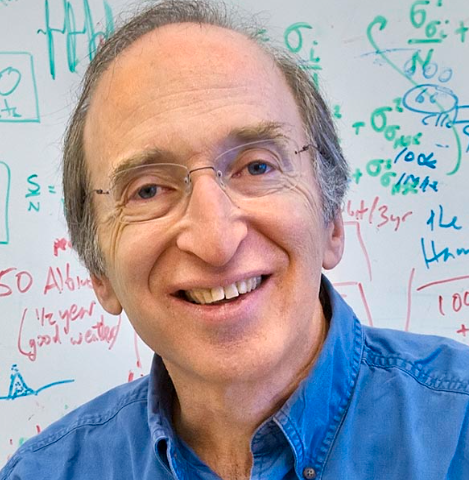 Saul Perlmutter合作论文数Lawrence Berkeley National Laboratory;Department of Physics, University of California, Berkeley4
 Nicholas Suntzeff合作论文数Department of Physics & Astronomy, College of Arts & Sciences, Texas A&M University;Mitchell Institute for Fundamental Physics & Astronomy, Texas A&M University4
 Joshua A. Frieman合作论文数Department of Astronomy and Astrophysics, University of Chicago4
 Peter J. Brown合作论文数Mitchell Institute for Fundamental Physics and Astronomy, Texas A&M University;Department of Physics & Astronomy, College of Arts & Sciences, Texas A&M University4Gregory Scott Aldering合作论文数Lawrence Berkeley National Laboratory, University of California4H. Thomas Diehl合作论文数Fermilab4
 Saurabh W. Jha合作论文数Department of Physics and Astronomy, School of Arts and Sciences, Rutgers, the State University of New Jersey4J. Marriner合作论文数4
 David Cinabro合作论文数College of Liberal Arts and Sciences, Wayne State University;U.S. Department of Energy4
 Bryan M Gaensler合作论文数Division of Physical and Biological Sciences, University of California, Santa Cruz;Department of Astronomy and Astrophysics, University of California, Santa Cruz4D. L. Depoy合作论文数4
 Kyle Barbary合作论文数4Ricardo Alberto Covarrubias合作论文数4
 Peter Nugent合作论文数Computational Research Division, Lawrence Berkeley National Laboratory;Computational Cosmology Center, Lawrence Berkeley National Laboratory4
 David A. Moffett合作论文数Univ. of Tasmania4
 Roy Maartens合作论文数Department of Physics & Astronomy, University of Western Cape4J. A. Fischer合作论文数3H. Spinka合作论文数3C. D'Andrea合作论文数3
 Tamara Davis合作论文数School of Mathematics and Physics, Faculty of Science, The University of Queensland3
 Michael Schubnell合作论文数Michigan Institute for Research in Astrophysics, College of Literature, Science, and the Arts, University of Michigan-Ann Arbor3
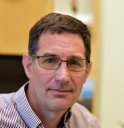 David Gerdes合作论文数Department of Physics, University of Michigan3
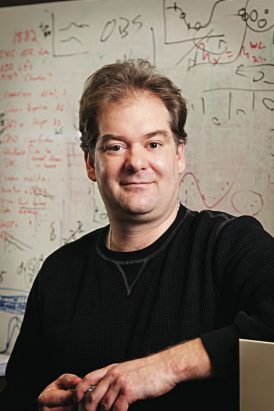 Chris Miller合作论文数Department of Astronomy, College of Literature, Science, and the Arts, University of Michigan-Ann Arbor3
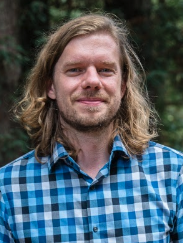 Ryan J Foley合作论文数Astronomy & Astrophysics Department, UC Santa Cruz3




