Despite rapid growth of quantum information science (QIS) workforce development initiatives, perceived lack of agreement among faculty on core content has made prior research-based curriculum and assessment development initiatives difficult to scale. To identify areas of consensus on content coverage, we report findings from a survey of N=63 instructors teaching introductory QIS courses at US institutions of higher learning. We identify a subset of content items common across a large fraction (≥ 80%) of introductory QIS courses that are potentially amenable to research-based curriculum development, with an emphasis on foundational skills in mathematics, physics, and engineering. As a further guide for curriculum development, we also examine differences in content coverage by level (undergraduate/graduate) and discipline. Finally, we briefly discuss the implications of our findings for the development of a research-based QIS assessment at the postsecondary level.
Driven in large part by the National Quantum Initiative Act of 2018, quantum information science (QIS) coursework and degree programs are rapidly spreading across U.S. institutions. Yet prior work suggests that access to quantum workforce education is unequally distributed, disproportionately benefiting students at private research-focused institutions whose student bodies are unrepresentative of U.S. higher education as a whole. We use regression analysis to analyze the distribution of QIS coursework across 456 institutions of higher learning as of Fall 2022, identifying statistically significant disparities across institutions in particular along the axes of institution classification, funding, and geographic distribution suggesting today 's QIS education programs are largely failing to reach low-income and rural students. We also conduct a brief analysis of the distribution of emerging dedicated QIS degree programs, discovering much the same trends. We conclude with a discussion of implications for educators, policymakers, and education researchers including specific policy recommendations to direct investments in QIS education to schools serving low-income and rural students, leverage existing grassroots diversity and inclusion initiatives that have arisen within the quantum community, and update and modernize procedures for collecting QIS educational data to better track these trends.
Popular media is an unspoken yet ever-present element of the physics landscape and a tool we can utilize in our teaching. It is also well-understood that students enter the physics classroom with a host of conceptions learned from the world at large. It stands to reason, then, to suspect that media coverage may be a major contributing factor to students' views on physical phenomena and the nature of science - one whose influence will only grow amid the 21st century digital age. Yet the role of the media in shaping physics teaching and learning has remained largely unexplored in the physics education research (PER) literature so far. Here, we explore the phenomenon of media hype from a theoretical and practical perspective: how media rhetoric of current topics in science and technology evolves, and how it affects students and instructors. We argue that media hype of cutting-edge science can be a double-edged sword for educators, with the same amped-up rhetoric that motivates students to enter the classroom tending to result in inflated preconceptions of what the science and technology can actually do. We draw on examples related to teaching quantum computing as a case study, though the findings we present should generalize to other topics garnering significant media attention - from exoplanets to graphene to batteries for electric vehicles. We conclude with a set of practical recommendations for physics teachers at all levels who wish to be more cognizant of the role exposure to popular media has on students and to tailor our teaching accordingly.
Flare frequency distributions represent a key approach to addressing one of the largest problems in solar and stellar physics: determining the mechanism that counterintuitively heats coronae to temperatures that are orders of magnitude hotter than the corresponding photospheres. It is widely accepted that the magnetic field is responsible for the heating, but there are two competing mechanisms that could explain it: nanoflares or Alfvén waves. To date, neither can be directly observed. Nanoflares are, by definition, extremely small, but their aggregate energy release could represent a substantial heating mechanism, presuming they are sufficiently abundant. One way to test this presumption is via the flare frequency distribution, which describes how often flares of various energies occur. If the slope of the power law fitting the flare frequency distribution is above a critical threshold, α = 2 as established in prior literature, then there should be a sufficient abundance of nanoflares to explain coronal heating. We performed >600 case studies of solar flares, made possible by an unprecedented number of data analysts via three semesters of an undergraduate physics laboratory course. This allowed us to include two crucial, but nontrivial, analysis methods: preflare baseline subtraction and computation of the flare energy, which requires determining flare start and stop times. We aggregated the results of these analyses into a statistical study to determine that α = 1.63 ± 0.03. This is below the critical threshold, suggesting that Alfvén waves are an important driver of coronal heating.
This paper first provides an overview of the growing subfield of quantum ethics, including a working definition; research to date into social, economic, and political implications of quantum technologies; and directions for future research. Second, it introduces the Quantum Ethics Project (QEP), its activities to date, and its organizing philosophy. The third section reports on QEP's ongoing curriculum development work, i.e. creating one of the first full-length courses on Ethics and Social Impacts of Quantum Technology. We outline the pedagogical approach being taken in the course design, including key learning outcomes, topic areas, teaching methods, and rationale. Finally, we discuss current limitations and future areas of attention, such as drawbacks to teaching ethical reasoning and ideas for assessment and implementation.
This paper first provides an overview of the growing subfield of quantum ethics, including a working definition; research to date into social, economic, and political implications of quantum technologies; and directions for future research. Second, it introduces the Quantum Ethics Project (QEP), its activities to date, and its organizing philosophy. The third section reports on QEP's ongoing curriculum development work, i.e. creating one of the first full-length courses on Ethics and Social Impacts of Quantum Technology. We outline the pedagogical approach being taken in the course design, including key learning outcomes, topic areas, teaching methods, and rationale. Finally, we discuss current limitations and future areas of attention, such as drawbacks to teaching ethical reasoning and ideas for assessment and implementation.
Quantum information science (QIS) is an emerging interdisciplinary field at the intersection of physics, computer science, electrical engineering, and mathematics leveraging the laws of quantum mechanics to circumvent classical limitations on information processing. With QIS coursework proliferating across US institutions, including at the undergraduate level, we argue that it is imperative that ethics and social responsibility be incorporated into QIS education from the beginning. We discuss ethical issues of particular relevance to QIS education that educators may wish to incorporate into their curricula. We then report on findings from focus interviews with six faculty who have taught introductory QIS courses, focusing on barriers to and opportunities for incorporation of ethics and social responsibility (ESR) into the QIS classroom. Few faculty had explicitly considered discussion of ethical issues in the classroom prior to the interview, yet instructor attitudes shifted markedly in support of incorporating ESR in the classroom as a result of the interview process itself. Taking into account faculty's perception of obstacles to discussing issues of ESR in coursework, we propose next steps toward making ESR education in the QIS classroom a reality.
The 53rd Annual Meeting of the APS Division of Atomic, Molecular and Optical Physics will take place from May 30 – June 3, 2022 in Orlando, Fl, USA. Virtual Help Desk
Significant focus in the PER community has been paid to student reasoning in undergraduate quantum mechanics. However, these same topics have remained largely unexplored in the context of emerging interdisciplinary quantum information science (QIS) courses. We conducted 15 exploratory think-aloud interviews with students in an upper-division quantum computing course at a large R1 university cross-listed in the physics and computer science departments. Focusing on responses to one particular problem, we identify two notably consistent problem-solving strategies across students in the context of a particular interview prompt, which we term Naive Measurement Probabilities (NMP) and Virtual Quantum Computer (VQC), respectively. Operating from a resources framework, we interpret these strategies as choices of coherent (and potentially mutually-generative) sets of resources to employ and available actions to perform.
Interdisciplinary introduction to quantum information science (QIS) courses are proliferating at universities across the US, but the experiences of instructors in these courses have remained largely unexplored in the discipline-based education research (DBER) communities. Here, we address this gap by reporting on the findings of a survey of instructors teaching introduction to QIS courses at institutions across the US, primarily at the undergraduate or hybrid undergraduate/graduate level, as well as follow-up focus interviews with six individual instructors. Key themes from this analysis include challenges and opportunities associated with the diversity of instructor and student backgrounds, student difficulties with the mathematical formalism (especially though not exclusively with linear algebra), and the need for better textbooks and curricular materials. We also find that while course topics are ostensibly similar, each course is crafted by its instructor to tell a different story about QIS and to uniquely balance goals such as accessibility and academic rigor, such that no canonical introduction to QIS course emerges from our dataset. We discuss the implications of this finding with regard to the benefits and risks associated with standardization of curricula as QIS coursework matures.
Significant attention in the PER community has been paid to student cognition and reasoning processes in undergraduate quantum mechanics. Until recently, however, these same topics have remained largely unexplored in the context of emerging interdisciplinary quantum information science (QIS) courses. We conducted exploratory interviews with 22 students in an upper-division quantum computing course at a large R1 university crosslisted in physics and computer science, as well as 6 graduate students in a similar graduate-level QIS course offered in physics. We classify and analyze students' responses to a pair of questions regarding the fundamental differences between classical and quantum computers. We specifically note two key themes of importance to educators: (1) when reasoning about computational power, students often struggled to distinguish between the relative effects of exponential and linear scaling, resulting in students frequently focusing on distinctions that are arguably better understood as analog-digital than classical-quantum, and (2) introducing the thought experiment of analog classical computers was a powerful tool for helping students develop a more expertlike perspective on the differences between classical and quantum computers.
 Bethany R. Wilcox合作论文数Dept Phys, Univ Colorado7
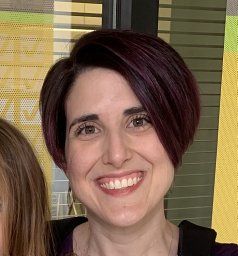 Passante Gina合作论文数7
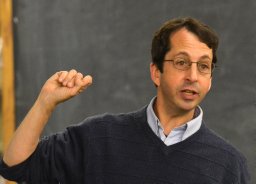 Steven J Pollock合作论文数Department of Physics;University of Colorado;Department of Physics, University of Colorado5
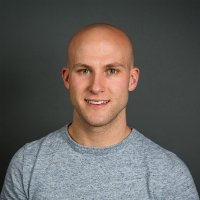 Colin Kennedy合作论文数National Institute of Standards and Technology, University of Colorado;Quantinuum3
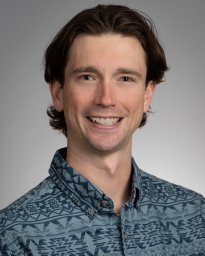 Tobias Bothwell合作论文数National Institute of Standards and Technology3
 Jun Ye (叶军)合作论文数Department of Physics, College of Arts and Sciences, University of Colorado Boulder;Joint Institute for Laboratory Astrophysics, University of Colorado Boulder;National Institute of Standards and Technology, U.S. Dept. of Commerce3
 Yee Ming Tso合作论文数2Maya Miklos合作论文数2
 James K. Thompson合作论文数NIST, Univ Colorado2
 Robinson John合作论文数2Smith Percy合作论文数1Kellen Kennedy合作论文数1Kristin A. Oliver合作论文数1
 Alexandra Werth合作论文数1Quinn Beato合作论文数1Evan Wickenden合作论文数1Diana Ryder合作论文数1Adel Al-Ghazwi合作论文数1Sarah Brookins合作论文数1Hongda Wang合作论文数1Nikolay Yegovtsev合作论文数1
 Colin G. West合作论文数1Thomas M. Horning合作论文数1
 Emma E. Nelson合作论文数Dept Phys, Univ Colorado1Grace K Hach合作论文数1
 Michael Vignal合作论文数Dept Phys, Univ Colorado1Zachary White合作论文数1
 William R. Milner合作论文数Dept Phys, Univ Colorado1
 Koushik Ganesan合作论文数Dept Phys, Univ Colorado1Courtney Peck合作论文数Natl Ctr Environm Informat, NOAA1Ella McQuaid合作论文数ATLAS Institute, University of Colorado Boulder, United States1
 Dhruv Kedar合作论文数Natl Inst Stand & Technol1Mengyu Wu (吴梦羽)合作论文数1
 Eleanor Taylor合作论文数Charing Cross Hospital, Imperial College Healthcare NHS Trust1John Robinson合作论文数1Yue Deng合作论文数University of Texas at Arlington1
 James Paul Mason合作论文数Lab Atmospher & Space Phys, Univ Colorado1
 Allison Youngblood合作论文数NASA Goddard Space Flight Center1
 Benjamin Erickson合作论文数1Oelker E合作论文数LIGO - Massachusetts Institute of Technology1
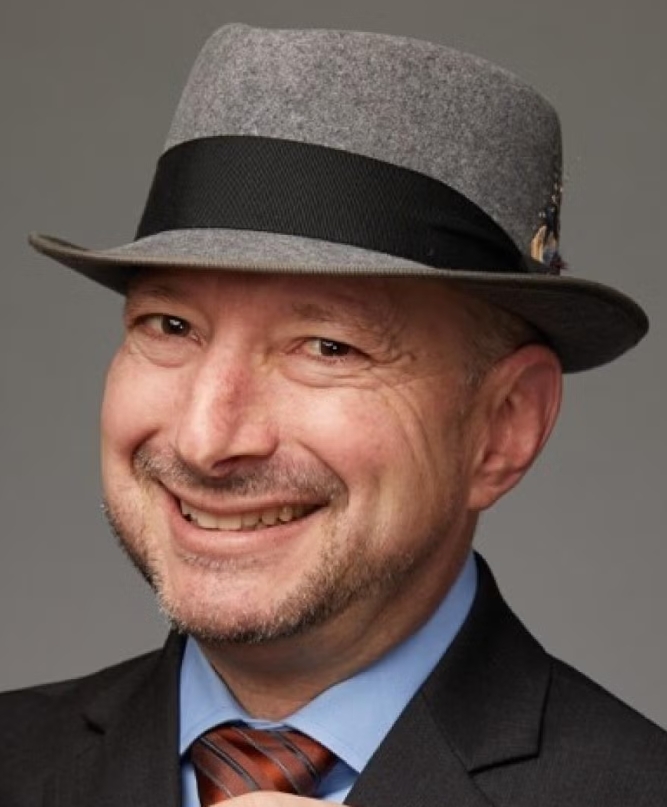 Noah Finkelstein合作论文数Department of Physics, College of Arts and Sciences, University of Colorado at Boulder1
 Thomas G. Beatty合作论文数Steward Observatory, The University of Arizona1Donald L. Woodraska合作论文数1
 H. J. Lewandowski合作论文数National Institute of Standards and Technology;Department of Physics;University of Colorado;National Institute of Standards and Technology, University of Colorado1




