SIGCSE is packed with teaching insights and inspiration. However, we get these insights and inspiration from hearing our colleagues talk about their teaching. Why not just watch them teach? This session does exactly that. Six exceptional educators will present their favorite piece of innovative lecture content just as they would to their students. The moderator, Colleen Lewis, will describe the central pedagogical move within the innovation and how this connects to education research. The goal of the session is to inspire SIGCSE attendees by highlighting innovative instruction by exceptional educators. The specific content of the innovative instruction may be applicable for some attendees, and the discussion of the underlying pedagogical move within each innovation can be applied across the attendees' teaching.
The Beauty and Joy of Computing (BJC) is a CS Principles (CSP) course developed at UC Berkeley, intended for high school juniors through university non-majors. It was twice chosen as a CSP pilot, and both the College Board and code.org have endorsed it. Since 2011, we have offered professional development to over 240 high school teachers. Our guiding philosophy is to meet students where they are, but not to leave them there. It covers the big ideas and computational thinking practices required in the AP CSP curriculum framework using an easy-to-learn blocks-based programming language called Snap! (based on Scratch), and powerful computer science ideas like recursion, higher-order functions and computability. Through the course, students learn to create beautiful images, and realize that code itself can be beautiful. Having fun is an explicit course goal. We take a "lab-centric" approach, and much of the learning occurs through guided programming labs that ask students to explore and play. In this workshop, we will provide an overview of BJC, share our experiences as instructors of the course at the university and high school level, provide a glimpse into a typical week of the course, and share details of potential crowd-funded summer professional development opportunities. This is a hands-on workshop. Laptops are required, and all "handouts" will be digital.
The Beauty and Joy of Computing (BJC) is an introductory computer science curriculum developed at UC Berkeley (and adapted at the University of North Carolina, Charlotte), intended for high school juniors through university non-majors. It was used in two of the five initial pilot programs for the AP CS Principles course being developed by the College Board and the National Science Foundation. Our overall goal is to support the CS10K project by preparing instructors to teach the AP CS Principles course through the BJC curriculum. In this workshop, we will share our experiences as instructors of the course at the university and high school level, provide a glimpse into a typical week of the course, and share details of NSF-funded summer professional development opportunities.
This workshop is for high school and college teachers of general-interest ("CS 0") computer science courses, especially the AP CS: Principles course. SNAP! (Build Your Own Blocks) is a free, browser-based, graphical, drag-and-drop language inspired by Scratch. The beauty of the Scratch programming environment, designed for 8-14 year olds, is that it makes abstract concepts more concrete and understandable to a broader audience. SNAP! extends Scratch to support older learners (14-20) with built-in named procedures (thus recursion), procedures as data (thus higher order functions), structured lists, and sprites as first class objects with inheritance. Participants will learn SNAP! hands-on. See http://snap.berkeley.edu for details. Network connected laptop required.
"Seldom was any knowledge given to keep, but to impart; the grace of this rich jewel is lost in concealment." - Bishop HallAt the SIGCSE Symposiums in 2007 and 2011, we presented panels in which seasoned teachers shared the teaching tips we wished we'd known before starting our careers [1,5]. The difference from earlier "Teaching Tips" panels [6] was that our suggestions were meant to be hidden gems less often highlighted by our colleagues or by some of the best-known teaching resources [2,3,4,7,8,9]. We clustered these tips into categories: Grading, Lecturing, Office (hours), Staff (mentoring), Exams (authoring & administering), Labs (authoring & running), Section (TA-led discussion), Projects (and homework; authoring & supporting), Classroom (organization, interactions, and incentives), Personal (fostering relationships), and Meta (advice spanning categories). The sessions were received quite well, and the audience contributed many of their own teaching tips throughout the presentations.This year, we're presenting a "High School edition", and have invited inspirational teachers from a broad variety of schools. The position statements that follow offer a random sampling of two of these "hidden" pearls; presenters will share many more during the session, and time will be provided for audience participation. We'll endeavor to capture all the tips for the online collection.
This workshop is for high school and college teachers of general-interest (CS 0) computer science courses. It presents the programming environment used in two of the five initial AP CS Principles...
The Beauty and Joy of Computing (BJC) is an introductory computer science curriculum developed at the University of California, Berkeley (and adapted at the University of North Carolina, Charlotte), intended for high school juniors through university non-majors. It was used in two of the five initial pilot programs for the AP CS Principles course being developed by the College Board and the National Science Foundation. Our overall goal is to support the CS10K project by preparing instructors to teach the AP CS Principles course through the BJC curriculum. In this workshop, we will share our experiences as instructors of the course at the university and high school level, provide a glimpse into a typical week of the course, and share details of NSF-funded summer professional development opportunities.
This workshop is for high school and college teachers of general-interest (CS 0) computer science courses. It presents the programming environment used in two of the five initial AP CS Principles pilot courses. SNAP! (Build Your Own Blocks) is a free, graphical, drag-and-drop extension to the Scratch programming language. Scratch, designed for 8--14 year olds, models programs as scripts without names, arguments, or return values. SNAP! supports older learners (14--20) by adding named procedures (thus recursion), procedures as data (thus higher order functions) structured lists, and sprites as first class objects with inheritance. Participants will learn SNAP! through discussion, programming exercises, and exploration. See http://snap.berkeley.edu for details. Laptop required.
The Beauty and Joy of Computing (BJC) is an introductory computer science curriculum developed at the University of California, Berkeley (and adapted at the University of North Carolina, Charlotte), intended for high school juniors through university non-majors. It was used in two of the five initial pilot programs for the AP CS Principles course being developed by the College Board and the National Science Foundation. Our overall goal is to support the CS10K project by preparing instructors to teach the AP CS Principles course through the BJC curriculum. In this workshop, we will share our experiences as instructors of the course at the university and high school level, provide a glimpse into a typical week of the course, and share details of NSF-funded summer professional development opportunities.
In 2006, computing education was suffering from a crisis - enrollments were dropping sharply at universities and colleges across the United States, and interest in computing from high school and middle school students was waning significantly. At the 2007 SIGCSE Symposium, the ACM Education Board organized a special session to explore the underlying causes [7]. In his keynote at the same conference, Grady Booch exhorted us to share the "passion, beauty, joy and awe" (PBJA) of computing [4]. This led to a series of room-packed sessions at the following three SIGCSE symposia to explore that idea from different perspectives [8, 9, 12]. They have provided a forum for sharing: " What we've done: Highlighting successful PBJA initiatives the presenters have undertaken or seen and wish to celebrate. - What we should do (curriculum): Pointing out where our curriculum is lacking in PBJA, and how to fix it. - How we should do it (pedagogy): Sharing how a change in attitude / focus / etc. can make strides to improving PBJA. Fortunately, enrollments have been continually rising, and there are colleges where the numbers are so strong (returning to historic highs), that some claim the crisis is over [10, 13]. Many dispute this, however, citing statistics that indicate under-represented students have not returned, and continuing negative connotations about the field [2]. Also, recent news of limited hiring in the information technology sector could have a damping affect [11]. This PBJA "movement" was born out of this enrollment crisis, but is not tied to it. There is always value in sharing novel best practices and advocating techniques that make computing fun. In the past, we tried to gather educators who brought a wide variety of perspectives (e.g., in 2010 we heard from international, domestic, high school, university and industrial representatives). This year, we've shifted from that "breadth-first" model to a "depth-first" one, and have invited three K-12 teachers who, collectively, have taught computing at an all-girls middle school, an under-served high school, and an affluent high school. The hope with this panel is to be able to drill down and understand the K-12 space, in terms of extolling the PBJA of computing.
 Eugene Lemon合作论文数8
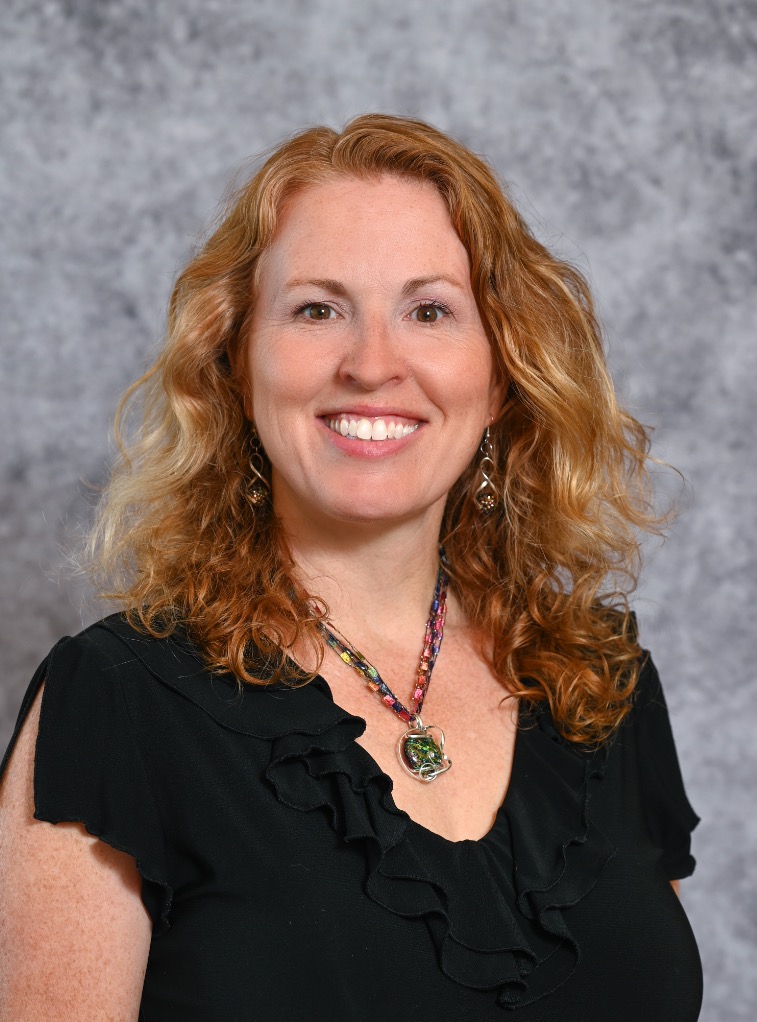 Tiffany Barnes合作论文数Department of Computer Science, College of Engineering, North Carolina State University8
 Dan Garcia合作论文数UC Berkeley Berkeley Engineering7Brian Harvey合作论文数6Sean Morris合作论文数4Zachary Machardy合作论文数4Nathaniel Titterton合作论文数3Barry Peddycord Ii合作论文数2Luke Segars合作论文数1Baker Franke合作论文数1Marnie Hill合作论文数1
 Michael Ball合作论文数Department of Electrical Engineering and Computer Science, University of California, Berkeley1
 Shikha Singh合作论文数Wellesley College1
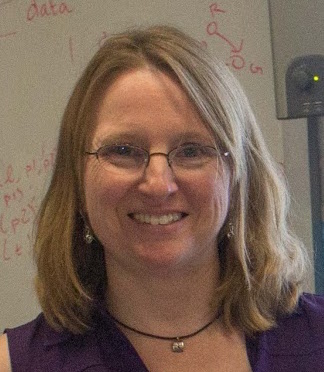 Kathi Fisler合作论文数Department of Computer Science, Brown University1Stephanie Hoeppner合作论文数1
 Colleen M. Lewis合作论文数Department of Computer Science, The Grainger College of Engineering, University of Illinois at Urbana-Champaign1
 David J. Malan合作论文数School of Engineering and Applied Sciences, Harvard University;Graduate School of Education, Faculty of Arts and Sciences, Harvard University1
 Manuel A. Pérez-Quiñones合作论文数Department of Software and Information Systems, College of Computing and Informatics, University of North Carolina;Computer and Information Science and Engineering Division, National Science Foundation1




