The leadership of our nation is currently grappling with a multitude of issues related to potential future terrorist activities for which there are no easy answers. Society is increasingly dependent on advances in science and technology to facilitate the examination and development of solutions to the critical problems we face today. For more than a century, the nation has turned to the National Academies— National Academy of Sciences, National Academy of Engineering, Institute of Medicine, and National Research Council—for independent, objective scientific advice. A new report of the National Academies Board on Agriculture and Natural Resources, Countering Agricultural Bioterorrism, addresses the nation’s vulnerability to terrorist attacks against agriculture and provides recommendations for strengthening our ability to prepare and respond to such attacks.
Determining changes in the composition of cell populations is made possible by technologies like single-cell transcriptomics, CyTOF, and microbiome sequencing. However, existing methods for differential abundance do not model some ...Cellular omics such as single-cell genomics, proteomics, and microbiomics allow the characterization of tissue and microbial community composition, which can be compared between conditions to identify biological drivers. This strategy has been critical to ...
chapter Free Access Share on How DENDRAL was conceived and born (participants' discussion) Authors: A. Weissberg View Profile , J. Lederberg View Profile , L. Darden View Profile Authors Info & Claims A history of medical informaticsJune 1990 Pages 45–47https://doi.org/10.1145/89482.89485Published:01 June 1990Publication History 0citation8DownloadsMetricsTotal Citations0Total Downloads8Last 12 Months1Last 6 weeks0 Get Citation AlertsNew Citation Alert added!This alert has been successfully added and will be sent to:You will be notified whenever a record that you have chosen has been cited.To manage your alert preferences, click on the button below.Manage my AlertsNew Citation Alert!Please log in to your account Save to BinderSave to BinderCreate a New BinderNameCancelCreateExport CitationPublisher SiteeReaderPDF
Reproduced with permission from the American Association for the Advancement of Science. Readers may view, browse, and/or download this material for temporary copying purposes only, provided these uses are for noncommercial personal purposes. Except as provided by law, this material may not be further reproduced, distributed, transmitted, modified, adapted, performed, displayed, published, or sold in whole or in part, without prior written permission from AAAS.
To determine if (poly)phenols alter cardiovascular risk factors, we assessed the potential of a high (poly)phenol beverage drink, rich in hydroxycinnamates and flavonoids, to modify vascular function in middle aged, overweight or obese subjects without medical co-morbidity in a randomized placebo controlled pilot study.Randomly assigned active 250 ml beverages containing 361 mg of (poly)phenols and 120 mg of vitamin C or placebo (no polyphenol/vitamin C) were taken twice daily for 4 weeks. Both beverages contained 40 kcals/250 ml. The primary end-points were pulse wave velocity (PWV) and cutaneous microvascular responses to sodium nitroprusside (SNP) and acetyl choline (ACh) laser doppler iontophoresis. A range of established and novel plasma markers were also measured.Twenty subjects received active beverage and 19 placebo; all completed the study. There was no difference in cutaneous vascular response to either SNP or ACh with mean group differences (logΔ area under perfusion curve) of 0.30 (−0.65, 1.26) and 0.35 (−0.11, 0.81) respectively. Nor was there evidence of a change in log PWV with a mean group difference of 0.029 m/s (−0.042, 0.10). No significant differences were seen in plasma leptin, apolipoproteins, cystatin C, insulin, adiponectin, CRP, ICAM-1, E-Selectin or t-PA, but IL-6 increased in active versus placebo recipients (0.32 vs – 0.18 pg/ml; p = 0.010).There was no evidence for a short-term beneficial effect of (poly)phenol intervention on microcutaneous vascular response or pulse wave velocity, and no evidence for a benefit on established or novel risk factors in overweight or obese subjects. Our results do not support a short-term benefit of (poly)phenol supplementation on cardiometabolic risk.Registration: Clinical Trials.gov (NCT00795834).
Bacillus subtilis-Bacillus globigii hybrids were made by integration of the B. globigii aromatic region (aroB to aroE) as an intergenote in the B. subtillis chromosome. Transformation of the heterologous intergenote by B. subtillis DNA (or vice versa) occurred at about 10% of the frequency of homologous transformation by hybrid donors into the same region. Heterologous intergenote crosses were unusually sensitive to shear fragmentations of donor DNA to sizes less than 30 X 10(6) to 40 X 10(6) daltons. In all cases, the entire intergenote was transferred en bloc. Homologous transformation of intergenote markers by B. globigii DNA was not unusually shear sensitive, and linkage was normal for markers in the intergenote. A model is proposed in which efficient heterologous intergenote transformation occurs by recognition and base pairing of homologous DNA sequences of both flanks of the intergenote.
EcoRI-cleaved deoxyribonucleic acid segments carrying two genes from Bacillus subtilis, pyr and leu, have been cloned in Escherichia coli by insertion into a derivative of the E. coli bacteriophage lambda. Lysogenization of pyrimidine- and leucine-requiring auxotrophs of E. coli by the hybrid phages exhibited prototrophic phenotypes, suggesting the expression of B. subtilis genes in E. coli. Upon induction, these lysogens produced lysates capable of transducing E. coli pyr and leu auxotrophs to prototrophy with high frequency. Isolated DNAs of these bacteriophages have the ability to transform B. subtilis auxotrophs to pyr and leu independence and contain EcoRI-cleaved segments which hybridize to corresponding segments of B. subtilis.
ADVERTISEMENT RETURN TO ISSUEPREVArticleNEXTApplications of artificial intelligence for chemical inference. 22. Automatic rule formation in mass spectrometry by means of the meta-DENDRAL programB. G. Buchanan, D. H. Smith, W. C. White, R. J. Gritter, E. A. Feigenbaum, J. Lederberg, and Carl DjerassiCite this: J. Am. Chem. Soc. 1976, 98, 20, 6168–6178Publication Date (Print):September 1, 1976Publication History Published online1 May 2002Published inissue 1 September 1976https://pubs.acs.org/doi/10.1021/ja00436a017https://doi.org/10.1021/ja00436a017research-articleACS PublicationsRequest reuse permissionsArticle Views297Altmetric-Citations67LEARN ABOUT THESE METRICSArticle Views are the COUNTER-compliant sum of full text article downloads since November 2008 (both PDF and HTML) across all institutions and individuals. These metrics are regularly updated to reflect usage leading up to the last few days.Citations are the number of other articles citing this article, calculated by Crossref and updated daily. Find more information about Crossref citation counts.The Altmetric Attention Score is a quantitative measure of the attention that a research article has received online. Clicking on the donut icon will load a page at altmetric.com with additional details about the score and the social media presence for the given article. Find more information on the Altmetric Attention Score and how the score is calculated. Share Add toView InAdd Full Text with ReferenceAdd Description ExportRISCitationCitation and abstractCitation and referencesMore Options Share onFacebookTwitterWechatLinked InRedditEmail Other access optionsGet e-Alertsclose Get e-Alerts
Chemischer InformationsdienstVolume 7, Issue 52 Physical Organic Chemistry ChemInform Abstract: APPLICATIONS OF ARTIFICIAL INTELLIGENCE FOR CHEMICAL INFERENCE. 22. AUTOMATIC C RULE FORMATION IN MASS SPECTROMETRY BY MEANS OF THE META-DENDRAL PROGRAM B. G. BUCHANAN, B. G. BUCHANANSearch for more papers by this authorD. H. SMITH, D. H. SMITHSearch for more papers by this authorW. C. WHITE, W. C. WHITESearch for more papers by this authorR. J. GRITTER, R. J. GRITTERSearch for more papers by this authorE. A. FEIGENBAUM, E. A. FEIGENBAUMSearch for more papers by this authorJ. LEDERBERG, J. LEDERBERGSearch for more papers by this authorC. DJERASSI, C. DJERASSISearch for more papers by this author B. G. BUCHANAN, B. G. BUCHANANSearch for more papers by this authorD. H. SMITH, D. H. SMITHSearch for more papers by this authorW. C. WHITE, W. C. WHITESearch for more papers by this authorR. J. GRITTER, R. J. GRITTERSearch for more papers by this authorE. A. FEIGENBAUM, E. A. FEIGENBAUMSearch for more papers by this authorJ. LEDERBERG, J. LEDERBERGSearch for more papers by this authorC. DJERASSI, C. DJERASSISearch for more papers by this author First published: December 28, 1976 https://doi.org/10.1002/chin.197652060AboutPDF ToolsRequest permissionExport citationAdd to favoritesTrack citation ShareShare Give accessShare full text accessShare full-text accessPlease review our Terms and Conditions of Use and check box below to share full-text version of article.I have read and accept the Wiley Online Library Terms and Conditions of UseShareable LinkUse the link below to share a full-text version of this article with your friends and colleagues. Learn more.Copy URL Share a linkShare onFacebookTwitterLinkedInRedditWechat No abstract is available for this article. Volume7, Issue52December 28, 1976 RelatedInformation
The transfecting efficiency of P22 DNA on “rough” strains of Salmonella typhimurium or non-restricting mutants of Escherichia coli K12 approaches 3 × 10⁻⁸ plaques/genome equivalent. It increases 20-fold upon complete erosion of the terminally redundant regions of the DNA molecule with either λ exonuclease or exonuclease III. Eroded DNA molecules form circles and linear oligomers upon annealing. The circular monomers display transfecting activity about ten times higher than that of eroded linear monomers or hydrogen-bonded oligomers. recB recC sbcB strains of E. coli K12 are transfected with P22 DNA with an efficiency of 1.5 × 10⁻⁶ plaques/genome equivalent. The activity of DNA molecules on these strains is not augmented by erosion. This suggests that the activation by erosion, seen in assays on rec+ genotypes, is due to the formation of hydrogen-bonded circular molecules, which more readily escape degradation by the recBC nuclease.
The lesions induced in Bacillus subtilis deoxyribonucleic acid (DNA) after treating bacterial cells (in vivo) and bacterial DNA (in vitro) with chloramine were studied biologically and physically. Single-strand breaks and a few double-strand scissions (at higher chloramine doses) accompanied loss of DNA-transforming activity in both kinds of treatments. Chloramine was about three times more efficient in vitro than in vivo in inducing DNA single-strand breaks. DNA was slowly chlorinated; the subsequent efficiency of producing DNA breaks was high. Chlorination of cells also reduced activity of endonucleases in cells; however, chlorinated DNA of both treatments was sensitized to cleavage by endonucleases. The procedure of extracting DNA from cells treated with chloramine induced further DNA degradation. Both treatments introduced a small fraction of alkali-sensitive lesions in DNA. DNA chlorinated in vitro showed further reduction in transforming activity as well as further degradation after incubation at 50 C for 5 h whereas DNA extracted from chloramine-treated cells did not show such a heat sensitivity.
T7 bacteriophage infects with equal efficiency restriction-proficient Escherichia coli K12 cells and the restriction-deficient mutants. To the contrary, the purified phage DNA transfects wild-type cells at a very low efficiency (10−9 plaques/genome equivalent). Mutations in the recB recC (exonuclease V) and sbcB (exonuclease I) loci increase the transfecting efficiency tenfold. A 1000-fold increase is obtained with cells deficient in restriction. No further increase is observed in hosts carrying both sets of mutations. The transfecting activity of the DNA on restriction-deficient hosts increases another 20-fold (up to 4 × 10⁻⁵ plaques/genome equivalent) by complete erosion of the redundant regions of DNA with λ exonuclease, both in rec+ and recB recC sbcB genotypes. Circles and linear oligomers arising from the annealing of eroded DNA show the same transfecting activity as the unannealed monomers. The terminal redundancy of the genome, as measured by the onset of annealability of eroded molecules, was found to comprise 50 to 100 base-pairs.
Chloramine (which occurs widely as a by-product of sanitary chlorination of water supplies) is shown to be a weak mutagen, when reversion of trp C to trp + in Bacillus subtilis is used as an assay. Some DNA-repair mutants appear to be more sensitive to chloramine, suggesting the involvement of DNA targets in bactericide. The influence of plating media on survival of cells treated with chloramine suggests a bacterial repair system acting upon potentially lethal lesions induced by chloramine.
The cleavage of Bacillus subtilis DNA by EcoR1 restriction endonuclease produced segments which retain various degrees of genetic transforming activity. The active segments analyzed thus far, range in size from 23 to 3 kilobases and can be partially separated by agarose gel electrophoresis. Various markers can thus be enriched from 30- to 60-fold.
 Dh Smith合作论文数10
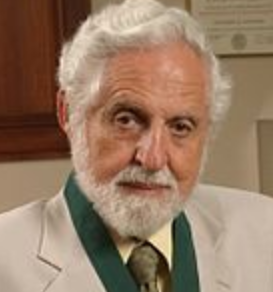 Carl Djerassi合作论文数Department of Chemistry, Stanford University9
 Bruce Buchanan合作论文数Department of Computer Science, School of Computing and Information, University of Pittsburgh;Keck Center for Advanced Training in Computational Biology, University of Pittsburgh9Ea Feigenbaum合作论文数8C. Sagan合作论文数6W.C. White合作论文数5Am Duffield合作论文数5
 Stanislav Ehrlich合作论文数University College London;Research Centre of Jouy-en-Josas, National Institute for Agricultural Research;King’s College London5V Sgaramella合作论文数4H Bursztyn合作论文数3R. Tucker合作论文数3L. Quam合作论文数3
 Joseph Veverka合作论文数Department of Astronomy, The College of Arts & Sciences, Cornell University3Elliott C. Levinthal合作论文数3E. C. Levinthal合作论文数3R. Dubisch合作论文数3Rs Engelmore合作论文数2D.G. Buchanan合作论文数2B. Eross合作论文数2N. S. Sridharan合作论文数2Re Carhart合作论文数2El Tatum合作论文数2Sm Johnson合作论文数2R. French合作论文数2Shih K L合作论文数2
 Edward A Feigenbaum (爱德华·费根鲍姆)合作论文数Stanford University2
 Larry Masinter合作论文数Interlisp.org2Roy J Gritter合作论文数2G. L. Sutherland合作论文数2Peter J Gierasch合作论文数2D. B. Cowie合作论文数1Norman Grossblatt合作论文数1Gustav Schroll合作论文数1Derek Sweatt合作论文数1michael ascher合作论文数1B Halpern合作论文数1B. A. Smith合作论文数UNIV ARIZONA,TUCSON,AZ 85721, USA1W Patton合作论文数1y hoyano合作论文数1Ronald Harris-Warrick合作论文数Neurobiology and Behavior, College of Agriculture and Life Sciences, Cornell University1Ganesan A T合作论文数1
 Marjorie Hoy合作论文数Department of Entomology, University of California, Berkeley1
 Larry Madden合作论文数Department of Plant Pathology, College of Food, Agricultural, and Environmental Sciences, The Ohio State University1
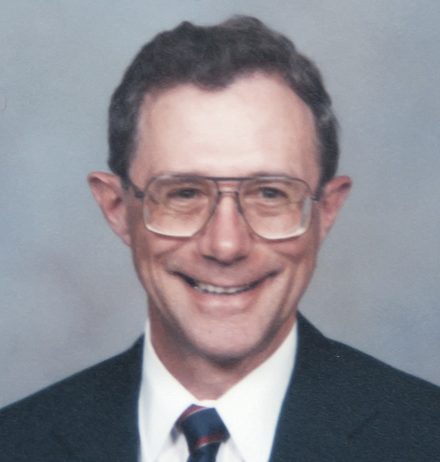 Harley W. Moon合作论文数College of Veterinary Medicine, Iowa State University1Helen H. Jensen合作论文数Iowa State University1
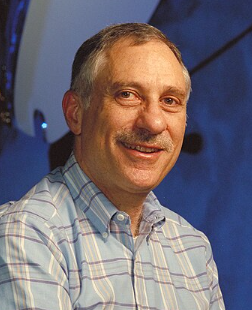 James B. Pollack合作论文数Ames Research Center, NASA1W Pereira合作论文数1




