The Oak Ridge Leadership Computing Facility (OLCF) has a long history of supporting and promoting GPU-accelerated computing starting with the deployment of the Titan supercomputer in 2021 and continuing with the Summit supercomputer which has a theoretical peak performance of approximately 200 petaflops. Because the majority of Summit's computational power comes from its 27,972 GPUs, users must port their applications to one of the supported programming models in order to make efficient use of the system. To prepare the transition to Frontier, the OLCF's exascale supercomputer, users will need to adapt to an entirely new ecosystem which will include new hardware and software technologies. First, users will need to familiarize themselves with the AMD Radeon GPU architecture. Furthermore, users who have been previously relying on CUDA will need to transition to the Heterogeneous-Computing Interface for Portability (HIP) or one of the other supported programming models (e.g., OpenMP, OpenACC). In this work, we describe our initial experiences and lessons learned in porting three applications or proxy apps currently running on Summit to the HPE/Cray ecosystem to leverage the compute power from AMD GPUs: minisweep, GenASiS, and Sparkler. Each one is representative of current production workloads utilized at the OLCF, different programming languages, and different programming models.
We present an exascale approach for producing global scale, high resolution, longitudinally based geoclimate classifications. Using a GPU implementation of the DUO Similarity Metric on the Summit supercomputer, we calculated the pairwise environmental similarity of 156,384,190 vectors of 414,640 encoded elements derived from 71 environmental variables over a 50-year time span at 1km 2 resolution. GPU matrix-matrix (GEMM) kernels were optimized for the GPU architecture and their outputs were managed through aggressive concurrent MPI rank CPU communication, calculations, and transfers. Using vector transformation and highly optimized operations of generalized distributed dense linear algebra, calculation of all-vector-pairs similarity resulted in 5.07 × 10 21 element comparisons and reached a peak performance of 2.31 exaflops. We demonstrated this method using existing and synthesized climate layers to show how geography can be parsed using high-performance computing. Geoclimate zones are important tools for understanding how environmental variables impact natural systems, particularly for agriculture and conservation with relevance to climate change. Historically, classification systems have been low resolution, based on limited variables, or subjective. To identify climate classes, we clustered DUO outputs at varying stringency, producing 69, 133, 340, and 717 global geoclimate zones. Our approach produced global scale, high resolution, longitudinally informed climate classifications that can be used in precision agriculture, cultivar breeding efforts, and conservation programs.
Predicted growth in world population will put unparalleled stress on the need for sustainable energy and global food production, as well as increase the likelihood of future pandemics. In this work, we identify high-resolution environmental zones in the context of a changing climate and predict longitudinal processes relevant to these challenges. We do this using exhaustive vector comparison methods that measure the climatic similarity between all locations on Earth at high geospatial resolution relative to global-scale analyses. The results are captured as networks, in which edges between geolocations are defined if their historical climate similarities exceed a threshold. We apply Markov clustering and our novel correlation of correlations method to the resulting climatic networks, which provides unprecedented agglomerative and longitudinal views of climatic relationships across the globe. The methods performed here resulted in the fastest (9.37 × 10¹⁸ operations/s) and one of the largest 168.7 × 10²¹ operations) scientific computations ever performed, with more than 100 quadrillion edges considered for a single climatic network. Our climatic analysis reveals areas of the world experiencing rapid environmental changes, which can have important implications for global carbon fluxes and zoonotic spillover events. Correlation and network analyses of this kind are widely applicable across computational and predictive biology domains, including systems biology, ecology, carbon cycles, biogeochemistry, and zoonosis research.
The advent of Exascale computing invites an assessment of existing best practices for developing application readiness on the world's largest supercomputers. This work details observations from the last four years in preparing scientific applications to run on the Oak Ridge Leadership Computing Facility's (OLCF) Frontier system. This paper addresses a range of topics in software including programmability, tuning, and portability considerations that are key to moving applications from existing systems to future installations. A set of representative workloads provides case studies for general system and software testing. We evaluate the use of early access systems for development across several generations of hardware. Finally, we discuss how best practices were identified and disseminated to the community through a wide range of activities including user-guides and trainings. We conclude with recommendations for ensuring application readiness on future leadership computing systems.
In this work we identify changes in high-resolution zones across the globe linked by environmental similarity that have implications for agriculture, bioenergy, and zoonosis. We refine exhaustive vector comparison methods with improved similarity metrics as well as provide multiple methods of amalgamation across 744 months of climatic data. The results of the vector comparison are captured as networks which are analyzed using static and longitudinal comparison methods to reveal locations around the globe experiencing dramatic changes in abiotic stress. Specifically we (i) incorporate updated similarity scores and provide a comparison between similarity metrics, (ii) implement a new feature for resource optimization, (iii) compare an agglomerative view to a longitudinal view, (iv) compare across 2-way and 3-way vector comparisons, (v) implement a new form of analysis, and (vi) demonstrate biological applications and discuss implications across a diverse set of species distributions by detecting changes that affect their habitats. Species of interest are related to agriculture (e.g., coffee, wine, chocolate), bioenergy (e.g., poplar, switchgrass, pennycress), as well as those living in zones of concern for zoonotic spillover that may lead to pandemics (e.g., eucalyptus, flying foxes).
Frontier, a supercomputer at the Oak Ridge Leadership Computing Facility (OLCF), debuted atop the Top500 list of the world’s most powerful supercomputers in June 2022 as the very first computer to produce exascale performance. Making sure scientific applications are optimized on this architecture is the critical link necessary to translate the newly available computational power into scientific insight and solutions. To that goal, the OLCF developed the Center for Accelerated Application Readiness (CAAR) program to ensure that a suite of highly optimized applications is ready for scientific runs at the onset of production operations for Frontier. This paper describes our experience in porting and optimizing such suite of applications in the OLCF’s CAAR program.
Current methods for defining SARS-CoV-2 lineages ignore the vast majority of the SARS-CoV-2 genome. We develop and apply an exhaustive vector comparison method that directly compares all known SARS-CoV-2 genome sequences to produce novel lineage classifications. We utilize data-driven models that (i) accurately capture the complex interactions across the set of all known SARS-CoV-2 genomes, (ii) scale to leadership-class computing systems, and (iii) enable tracking how such strains evolve geospatially over time. We show that during the height of the original Omicron surge, countries across Europe, Asia, and the Americas had a spatially asynchronous distribution of Omicron sub-strains. Moreover, neighboring countries were often dominated by either different clusters of the same variant or different variants altogether throughout the pandemic. Analyses of this kind may suggest a different pattern of epidemiological risk than was understood from conventional data, as well as produce actionable insights and transform our ability to prepare for and respond to current and future biological threats.
We describe our development of ab initio protein-ligand binding pose prediction models based on transformers and binding affinity prediction models based on the neural tangent kernel (NTK). Folding both protein and ligand, the TwoFold models achieve efficient and quality predictions matching state-of-the-art implementations while additionally reconstructing protein structures. Solving NTK models points to a new use case for highly optimized linear solver benchmarking codes on HPC.
As the US Department of Energy (DOE) computing facilities began deploying petascale systems in 2008, DOE was already setting its sights on exascale. In that year, DARPA published a report on the feasibility of reaching exascale. The report authors identified several key challenges in the pursuit of exascale including power, memory, concurrency, and resiliency. That report informed the DOE's computing strategy for reaching exascale. With the deployment of Oak Ridge National Laboratory's Frontier supercomputer, we have officially entered the exascale era. In this paper, we discuss Frontier's architecture, how it addresses those challenges, and describe some early application results from Oak Ridge Leadership Computing Facility's Center of Excellence and the Exascale Computing Project.
As the US Department of Energy (DOE) computing facilities began deploying petascale systems in 2008, DOE was already setting its sights on exascale. In that year, DARPA published a report on the feasibility of reaching exascale. The report authors identified several key challenges in the pursuit of exascale including power, memory, concurrency, and resiliency. That report informed the DOE's computing strategy for reaching exascale. With the deployment of Oak Ridge National Laboratory's Frontier supercomputer, we have officially entered the exascale era. In this paper, we discuss Frontier's architecture, how it addresses those challenges, and describe some early application results from Oak Ridge Leadership Computing Facility's Center of Excellence and the Exascale Computing Project.
The Summit system at Oak Ridge National Lab-oratory (ORNL) has been the world's top AI for science su-percomputer for several years, ranked world's fastest computer at its 2018 launch and currently top system in the US and #2 on the TOP5OO list. Summit's purposeful design to handle both conventional modeling and simulation science and emerging AI workloads has made it a leading destination for AI-powered computational science. We report here on AI for science usage on Summit near the midpoint of its lifespan. We review AI usage across the many science projects that have used Summit. We then examine in detail a set of applications scaling AI to full system as well as projects implementing AI-coordinated science discovery workflows on Summit. Finally, we offer some observations regarding the future of advancing scientific knowledge and understanding via AI, especially in the context of leadership-class scientific computing.
The rise of machine learning (ML) applications and their use of mixed precision to perform interesting science are driving forces behind AI for science on HPC. The convergence of ML and HPC with mixed precision offers the possibility of transformational changes in computational science. The HPL-AI benchmark is designed to measure the performance of mixed precision arithmetic as opposed to the HPL benchmark which measures double precision performance. Pushing the limits of systems at extreme scale is nontrivial -little public literature explores optimization of mixed precision computations at this scale. In this work, we demonstrate how to scale up the HPL-AI benchmark on the pre-exascale Summit and exascale Frontier systems at the Oak Ridge Leadership Computing Facility (OLCF) with a cross-platform design. We present the implementation, performance results, and a guideline of optimization strategies employed for delivering portable performance on both AMD and NVIDIA GPUs at extreme scale.
At the 2007 Cray User Group meeting, the Oak Ridge Leadership Computing Facility (OLCF) introduced the OLCF Test Harness (OTH), a framework[1] used for acceptance testing of the Jaguar supercomputer[2]. Since then, the OTH framework has evolved to version 2.0 which adds new features and streamlines usability. The OTH is the key piece of software used to orchestrate acceptance testing for all OLCF computational resources before they are deployed for production use, including our leadership class high performance computing (HPC) systems. The OTH framework is written in Python and is publicly available[3]. In this paper, we first describe the requirements, design, and structure of the OTH. Then, we present specific improvements developed to support acceptance testing of the OLCF’s Summit system[4]. We will also showcase new OTH features that have been added to streamline the acceptance test process as well as the motivation behind those changes. As part of this work, we also evaluated different workflow tools in order to determine whether these tools could complement the OTH in two key areas: automation and reporting. The advantages and disadvantages identified with each tool will be discussed. Lastly, we summarize the challenges and lessons learned collected from using the OTH for the acceptance of the last three flagship systems at the OLCF. These may be useful for other HPC centers developing their own testing frameworks or those interested in using the OTH. Keywords-automated testing framework, high performance computing, workflows
SummaryThis article studies mini‐applications—Minisweep, GenASiS, GPP, and FF—that use computational methods commonly encountered in HPC. We have ported these applications to develop OpenACC and OpenMP versions, and evaluated their performance on Titan (Cray XK7 with K20x GPUs), Cori (Cray XC40 with Intel KNL), Summit (IBM AC922 with Volta GPUs), and Cori‐GPU (Cray CS‐Storm 500NX with Intel Skylake and Volta GPUs). Our goals are for these new ports to be useful to both application and compiler developers, to document and describe the lessons learned and the methodology to create optimized OpenMP and OpenACC versions, and to provide a description of possible migration paths between the two specifications. Cases where specific directives or code patterns result in improved performance for a given architecture are highlighted. We also include discussions of the functionality and maturity of the latest compilers available on the above platforms with respect to OpenACC or OpenMP implementations.
High-performance computing (HPC) increasingly relies on heterogeneous architectures to achieve higher performance. In the Oak Ridge Leadership Facility (OLCF), Oak Ridge, TN, USA, this trend continues as its latest supercomputer, Summit, entered production in early 2019. The combination of IBM POWERS CPU and NVIDIA V100 GPU, along with a fast NVLink2 interconnect and other latest technologies, pushes system performance to a new height and breaks the exascale barrier by certain measures. Due to Summit powerful GPUs and much higher GPU-CPU ratio, offloading to accelerators becomes a requirement for any application, which intends to effectively use the system. To facilitate navigating a complex landscape of competing heterogeneous architectures, a collection of applications from a wide spectrum of scientic domains is selected for early adoption on Summit. In this article, the experience and lessons learned are summarized, in the hope of providing useful guidance to address new programming challenges, such as scalability, performance portability, and software maintainability, for future application development efforts on heterogeneous HPC systems.
Various 'omics data types have been generated for Populus trichocarpa, each providing a layer of information which can be represented as a density signal across a chromosome. We make use of genome sequence data, variants data across a population as well as methylation data across 10 different tissues, combined with wavelet-based signal processing to perform a comprehensive analysis of the signature of the centromere in these different data signals, and successfully identify putative centromeric regions in P. trichocarpa from these signals. Furthermore, using SNP (single nucleotide polymorphism) correlations across a natural population of P. trichocarpa, we find evidence for the co-evolution of the centromeric histone CENH3 with the sequence of the newly identified centromeric regions, and identify a new CENH3 candidate in P. trichocarpa.
Summit, the latest flagship supercomputer deployed at Oak Ridge Leadership Computing Facility (OLCF), became the number one system in the TOP500 [ 17 ] list in June 2018 and retained its top spot in the November 2018 list. An extensive acceptance test plan was developed to evaluate the unique features introduced in the Summit architecture and system software stack. The acceptance test also includes tests to ensure that the system is reliable, stable, and performant.
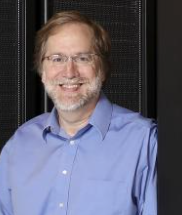 Daniel Jacobson合作论文数Biosciences Division, Oak Ridge National Laboratory12
 Oscar elias Hernandez合作论文数Department of Computer Science, University of Houston12
 Verónica G. Vergara Larrea合作论文数Oak Ridge Natl Lab, Natl Ctr Computat Sci, Oak Ridge, TN USA10
 Bronson Messer合作论文数Scientific Computing and Theoretical Physics Groups, Oak Ridge National Laboratory;Department of Physics & Astronomy, University of Tennessee8
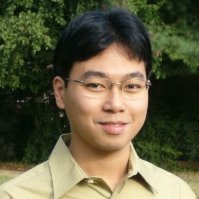 Reuben D. Budiardja合作论文数Physics Division;Oak Ridge National Laboratory;Physics Division, Oak Ridge National Laboratory8
 Veronica G. Melesse Vergara合作论文数7
 Markus Eisenbach合作论文数Oak Ridge National Laboratory7
 Arnold Tharrington合作论文数6Don Maxwell合作论文数6
 Des Weighill合作论文数UCB6
 Thomas Evans合作论文数Oak Ridge National Laboratory6
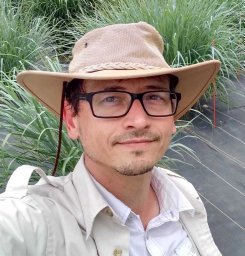 Jared Streich合作论文数Oak Ridge Natl Lab, Biosci Div, Oak Ridge, TN 37830 USA5
 Steven P. Hamilton合作论文数5
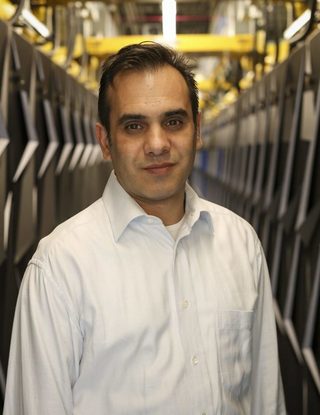 Sarp Oral合作论文数Oak Ridge National Laboratory;Florida State University;OpenSFS5
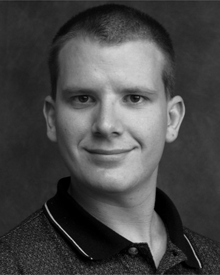 Mark Berrill合作论文数Electrical and Computer Engineering Department, Colorado State University5
 Michael J. Brim合作论文数Computer Sciences Department;University of Wisconsin;Computer Sciences Department, University of Wisconsin5
 Sunita Chandrasekaran合作论文数University of Houston5Stephen Nichols合作论文数4Antigoni Georgiadou合作论文数4Thomas Papatheodore合作论文数4Matthew Ezell合作论文数4
 Kainer David合作论文数Research School of Biology, The Australian National University4Gregory G. Davidson合作论文数4Christopher Zimmer合作论文数Otsuka Maryland Research Institute4
 Sharlee Climer合作论文数University of Missouri-St. Louis4
 David Bernholdt合作论文数Computer Science and Mathematics Division, Oak Ridge National Laboratory4Feiyi Wang (王菲易)合作论文数Center of Computational Science
Oak Ridge National Laboratory4
David Bernholdt合作论文数Computer Science and Mathematics Division, Oak Ridge National Laboratory4Feiyi Wang (王菲易)合作论文数Center of Computational Science
Oak Ridge National Laboratory4 John Alexander Turner合作论文数3
 Hao Lu合作论文数3
 Joao Gabriel Felipe Machado Gazolla合作论文数National Virtual Biotechnology Laboratory, US Department of Energy3
 Jonathon Romero合作论文数The Bredesen Center for Interdisciplinary Research and Graduate Education, University of Tennessee Knoxville3Piet Jones合作论文数Bredesen Ctr Interdisciplinary Res & Grad Educ, Univ Tennessee3
 Anna Furches合作论文数Bredesen Ctr Interdisciplinary Res & Grad Educ, Univ Tennessee3John Lagergren合作论文数Oak Ridge National Laboratory3
 Mikaela Cashman合作论文数Univ Nebraska, Dept Comp Sci & Engn, Lincoln, NE 68588 USA3Swen Boehm合作论文数Oak Ridge Natl Lab, Comp Sci & Math Div, Oak Ridge, TN 37830 USA3
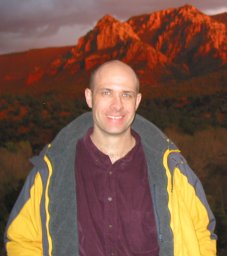 DiFazio Stephen P合作论文数Dept Biol, W Virginia Univ3M. Graham Lopez合作论文数3
 Matthew R. Norman合作论文数3
 Macaya-Sanz D合作论文数Forest Research Centre, INIA3
 Jack Dongarra合作论文数Department of Electrical Engineering and Computer Science, The University of Tennessee;Innovative Computing Laboratory, The University of Tennessee;Center for Information Technology Research, The University of Tennessee;School of Mathematics, University of Manchester;Computer Science and Mathematics Division, Oak Ridge National Laboratory3
 Stanimire Tomov合作论文数University of Tennessee3
 Norbert Podhorszki合作论文数Research Institute for Measurement and Computing;Hungarian Academy of Sciences;Research Institute for Measurement and Computing, Hungarian Academy of Sciences3
 Mallikarjun Shankar合作论文数Oak Ridge National Laboratory3
 Azzam Haidar合作论文数Department of Electrical Engineering and Computer Science, The University of Tennessee3Scott Atchley合作论文数Oak Ridge National Laboratory, Oak Ridge, TN3Michael A. Matheson合作论文数3
 Manesh Shah合作论文数3Nicholas Frontiere合作论文数3




