The measurement of direct photons from Au+Au collisions at √sNN=39 and 62.4 GeV in the transverse-momentum range 0.4
The PHENIX collaboration presents first measurements of low-momentum (0.41 GeV/c) direct-photon yield dN_{γ}^{dir}/dη is a smooth function of dN_{ch}/dη and can be well described as proportional to (dN_{ch}/dη)^{α} with α≈1.25. This scaling behavior holds for a wide range of beam energies at the Relativistic Heavy Ion Collider and the Large Hadron Collider, for centrality selected samples, as well as for different A+A collision systems. At a given beam energy, the scaling also holds for high p_{T} (>5 GeV/c), but when results from different collision energies are compared, an additional sqrt[s_{NN}]-dependent multiplicative factor is needed to describe the integrated-direct-photon yield.
Measurements of midrapidity charged-particle multiplicity distributions, dN(ch)/d eta, and midrapidity transverse-energy distributions, dE(T)/d eta, are presented for a variety of collision systems and energies. Included are distributions for Au + Au collisions at root s(NN) = 200, 130, 62.4, 39, 27, 19.6, 14.5, and 7.7 GeV, Cu + Cu collisions at root s(NN) = 200 and 62.4 GeV, Cu + Au collisions at root s(NN) = 200 GeV, U + U collisions at root s(NN) = 193 GeV, d + Au collisions at root s(NN) = 200 GeV, He-3 + Au collisions at root s(NN) = 200 GeV, and p + p collisions at root s(NN) = 200 GeV. Centrality-dependent distributions at midrapidity are presented in terms of the number of nucleon participants, N-part, and the number of constituent quark participants, N-qp. For all A + A collisions down to root s(NN) = 7.7 GeV, it is observed that the midrapidity data are better described by scaling with N-qp than scaling with N-part. Also presented are estimates of the Bjorken energy density, epsilon(BJ), and the ratio of dE(T)/d eta to dN(ch)/d eta, the latter of which is seen to be constant as a function of centrality for all systems.
We have studied the dependence of azimuthal anisotropy nu(2) for inclusive and identified charged hadrons in Au + Au and Cu + Cu collisions on collision energy, species, and centrality. The values of nu(2) as a function of transverse momentum pT and centrality in Au + Au collisions at root s(NN) = 200 and 62.4 GeV are the same within uncertainties. However, in Cu + Cu collisions we observe a decrease in nu(2) values as the collision energy is reduced from 200 to 62.4 GeV. The decrease is larger in the more peripheral collisions. By examining both Au + Au and Cu + Cu collisions we find that nu(2) depends both on eccentricity and the number of participants, N-part. We observe that nu(2) divided by eccentricity (epsilon) monotonically increases with N-part and scales as N-part(1/3). The Cu + Cu data at 62.4 GeV falls below the other scaled nu(2) data. For identified hadrons, nu(2) divided by the number of constituent quarks n(q) is independent of hadron species as a function of transverse kinetic energy K E-T = m(T) - m between 0.1 < K E-T / n(q) < 1 GeV. Combining all of the above scaling and normalizations, we observe a near-universal scaling, with the exception of the Cu + Cu data at 62.4 GeV, of nu(2)/(nq center dot e center dot N-part(1/3)) vs K E-T / n(q) for all measured particles.
Measurements of the midrapidity transverse-energy distribution, dE(T)/d eta, are presented for p + p, d+Au, and Au+Au collisions atv root s(NN) = 200 GeV and additionally for Au+Au collisions atv root s(NN) = 62.4 and 130 GeV. The dE(T)/d eta distributions are first compared with the number of nucleon participants N-part, number of binary collisions N-coll, and number of constituent-quark participants N-qp calculated from a Glauber model based on the nuclear geometry. For Au+Au, < dE(T)/d eta >/N-part increases with N-part, while < dE(T)/d eta >/N-qp is approximately constant for all three energies. This indicates that the two-component ansatz, dE(T)/d eta alpha (1 - x)N-part/2 + xN(coll), which was used to represent E-T distributions, is simply a proxy for N-qp, and that the N-coll term does not represent a hard-scattering component in E-T distributions. The dE(T)/d eta distributions of Au+Au and d+Au are then calculated from the measured p + p E-T distribution using two models that both reproduce the Au+Au data. However, while the number-of-constituent-quark-participant model agrees well with the d+Au data, the additive-quark model does not.
The emission of pions from relativistic heavy-ion collisions of S+S, S+Ag and S+Pb at 200 GeV/nucleon is characterized using two-particle interferometry. The multiplicity dependence of the pion source parameters near midrapidity is studied. The transversal ( R t ) and longitudinal ( R l ) pion source parameters are independent of the initial nuclei in the interaction and increase with increasing multiplicity. This suggests that the freeze-out process is governed mainly by the particle multiplicity. The multiplicity dependence is weaker than that expected from a simple model of a freeze-out at a constant density.
Measurements of the midrapidity transverse energy distribution, $d\Et/d\eta$, are presented for $p$$+$$p$, $d$$+$Au, and Au$+$Au collisions at $\sqrt{s_{_{NN}}}=200$ GeV and additionally for Au$+$Au collisions at $\sqrt{s_{_{NN}}}=62.4$ and 130 GeV. The $d\Et/d\eta$ distributions are first compared with the number of nucleon participants $N_{\rm part}$, number of binary collisions $N_{\rm coll}$, and number of constituent-quark participants $N_{qp}$ calculated from a Glauber model based on the nuclear geometry. For Au$+$Au, $\mean{d\Et/d\eta}/N_{\rm part}$ increases with $N_{\rm part}$, while $\mean{d\Et/d\eta}/N_{qp}$ is approximately constant for all three energies. This indicates that the two component ansatz, $dE_{T}/d\eta \propto (1-x) N_{\rm part}/2 + x N_{\rm coll}$, which has been used to represent $E_T$ distributions, is simply a proxy for $N_{qp}$, and that the $N_{\rm coll}$ term does not represent a hard-scattering component in $E_T$ distributions. The $dE_{T}/d\eta$ distributions of Au$+$Au and $d$$+$Au are then calculated from the measured $p$$+$$p$ $E_T$ distribution using two models that both reproduce the Au$+$Au data. However, while the number-of-constituent-quark-participant model agrees well with the $d$$+$Au data, the additive-quark model does not.
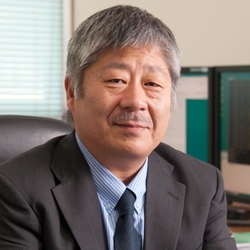 Toru Sugitate (杉立徹)合作论文数Hiroshima University176
 Achim Franz合作论文数Physics Department, Brookhaven National Laboratory175
 S. Esumi合作论文数162H. Ohnishi合作论文数158Walter Sondheim合作论文数Los Alamos National Laboratory154
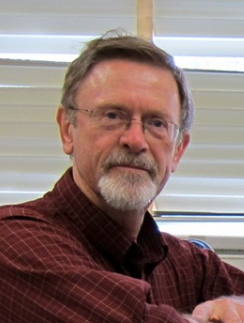 Hubert van Hecke合作论文数Los Alamos National Laboratory152
 Yasuo Miake (三明康郎)合作论文数Institute of Physics, University of Tsukuba;Department of Pure and Applied Sciences, University of Tsukuba150Shoji Nagamiya合作论文数147Abhay Deshpande合作论文数Brookhaven National Laboratory144W. A. Zajc合作论文数144
 Yasuyuki Akiba合作论文数RHIC Physics Research Laboratory, Nishina Center for Accelerator-Based Science, RIKEN144O. Dietzsch合作论文数144
 Alexei Denisov合作论文数Department of Experimental Physics, Institute for High Energy Physics144
 Melvin L. Brooks合作论文数Los Alamos National Laboratory143S. Bathe合作论文数143S. F. Pate合作论文数143P. L. McGaughey合作论文数Los Alamos National Laboratory143E. M. Takagui合作论文数143A. Kiyomichi合作论文数143
 Ryugo Hayano合作论文数University of Tokyo142Anders Oskarsson合作论文数Division of Particle and Nuclear Physics, Department of Physics, Faculty of Science, Lund University142
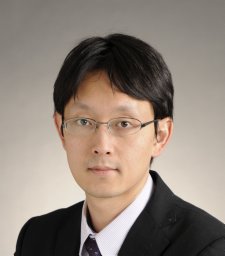 Tatsuya Chujo合作论文数Institute of Physics, University of Tsukuba;Division of Physics, Faculty of Pure and Applied Sciences, University of Tsukuba142
 Bernd Bassalleck合作论文数Department of Physics and Astronomy, The University of New Mexico142
 Marzia Rosati合作论文数Department of Physics and Astronomy, Iowa State University142J. T. Mitchell合作论文数142S. H. Aronson合作论文数142S. Chernichenko合作论文数142F. Matathias合作论文数141H. Delagrange合作论文数141A. Bazilevsky合作论文数141A. Glenn合作论文数141
 Hideki Hamagaki (浜垣秀樹)合作论文数Division of Fundamental Science, Institute for Innovative Science and Technology, Nagasaki Institute of Applied Science141
 Michael J. Tannenbaum合作论文数Physics Department, Brookhaven National Laboratory141
 Christopher Pinkenburg合作论文数Physics Department, Brookhaven National Laboratory141S. Butsyk合作论文数Department of Physics and Astronomy, State University of New York — Stony Brook141
 Richard Seto合作论文数Department of Physics & Astronomy, College of Natural & Agricultural Sciences, University of California, Riverside141T. Ichihara合作论文数140G. Mishra合作论文数140
 Kazuyoshi Kurita (栗田和好)合作论文数Department of Physics, College of Science, Rikkyo University;Center for Development and Support of Higher Education, Rikkyo University140g bunce合作论文数139R. P. Pisani合作论文数139
 Mickey Chiu合作论文数Physics Department, Brookhaven National Laboratory;NEXO;PHENIX139S. Kametani合作论文数139Junsei Chiba (千葉順成)合作论文数Faculty of Science and Technology, Physics, Tokyo University of Science139S.-Y. Fung合作论文数139Pieter J Kroon合作论文数139Gary S. Kyle合作论文数New Mexico State University139I. D. Ojha合作论文数139
 Byung-Sik Hong合作论文数Department of Physics, College of Science, Korea University138




