Diamond-like carbon (DLC) films were synthesized by RF plasma enhanced chemical vapor deposition using methane as carbon source. Effect of substrate on the growth of DLC films was investigated by using four different substrate materials, silicon wafer (100), glass, flat-polished and mirror-polished alumina. The carbon films were deposited at four different self-bias voltages (-157 V, -403 V, -500 V and -590 V) by changing the plasma power under fixed flow rate and working pressure. Raman analyses indicated that DLC films were deposited on silicon and glass substrates at the self-bias -403 V ~ -590 V, and polymer-like carbon films were obtained at -157 V. For the alumina substrates, different Raman results were observed for flat-polished and mirror-polished alumina substrates. The hardness of DLC films, deposited on silicon and glass substrates at the self-bias -403 V ~ -590 V, was within 16~20 GPa using nanoindentation technique.
Large-area (500-/spl mu/m diameter) mesa-structure In/sub 0.53/Ga/sub 0.47/As-In/sub 0.52/Al/sub 0.48/As avalanche photodiodes (APDs) are reported. The dark current density was /spl sim/2.5/spl times/10/sup -2/ nA//spl mu/m/sup 2/ at 90% of breakdown; low surface leakage current density (/spl sim/4.2 pA//spl mu/m) was achieved with wet chemical etching and SiO/sub 2/ passivation. An 18 /spl times/ 18 APD array with uniform distributions of breakdown voltage, dark current, and multiplication gain has also been demonstrated. The APDs in the array achieved 3-dB bandwidth of /spl sim/8 GHz at low gain and a gain-bandwidth product of /spl sim/120 GHz.
We have studied the molecular beam epitaxy (MBE) growth of GaAsSb on GaAs substrates. The optical properties and composition of GaAsSb layer strongly depend on the growth temperature, the Ga growth rate, and the As and Sb fluxes and their ratios. We also report on two GaAsSb-GaAs photodiode structures operating at 1.3 mum. The peak quantum efficiency was 54% for the GaAsSb resonant-cavity-enhanced (RCE) p-i-n photodiode and 36% for the RCE GaAsSb avalanche photodiode (APD) with separate absorption, charge, and multiplication regions (SACM). At 90% of the breakdown, the dark current of the SACM APD was 5 nA. The GaAsSb SACM APD also exhibited very low multiplication noise and k(eff) was approximately 0.1, which is the lowest ever reported for APDs operating at 1.3 mum.
We report a 12 x 12 In0.53Ga0.47As-In0.52Al0.48As avalanche photodiode (APD) array. The mean breakdown voltage of the APD was 57.9 V and the standard deviation was less than 0.1 V. The mean dark current was similar to2 and similar to300 nA, and the standard deviation was similar to0.19 and similar to60 nA at unity gain (V-bias = 13.5 V) and at 90% of the breakdown voltage, respectively. External quantum efficiency was above 40% in the wavelength range from 1.0 to 1.6 mum. It was similar to57% and similar to45% at 1.3 and 1.55 mum, respectively. A bandwidth of 13 GHz was achieved at low gain.
We report a 12 /spl times/ 12 In/sub 0.53/Ga/sub 0.47/As-In/sub 0.52/Al/sub 0.48/As avalanche photodiode (APD) array. The mean breakdown voltage of the APD was 57.9 V and the standard deviation was less than 0.1 V. The mean dark current was /spl sim/2 and /spl sim/300 nA, and the standard deviation was /spl sim/0.19 and /spl sim/60 nA at unity gain (V/sub bias/ = 13.5 V) and at 90% of the breakdow...
The effects of biaxial strain produced by the lattice mismatch of constituent materials on the optical properties of strained I n 1− x G a x A s y P 1− y / I n 1− x G a x A s quantum well lasers are investigated. The optical gain and refractive index change of a biaxially stressed quantum well lasers are studied theoretically using the multiband effective mass equation (i.e., method), deformation potential theory and Fermi‐Golden rule, band mixing effect is retained in the calculations. It is found that the biaxial strain would change the subband structures and optical properties of quantum well lasers, we found the gain of TE mode increases with increasing compressive strain, while the gain of TM mode increases with increasing tensile strain, these will be benefited for reducing the threshold current depending on whether the quantum well lasers are operating in TE or TM mode. On the other hand, the refractive index change in the active region near the TE(TM) mode peak gain becomes more negative when a biaxial compressive(tensile) strain is applied, it leads to the conclusion that the strain weakens the optical confinement, the temperature dependence of gain also becomes stronger when there is strain. Finally, we also found the minimum peak gain occurs when a small tensile strain is applied, but no strain.
A new instantaneous phasor method for obtaining power system instantaneous balanced fundamental components is introduced. An example is presented. This technique may be used for active power quality control and for continuous diagnostics.
The new instantaneous phasor method originated by the author is applied for the evaluation of efficiency of induction motors installed in the field. The unique property of the instantaneous phasor method is that the phasors of one phase can be used to represent all three phases. The active power components that include the fundamental-frequency, positive-sequence, negative-sequence, and the harmonic power components are studied in this paper.
Induction motors are the most popular motors used in industry. This paper further suggests the use of air-gap torque method [1] to evaluate their efficiency and load changes, The fundamental difference between Method E and the air-gap torque method is discussed. Efficiency assessments conducted on induction motors under various conditions show the accuracy and potential of the air-gap torque method.
The majority of electric motor applications are pumps, fans, blowers, and certain compressors that follow the load torque pattern described in this paper. It has long been known that simply replacing the old motor with a high-efficiency motor might not produce the expected efficiency gain. This paper suggests calculations for the effective efficiency and temperature rise of high-efficiency motors. The reliability in terms of temperature rise, downsizing, power factor, harmonics, mechanical structure, etc., are discussed
This paper suggests a method to monitor defects such as cracked rotor bars and the shorted stator coils in induction motors. Air-gap torque can be calculated white the motor is running, No special down time for measurement is required, Data of the air-gap torque for a motor should be periodically kept for comparison purposes, Since more data than just a line current are taken, this method offers other potential possibilities that cannot be handled by examining only a line current.The theoretical foundation for this proposed method is presented. Experiments conducted on a 5-hp motor show the validity and potential of this approach, Further studies are planned to extend the proposed method in detail and to monitor defects developed in other types of rotating machines.
 Archie L. Holmes Jr.合作论文数Chandra Department of Electrical and Computer Engineering, Cockrell School of Engineering, University of Texas at Austin5
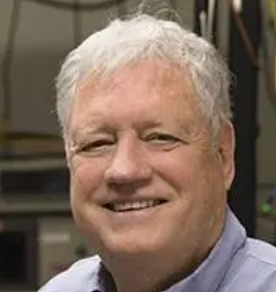 Joe Charles Campbell合作论文数School of Engineering and Applied Science, University of Virginia4
 Andrew S. Huntington合作论文数4
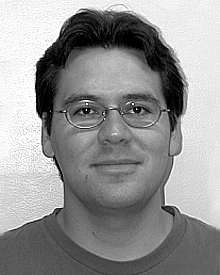 Jeffrey B. Hurst合作论文数4
 Larry A. Coldren合作论文数Optoelectronics Technology Center, Department of Electrical & Computer Engineering, College of Engineering, University of California, Santa Barbara3
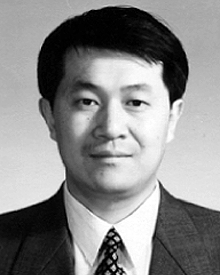 Xiaoguang Zheng合作论文数Electrical and Computer Engineering Department, University of Virginia3
 xiaolin li合作论文数2
 S. Wang合作论文数2
 Xuhui Sun合作论文数2xiguang zheng合作论文数1selina c wang合作论文数1Jc Campbell合作论文数1
 Xiaoguang Sun (孙晓光)合作论文数1Rubin Sidhu合作论文数1
 Xiaoli Sun合作论文数Goddard Space Flight Center, National Aeronautics and Space Administration1Xiaoping Li合作论文数1
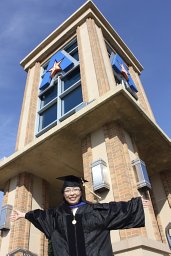 Shuling Wang合作论文数Microelectronics Research Center;Department of Electrical and Computer Engineering;University of Texas at Austin;Microelectronics Research Center, University of Texas at Austin1
 Xiaowei Li (李晓维)合作论文数University of Chinese Academy of Sciences;State Key Lab of Computer Architecture, Institute of Computing Technology, Chinese Academy of Sciences1K. F. Yarn合作论文数1Wei Min Wu合作论文数1Pedro J. Otaduy合作论文数1P. L. Sorenson合作论文数1C L. A合作论文数1Shinn-Shyong Tzeng合作论文数1John D. Kueck合作论文数1Ming Rong Lee合作论文数1




