The increase in congestion in surface traffic, airborne pollution, and other environmental issues has motivated transit authorities to promote public transit worldwide. In large cities and metropolitan areas, adding new rapid transit lines attracts more commuters to the public system, as they often reduce travel time compared to the private mode (car) that faces high congestion. In addition, the travel time has less variability with respect to preset schedules, and rapid lines are more efficient than slow modes operated by buses. When a new rapid transit line is constructed, it partially replaces the traffic of existing slow transit lines. As a consequence, some of the slow-mode lines must be either canceled or their routes modified to work properly with the new rapid transit line. This process is usually carried out sequentially, thus leading to suboptimal solutions.In this paper, we consider an integrated model for simultaneously designing rapid and redesigning slow networks. The model’s main aim is social: to maximize the demand covered (or captured) by both public modes, through offering a shorter commuting time. In addition, we also take care of the costs, keeping them within limits. We present a mathematical programming formulation that is solved by using a specially improved Benders decomposition. For this purpose, we include a partial decomposition to speed up the computation. The computational experiments are done on a case study based on real data obtained from a survey of mobility among transportation zones in the city of Seville. In terms of performance, for small instances, the Branch and Benders Cut (B&BC) yields solution networks that cover at least 5.2% more demand than other methods in the literature, within a time limit of 4 h. The advantage is even higher for the larger instances, for which B&BC found solutions that the other methods did not find.
Disruptions in railway rapid transit systems produce negative effects affecting passengers’ daily movements and considerable costs due to abnormal operation. In this study, we propose a methodology for analyzing the effect of disruptions on regular timetables. Among the post-disruption alternatives that service operators can use to try to restore the normal functioning of transport services, we study the execution of small corrective actions on the timetable to guarantee its feasibility in terms of inter-service safety times at stations and the possibility of performing a timetable re-optimization. In the latter case, we propose an original mixed-integer non-linear optimization model to recover the timetable stability (or regularity) as soon as possible. We illustrate and compare the two strategies. Using timetable stability as a system performance indicator, we propose a measure of timetable resilience. Finally, we study the effect of extra train capacity on the resilience of the timetable.
In this paper, we extend the notions of λ -cent-dian and generalized-center from Facility Location Theory to the more intricate domain of Network Design. Our focus is on the task of designing a sub-network within a given underlying network while adhering to a budget constraint. This sub-network is intended to efficiently serve a collection of origin/destination pairs of demand. The λ -cent-dian problem studies the balance between efficiency and equity. We investigate the properties of the λ -cent-dian and generalized-center solution networks under the lens of equity, efficiency, and Pareto-optimality. We finally prove that the problems solved here are NP-hard.
In this paper, we study the λ -centdian problem in the domain of network design. The focus is on designing a sub-network within a given underlying network while adhering to a budget constraint. This sub-network is intended to efficiently serve a collection of origin/destination demand pairs. We extend the work presented in Bucarey et al. (On λ -cent-dians and generalized-center for network design: definitions and properties, 2024), providing an algorithmic perspective on the generalized λ -centdian problem. In particular, we provide a mathematical formulation for λ≥ 0 and discuss the bilevel structure of this problem for λ >1 . Furthermore, we describe a procedure to obtain a complete parametrization of the Pareto-optimality set based on solving two mixed integer linear formulations by introducing the concept of maximum λ -cent-dian. We evaluate the quality of the different solution concepts using some inequality measures. Finally, for λ∈ [0,1] , we study the implementation of a Benders decomposition method to solve it at scale.
On lambda-cent-dians and generalized-center for network design: definitions and properties
The increase in congestion in surface traffic, airborne pollution, and other environmental issues have motivated the transit authorities to promote public transit worldwide. In big cities and large metropolitan areas, adding new rapid transit lines attracts more commuters to the public system, as they frequently allow saving travel time as compared to the private mode (car) that faces high congestion. In addition, the travel time has less variability with respect to preset schedules, and rapid lines are more efficient than slow modes operated by buses. When a new rapid transit line is constructed, it partially replaces the traffic of existing slow transit lines. As a consequence, some of the slow-mode lines have to be either canceled or their routes modified to collaborate properly with the new rapid transit line. This process is usually carried out in a sequential way, thus leading to suboptimal solutions. In this paper, we consider an integrated model for simultaneously designing rapid and redesigning slow networks. The aim of the model is community-oriented, that is, to maximize the demand covered (or captured) by both modes. We present a mathematical programming formulation that is solved by using a specially improved Benders decomposition. For this purpose, we include a partial decomposition to speed up the computation. The computational experiments are done on a case study based on real data obtained from a survey of mobility among transportation zones in the city of Seville.
The term resilience has become a relevant research topic in last years due to the interest of being applied to different fields and to many types of complex networks. A recently published paper proposed a theoretical and mathematical framework for a concept of local and discrete resilience, from a system performance recovery point of view. This paper deepens on this definition and provides bounds and exact values for the local resilience of some classes of networks. In addition, a new measure is defined, the composed resilience, which allows to study and compare networks from a general point of view. Several computational experiments are presented for this new parameter in different types of synthetic and real networks, providing a general measure for the resilience in complex networks.
The research and use of the term resilience in various types of technological, physiological, and socioeconomic systems has become very topical in recent years since this term has been applied in different fields with different meanings and connotations. One of the most common meanings of resilience is related to a positive idea that addresses recovery from failures. This study proposes to establish a theoretical and mathematical framework for discrete resilience that allows different systems to be quantitatively compared from this point of view. Also, a definition and a local view of the concept of resilience applicable to different characteristic measures in the field of complex networks is provided. Furthermore, several computational experiments are presented on the values of this new parameter in different types of synthetic and real-world networks, supplying a new set of conceptual tools for network science research.
We consider two covering variants of the network design problem. We are given a set of origin/destination pairs, called O/D pairs, and each such O/D pair is covered if there exists a path in the network from the origin to the destination whose length is not larger than a given threshold. In the first problem, called the Maximal Covering Network Design problem, one must determine a network that maximizes the total fulfilled demand of the covered O/D pairs subject to a budget constraint on the design costs of the network. In the second problem, called the Partial Covering Network Design problem, the design cost is minimized while a lower bound is set on the total demand covered. After presenting formulations, we develop a Benders decomposition approach to solve the problems. Further, we consider several stabilization methods to determine Benders cuts as well as the addition of cut-set inequalities to the master problem. We also consider the impact of adding an initial solution to our methods. Computational experiments show the efficiency of these different aspects.
This paper presents an optimization procedure to choose a parking facility according to different criteria: total travel time including transfers, parking fee and a factor depending on the risk of not having an available spot in the parking facility at the arrival time. An integer programming formulation is proposed to determine an optimal strategy of minimum cost considering the available information, different scenarios, and each user profile. To evaluate the performance, a computational experience has been carried out on Seville (Spain), where a historical city center restricts the traffic of private vehicles and encourages the use of parking facilities.
Navigation systems implemented in mobile devices allow users to search for the shortest routes between pairs of points. Many of the existing commercial products assume in a simplified way that the travel time to cross each arc of a road network is fixed, once a starting time has been established. However, the real travel time along a road section within cities depends on many factors that are related to traffic congestion, weather conditions, possible incidents, etc., and consequently, it depends on the time. As can easily be shown, determining the shortest itineraries in a network whose arcs are time-dependent can result in a diversity of optimal routes for a same origin-destination pair based on different departure times. Assuming the availability of the estimated data of the time required to travel along each section of the street network, once the departure time has been previously set, we propose in this work an efficient algorithm for obtaining faster routes on time-dependent arcs, in such a way that the sum of driving times is minimized, which in parallel allows improving fuel consumption and reducing associated polluting emissions. The possibility of introducing waiting periods in the nodes to optimize the total time spent on the trip has also been considered in the design of the proposed procedure. An experimental evaluation is carried out to show the effectiveness of the provided algorithm.
The rapid and constant increase in urban population has led to a drastic rise in urban solid waste production with worrying consequences for the environment and society. In many cities, an efficient waste management combined with a suitable design of vehicle routes (VR) can lead to benefits in the environmental, economic, and social impacts. The general population is becoming increasingly aware of the need for the separation of the various categories of municipal solid waste. The numerous materials collected include glass, PET or batteries, and electric components, which are sorted at the eco-points. The management of eco-points gives rise to several problems that can be formulated analytically. The location and number of eco-point containers, the determination of the fleet size for picking up the collected waste, and the design of itineraries are all intertwined, and present computationally difficult problems, and therefore must be solved in a sequential way. In this paper, a mathematical model has been formulated, based on the Bin Packing (BP) and VR schemes, for the deployment of routes of mobile containers in the selective collection of urban solid waste. A heuristic algorithm has also been developed, which considers two different configurations of the containers to solve the proposed mathematical programming model. The results obtained from the numerical simulations show the validation of the proposed methodology carried out for the benchmark of the Sioux Falls network and the specific real case study.
Location of new stations/stops in public transportation networks has attracted much interest from both the point of views of theory and applications. In this paper we consider a set of pairs of points in the plane demanding traveling between the elements of each pair, and a tree network embedded in the plane representing the transportation system. An alternative mode of transportation competes with the combined plane-network mode so that the modal choice is made by distance (time) comparisons. The aim of the problem dealt with in this paper is to locate a new station/stop so that the traffic through the network would be maximized. Since stops at new stations increases the time of passengers that already used the combined mode, and may persuade them to change the mode, a constraint on the increase of the overall time is imposed. A quadratic in the number of pairs time algorithm is proposed.
Abstract Usually, when a rapid transit line is planned a less efficient system already partially covers the demand of the new line. Thus, when the rapid transit starts its regular services, the slow mode (e.g. bus lines) have to be cancelled or their routes modified. Usually this process is planned according to a sequential way. Firstly, the rapid transit line is designed taking into account private and public flows, and possibly surveys on mobility in order to predict the future utilization of the new infrastructure and/or other criteria. Then, in a second stage, the bus route network is redesigned. However, this sequential process can lead to a suboptimal solution, for which reason in this paper a cooperative model for rapid and slow transit network design is studied. The aim is to design simultaneously both networks and the objective is to maximize the number of passengers captured by both public modes against the private mode. We present a mathematical programming formulation and solve the problem by an improved Benders decomposition approach.
In this paper we analyze the computational complexity of transportation infrastructure network design problems, in the presence of a competing transportation mode. Some of these problems have previously been introduced in the literature. All problems studied have a common objective: the maximization of the number of travelers using the new network to be built. The differences between them are due to two factors. The first one is the constraints that the new network should satisfy: (1) budget constraint, (2) no-cycle constraint, (3) both constraints. The second factor is the topology of the network formed by the feasible links and stations: (1) a general network, (2) a forest. By combining these two factors, in total we analyze six problems, five of them are shown to be NP-hard, the sixth being trivial. Due to the NP-hardness of these problems, a genetic algorithm is proposed. Computational experiments show the applicability of this algorithm.
In many transit systems, operators use skip-stop strategies to reduce travel time of particular train services by not stopping (skipping) at less densely populated stations.This decision of omitting some stops reduces the travel time for the users within the vehicle and increases the speed of operation, favouring the provision of new transit services where are more necessary.In this work, the best A/b stop-skip patterns for a set of transit services along a railway corridor are determined by means a three-phase methodology that includes the formulation of a nonlinear integer programming inspired in the multiple knapsack problem and the application of a heuristic algorithm based on mathematical properties (matheuristic).
The achievement of some of the Sustainable Development Goals (SDGs) from the recent 2030 Agenda for Sustainable Development has drawn the attention of many countries towards urban transport networks. Mathematical modeling constitutes an analytical tool for the formal description of a transportation system whereby it facilitates the introduction of variables and the definition of objectives to be optimized. One of the stages of the methodology followed in the design of urban transit systems starts with the determination of corridors to optimize the population covered by the system whilst taking into account the mobility patterns of potential users and the time saved when the public network is used instead of private means of transport. Since the capture of users occurs at stations, it seems reasonable to consider an extensive and homogeneous set of candidate sites evaluated according to the parameters considered (such as pedestrian population captured and destination preferences) and to select subsets of stations so that alignments can take place. The application of optimization procedures that decide the sequence of nodes composing the alignment can produce zigzagging corridors, which are less appropriate for the design of a single line. The main aim of this work is to include a new criterion to avoid the zigzag effect when the alignment is about to be determined. For this purpose, a curvature concept for polygonal lines is introduced, and its performance is analyzed when criteria of maximizing coverage and minimizing curvature are combined in the same design algorithm. The results show the application of the mathematical model presented for a real case in the city of Seville in Spain.
•We model and solve the Railway Rapid Transit Network Design and Line Planning problem.•We costs relative to the network construction, operation, rolling stock and personnel.•We consider the existence of an alternative transportation mode competing with the railway.•The route choice mechanism is based on a generalized travel cost function which includes the fare.•We develop a matheuristic which solves a succession of assignments and network operation problems.•We apply the ALNS to areal-size instance and compare results against a 1 assignment procedure.
In recent years, the growth of fossil fuel use and greenhouse gases emissions (GHGs) has been promoted by the population increase and development of the industry sector.Due to the increasing attention towards the effects of climate changes on quality of life, recent researches on pollutant formation processes have been developed in different sectors, especially in transportation.The last emission standards on pollutants impose limits on the dimensions and on the particle number of the particulate matter emissions, because of the highly dangerous effect on human health.To fight high concentrations of particulate matter (PM) emissions, a wide number of studies are addressed towards the definition of the most important parameters in effective production of particulate matter, especially in spark ignition engines.Physical processes such as mixture formation, engine operating parameters and fuel chemical properties strongly affect the soot formation in gasoline engines.The heat transfer process between the piston hot surface and the fuel gasoline during the post-injection phase is a key aspect of soot emissions for an engine.This paper is devoted to analyzing the fundamental parameters that are responsible for pollutant formation in the transport sector and the actual experimental and numerical techniques used to predict the environmental impact of engines.
 Gilbert Laporte合作论文数Department of Decision Sciences, School of Management, University of Bath26
 Francisco A. Ortega合作论文数Department of Applied Mathematics I, University of Seville26
 Federico Perea合作论文数Universidad de Zaragoza17
 Alicia De-Los-Santos合作论文数Departamento de Matemática Aplicada II, Universidad de Sevilla12
 Miguel A. Pozo合作论文数8Antonio J. Lozano合作论文数8
 Justo Puerto Albandoz合作论文数Metodos y Modelos de la Estadistica y la Investigacion Operativa Grupo, Departamento de Estadística e Investigación Operativa, Universidad de Sevilla7
 Frank Plastria合作论文数Business Technology and Operations, Vrije Universiteit Brussel6
 David Canca合作论文数Dept. of Industrial Management, University of Seville6
 Ángel Marín合作论文数Escuela Técnica Superior de Ingenieros Aeronáuticos, Universidad Politécnica de Madrid5
 Natividad Gonzalez-Blanco合作论文数4
 Ramon Piedra-De-La-Cuadra合作论文数Dept Matemat Aplicada 1, Univ Seville4
 Victor Bucarey合作论文数Inst Engn Sci, Univ OHiggins4
 Guido Marseglia合作论文数Università degli Studi Link Campus University4
 Eva Barrena合作论文数4
 Vladimir Marianov合作论文数Department of Electrical Engineering, Pontificia Universidad Católica de Chile3
 José Miguel Díaz-Báñez合作论文数Departamento de Matemática Aplicada II, Universidad de Sevilla3
 Ravindra K Ahuja合作论文数Axele;Optym3
 Miguel Romance合作论文数Universidad de Zaragoza3M. Labbé合作论文数Dept. of Clinical Microbiology Brugmann University Hospital 4 Place van Gehuchten B-1020 Brussels Belgium3Christian Liebchen合作论文数Fakultat II - Mathematik und Naturwissenschaften
Institut fur Mathematik, Sekr. MA 5-1
Technische Universitat Berlin3A. Tamir合作论文数Department of Statistics and Operations Research;School of Mathematical Sciences;Tel Aviv University3
Miguel Romance合作论文数Universidad de Zaragoza3M. Labbé合作论文数Dept. of Clinical Microbiology Brugmann University Hospital 4 Place van Gehuchten B-1020 Brussels Belgium3Christian Liebchen合作论文数Fakultat II - Mathematik und Naturwissenschaften
Institut fur Mathematik, Sekr. MA 5-1
Technische Universitat Berlin3A. Tamir合作论文数Department of Statistics and Operations Research;School of Mathematical Sciences;Tel Aviv University3 Regino Criado Herrero合作论文数Instituto Tecnológico de Data, Networks and Cybersecurity Sciences, Universidad Rey Juan Carlos3Teresa Cáceres合作论文数2
 Anita Schöbel合作论文数Fachbereich Mathematik, Technische Universität Kaiserslautern/Fraunhofer-Instituts für Techno- und Wirtschaftsmathematik2
 Ricardo García-Ródenas合作论文数2M.C. López-De-Los-Mozos合作论文数2Carlo Maria Medaglia合作论文数Centro per le Applicazioni della Televisione e delle Tecniche di Istruzione a Distanza (CATTID),, University “Sapienza”,2
 M. Cruz Lopez-de-los-Mozos合作论文数2
 Rocío M. Casablanca合作论文数Departamento de Matematica Aplicada I, Universidad de Sevilla2T. Brian Boffey合作论文数2Armando Garzón-Astolfi合作论文数2
 Joao Rodrigues合作论文数1
 Miguel A Pozo合作论文数1Mark-Christoph Körner合作论文数1
 E Garcia合作论文数State University of West Paraná1Tunzi Tan合作论文数Univ Chinese Acad Sci, Sch Math Sci, 19A Yuquan Rd, Beijing 100049, Peoples R China1
 Suixiang Gao (高随祥)合作论文数School of Mathematical Sciences, University of Chinese Academy of Sciences1
 Martine Labbé合作论文数Department of Computer Science, Universite libre de Bruxelles1Julio Flores合作论文数Department of Applied Mathematics, Universidad Rey Juan Carlos1
 Michel Gendreau合作论文数Department of Mathematical and Industrial Engineering, Polytechnique Montréal1Alejandro García Del Amo合作论文数1Blas Pelegrín合作论文数1
 Menezes Mozart合作论文数NEOMA Business School1
 Bosco García-Archilla合作论文数bosco@esi.us.es1Martín Cera合作论文数1Francisco Ramón Fernández García合作论文数1Daniel Scholz合作论文数1
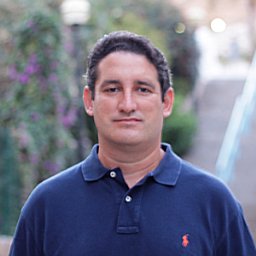 Antonio M. Rodríguez-Chía合作论文数Facultad de Ciencias, Universidad de Cádiz1




