High-throughput sequencing, culture-dependent workflows, and microbiome transfer experiments reveal whether potassium phosphite (KP), an environmentally acceptable agricultural chemical, could specifically enrich the antagonistic bacterial community that inhibited the growth of the pathogen Ralstonia solanacearum. The application of KP enriched the potential antagonistic bacteria Paenibacillus and Streptomyces in soil, but depleted most dominant genera belonging to gram negative bacteria, such as Pseudomonas, Massilia, and Flavobacterium on day 7. Moreover, the KP-modulated soil microbiome suppressed R. solanacearum growth in soil. The predicted functions related to the synthesis of antagonistic substances, such as streptomycin, and the predicted functions related to tellurite resistance and nickel transport system were significantly enriched, but the synthesis of lipopolysaccharide (distinct component lipopolysaccharide in gram negative bacteria) were significantly depleted in the KP-treated soils. In addition, the copy numbers of specific sequences for Streptomyces coelicoflavus and Paenibacillus favisporus were significantly increased in the soil amended with KP, inhibited the growth of R. solanacearum, and had a higher tolerance of KP than R. solanacearum. Our study linked the application of fertilizers to the enrichment of antagonistic bacteria, which could support future work that aims to precisely regulate the soil microbiome to protect the host from infection by soil-borne pathogens.
It have been reported that the transition metal complex of Schiff base ligands have the ability to inhibit urease. Herein, in this manuscript, two novel transition metal complexes [Cd-2(L)(2)center dot(H2O)] (1), [Pb(L)center dot, [Pbe(2)) were synthesized based on chelating hydrazone ligand N'-(pyridin-2-ylmethylene)isonicotinohydrazide (L). These compounds were tested by single crystal X-ray diffraction and determined by structure and tested for urease resistance in vitro. The complex 2 exhibited better the activities of inhibiting than the positive control acetohydroxamic acid with an IC50 = 2.5 mu M, while the complex 1 showed weak activity, and complex 2 acted as an effective urease inhibitor.
In this study, paraffin/red mud phase change energy storage composites were fabricated at 4 mix proportions with paraffin to red mud ratios of 0.4:0.6, 0.45:0.55, 0.5:0.5, and 0.55:0.45 by a mixed mill-heating method. Scanning electron microscopy (SEM) and Fourier transform infrared (FT-IR) results reveal that paraffin flows well into red mud pores and has good compatibility. The differential scanning calorimetry (DSC) results reveal that the melting temperatures of the paraffin/red mud phase change energy storage composite vary from 75℃ to 85℃, and the latent heat value is approximately 25-40J/g. High thermal stability is observed by the thermogravimetric analysis (TG) method. The Brunauer Emmett Teller (BET) isotherms, laser particle sizer, X-ray diffraction analysis (XRD), and laser Raman spectrograph (LRS) show that the phase change energy storage composite does not produce a new material from the raw materials and that the material has a stable performance. Furthermore, the paraffin/red mud phase change energy storage composite was incorporated into the cement-based and gypsum-based materials at 10%, 20%, and 30% weight. The heat storage performance can be improved remarkably with an increase in the addition of phase change energy storage composite replacement. The compressive strength change is minimal with the addition of 10% and 20%, and the compressive strength decreases by nearly 40% with the addition of 30%. The paraffin/red mud phase change energy storage composite has a large influence on the flexural strength.
The increases in the usage of nitrogen fertilizer result in deleterious impacts on the environment; thus, there is an urgent need to improve nitrogen use efficiency (NUE) in crops including rice (Oryza sativa L.). Attentions have focused on quantitative trait loci (QTL) mapping of NUE-related traits using single experimental population, but to date, very few studies have taken advantage of association mapping to examine hundreds of lines for identifying potentially novel QTLs in rice. Here, we conducted association analysis on NUE-related traits using a population containing 184 varieties, which were genotyped with 157 genome-wide simple sequence repeat (SSR) markers. We detected eight statistically significant marker loci associating with NUE-related traits, of which two QTLs at RM5639 and RM3628 harbored known NUE-related genes GS1;2 and AspAt3, respectively. At a novel NUE-related locus RM5748, we developed Kompetitive Allele Specific PCR (KASP) single nucleotide polymorphism (SNP) markers and searched for putative NUE-related genes which are close to the associated SNP marker. Based on a transcriptional map of N stress responses constructed by our lab, we evaluated expressions of the NUE-related genes in this region and validated their effect on NUE. Meanwhile, we analyzed NUE-related alleles of the eight loci that could be utilized in marker-assisted selection. Moreover, we estimated breeding values of all the varieties through genomic prediction approach that could be beneficial for rice NUE enhancement.
An entry from the Cambridge Structural Database, the world’s repository for small molecule crystal structures. The entry contains experimental data from a crystal diffraction study. The deposited dataset for this entry is freely available from the CCDC and typically includes 3D coordinates, cell parameters, space group, experimental conditions and quality measures.
 Ze-Yu Fang合作论文数2Xingxia Mo合作论文数1Yuanfeng Wu合作论文数1
 lv su合作论文数1Hongzhou An合作论文数1Jun Yu合作论文数State Key Laboratory of Crop Genetics and Germplasm Enhancement, Nanjing Agricultural University, 210095, Nanjing, China.1
 Chengsong Zhu合作论文数Department of Immunology, UT Southwestern Medical Center1
 Cheng Liu合作论文数1Pengfei Qiu合作论文数1Shu Zhang合作论文数1xinyi wang合作论文数1Yue Jiang合作论文数1Jianpeng TANG (唐建鹏)合作论文数1Dan Hu合作论文数1
 Chen Gaoming合作论文数State Key Laboratory of Crop Genetics and Germplasm Enhancement, Nanjing Agricultural University, 210095, Nanjing, China.1刘云鹏合作论文数College of Materials Science and Technology, Nanjing University of Aeronautics and Astronautics1
 Henglin Lv (吕恒林)合作论文数School of Mechanics & Civil Engineering, China University of Mining and Technology1
 Ruifu Zhang (张瑞福)合作论文数College of Resources and Environmental Sciences, Nanjing Agricultural University1
 Biao Shen (沈标)合作论文数College of Resources and Environmental Sciences, Nanjing Agricultural University1
 Yunlu Tian (田云录)合作论文数College of Agriculture, Nanjing Agricultural University1
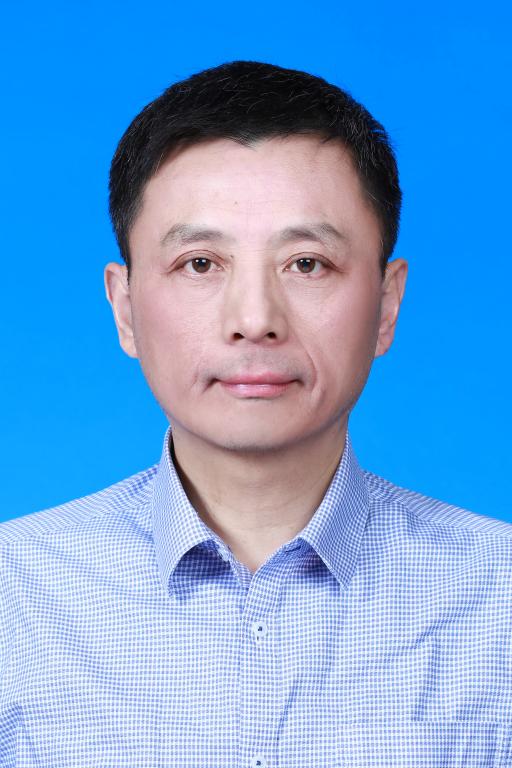 Chunming Wang (王春明)合作论文数College of Agriculture, Nanjing Agricultural University1
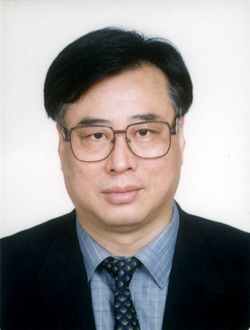 Huqu Zhai (翟虎渠)合作论文数National Academy of Agricultural Sciences1
 Yang Zhang合作论文数Department of Biochemistry, Yong Loo Lin School of Medicine, National University of Singapore;Department of Computer Science, School of Computing, National University of Singapore;Cancer Science Institute of Singapore, National University of Singapore1
 Zhiyong Liu (刘志勇)合作论文数School of Civil Engineering, Yantai University1Guo Feng-Jiao合作论文数1
 Hailiang Zhu (朱海亮)合作论文数School of Life Sciences, Nanjing University1Feng Haichao合作论文数1Zhiyi Liu合作论文数1
 Weijie Tang合作论文数1
 Yunsheng Zhang (张云升)合作论文数School of Materials Science and Engineering, Southeast University1
 Qirong Shen (沈其荣)合作论文数Nanjing Agricultural University1
 Jianmin Wan (万建民)合作论文数Institute of Crop Sciences, Chinese Academy of Agricultural Sciences1
 Yidong Chen合作论文数Peking University1
 Eiko Kuramae合作论文数Netherlands Institute of Ecology, Royal Netherlands Academy of Arts and Sciences;Utrecht University1




