To improve the imaging quality and reduce the hardware complexity of the ultrasound imaging system with piezoelectric transducers, this paper proposes an improved sidelobe blanking beamforming method (ISLB) in the field of non-destructive testing. Firstly, the method divides a complete piezoelectric transducer array into two sub-arrays to obtain the main beamformer and the auxiliary beamformer. Specifically, the echo data received by the two sub-arrays are summed as the main beamformer, and subtracted as the auxiliary beamformer. Furthermore, to suppress background noise and clutter, the sign coherence factor is applied to weight the output signals of the main beamformer. Finally, the main beamformer signals are compared with the auxiliary beam-former signals to obtain the final beamforming outputs. To verify the effectiveness and robustness of the proposed method, carbon steel blocks, aluminium blocks, steel rails, and steel plate welds are used for experimental analysis. The experiment results demonstrate that compared with delay and sum (DAS), the ISLB method reduces the array performance indicator (API) by 77.9 %, enhances the contrast ratio (CR) by 219.0 %, and improves signal-to-noise ratio (SNR) and peak signal-to-noise ratio (PSNR) by 35 dB and 25 dB, respectively. In addition, due to the low complexity of ISLB, this paper further proposes a real-time implementation scheme for an FPGAbased ultrasound imaging system with piezoelectric transducers. The proposed method effectively satisfies the dual requirements of real-time performance and clarity for ultrasound imaging, and provides efficient and reliable real-time imaging technical support for the rapid qualitative screening of defects.
This paper proposes a statistical ultrasound beamforming method based on an iterative coherence factor (iCF) to enhance image contrast and signal-to-noise ratio (SNR) with low hardware cost. By leveraging the distribution characteristics of target and noise signals in nondestructive testing (NDT) and structural health monitoring (SHM), the method employs maximum likelihood and enhanced maximum a posteriori (MAP) estimations to iteratively optimize signal distribution parameters. This process continuously strengthens coherent image regions while effectively suppressing background noise, artifacts, and boundary reflections. The effectiveness and robustness of the proposed method are demonstrated through comprehensive experimental validations, including inspections of steel structures, welds, rails guided by longitudinal waves, and carbon fiber-reinforced plate (CFRP) defect detection guided by Lamb waves. Experimental results show that the proposed iCF method significantly outperforms the traditional Delay-and-Sum (DAS) method, achieving over double increase in the imaging contrast and an improvement in SNR greater than 20 dB in both dense and sparse array configurations. In addition, the proposed method has a low computational burden and can easily replace the DAS method. The iterative coherence framework developed in this study has the potential to build up a novel technical route for future optimized signal modeling and parameter estimation in the field of NDT and SHM.
Ultrasonic imaging, as a fundamental methodology in nondestructive testing, achieves defect characterization through acoustic interaction mechanisms including reflection at impedance boundaries, microstructural scattering, and frequency-dependent attenuation. However, conventional delay-and-sum (DAS) beamforming compromises spatial resolution and contrast performance due to inherent limitations such as main lobe broadening, sidelobe leakage artifacts, and coherent noise interference. The spatial spectrum coherence factor (SSCF) algorithm proposed in this paper is based on the difference in the energy distribution of the spatial spectrum of the echo data after the Fourier transform, and enhances the differentiation between the defects and the background region by the product of the low-frequency component and the total energy; the coherence energy factor (CEF) algorithm proposed in this paper combines the 2-norm energy characterization of the echo signal with the symbolic coherence weighting to suppress the background clutter and reserve the details of the defects. Then the SSCF methodand CEF method are fused to obtain the SSCF-CEF beamforming algorithm, which achieves a more significant enhancement of the imaging effect. The experiment utilizes 20# carbon steel test block, aluminum test block and actual rail test block to verify the effectiveness of the algorithm. The results show that: compared with DAS, the SSCF-CEF algorithm improves the contrast ratio (CR) by 438.26 % and reduces the array performance index (API) by 47.14 % in 20# steel specimen; the half-peak full-width value is optimized to 1.78 mm in the aluminum specimen experiment, which is 53.9 % lower than that of DAS, and compressed API by 90.21 % compared with DAS and achieved a jump of CR by 172.39 %; the CR in the rail inspection scenario is improved by 287.16 %, while the API is reduced by 91.81 %. In addition, SSCF and CEF alone are significantly better than traditional generalized coherence factor and coherence factor algorithms.
The total focusing method requires the acquisition and processing of a large amount of data, which limits its application in the field of nondestructive testing, which requires real-time performance. To enhance the implementation efficiency of the total focusing method (TFM) while maximizing ultrasonic detection performance and imaging quality, this paper introduces the array sparsification method into TFM. Based on the Field II ultrasonic simulation platform, the variation trend of the sparse TFM is systematically researched as the number of transmitting array elements decreases. To further enhance the imaging quality, this paper utilizes the zerocrossing count in the echo data to characterize signal coherence and employs coherent energy weighting on the imaging data, thereby achieving significant improvement in imaging performance. The experiments employ a 20# steel test block, an aluminum test block, and a practical rail test block to validate the algorithm's effectiveness. The results demonstrate that, compared to the delay-and-sum (DAS) method, the proposed zerocrossing factor (ZCF) method achieves a 102.85 % improvement in contrast ratio (CR) and an 85.70 % reduction in array performance index (API) for the 20# steel test block. In the aluminum test block experiment, it reduces API by 93.95 % and increases CR by 84.91 %. For the steel rail inspection scenario, CR is enhanced by 132.54 % while API is decreased by 83.81 %. Although the computational complexity of the proposed ZCF algorithm is higher, it achieves substantial improvements in imaging quality.
In normal lighting settings, most image-painting methods perform a great job of reconstructing image details and textures. However, in low-light environments, these subtleties are often ignored, leading to the loss of significant semantic information. To address these issues, we provide a single-stage generative adversarial network in this paper. Unlike previous methods, we fuse features generated from efficient multi-scale fusion at the coding layer in our encoder-decoder model. It does a good job of extracting image features to maintain finely detailed textures and improve the image’s overall brightness and clarity. Finally, we construct an adversarial network that is generative of two-branch discriminators to generate more realistic colors while preserving the image’s content. Extensive analysis and cross-dataset comparisons demonstrate the superior performance of our technology over existing methods.
平板探测器是锥束CT的关键组成部件,像元间的信号串扰是造成平板探测器投影图像空间分辨率低于极限值的主要因素,校正平板探测器信号串扰对提高锥束CT检测精度具有重要意义.本文基于点扩散函数矩阵反卷积投影图像去串扰校正思路,研究了点扩散函数矩阵的准确性对投影图像串扰校正的影响、点扩散函数和线扩散函数的关系及其与X射线成像的相似性,提出一种结合刀口法测量线扩散函数与平行束CT扫描重建的平板探测器点扩散函数矩阵测算方法.DR/CT扫描成像实验中,应用本文方法校正信号串扰后,DR成像空间分辨率由约 10 lp/mm提升至优于 25 lp/mm,高能CT成像空间分辨率由不到 4 lp/mm提升至优于 5 lp/mm,实验证明,应用本文方法能有效校正平板探测器信号串扰,提升锥束CT图像的空间分辨率和对比度.
In low-energy X-ray imaging, fluorescence crosstalk is the most important factor affecting the spatial resolution of fiber- coupled high-resolution charge-coupled device ( CCD)/complementary metal-oxide-semiconductor (CMOS) flatpanel detectors. In this paper, a high-resolution scintillation screen with a double- layer structure is proposed on the basis of the suppression effect of interface total reflection on fluorescence crosstalk. The two scintillation layers are coupled by a coupling medium with a small refractive index. The refractive index of the coupling medium can be adjusted to control the output angle of fluorescence on the interface between the upper scintillation screen and the coupling medium, thereby achieving the purpose of suppressing fluorescence crosstalk and improving the spatial resolution detected by scintillation screen. The simulation results based on the point spread function theory show that compared with the single-layer scintillation screen with the same thickness, the proposed scintillation screen with a double- layer structure can achieve higher spatial resolution. The experimental results of X-ray imaging further verify the effectiveness of the proposed scintillation screen in improving the spatial resolution of the detector.
In practice, cone-beam computed tomography (CT) images are usually tarnished by ring artifacts. To address this problem, in this article, we proposed a ring-artifact removal technique based on the nonlinear deviation correction of pixel response for flat panel detector (FPD), named Nonlinear Deviation CorrecTion (NDCT). Our proposed NDCT is a two-point fitting correction method of the local response from mean projection images. Its advantages lie in the following three aspects. First, it obtains correction coefficients by solving the correction equations based on the mean projection images without additional scanning, which improves efficiency. Second, it corrects all pixels of FPD at the same time, which eliminates the inconsistency of adjacent pixels and then the ring artifact within the 3-D CT image can be corrected. Third, the calculation is very simple so the correction speed is fast, which further improves efficiency in practice. Both numerical and real experiments showed that our NDCT method achieved excellent performance and fast speed in ring-artifact removal.
The crosstalk of scintillation screen signals is the main factor that affects the spatial resolution of X-ray detectors. The spatial resolution of fiber-coupled GAGG Ce single crystal scintillation screen CCD/CMOS detector is studied based on the point spread function theory. The ray crosstalk of GAGG_Ce single crystal scintillation screen and fluorescence crosstalk are simulated by Monte Carlo program EGSnrc and optical simulation software Zemax respectively. The simulation results show that fluorescence crosstalk is the most important factor affecting the spatial resolution of the detector for low-energy X-ray radiation imaging. In addition, the method of suppressing fluorescence crosstalk by reducing the numerical aperture of optical fiber panel is studied, and the relationship among numerical aperture of optical fiber panel, detector spatial resolution and X-ray conversion factor is obtained. The correctness of the simulation results is verified by the self-made CCD detector test.
Computed tomography (CT) technology has been rapidly developed and widely used in the medical field, at the same time, it has also attracted people’s attention to its radiation dose. Although reducing the dose of X-rays can greatly reduce a patient’s chance of developing cancer, the lower the dose, the worse the quality of the generated image, generating speckle noise and streaking artifacts that can seriously affect the diagnostic results. Therefore, low-dose CT images need to be optimized and enhanced to facilitate expert diagnosis. Based on WGAN-VGG, this paper proposes an improved generative adversarial network for CT image denoising. The algorithm improves the loss functions of the generator and discriminator, and introduces noise loss, which constitutes a composite perceptual loss function with perceptual loss. This method not only prevents over fitting of results and low PSNR and SSIM, but also can better measure the internal similarity between images, so that the visual texture details of the image can achieve a more detailed restoration effect, which is helpful to reduce noise and see clearer details. Experiments have shown that the algorithm accelerates the convergence of loss function, effectively improves the problems of difficult training of generative adversarial network and slow convergence of loss function, and can better remove noise and restore more image details at the same time.
计算机分层成像对板状构件的无损检测有其独特的优势,但由于投影角度有限,导致重建图像存在有限角伪影和分层图像模糊.为提高计算机分层成像图像质量,提出了基于投影视角加权的滤波反投影算法,有效抑制了高密度特征对其它层的干扰现象.首先,根据不同投影视角分层图像间的不相似度,确定不同投影视角的加权系数;而后,对投影进行加权反投影重建;最后,分析了3种不同加权系数对重建图像质量的影响,同时引入层灵敏度曲线的调制度作为定量评价指标,未加权和3种不同加权系数层灵敏度曲线的调制度依次为0.082,0.267,0.290,0.294.实验结果表明,该算法减少了分层图像混叠,层灵敏度曲线的调制度提升了约0.2,重建图像质量显著提升.
In this paper, we propose a framework for CT image segmentation of oil rock core. According to the characteristics of CT image of oil rock core, the existing level set segmentation algorithm is improved. Firstly, an algorithm of Chan-Vese (C-V) model is carried out to segment rock core from image background. Secondly the gray level of image background region is replaced by the average gray level of rock core, so that image background does not affect the binary segmentation. Next, median filtering processing is carried out. Finally, an algorithm of local binary fitting (LBF) model is executed to obtain the crack region. The proposed algorithm has been applied to oil rock core CT images with promising results.
Ring artifacts usually appear in photon counting computed tomography (PCCT) images, which may compromise image quality and cause non-uniformity bias. This study proposed a fast ring artifacts removal method by exploring the correlation from projections with different views for PCCT. This method has three advantages. First, our method only employ mean projection of current scan to correct projections without additional scans. Second, our method can correct the inconsistency of all detector pixels simultaneously without locating the inconsistent response pixels. Third, it can preserve reconstructed image details well without extra computational cost. Both numerical and preclinical experiments demonstrate the proposed method can suppress the ring artifacts very well than the competitors.
Low-dose medical computed tomography (CT) images are associated with noise problems, and it is difficult to obtain relevant paired datasets. To solve these issues, we propose a low-dose CT denoising algorithm, which is based on an improved cycle generative adversarial network. Our algorithm achieves end-to-end mapping from low-dose CT images to standard-dose CT images using unpaired datasets. In addition, to make the generator output image similar to the target image, we creatively put the DenseNet residual learning network model to the generator, wherein feature reusability is beneficial to restore the image details. Research confirms that this algorithm effectively improves the ability of edge keeping and denoising. The quality of the restored image is significantly improved, which is helpful for the detection and analysis of lesions.
由于成像视场或X射线穿透能力的限制,计算机层析成像技术难以实现大型板壳类对象的无损检测和质量评价,而通过扫描几何结构调整和重建算法改进,计算机分层成像(CL)技术可为板壳类对象的内部结构分析提供有效技术手段.随着医疗、电子、材料等领域无损检测需求的日益迫切,CL技术引起广泛关注.以板壳结构对象的无损检测需求为背景,综述了CL技术国内外研究现状,介绍了几种典型CL系统结构,重点分析了CL图像重建算法和产品开发及应用情况.最后,展望了CL技术的应用前景和发展趋势.
高原地区由于气候原因在供暖时应考虑使用低温空气源热泵,并设置辅助热源进行补充.本文以西藏自治区某医院建筑为研究对象,通过对单一低温空气源热泵供暖、低温空气源热泵+太阳能辅助热源供暖以及低温空气源热泵+电加热辅助供暖三种不同的热源方案进行分析,对比其经济效益、节能效益和环保效益,得出如下结论:低温空气源热泵+太阳能系统与其他两种方案相比费用年值最低,节能减排量最高,具有较好的经济性和环保性.
To solve the problems of artifacts and weak edges of industrial computed tomography (CT) images, an image region-scalable fitting energy minimization segmentation method based on wavelet transform is proposed to achieve the accurate positioning of image edges, and improve the image measurement accuracy. First, the wavelet transform is used to preprocess the image in order to reduce metal artifacts. Then, the proposed method is employed to accurately segment the image, which aims to improve the location accuracy of the edge of the region of interest. Actual data measurement results show that the proposed method can effectively reduce the effect on weak edges of the images, and the relative error of measurement is less than 0.7%, which is 1.4 times higher than that of the Chan-Vese algorithm and meets the requirements of measurement applications.
To solve the over-smoothing problem of image details caused by fixed filtering coefficients during the filtering process in the traditional non-local means (NLM) algorithms, a weight function comprising an adaptive filtering coefficient is designed using the structural tensor (ST) trace as a discriminant criterion of image feature areas and called as ST-NLM. Meanwhile, to solve the time consuming problem of the traditional algorithms, the proposed algorithm is accelerated by integral images. The test results demonstrate that the overall smoothness and detail retention of images arc relatively good after denoising by the ST-NLM method. Compared with those by the NLM method, the peak signal-to-noise ratio, structural similarity, and running speed by the ST-NLM method increase by 3 dB, 5%, and twice, respectively.
Abstract To reduce artifacts of CT image reconstructed from limited-angle projections data, we develop a biregular term optimization algorithm, which introduces the singular value decomposition (SVD) as an additional regularization term on the basis of gradient L0 norm regularization. We combine the alternating direction (ADM) method and the variable splitting method to solve the proposed optimization model. Firstly, the regularization of gradient L0 norm is performed, which takes advantage of the sparsity of the image gradient. Then, the regularization of SVD is carried out, which based on the low rank of the image. Finally, the weighted errors of two regularized image are fed back to the iterative reconstruction process. The experimental results show that, compared with the SART, SART+SVD,SART+L0 algorithms, the maximum peak signal-to-noise ratio (PSNR) of the proposed algorithm is increased by about 28%, 25%, 1%, and the root mean square error (RMSE) is reduced by about 11%, 8%, 0.05%, respectively. The proposed biregular term optimization algorithm can accurately restore image edge, effectively reduce the artifacts reconstructed by limited-angle projections, and significantly improve image quality.
微纳CT射线源焦点热漂移是影响图像清晰度的重要因素之一.通过理论和仿真实验分析了射线源焦点漂移对图像清晰度的影响.利用实际微纳CT系统,实验发现焦点漂移主要是缓慢热漂移,漂移量与X射线源功率正相关,且焦点漂移具有一定随机性.据此,提出一种基于投影图像特征匹配的焦点漂移校正方法.首先,在实际CT扫描后快速采集少量参考投影,根据实际CT投影和参考投影自适应特征匹配结果求取特定角度下的焦点漂移量;其次,采用样条插值获取CT扫描过程所有的焦点漂移量;最后,根据焦点漂移量修正实际投影数据,重建得到校正后的图像.实验表明,该方法定位精度高,可大幅度减少图像畸变,图像清晰度提高近10%.
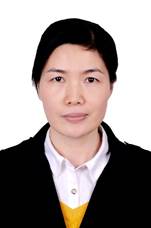 Yufang Cai (蔡玉芳)合作论文数College of Optoelectronic Engineering, Chongqing University13
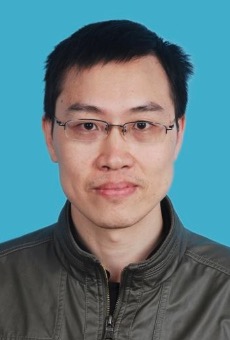 Yongning Zou (邹永宁)合作论文数College of Optoelectronic Engineering, Chongqing University11
 YanPing Lu (卢艳平)合作论文数9Rong Liu (刘荣)合作论文数6
 Rifeng Zhou (周日峰)合作论文数College of Optoelectronic Engineering, Chongqing University6
 An Kang (安康)合作论文数5
 Fenglin Liu (刘丰林)合作论文数College of Optoelectronic Engineering, Chongqing University5
 Ping Wang (王平)合作论文数School of Electrical Engineering, Chongqing University4Gong-jie YAO (姚功杰)合作论文数3XU Li-bing (徐利兵)合作论文数3
 Xiaojiao Duan (段晓礁)合作论文数College of Optoelectronic Engineering, Chongqing University3
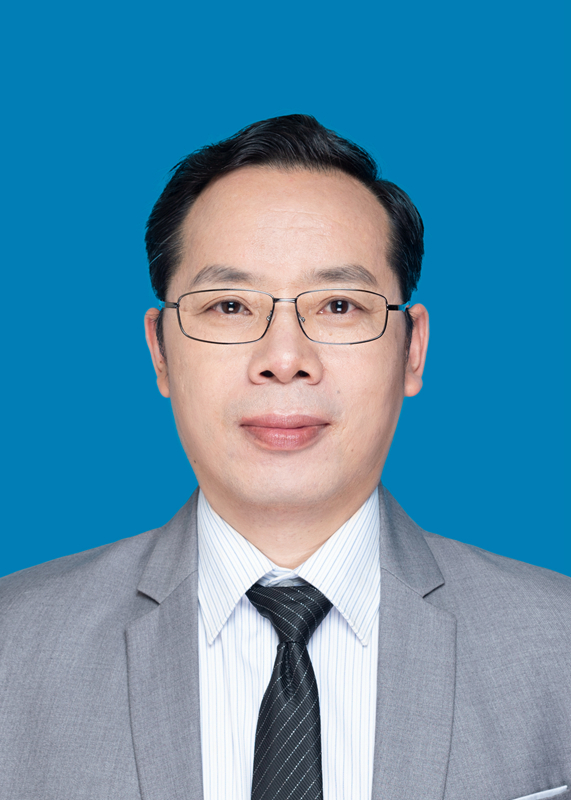 Lianqing Zheng (郑连清)合作论文数School of Electrical Engineering, Chongqing University3Li Wenfang (李汶芳)合作论文数2
 Weiwen Wu (伍伟文)合作论文数School of Biomedical Engineering, Sun Yat-sen University2LI Jian-wei合作论文数2Ge Minxue (葛敏雪)合作论文数2Li Pingyi (李屏懿)合作论文数2SUN Xiao-wei (孙小惟)合作论文数2Jie Qing合作论文数2Zehong ZHANG (张泽宏)合作论文数2
 HuiQian Wang (王慧倩)合作论文数2
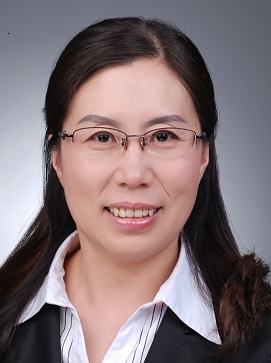 Bo Li (李波)合作论文数College of Management and Economics, Tianjin University2Anhua Zhou (周安华)合作论文数2
 Liming Duan (段黎明)合作论文数College of Optoelectronic Engineering, Chongqing University2
 Chang Dingyue合作论文数1Tianchen Xia合作论文数1Taoyan Chen (陈桃艳 Chen Taoyan)合作论文数1Fu Fanping (傅范平)合作论文数1Yang Dehong合作论文数1Haosong Yu (余浩松)合作论文数1LU Yan-ping合作论文数1Shilin Wu合作论文数1Yang Ruina (杨瑞娜)合作论文数1Cheng Yan (程燕)合作论文数1Liangtian Sun合作论文数1wu xian合作论文数1
 Liang Ji合作论文数1
 Xiaodong Guo合作论文数Sch Opt Elect Engn, Chongqing Univ1Xiaobo Zhang合作论文数1ruiyao huang (黄瑞瑶)合作论文数1Xia HUANG (黄霞)合作论文数1
 Haijun Yu合作论文数Chongqing Univ, Key Lab Optoelect Technol & Syst, Minist Educ, Chongqing 400044, Peoples R China1
 Xiaowei Zhou合作论文数College of Biomedical Engineering, Chongqing Medical University1zhonghua sun (孙忠华)合作论文数1Linlin Jia (贾琳琳)合作论文数1Haixia Ye (叶海霞)合作论文数1Han Wang (王涵)合作论文数1xinyuan li (李昕原)合作论文数1Qian Xiang (向前)合作论文数1




