Although N6 is not stable at ambient temperature and pressure, the detonation performance (velocity, pressure, and heat of detonation) of molecular N6 was investigated using quantum chemical calculations and results from thermochemical calculations. It could be shown that on paper at least, N6 in the condensed phase (liquid or gas) at extremely low temperatures (at or below -196 degrees C) should show superior energetic performance compared to TNT under ambient conditions, but inferior energetic performance to that of beta-HMX, TKX-50, and epsilon-CL-20 under ambient conditions. The thermal instability of diazide, N6, means that direct comparison of the energetic performance of N6, TNT, beta-HMX, and epsilon-CL-20 under ambient conditions is not very useful or appropriate. Since secondary explosives used in current, real-life applications must fulfill stringent property requirements, including a thermal stability of 150 degrees C or higher, the diazide, N6 molecule, would clearly not fulfill this requirement. Therefore, any discussion of the properties of N6 or comparisons involving N6 discussed in this work should bear this in mind.
Although N 6 is not stable at ambient temperature and pressure, the detonation performance (velocity, pressure, and heat of detonation) of molecular N 6 was investigated using quantum chemical calculations and results from thermochemical calculations. It could be shown that on paper at least, N 6 in the condensed phase (liquid or gas) at extremely low temperatures (at or below −196°C) should show superior energetic performance compared to TNT under ambient conditions, but inferior energetic performance to that of β ‐HMX, TKX‐50, and ε ‐CL‐20 under ambient conditions. The thermal instability of diazide, N 6 , means that direct comparison of the energetic performance of N 6 , TNT, β ‐HMX, and ε‐CL‐20 under ambient conditions is not very useful or appropriate. Since secondary explosives used in current, real‐life applications must fulfill stringent property requirements, including a thermal stability of 150°C or higher, the diazide, N 6 molecule, would clearly not fulfill this requirement. Therefore, any discussion of the properties of N 6 or comparisons involving N 6 discussed in this work should bear this in mind.
The cover picture presents a structural motif of a distorted Pd2Cl2 square in solid PdCl(NO). This iconic compound was firstly synthesized during outstanding research in the late 1950s in Munich, which led to the development of the Wacker process for the conversion of ethene into acetaldehyde by catalysis with PdCl2. More than sixty years after its synthesis, crystals of PdCl(NO) were prepared for the first time and the structure determined by X-ray diffraction. In the monoclinic structure distorted Pd4Cl4 octagons in chair arrangement are interconnected to corrugated layers, forming a two-dimensional polymer insoluble in common solvents. In this compound each Pd atom is connected to a N-O group, bonded alternatively up and down with a Pd-N-O angle of 129°. The bonding situation in PdCl(NO) was investigated by vibrational, electronic and X-ray absorption (XAS) spectroscopies. The XAS measurement at the KIT synchrotron facility uncovers that the charge located at the Pd atom in PdCl(NO) is comparable to that in PdCl2 or PdO (DOI: 10.1002/zaac.202200337).
During outstanding research in the late 1950s in Munich, which led to the development of the Wacker process for converting ethene into acetaldehyde by catalysis of PdCl2, black insoluble nitrosyl-palladium chloride (PdCl(NO)) was obtained. More than sixty years after its first synthesis, its crystal structure was now determined by X-ray diffraction. PdCl(NO) (mP16, P2(1)/c, a=10.2684(5), b=4.0737(2), c=7.8456(4) angstrom, beta=111.125(1)degrees, wR2=0.0572) consists of distorted Pd4Cl4 octagons in chair arrangement to which four distorted Pd2Cl2 squares are annulated on every second edge. In this arrangement each of the two Pd atoms of the squares are connected to one N-O group, bonded alternatively up and down to the Pd atoms with a Pd-N-O angle of 129 degrees. Such a square has the composition of the dimer which was found in the mass spectrum at 343.6 m/e. The octagons with four squares are interconnected to corrugated layers in the b-c-plane as a two-dimensional polymer.
An entry from the Cambridge Structural Database, the world’s repository for small molecule crystal structures. The entry contains experimental data from a crystal diffraction study. The deposited dataset for this entry is freely available from the CCDC and typically includes 3D coordinates, cell parameters, space group, experimental conditions and quality measures.
The Fraunhofer-Gesellschaft (FhG) was founded by the Secretary of the Baverian Ministry of Economics, Hugo Geiger. He intended to create a research organisation that should unite science and economics to foster applied research. The new institution was named after Joseph von Fraunhofer, a hint to its intended orientation as Fraunhofer was both an ingenious scientist and a successful businessman. His inventions were developed into products which were sold all over the word. The FhG as new organisation would become the third pillar of German Research next to the Max-Planck-Society (MPG) and the German Research Foundation (DFG), but initially, the MPG and the DFG caused some problems for the newly founded FhG. However, when the German Ministry for Research guaranteed funding, the FhG quickly rose to international recognition.
ZusammenfassungDie Fraunhofer‐Gesellschaft (FhG) wurde auf Initiative des Staatssekretärs Hugo Geiger vom Bayerischen Wirtschaftsministerium am 26.März 1949 gegründet. Ungewöhnlich für die damalige Zeit war die Verbindung von Wissenschaft mit der Wirtschaft zu angewandter Forschung. Dieses spiegelte sich in der Wahl des Namenspatrons der Gesellschaft, Joseph von Fraunhofer, wider, der es in München vom einfachen Glasergesellen bis zum Physik‐Professor gebracht hatte. Gleichzeitig war Fraunhofer ein weitsichtiger Unternehmer, der seine wissenschaftlichen Erkenntnisse schnell in innovative Produkte überführte, die zum Verkauf geeignet waren. Die neu gegründete FhG musste sich als dritte Säule der deutschen Forschungslandschaft neben der Max‐Planck‐Gesellschaft (MPG) und der Deutschen Forschungsgemeinschaft (DFG) Anerkennung verschaffen. Sowohl seitens der MPG wie auch der DFG wurde der Aufstieg der FhG anfangs erschwert. Doch als die Grundfinanzierung der FhG durch das Bundesforschungsministerium übernommen wurde, begann ein steiler Aufstieg zur heutigen internationalen Bedeutung.
Hydrazoic acid (HN3) is the simplest covalent azide, potentially explosive, and strongly toxic with both a low boiling and a low melting point (309 and 193 K, respectively). The monoclinic structure, recently solved by X-ray single-crystal diffraction at 100(2) K, is built up by tetramers (HN3)4 in unique pseudotetragonal layers with N-H···N hydrogen bonds, but with only weak van der Waals bonds between them. As also observed in 2H-graphite, nearly planar layers are stacked parallel to (001) with the sequence A, B, ..., A, B. We report here on a polycrystalline sample of HN3 that retains the monoclinic structure between 55(5) and 180(5) K with nearly linear increase of the lattice parameters a and b, but with steeper, partly nonlinear increase for the lattice parameter c. Near the melting point additional reflections are observed in the diffractograms which may indicate structural stress in the planar layers.
Zeitschrift für anorganische und allgemeine ChemieVolume 646, Issue 22 p. 1785-1786 Laudatio In celebration of the 85th birthday of Herbert W. Roesky Thomas M. Klapötke, Search for more papers by this authorJürgen Evers, Search for more papers by this author Thomas M. Klapötke, Search for more papers by this authorJürgen Evers, Search for more papers by this author First published: 27 November 2020 https://doi.org/10.1002/zaac.202010022 Read the full textAboutPDF ToolsRequest permissionExport citationAdd to favoritesTrack citation ShareShare Give accessShare full text accessShare full-text accessPlease review our Terms and Conditions of Use and check box below to share full-text version of article.I have read and accept the Wiley Online Library Terms and Conditions of UseShareable LinkUse the link below to share a full-text version of this article with your friends and colleagues. Learn more.Copy URL Share a linkShare onEmailFacebookTwitterLinked InRedditWechat No abstract is available for this article. Volume646, Issue22Special Issue: Dedicated to Professor Dr. Herbert W. Roesky on the Occasion of his 85th BirthdayNovember 30, 2020Pages 1785-1786 RelatedInformation
ZrW2 and HfW2 were prepared by melting the constituent elements in an arc‐furnace. By cooling through perictectic phase lines above approximately 2000 °C, samples of the nominal 1:2 composition were obtained as products consisting of two phases, of which approximately 95 % adopts the MgCu2 type structure and 5 % the W structure. In ZrW2 and in HfW2, the MgCu2 type structure enables efficient topological compact spacefilling of the smaller W atoms into the cavities of the three‐dimensional net constructed by the larger tetravalent metals Zr and Hf. Correspondingly, very dense and hard alloys are obtained which burn at a crash in air in a strong exothermic ignition reaction. These materials are non‐toxic.
AbstractAnfang des 20. Jahrhunderts leitete zunächst der Chemiker Salomon Axelrod das chemische Laboratorium im Kabelwerk Oberspree. Sein Hauptforschungsgebiet war Kautschuk. Nach seinem Tod übernahm der Ingenieur Wichard von Moellendorff die Leitung des Labors, und Forschungsschwerpunkt wurden Metalle. Der Name eines seiner Laboranten steht noch heute in Chemiebüchern: Jan Czochralski.
Isocyanic acid, HNCO, the imide of carbon dioxide, was prepared by reaction of stearic acid and potassium cyanate (KOCN) at 60 °C in a sealed, thoroughly dried reactor. Interestingly, its crystal structure, solved by X-ray single crystal diffraction at 123(2) K, shows a group-subgroup relation for the NCO- anion to carbon dioxide: (for CO2, cP12, Pa3̅, a = 5.624(2) Å, 150 K, C-O 1.151(2) Å; for HNCO, oP16, Pca21, a = 5.6176(9), b = 5.6236(8), c = 5.6231(7) Å, 123(2) K). Precise positions of H, N, C, and O were determined by DFT calculations with WIEN2k leading to interatomic distances C-O 1.17, C-N 1.22, N-H 1.03, and -N-H···N 2.14 Å, and the interatomic angle N-C-O 171°.
Cars, television, mobile phones, digital cameras, cash machines: Daily life is strongly affected by microchips produced from high purity silicon single crystals via thin wafers. Most of these single crystals are prepared by a process invented by the German-Polish scientist Jan Czochralski in 1916 in the "Kabelwerk Oberspree (KWO)" of the "Allgemeine Elektricitatsgesellschaft (AEG)" in Berlin-Oberschneweide. Czochralski discovered the famous method to pull single crystals by accident: Deep in thought, he dipped his pen not into an ink pot but into a crucible with liquid tin, both standing next to one another on his desk. Quickly he pulled his pen out and observed a thin thread of tin emerging from the tip. After etching, the thread was identified as a single crystal of tin. This observation is probably one of the most important technical inventions of the first half of the 20th century. In 1917, he left the AEG in Berlin and worked in the metal research laboratory, later belonging to the, Metallgesellschaft", in Frankfurt/Main. Until today, wafers of high-purity silicon are prepared by the Czochralski method. Silicon wafers with 200 mm diameter were produced in 1990, 300 mm wafers in 2001. The production of wafers with 450 mm diameter was expected for 2016. Siltronic produced in 2009 the first dislocation-free silicon single crystal with 450 mm diameter, and other companies followed. However, until now, the 450 mm technology is not standard. This is due to a combination of very high investment costs needed to establish the 450 mm technology and very low prices of microchips.
SiO2 exhibits a high-pressure-high-temperature polymorphism, leading to an increase in silicon coordination number and density. However, for the related compound SiS2 such pressure-induced behavior has not been observed with tetrahedral coordination yet. All four crystal structures of SiS2 known so far contain silicon with tetrahedral coordination. In the orthorhombic, ambient-pressure phase these tetrahedra share edges and achieve only low space filling and density. Up to 4 GPa and 1473 K, three phases can be quenched as metastable phases from high-pressure high-temperature to ambient conditions. Space occupancy and density are increased first by edge and corner sharing and then by corner sharing alone. The structural situation of SiS2 up to the current study resembles that of SiO2 in 1960: Then, in its polymorphs only Si-O4 tetrahedra were known. But in 1961, a polymorph with rutile structure was discovered: octahedral Si-O6 coordination was established. Now, 50 years later, we report here on the transition from 4-fold to 6-fold coordination in SiS2, the sulfur analogue of silica.
The ambient pressure phase of silicon disulfide (NP-SiS2), published in 1935, is orthorhombic and contains chains of distorted, edge-sharing SiS4 tetrahedra. The first high pressure phase, HP3-SiS2, published in 1965 and quenchable to ambient conditions, is tetragonal and contains distorted corner-sharing SiS4 tetrahedra. Here, we report on the crystal structures of two monoclinic phases, HP1-SiS2 and HP2-SiS2, which can be considered as missing links between the orthorhombic and the tetragonal phase. Both monoclinic phases contain edge- as well as corner-sharing SiS4 tetrahedra. With increasing pressure, the volume contraction (-ΔV/V) and the density, compared to the orthorhombic NP-phase, increase from only edge-sharing tetrahedra to only corner-sharing tetrahedra. The lattice and the positional parameters of NP-SiS2, HP1-SiS2, HP2-SiS2, and HP3-SiS2 were derived in good agreement with the experimental data from group-subgroup relationships with the CaF2 structure as aristotype. In addition, the Raman spectra of SiS2 show that the most intense bands of the new phases HP1-SiS2 and HP2-SiS2 (408 and 404 cm(-1), respectively) lie between those of NP-SiS2 (434 cm(-1)) and HP3-SiS2 (324 cm(-1)). Density functional theory (DFT) calculations confirm these observations.
Untersuchungen uber die Vorgange, die beim Verformen von Metallen und Legierungen ablaufen, waren im ersten Drittel des 20. Jahrhunderts zentrales Forschungsthema. Wichard von Moellendorff baute dazu im Kabelwerk Oberspree (KWO) der Allgemeinen Elektricitatsgesellschat (AEG) ein neues Industrie-Labor auf. So konnte er sich mit systematischen metallographischen und mechanischen Untersuchungen an der wissenschaftlichen Auseinandersetzung uber die Verformungsvorgange beteiligen. 1913 leitete er zusammen mit Czochralski erste Vorstellungen uber die Auswirkungen der Kristallinitat auf die Verformungvorgange ab. Seine Deutungen waren zunachst im Widerspruch zu gangigen wissenschaftlichen Auffassungen, setzten sich dann aber als richtig durch. Nach einer Auszeit wahrend des Ersten Weltkriegs setzte er diese Forschung als Direktor des Staatlichen Materialprufungsamtes und gleichzeitig des Kaiser-Wilhelm-Instituts fur Metallforschung in Berlin-Dahlem fort und untersuchte die Form der Flie ss kegel, die beim mechanischen Zerrei ss en von Metallstaben entstehen. Diese Vorgange lie ss en sich 1929 durch Drehung, Verzerrung und Gleitung kristallographischer Gleitebenen deuten. Polany befasste sich ab 1923 mit rontgenographischen und mechanischen Untersuchungen der Verformungsvorgange. 1932 gelang ihm der wissenschaftliche Durchbruch uber einen Versetzungsmechanismus. Demnach werden einzelne Atome auf Zwischenpositionen verschoben und bewegen sich dann schrittweise durch den Kristall. 1933 verlie ss Polanyi wegen seiner judischen Abstammung Nazi-Deutschland; Moellendorff gehort zu den wenigen der deutschen wissenschaftlichen und technischen Elite, die sich mutig dem Nazi-Regime entgegengestellten.Plastification was in focus of research on metals and alloys in the first third of the 20(th) century. Wichard von Moellendorff built up a research laboratory at the Allgemeine Elektricitatsgesellschaft (AEG) in Berlin-Oberschoneweide in the Kabelwerk Oberspree (KWO). With systematic investigations on the metallographic and mechanic properties of metals and alloys he made substantial contributions to the scientific discussion of plastification. His results were partially contrary to the current opinion in metal science, but nevertheless true. Together with Czochralski he derived first conceptions on the mechanism for such deformations considering the crystalinity of the metals. After an interruption due to the first world war, Moellendorff started investigations as director of the Staatliches Materialprufungsamt and the Kaiser-Wilhelm-Institut fur Metallforschung on the plastic flow conus of metallic rods during rupture. This process was explained in 1929 by turning, distortion and shearing of crystallographic planes. Polanyi at the Kaiser-Wilhem-Institut fur Faserforschung, was able to explain the mechanism in 1932. Single atoms move step by step through the lattice on inclined positions and form dislocations. Together with neighbored atoms whole plains can be moved with a minimal energy through the crystal. With the dislocation mechanism, hammering, rolling and bending of metals and alloys can be explained. 1933 Polanyi left Nazi-Germany and became Professor in Manchester, Moellendorff was brave enough to make an affront against the Nazi regime in giving up the membership of the Kaiser-Wilhelm-Gesellschaft stating his personal opposition in an official letter which was not widespread behaviour of the German scientific and technical elite.
AbstractThe crystal structures of two high‐pressure phases of SiS2, HP1‐SiS2 and HP2‐SiS2, obtained from the ambient‐pressure phase at 1473 K at 2.8 GPa and 3.5 GPa, resp., are determined by single crystal XRD, Raman spectroscopy, and DFT calculations.
Two recently introduced concepts in the design of new energetic materials, namely complexation and cocrystallization, have been applied in the synthesis and characterization of the energetic copper(II) compound "[Cu(dt-5-e)2(H2O)](ClO4)2," which consists of two different complex cations and can be described as a model energetic ionic cocrystal. The presence of both the N-rich 1,2-di(1H-tetrazol-5-yl)ethane ligand and oxidizing perchlorate counterion results in a new type of energetic material. The ionic complex cocrystal consists of a mononuclear and a trinuclear complex unit. It can be obtained by precipitation from perchloric acid or by dehydration of the related mononuclear coordination compound [Cu(dt-5-e)2(H2O)2](ClO4)2·2H2O at 70 °C in the solid state. The transformation starting at 60 °C was monitored by X-ray powder diffraction and thermal analysis. The energetic ionic cocrystal was shown to be a new primary explosive suitable for laser ignition. The different coordination spheres within the ionic cocrystal (octahedral and square pyramidal) were shown by UV/vis/NIR spectroscopy to result in excellent light absorption.
 Gilbert Oehlinger合作论文数39
 Thomas M. Klapötke合作论文数Department of Chemistry, Faculty of Chemistry and Pharmacy, Ludwig-Maximilians-Universität München18Armin Weiss合作论文数13
 Peter Jozsef Mayer合作论文数11
 Möckl Leonhard合作论文数Department for Chemistry and Center for NanoScience (CeNS),, University of Munich (LMU),9
 Wolfgang Beck合作论文数Department Chemie, Ludwig-Maximilians-Universitat Munchen7Michael Goebel合作论文数5Ralf Köppe合作论文数Institut für Anorganische Chemie, Karlsruher Institut für Technologie (KIT5
 Gerhard Sextl合作论文数Fraunhofer-Institut für Silicatforschung ISC5Christiane Herzog合作论文数4Jan M. Welch合作论文数4Stefanie Jakob合作论文数4Steemann Franz Xaver合作论文数3
 Hansgeorg Schnöckel合作论文数Institut Fur Anorganische Chemie, Karlsruher Institut Fur Technologie3Kurt Polborn合作论文数3
 Michael Gobel合作论文数3GA Landrum合作论文数2Peter Stallhofer合作论文数2Thomas M. Klapoetke合作论文数2Stefan Huber合作论文数2Anna Zimina合作论文数2
 Sergey Medvedev合作论文数Max Planck Institute for Chemical Physics of Solids2
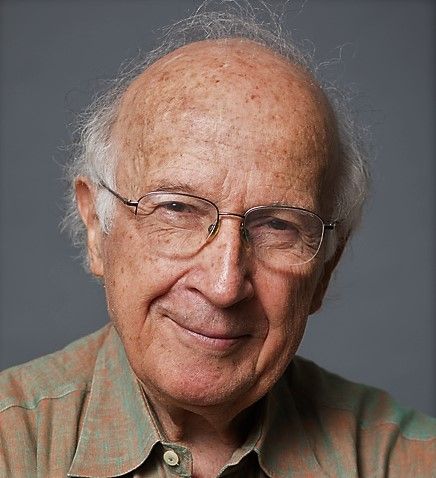 Roald Hoffmann合作论文数Department of Chemistry & Chemical Biology, The College of Arts & Sciences, Cornell University2
 Silke Wolf合作论文数2
 Burkhard Krumm合作论文数Department of Chemistry, Faculty of Chemistry and Pharmacy, Ludwig-Maximilians-Universität München2Rudolf Staudigl合作论文数2Marianne Rotter合作论文数2Bernd Sendlinger合作论文数2Hans-Otto Becker合作论文数2
 Georg Steinhauser合作论文数Institut für Radioökologie und Strahlenschutz, Fakultät für Mathematik und Physik, Leibniz Universität Hannover2Margaret-Jane Crawford合作论文数2gunter schon合作论文数1Christoph von Plotho合作论文数1manuel joas合作论文数1Urs Fischbach合作论文数1Thomas Reith合作论文数1gerd fischer合作论文数1Gerd Fischer合作论文数1O. I. Barkalov合作论文数1Michael Woerle合作论文数1
 Peter Ulmer合作论文数Institute of Geochemistry and Petrology, Department of Earth Sciences, Eidgenössische Technische Hochschule Zürich1
 Pavel G. Naumov合作论文数Institute of Crystallography, Russian Academy of Sciences;Institute of Crystallography, Russian Academy of Sciences1Martin Franz A合作论文数1
 Quirin Axthammer合作论文数1
 Ivan Gospodinov合作论文数1Ivan A. Trojan合作论文数Russian Academy of Sciences1
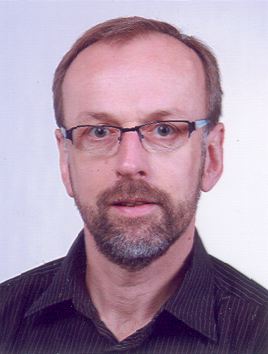 Frank Krumeich合作论文数Institute for Chemical and Bioengineering, Department of Chemistry and Applied Biosciences, ETH Zurich1
 Peter Klüfers合作论文数Department Chemie Ludwig-Maximilians-Universitat Munchen1
 Heinrich Nöth合作论文数Ludwig-Maximilians-Universität München1




