This multilingual resource contains corpora for 14 languages, gathered at the occasion of the 1.2 edition of the PARSEME Shared Task on semi-supervised Identification of Verbal MWEs (2020). These corpora were meant to serve as additional "raw" corpora, to help discovering unseen verbal MWEs. The corpora are provided in CONLL-U (https://universaldependencies.org/format.html) format. They contain morphosyntactic annotations (parts of speech, lemmas, morphological features, and syntactic dependencies). Depending on the language, the information comes from treebanks (mostly Universal Dependencies v2.x) or from automatic parsers trained on UD v2.x treebanks (e.g., UDPipe). VMWEs include idioms (let the cat out of the bag), light-verb constructions (make a decision), verb-particle constructions (give up), inherently reflexive verbs (help oneself), and multi-verb constructions (make do). For the 1.2 shared task edition, the data covers 14 languages, for which VMWEs were annotated according to the universal guidelines. The corpora are provided in the cupt format, inspired by the CONLL-U format. Morphological and syntactic information – not necessarily using UD tagsets – including parts of speech, lemmas, morphological features and/or syntactic dependencies are also provided. Depending on the language, the information comes from treebanks (e.g., Universal Dependencies) or from automatic parsers trained on treebanks (e.g., UDPipe). This item contains training, development and test data, as well as the evaluation tools used in the PARSEME Shared Task 1.2 (2020). The annotation guidelines are available online: http://parsemefr.lif.univ-mrs.fr/parseme-st-guidelines/1.2
The web presents unprecedented opportunities for large-scale collection of text in many languages. However, two critical steps in the development of web corpora remain challenging: the identification of clean text from source HTML and the assignment of genre or register information to the documents. In this paper, we evaluate a multilingual approach to this end. Our starting points are the Swedish and French Common Crawl datasets gathered for the 2017 CoNLL shared task, particularly the URLs. We 1) fetch HTML pages based on the URLs and run boilerplate removal, 2) train a classifier to further clean out undesired text fragments, and 3) annotate text registers. We compare boilerplate removal against the CoNLL texts, and find an improvement. For the further cleaning of undesired material, the best results are achieved using Multilingual BERT with monolingual fine-tuning. However, our results are promising also in a cross-lingual setting, without fine-tuning on the target language. Finally, the register annotations show that most of the documents belong to a relatively small set of registers, which are relatively similar in the two languages. A number of additional flags in the annotation are, however, necessary to reflect the wide range of linguistic variation associated with the documents.
Deep learning-based language models pretrained on large unannotated text corpora have been demonstrated to allow efficient transfer learning for natural language processing, with recent approaches such as the transformer-based BERT model advancing the state of the art across a variety of tasks. While most work on these models has focused on high-resource languages, in particular English, a number of recent efforts have introduced multilingual models that can be fine-tuned to address tasks in a large number of different languages. However, we still lack a thorough understanding of the capabilities of these models, in particular for lower-resourced languages. In this paper, we focus on Finnish and thoroughly evaluate the multilingual BERT model on a range of tasks, comparing it with a new Finnish BERT model trained from scratch. The new language-specific model is shown to systematically and clearly outperform the multilingual. While the multilingual model largely fails to reach the performance of previously proposed methods, the custom Finnish BERT model establishes new state-of-the-art results on all corpora for all reference tasks: part-of-speech tagging, named entity recognition, and dependency parsing. We release the model and all related resources created for this study with open licenses at this https URL .
We propose a method for modifying hateful online comments to non-hateful comments without losing the understandability and original meaning of the comments. To accomplish this, we retrieve and classify 301,153 hateful and 1,041,490 non-hateful comments from Facebook and YouTube channels of a large international media organization that is a target of considerable online hate. We supplement this dataset by 10,000 Reddit comments manually labeled for hatefulness. Using these two datasets, we train a neural network to distinguish linguistic patterns. The model we develop, Neural Network Hate Deletion (NNHD), computes how hateful the sentences of a social media comment are and if they are above a given threshold, it deletes them using a language dependency tree. We evaluate the results by comparing crowd workers' perceptions of hatefulness and understandability before and after transformation and find that our method reduces hatefulness without resulting in a significant loss of understandability. In some cases, removing hateful elements improves understandability by reducing the linguistic complexity of the comment. In addition, we find that NNHD can satisfactorily retain the original meaning on average but is not perfect in this regard. In terms of practical implications, NNHD could be used in social media platforms to suggest more neutral use of language to agitated online users.
We present an updated and improved version of our syntactic analysis query toolkit, dep search, geared towards morphologically rich languages and large parsebanks. The query language supports complex searches on dependency graphs, including for example boolean logic and nested queries. Improvements we present here include better data indexing, especially better database backend and document metadata support, API access and improved web user interface. All contributions are available under open licences.
This paper develops register sub-corpora for the Web-crawled Finnish Internet Parsebank. Currently, all the documents belonging to different registers, such as news and user manuals, have an equal status in this corpus. Detecting the text register would be useful for both NLP and linguistics (Giesbrecht and Evert, 2009) (Webber, 2009) (Sinclair, 1996) (Egbert et al., 2015). We assemble the subcorpora by first naively deducing four register classes from the Parsebank document URLs and then developing a classifier based on these, to detect registers also for the rest of the documents. The results show that the naive method of deducing the register is efficient and that the classification can be done sufficiently reliably. The analysis of the prediction errors however indicates that texts sharing similar communicative purposes but belonging to different registers, such as news and blogs informing the reader, share similar linguistic characteristics. This attests of the well-known difficulty to define the notion of registers for practical uses. Finally, as a significant improvement to its usability, we release two sets of sub-corpus collections for the Parsebank. The A collection consists of two million documents classified to blogs, forum discussions, encyclopedia articles and news with a naive classification precision of >90%, and the B collection four million documents with a precision of >80%.
Intuitively, some predicates have a better fit with certain arguments than others. Usage-based models of language emphasize the importance of semantic similarity in shaping the structuring of constructions (form and meaning). In this study, we focus on modeling the semantics of transitive constructions in Finnish and present an autoencoder-based neural network model trained on semantic vectors based on Word2vec. This model builds on the distributional hypothesis according to which semantic information is primarily shaped by contextual information. Specifically, we focus on the realization of the object. The performance of the model is evaluated in two tasks: a pseudo-disambiguation and a cloze task. Additionally, we contrast the performance of the autoencoder with a previously implemented neural model. In general, the results show that our model achieves an excellent performance on these tasks in comparison to the other models. The results are discussed in terms of usage-based construction grammar. Kokkuvõte. Aki-Juhani Kyröläinen, M. Juhani Luotolahti ja Filip Ginter: Autokoodril põhinev närvivõrkude mudel valikulisel eelistamisel. Intuitiivselt tundub, et mõned argumendid sobivad teatud predikaatidega paremini kokku kui teised. Kasutuspõhised keelemudelid rõhutavad konstruktsioonide struktuuri (nii vormi kui tähenduse) kujunemisel tähendusliku sarnasuse olulisust. Selles uurimuses modelleerime soome keele transitiivsete konstruktsioonide semantikat ja esitame närvivõrkude mudeli ehk autokoodri. Mudel põhineb distributiivse semantika hüpoteesil, mille järgi kujuneb semantiline info peamiselt konteksti põhjal. Täpsemalt keskendume uurimuses objektile. Mudelit hindame nii valeühestamise kui ka lünkülesande abil. Kõrvutame autokoodri tulemusi varem välja töötatud neurovõrgumudelitega ja tõestame, et meie mudel töötab võrreldes teiste mudelitega väga hästi. Tulemused esitame kasutuspõhise konstruktsioonigrammatika kontekstis. Võtmesõnad: neurovõrk; autokooder; tähendusvektor; kasutuspõhine mudel; soome keel
Intuitively, some predicates have a better fit with certain arguments than others. Usage-based models of language emphasize the importance of semantic similarity in shaping the structuring of constructions (form and meaning). In this study, we focus on modeling the semantics of transitive constructions in Finnish and present an autoencoder-based neural network model trained on semantic vectors based on Word2vec. This model builds on the distributional hypothesis according to which semantic information is primarily shaped by contextual information. Specifically, we focus on the realization of the object. The performance of the model is evaluated in two tasks: a pseudo-disambiguation and a cloze task. Additionally, we contrast the performance of the autoencoder with a previously implemented neural model. In general, the results show that our model achieves an excellent performance on these tasks in comparison to the other models. The results are discussed in terms of usage-based construction grammar.
We present the TurkuNLP entry in the CoNLL 2017 Shared Task on Multilingual Parsing from Raw Text to Universal Dependencies. The system is based on the UDPipe parser with our focus being in exploring various techniques to pre-train the word embeddings used by the parser in order to improve its performance especially on languages with small training sets. The system ranked 11th among the 33 participants overall, being 8th on the small treebanks, 10th on the large treebanks, 12th on the parallel test sets, and 26th on the surprise languages.
This package contains the system outputs from the CoNLL 2017 Shared Task in Multilingual Parsing from Raw Text to Universal Dependencies.
Automatic segmentation, tokenization and morphological and syntactic annotations of raw texts in 45 languages, generated by UDPipe (http://ufal.mff.cuni.cz/udpipe), together with word embeddings of dimension 100 computed from lowercased texts by word2vec (https://code.google.com/archive/p/word2vec/). For each language, automatic annotations in CoNLL-U format are provided in a separate archive. The word embeddings for all languages are distributed in one archive. Note that the CC BY-SA-NC 4.0 license applies to the automatically generated annotations and word embeddings, not to the underlying data, which may have different license and impose additional restrictions. Update 2018-09-03 =============== Added data in the 4 “surprise languages” from the 2017 ST: Buryat, Kurmanji, North Sami and Upper Sorbian. This has been promised before, during CoNLL-ST 2018 we gave the participants a link to this record saying the data was here. It wasn't, sorry. But now it is.
In this paper we present our system in the DiscoMT 2017 Shared Task on Crosslingual Pronoun Prediction. Our entry builds on our last year’s success, our system based on deep recurrent neural networks outperformed all the other systems with a clear margin. This year we investigate whether different pre-trained word embeddings can be used to improve the neural systems, and whether the recently published Gated Convolutions outperform the Gated Recurrent Units used last year.
This study presents a methodological toolbox for big data analysis of linguistic constructions by introducing dependency profiles, i.e., co-occurrences of linguistic elements with syntax information. These were operationalized by reconstructing sentences as delexicalized syntactic biarcs, subtrees of dependency analyses. As a case study, we utilize these dependency profiles to explore usage patterns associated with emoticons, the graphic representations of facial expressions. These are said to be characteristic of Computer-Mediated Communication, but typically studied only in restricted corpora. To analyze the 3.7-billion token Finnish Internet Parsebank we use as data, we apply clustering and support vector machines. The results show that emoticons are associated with three typical usage patterns: stream of the writer’s consciousness, narrative constructions and elements guiding the interaction and expressing the writer’s reactions by means of interjections and discourse particles. Additionally, the more frequent emoticons, such as :), are used differently than the less frequent ones, such as ^_^. Kokkuvõte. Veronika Laippala, Aki-Juhani Kyröläinen, Jenna Kanerva, Juhani Luotolahti ja Filip Ginter: Sõltuvusprofiilid kui vahend suurandmete keeleliste konstruktsioonide analüüsimiseks: uurimus emotikonidest. Uurimuses esitame metodoloogilise “tööriistakomplekti” keelekonstruktsioonide analüüsimiseks suurandmete põhjal, rakendades sõltuvusprofiile. Sõltuvusprofiil on lingvistiliste elementide koosesinemise esitusviis, kuhu on kaasatud süntaktiline informatsioon. Selleks on laused konstrueeritud sõltuvusanalüüsi alampuudena, kus süntaktiline info on esitatud sõnadevaheliste (kaksik-)kaarte abil. Artiklis rakendame sõltuvusprofiile selleks, et selgitada välja emotikonide kasutusmustrid. Näomiimika graafilised esitused on iseloomulikud arvuti suhtlusele, mida tavaliselt uuritakse piiratud korpuse põhjal, kuid meie kasutame klasterdamist ja tugivektor-masinaid 3,7 miljardi sõna suuruse Soome Interneti Puudepangal. Selgub, et emotikonide kasutus seostub kolme peamise kasutusmustriga: kirjutaja teadvuse vooluga, narratiivsete konstruktsioonidega ning hüüdsõnade ja diskursusepartiklitega, mis juhivad suhtlust ja väljendavad kirjutaja reaktsioone. Lisaks selgub, et sagedastel emotikonidel nagu :), on rohkem erinevaid kasutusi kui harvadel emotikonidel nagu ^_^. Võtmesõnad: sõltuvusprofiilid; kasutuspõhine süntaks; arvutisuhtlus; emotikonid; veebikorpus; soome keel
In this paper we present our winning system in the WMT16 Shared Task on CrossLingual Pronoun Prediction, where the objective is to predict a missing target language pronoun based on the target and source sentences. Our system is a deep recurrent neural network, which reads both the source language and target language context with a softmax layer making the final prediction. Our system achieves the best macro recall on all four language pairs. The margin to the next best system ranges between less than 1pp and almost 12pp depending on the language pair.
Recently, there has been great interest both in the development of cross-linguistically applicable annotation schemes and in the application of syntactic parsers at web scale to create parsebanks of online texts. The combination of these two trends to create massive, consistently annotated parsebanks in many languages holds enormous potential for the quantitative study of many linguistic phenomena, but these opportunities have been only partially realized in previous work. In this work, we take a key step toward universal web parsebanks through a single-language case study introducing the first retrainable parser applied to the Universal Dependencies representation and its application to create a Finnish web-scale parsebank. We further integrate this data into an online dependency search system and demonstrate its applicability by showing linguistically motivated search examples and by using the dependency syntax information to analyze the language of the web corpus. We conclude with a discussion of the requirements of extending from this case study on Finnish to create consistently annotated web-scale parsebanks for a large number of languages.
This paper presents the University of Turku entry to the SemEval-2015 task on Broad-Coverage Semantic Dependency Parsing.The system uses an existing transition-based parser as a sequence classifier to jointly predict all arguments of one candidate predicate at a time.Compared to our 2014 entry, the 2015 system gains about 3pp in terms of F-score for a fraction of the development time.Depending on the subtask, the difference between our entry and the winning system ranges between 1 and 5pp.
We present a syntactic analysis query toolkit geared specifically towards massive dependency parsebanks and morphologically rich languages. The query language allows arbitrary tree queries, including negated branches, and is suitable for querying analyses with rich morphological annotation. Treebanks of over a million words can be comfortably queried on a low-end netbook, and a parsebank with over 100M words on a single consumer-grade server. We also introduce a web-based interface for interactive querying. All contributions are available under open licenses.
This paper investigates sentence compression for automatic subtitle generation using supervised machine learning. We present a method for sentence compression as well as discuss generation of training data from compressed Finnish sentences, and different approaches to the problem. The method we present outperforms state-of-the-art baseline in both automatic and human evaluation. On real data, 44.9% of the sentences produced by the compression algorithm have been judged to be useable as-is or after minor edits.
In this paper, we report on the development of a large-scale Finnish Internet parsebank, currently consisting of 1.5 billion tokens in 116 million sentences. The data is fully morphologically and syntactically analyzed and it has been used to extract flat and syntactic n-gram collections, as well as verb-argument and nounargument n-grams. Additionally, distributional vector space representations of the words are induced using the word2vec method. All n-gram collections as well as the vector space models are made available under an open license.
 Filip Ginter合作论文数Department of Computing, Faculty of Technology, University of Turku19
 Jenna Kanerva合作论文数13
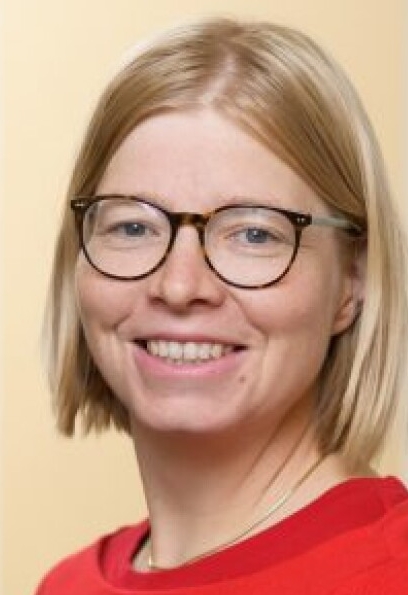 Veronika Laippala合作论文数University of Turku5
 Sampo Pyysalo合作论文数Department of Computing, University of Turku;Department of Future Technologies, University of Turku;Department of Theoretical and Applied Linguistics, University of Cambridge5
 Milan Straka合作论文数4Aki-Juhani Kyröläinen合作论文数School of Languages and Translation Studies, University of Turku4
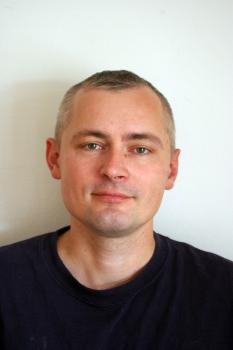 Daniel Zeman合作论文数Center for Computational Linguistics, Institute of Formal and Applied Linguistics, Faculty of Mathematics and Physics, Charles University4
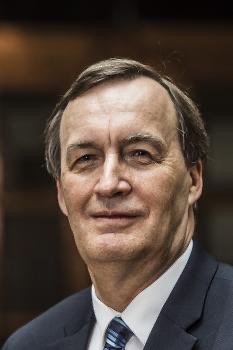 Jan Hajič合作论文数Institute of Formal and Applied Linguistics, Faculty of Mathematics and Physics, Charles University3
 Joakim Nivre合作论文数Department of Linguistics and Philology, Faculty of Languages, Uppsala University;Research Institutes of Sweden2
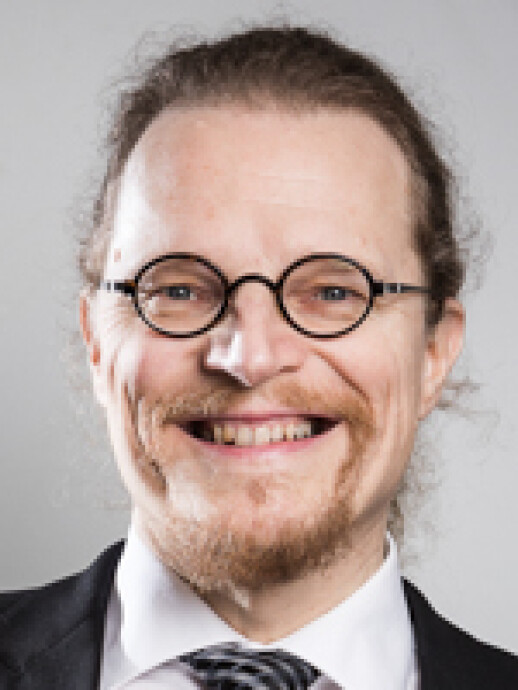 Tapio Salakoski合作论文数Faculty of Science, University of Turku2
 Christopher Manning合作论文数Department of Linguistics, Stanford University;Department of Computer Science, Stanford University;AIX Ventures2
 Martin Potthast合作论文数Department of Electrical Engineering, University of Kassel;Department of Computer Science, University of Kassel;hessian.AI;ScaDS.AI2
 Sara Stymne合作论文数Linköping University2
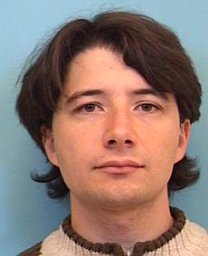 Martin Popel合作论文数Charles University in Prague2
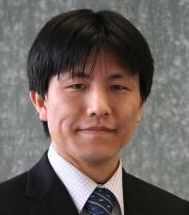 Hiroshi Kanayama合作论文数IBM Research - Tokyo2Dechuan Teng合作论文数1Ryan Hornby合作论文数1Anna Salmela合作论文数1
 Renata Ramisch合作论文数1
 Bo Zheng (郑博)合作论文数Harbin Institute of Technology1
 Rodrigo Wilkens合作论文数Université Catholique de Louvain1
 Timothy Dozat合作论文数Google1Yu Kuan合作论文数1
 Marcos Garcia-Fuentes合作论文数1Christophe Moor合作论文数1Heval Azizoglu合作论文数1Affan Zaffar合作论文数1Erik Schill合作论文数1Saara Hellström合作论文数1Liina Repo合作论文数1Vassiliki Foufi合作论文数1Carola Carlino合作论文数1
 Pablo Gamallo合作论文数1
 Tao Ji (纪焘)合作论文数College of Foreign Languages and Literature, Fudan University1Vincent Segonne合作论文数1
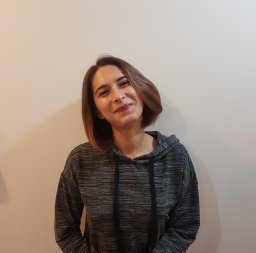 Zeynep Yirmibesoglu合作论文数1Herman Leung合作论文数1
 Valtteri Skantsi合作论文数1
 Tolga Kayadelen合作论文数1Mihaela Cristescu合作论文数1
 Meghan Dowling合作论文数ADAPT Ctr, Dublin City Univ1
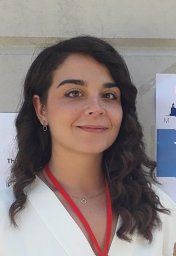 Giulia Speranza合作论文数1
 E. Badmaeva合作论文数1jana strnadova合作论文数1Menghan Jiang合作论文数Dept Chinese & Bilingual Studies, Hong Kong Polytech Univ1
 Johannes Heinecke合作论文数1Kira Droganova合作论文数Fac Math & Phys, Charles Univ Prague1
 umut sulubacak合作论文数1Masayasu Muraoka合作论文数IBM Research - Tokyo, Japan1




