There are many competing definitions of what statistical properties make a machine learning model fair. Unfortunately, research has shown that some key properties are mutually exclusive. Realistic models are thus necessarily imperfect, choosing one side of a trade-off or the other. To gauge perceptions of the fairness of such realistic, imperfect models, we conducted a between-subjects experiment with 502 Mechanical Turk workers. Each participant compared two models for deciding whether to grant bail to criminal defendants. The first model equalized one potentially desirable model property, with the other property varying across racial groups. The second model did the opposite. We tested pairwise trade-offs between the following four properties: accuracy; false positive rate; outcomes; and the consideration of race. We also varied which racial group the model disadvantaged. We observed a preference among participants for equalizing the false positive rate between groups over equalizing accuracy. Nonetheless, no preferences were overwhelming, and both sides of each trade-off we tested were strongly preferred by a non-trivial fraction of participants. We observed nuanced distinctions between participants considering a model "unbiased" and considering it "fair." Furthermore, even when a model within a trade-off pair was seen as fair and unbiased by a majority of participants, we did not observe consensus that a machine learning model was preferable to a human judge. Our results highlight challenges for building machine learning models that are perceived as fair and broadly acceptable in realistic situations.
Data brokers and advertisers increasingly collect data in one context and use it in another. When users encounter a misuse of their data, do they subsequently disclose less information? We report on human-subjects experiments with 25 in-person and 280 online participants. First, participants provided personal information amidst distractor questions. A week later, while participants completed another survey, they received either a robotext or online banner ad seemingly unrelated to the study. Half of the participants received an ad containing their name, partner's name, preferred cuisine, and location; others received a generic ad. We measured how many of 43 potentially invasive questions participants subsequently chose to answer. Participants reacted negatively to the personalized ad, yet answered nearly all invasive questions accurately. We unpack our results relative to the privacy paradox, contextual integrity, and power dynamics in crowdworker platforms.
Recent pushes to replace human decision-makers with machine learning models have surfaced concerns about algorithmic fairness. These concerns have led to a quickly growing literature on defining fairness and making models transparent. In practice, the data scientist building the model necessarily must make difficult tradeoffs choosing between imperfect models, balancing different definitions of fairness with accuracy and other considerations. Because these choices have ethical dimensions, there is a need to better support these choices and both document and justify them for the public. We outline a research agenda towards better visualizing difficult fairness-related tradeoffs between competing models, empirically quantifying societal norms about such tradeoffs, and documenting these decisions. We outline how the best practices that result could enable a consumer protection framework for accountable fairness.
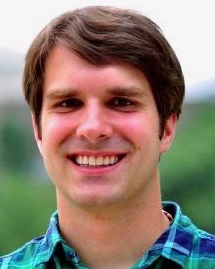 Blase Ur合作论文数Department of Computer Science, University of Chicago3
 Galen Harrison合作论文数Biocomplexity Institute, University of Virginia;Department of Computer Science, School of Engineering & Applied Science, University of Virginia2
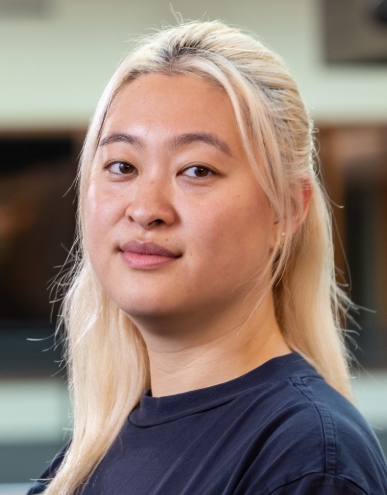 Miranda Wei合作论文数Security and Privacy Research Laboratory, Paul G. Allen School of Computer Science & Engineering, University of Washington;Tech Policy Lab, University of Washington1
 Sophie Veys合作论文数 University of Chicago 1
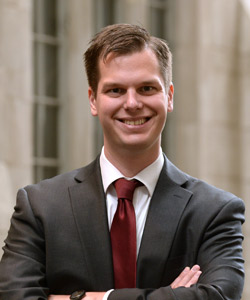 Matthew Kugler合作论文数Northwestern Pritzker School of Law, Northwestern University1
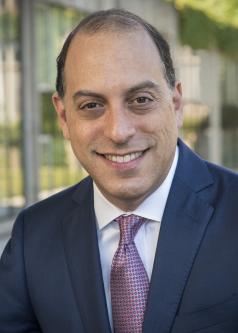 Lior Jacob Strahilevitz合作论文数The Law School, The University of Chicago1




