The report focuses on the challenges and opportunities facing agriculture in the context of climate change in the UK and Australia. It discusses the vulnerability of agriculture to climate change impacts and the need for mitigation measures. The report highlights the potential of precision agriculture technologies and environmentally safe interventions, such as biological control products, to manage pests, diseases and invasives under changing climate. It also emphasizes the role of Earth Observation data in agriculture, particularly in pest and disease management, and identifies priority research topics. The report concludes with a plan for developing a research theme to address these issues.
The Fall Army Worm (FAW) radio campaign was implemented between November 2018 and April 2019 in key maize growing areas and locations with reported high severity of fall armyworm as identified by national stakeholders. We evaluated the effectiveness of radio mass extension campaign in achieving scale, and effect on farmers’ knowledge and uptake of management practices for fall armyworm (FAW). We also assessed the factors determining farmers’ participation in radio campaign, to inform future and similar campaigns. Data were gathered through a household survey targeting locations where the campaign was implemented; and 250 male and 215 female farmers were surveyed. The study was conducted in four of the seven provinces where the campaign took place—Eastern, Luapula, Copperbelt and Southern provinces. Selection of the sample provinces was based on reported rainfall distribution during the season and severity of FAW infestation, radio coverage areas and maize growing intensities. The radio campaign reached an estimated 1.4 million farmers. Survey results show that both male and female radio listeners were significantly more aware of fall armyworm, and more likely to adopt management practices than non-radio listeners, in particular preventive measures such as frequent monitoring, intercropping and crop rotation. This means that participation in the radio-based extension campaign significantly increased farmers’ knowledge and stimulated uptake of management practices for FAW. However, the survey showed that only 49% of the respondents listened to at least one FAW radio episode. Predictors of farmer participation in radio campaign were; gender, education level, and maize farm size. The results imply that deliberate promotion of such programs would enhance listenership and improve interactivity while at the same time integrating other extension approaches. The integration also provides opportunities for equally reaching women as men, given the observed digital divide.
Parthenium hysterophorus (an alien weed) is posing serious threat to crop yields, livestock's and human health and is considered the seventh most devastating weed across the globe. Early identification and mapping of Parthenium hysterophorus is essential for the timely eradication and control of this alien invasive species. Hyperspectral remote sensing (due to its high spectral details) is highly valuable in discriminating vegetation species and mapping its distribution. However, the use of high-dimensional hyperspectral data possesses the threat of multicollinearity (i.e., contiguous wavelength-bands exhibits strong spectral correlation) which in-turn yields unstable parameter estimation. This study aims to explore the potential of hyperspectral (spectroscopic) data for discerning Parthenium hysterophorus and to identify optimal wavebands that are sensitive for species discrimination. In this study, the spectral signatures of Parthenium hysterophorus and four co-occurring plant species were acquired using portable hand held spectrometer. Spectral Angle Mapper (SAM) in conjunction with Genetic Algorithms (GA) were used discern the measured species based on their spectral profiles. The analysis yielded high classification accuracies for both the training (overall accuracy = 99%) and testing (overall accuracy = 97%) datasets. The SAM-GA picked a meaningful subset of spectral bands from different parts of electromagnetic spectrum (i.e., centering at 0.47 mu m, 0.715 mu m, 1.12-1.25 mu m and 1.8-1.9 mu m) which carries highest information for the spectral discrimination of Parthenium hysterophorus. In conclusion, this study confirms the capability of hyperspectral data in discerning Parthenium hysterophorus from other crops/plant species and also highlights the importance of few wavelength positions for the spectral discrimination of Parthenium hysterophorus weed.
Parthenium, Parthenium hysterophorus L. poses a serious environmental and socio-economic threat in Pakistan. It was identified as a priority for control in Pakistan and an integrated control programme has been launched against this invasive weed. In 2009 the biological control agent, Zygogramma bicolorata Pallister, was documented in Pakistan and thought to have naturally dispersed into the region. Despite the presence of this biological control agent for the past decade in Pakistan, the population level impact on parthenium weed has been limited by several factors, including climate, diapause and limited dispersal. A redistribution programme was initiated to promote this biological control agent in Pakistan. In addition to this, the parthenium winter rust, Puccinia abrupta Diet. & Holw. var. partheniicola (Jackson) Parmelee, was reported in Pakistan for the first time in 2019. Despite this rust being widespread there appears to be limited impact, most likely linked to environmental conditions and the timing of infection. Monitoring programmes for this rust have been initiated for the winter of 2020. CABI, through its Action on Invasives programme, has established a quarantine facility for the screening of complementary biological control agents not yet in Pakistan against parthenium and other invasive weeds in the country. With this quarantine facility the importation of the stem boring weevil, Listronotus setosipennis (Hustache) was possible and host range testing is underway. The biological control of parthenium in Pakistan is still at an early stage, and considerable effort is required to fill the management toolbox for this invasive weed.
 Abdul Rehman合作论文数2Tim Beale合作论文数CABI;T.Beale@cabi.org.;CABI2
 Noah Phiri合作论文数Mkondezi Research Station2
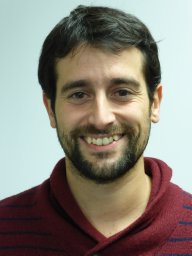 Pablo Gonzalez-Moreno合作论文数2Melanie Bateman合作论文数1
 Tamsin Davis合作论文数1
 David Onyango Owino合作论文数1Gilson Chipabika合作论文数1Mathews Matimelo合作论文数1Birgitta Oppong-Mensah合作论文数1
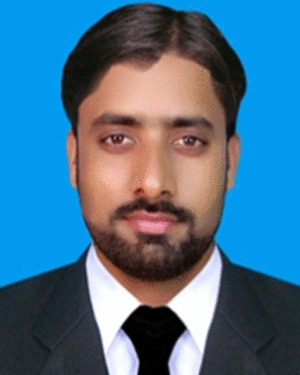 Saleem Ullah合作论文数1Joe Beeken合作论文数1Muhammad Ali合作论文数1Belinda Luke合作论文数1
 Harrison Rware合作论文数1
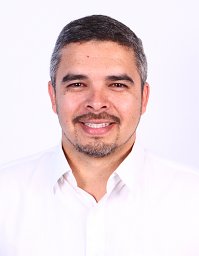 Jose Gomez Vargas合作论文数1
 Yelitza Colmenarez合作论文数1Silvia Silvestri合作论文数1
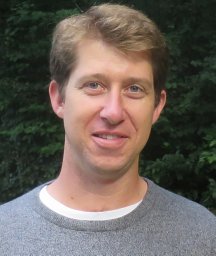 Philip Weyl合作论文数CABI1
 Kazam Ali合作论文数1Arshad Iqbal合作论文数1
 Muhammad Usman Shafique合作论文数Natl Ctr Excellence Geol, Univ Peshawar1Idah Mugambi合作论文数1
 Monica K. Kansiime合作论文数Africa Reg Ctr, CAB Int1
 Justice A. Tambo合作论文数CABI1
 Sean T. Murphy合作论文数1
 Taylor B合作论文数CABI Europe UK1Pratt Corin合作论文数Faculty of Natural Sciences, Imperial College London1
 Muhammad Shakir合作论文数1Sultan Amir合作论文数1
 Muhammad Shahid Iqbal合作论文数1
 M.J.W. Cock合作论文数Centre for Agriculture and Biosciences International1Steve Edgington合作论文数1
 Roger Day合作论文数Silwood Centre for Pest Management, Imperial College at Silqood Park1Arne Witt合作论文数1
 Natalia Corniani合作论文数1Victor Attuquaye Clottey合作论文数1
 Regan Early合作论文数University of Notre Dame;,Department of Ecology and Evolutionary Biology, Brown University;University of Notre Dame, Brown University1




