Understanding the capacity of forests to adapt to climate change is of pivotal importance for conservation science, yet this is still widely unknown. This knowledge gap is particularly acute in high-biodiversity tropical forests. Here, we examined how tropical forests of the Americas have shifted community trait composition in recent decades as a response to changes in climate. Based on historical trait-climate relationships, we found that, overall, the studied functional traits show shifts of less than 8% of what would be expected given the observed changes in climate. However, the recruit assemblage shows shifts of 21% relative to climate change expectation. The most diverse forests on Earth are changing in functional trait composition but at a rate that is fundamentally insufficient to track climate change.
Tropical forests are the most diverse and productive ecosystems on Earth. While better understanding of these forests is critical for our collective future, until quite recently efforts to measure and monitor them have been largely disconnected. Networking is essential to discover the answers to questions that transcend borders and the horizons of funding agencies. Here we show how a global community is responding to the challenges of tropical ecosystem research with diverse teams measuring forests tree-by-tree in thousands of long-term plots. We review the major scientific discoveries of this work and show how this process is changing tropical forest science. Our core approach involves linking long-term grassroots initiatives with standardized protocols and data management to generate robust scaled-up results. By connecting tropical researchers and elevating their status, our Social Research Network model recognises the key role of the data originator in scientific discovery. Conceived in 1999 with RAINFOR (South America), our permanent plot networks have been adapted to Africa (AfriTRON) and Southeast Asia (T-FORCES) and widely emulated worldwide. Now these multiple initiatives are integrated via ForestPlots.net cyber-infrastructure, linking colleagues from 54 countries across 24 plot networks. Collectively these are transforming understanding of tropical forests and their biospheric role. Together we have discovered how, where and why forest carbon and biodiversity are responding to climate change, and how they feedback on it. This long-term pan-tropical collaboration has revealed a large long-term carbon sink and its trends, as well as making clear which drivers are most important, which forest processes are affected, where they are changing, what the lags are, and the likely future responses of tropical forests as the climate continues to change. By leveraging a remarkably old technology, plot networks are sparking a very modern revolution in tropical forest science. In the future, humanity can benefit greatly by nurturing the grassroots communities now collectively capable of generating unique, long-term understanding of Earth's most precious forests.
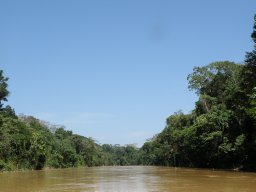
AIM: Floodplains occupy a vast area of the Amazon basin but little is known of how their physical and limnological characteristics respond to local and regional ecological processes. In the Negro River basin and its main tributary, the Branco River, there are large areas that are seasonally flooded by water from local rainfall and that are not directly connected to major rivers. One such area is the floodplain of Viruá National Park, in Roraima state, northern Brazil. METHODS: The physical and chemical limnological characteristics of 19 plots in this area were monitored over three years (2008‑2010), with samples collected each year at the beginning and end of the rainy season (May to August). RESULTS: The water bodies studied had low mean values for electrical conductivity (22.0 ± 14.0 µS*cm-1) and pH (4.8 ± 0.7), relatively high temperatures (26.6 ± 2.7 °C), and moderate values for dissolved oxygen saturation (43.0 ± 21.5%) and water transparency (87.9 ± 38.7 cm). There was no significant difference in the limnological characteristics of the aquatic plots between the beginning and end of the rainy seasons in 2008 and 2010, but there were significant differences in 2009 due to an atypical rainfall pattern with two short dry spells during the rainy season. Multivariate analysis showed that the highest temporal variations in the limnological characteristics of the aquatic plots resulted from changes in water transparency, and these changes were related to soil type, elevation of the plot, and the particular micro-basins to which they were connected. CONCLUSIONS: This dynamic is different from that of most floodplains in the Amazon region, where the limnological pattern is well-defined seasonally and strongly dependent on the direct connectivity to large river systems. Floodplains not connected to large rivers should receive special attention in relation to the expected impacts of global climate change because of their high dependence on local rainfall.
The database of the Brazilian Program for Biodiversity Research (PPBio; GIVD ID SA-BR-001) includes data on the environment and biological groups such as plants. It is organized by site, which is usually a grid with 10 to 72 uniformly-distributed plots, and has already surveyed 1,638 releves across different Brazilian ecosystems. The sampling design is based on the RAPELD system to allow integration of data from diverse taxa and ecosystem processes. RAPELD is a spatially-explicit sampling scheme to monitor biodiversity in long-term ecological research sites and during rapid appraisals of biodiversity that has attracted support from many management agencies, which are using it as their long-term monitoring system. Vegetation surveys include measurements of cover, biomass and number of individuals from woody and herbaceous vascular plants, along with environmental data. We have recently migrated to a metadata catalog and data repository which allows searching for specific groups across all sites. All RAPELD data have been collected since 2001, though the site also allows data from other long-term plots to be archived as associated projects.
 William E. Magnusson合作论文数Instituto Nacional de Pesquisas da Amazonia5
 Fabricio Beggiato Baccaro合作论文数Dept Biol, Univ Fed Amazonas3
 rainer xavier de amorim合作论文数2Bert van Ulft合作论文数2Luciana de Oliveira Pereira合作论文数2karina garcia cabrera合作论文数2Verginia Wortel合作论文数2
 Luciana F. Alves合作论文数2
 Ben Hur Marimon-Junior合作论文数2
 Juliana Schietti合作论文数2
 Sandra Cristina Muller合作论文数2Richarlly da Costa Silva合作论文数2Geertje van der Heijden合作论文数2Fernando Cornejo Valverde合作论文数2
 Katia Zanini合作论文数Dept Ecol, Univ Fed Rio Grande do Sul2
 Marcelo Petratti Pansonato合作论文数Instituto de Biociências - Dept. Ecologia, Universidade de Sao Paulo - USP2
 Laura Vedovato合作论文数Fac Environm Sci & Econ, Univ Exeter2Joice Klipel合作论文数2
 Kauane Bordin合作论文数Corresponding author.2
 Sonia Palacios-Ramos合作论文数National Agrarian University2Vitor de Andrade Kamimura合作论文数2
 flavia delgado santana合作论文数Programa Posgrad Ecol, Inst Nacl Pesquisas Amazonia INPA2
 Anand Roopsind合作论文数Boise State Univ, Biol Sci, Boise, ID 83725 USA2Javier Silva Espejo合作论文数Univ Nacl Amazon Madre de Dios UNAMAD2
 Edmar Almeida de Oliveira合作论文数Univ Estado Mato Grosso2
 Rodolfo Vasquez Martinez合作论文数Jardin Bot Missouri, Oxapampa, Peru2Gerardo Flores Llampazo合作论文数Universidad Nacional Jorge Basadre de Grohmann (UNJBG), Tacna, Peru.2Zorayda Restrepo Correa合作论文数Fdn Con Vida, Socioecosistemas & Cambio Climat, Medellin, Colombia2Guido Pardo合作论文数Univ Autonoma Beni, Campus Univ,Ave Ejercito Nacl, Riberalta, Beni, Bolivia2Georgia Pickavance合作论文数Univ Leeds, Sch Geog, Leeds LS2 9JT, W Yorkshire, England2
 Foster Brown合作论文数Woods Hole Res Ctr, Falmouth, MA USA2
 Isau Huamantupa合作论文数Univ Nacl San Antonio Abad Cusco, Cuzco, Peru2Joeri A. Zwerts合作论文数2
 Roy Gonzalez-M.合作论文数Programa Ciencias Basicas Biodivers, Inst Invest Recursos Biol Alexander Von Humboldt2
 Simone Matias Reis合作论文数Environm Change Inst, Univ Oxford2Olaf Bánki合作论文数Naturalis Biodiversity Center2
 David Galbraith合作论文数The School of Plant Sciences, College of Agriculture, Life & Environmental Sciences, The University of Arizona;School of Life Sciences, Henan University;Department of Biomedical Engineering, University of Arizona2
 Maxime Réjou-Méchain合作论文数Institute of Research for Development2
 Oliver Phillips合作论文数Earth and Biosphere Institute, University of Leeds;School of Geography, University of Leeds2
 Erika Berenguer合作论文数School of Geography and the Environment, University of Oxford2
 Robert Muscarella合作论文数2Talbot Joey合作论文数2
 Euridice Honorio Coronado合作论文数School of Geography, University of Leeds Leeds;Instituto de Investigaciones de la Amazonia Peruana Iquitos;Instituto de Investigaciones de la Amazonia Peruana Iquitos, University of Leeds Leeds2
 Yoko Ishida合作论文数2
 Jhon Del Aguila-Pasquel合作论文数2
 Sullivan Martin J P合作论文数British Trust for Ornithology2
 Vleminckx Jason合作论文数Faculté des Sciences, Université Libre de Bruxelles2
 Vincent Antoine Vos合作论文数2
 Arets Eric J M M合作论文数2




