ABSTRACT The pandemic changed people's lives and came with enormous restrictions on personal freedom, greatly restricting people's sense of agency. In response, people oscillated between fear and anger. We show ( N = 2125) the ways in which people restored their perceived agency that was taken away by restrictions and that affective reactions to the pandemic may have guided people's pandemic behavior. In Study 1 ( n = 276), psychological threat elicited by the pandemic predicted anxiety and was, in turn, related to reactance. While anxiety positively predicted reactions increasing the success of pandemic management, reactance was related to non‐facilitating reactions such as belief in conspiracies and vaccine distrust. In Study 2 ( n = 354), reading about a conspiracy myth as one form of defense increased positive affect. In Study 3 ( n = 213) and Study 4 ( n = 1282), we replicated findings from Study 1, extending the focus to belief in conspiracies and fake news, anti‐vaccination attitudes, national trust, solidarity, and mainstream media mistrust. Interestingly, in Study 4, defensive reactions were associated with more perceived agency, indicating that defensive reactions may be tools to manage pandemic‐induced affect. This study series shows that a threat and defense perspective may be a useful angle to understand human behavior in times of crisis.
We assume that the built space—as part of the physical environment—has the power to affect basic human need fulfillment. Accordingly, we investigated how design features of the built space within a physical environment contribute to this effect. In two studies, we used computer-aided design to manipulate the degree of privacy, clutter, and biophilia as well as color temperature of the environment in study spaces, then measured need fulfillment (total N = 314). In Study 1A, participants (N = 260) felt more inclined to enter private study environments than nonprivate ones and felt more competent, autonomous, and related to others in private environments. Some participants (n = 227) continued on to Study 1B, in which they preferred to enter warm, cluttered, biophilic environments and felt more competent, autonomous, and related to others in warm and cluttered environments. In Study 2 (N = 54), we investigated the effects in a virtual reality office setting. The participants indicated that they felt more competent, autonomous, and related to others in more cluttered environments than in empty ones. At the same time, they felt more related to others in biophilic environments compared to nonbiophilic environments. The findings provide the first evidence that the built environment affects need fulfillment.
The coachee's self is central to coaching. Yet the roles that different self-related concepts play in coaching have been insufficiently studied. Specifically, self-control and self-regulation have been conflated or treated as identical concepts. Using the theory of personality systems interactions, we investigated how the development of self-management competencies (SMCs) within coaching facilitates coaching success in two studies with professional samples. Additionally, we examined how coaches support coachees' development of these competencies. Study 1 employed a longitudinal design. Caregivers working as managers engaged in a 5-month coaching programme. Goal attainment increased, need frustration decreased and the SMCs self-regulation and self-access increased, with self-regulation predicting coachees' goal attainment. In Study 2, we conceptually replicated the finding that self-regulation is positively related to coaching success. With a cross-sectional design, we matched self-reported data of 298 coachees with self-reported data of their 75 respective coaches. In a structural equation model, we found that a strong coaching relationship reported by the coaches positively related to the SMCs reported by the coachees. Self-regulation again showed the strongest effect on coaching success. These findings provide theoretical insights into the different effects of self-regulation and self-control on coaching effectiveness and suggest areas of focus for coaches.
PLUSTRACK ist ein Projekt der Universität Salzburg mit dem Ziel, ein Community-Netzwerk für Studierende aufzubauen. Durch eine bessere soziale Vernetzung soll der Studieneinstieg erleichtert und Studierenden darüber hinaus geholfen werden, in herausfordernden Studiensituationen Unterstützung zu finden. Studierende werden hierzu durch verschiedene Vernetzungsinitiativen und Maßnahmen zur Förderung ihrer Resilienz in zentralen Phasen ihres Studiums begleitet, durch Mentoring-, Coaching- und Trainingsangebote unterstützt und dazu angeregt, sich mit ihren Ideen und Verbesserungshinweisen einzubringen. Aber auch Lehrende und Mitarbeitende der Universität werden zu einem verstärkten Austausch miteinander und zur Mitgestaltung von Veränderungsprozessen eingeladen. Unterstützt und begleitet werden diese Angebote durch digitale Tools und Aktivitäten. Dieses Projekt wurde am 1. Juni 2023 im Rahmen einer Online-Veranstaltung des BMBWF präsentiert. Die Präsentationsunterlagen finden Sie hier.
According to Regulatory Focus Theory, two systems determine our strategies to pursue goals - the promotion and the prevention system. Individuals with a dominant promotion system focus on achieving gains, i.e., promoters, and individuals with a dominant prevention system focus on avoiding losses, i.e., preventers. Regulatory Fit Theory suggests that a fit between this focus and the situation causes superior performance and makes individuals feel right. We transfer the fit idea to the interaction of dominant regulatory focus (promotion vs. prevention) with motivational direction (approach vs. avoidance motivation). We investigated these interaction effects on individuals' performance and their experience within creativity workshops. In Study 1 (N 1 = 172), using multi-level analyses, we found that a promotion focus was associated with fluency and a prevention focus with elaborated ideas. This effect was stronger, when preventers also scored high on avoidance motivation. Further, preventers experienced more autonomy support and were more satisfied when they scored high on avoidance. Promoters high on approach motivation reported more autonomy support and more satisfaction than preventers high on approach motivation. For Study 2 (N 2 = 112), we used an experimental design: After measuring regulatory focus, we manipulated approach vs. avoidance motivation in creativity workshops. Using multi-level analyses, we did not find main or interaction effects on fluency or elaboration but we found interaction effects on participants' experience of the creativity workshop. Preventers were more satisfied when they received the avoidance condition. Promoters reported less autonomy support, lower satisfaction, and more perceived conflicts within their teams in the avoidance condition.
First-generation students (FGS) are more likely to feel misplaced and struggle at university than students with university-educated parents (continuous-generation students; CGS). We assumed that the shutdowns during the Coronavirus-pandemic would particularly threaten FGS due to obstructed coping mechanisms. Specifically, FGS may show lower identification with the academic setting and lower perceived fairness of the university system (system justification). We investigated whether FGS and CGS used different defenses to cope with the shutdown threat in a large sample of German-speaking students (N = 848). Using Structural Equation Modeling, we found that for all students, independent of academic parental background, high levels of system justification were associated with perceiving the learning situation as less threatening, better coping with failure, and less helplessness. However, in comparison to CGS, FGS showed small but significant reductions in system justification and relied more on concrete personal relationships with other students as well as their academic identity to cope with the threatening situation. We discuss implications for helping FGS succeed at university.
The global Covid 19-pandemic led to many challenges for higher education (HE) teachers. However, it also provided an opportunity to not only re-evaluate a previously unquestioned teaching culture, but also to fundamentally question the capabilities of HE institutions and teachers to implement digitally supported education at the organizational, teaching, and learning levels. In this study, we analyzed data from 1,339 HE teachers’ conclusions for post-pandemic teaching terms of instructional course quality. Our findings shed light on HE teachers’ mindsets toward traditional face-to-face and online teaching, as well as (im)probable changes in academic teaching culture. Our results offer a “bottom-up” basis for recommendations on how institutions can support their faculty for digital transformations in HE based on teachers’ expertise and perceptions of the advantages and hindrances of HE online teaching.
 Eva Jonas合作论文数Paris-Lodron-Universität Salzburg7
 Stefan Reiss合作论文数Dept Psychol, Univ Salzburg3
 Eline Leen-Thomele合作论文数2Chiara A Jutzi合作论文数Dept Psychol, Univ Salzburg2
 Christina Muhlberger合作论文数Dept Psychol, Social Psychol, Univ Salzburg2Maria Tulis合作论文数2
 Klackl Johannes合作论文数Department of Psychology, University of Salzburg2
 Martina Feldhammer合作论文数1
 Sandra Julia Diller合作论文数Dept Social Psychol, Univ Salzburg1
 Vittoria Franchina合作论文数1
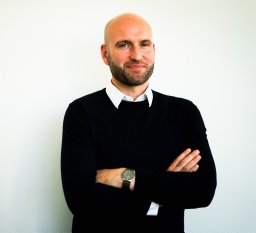 Paul C. Endrejat合作论文数Fac Psychol & Human Movement Sci Ind & Org Psycho, Univ Hamburg1
 Manuela Paechter合作论文数1
 Simone Kauffeld合作论文数Institut für Psychologie Arbeits-, Organisations- und Sozialpsychologie, Technische Universität Braunschweig1
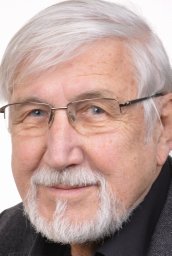 Siegfried Greif合作论文数Universität Osnabrück1
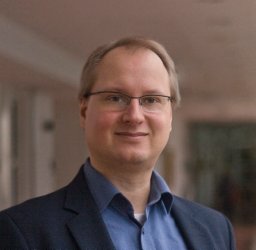 Jochim Hansen合作论文数Department of Psychology, University of Basel1




