The effects of steady continuous blowing (SCB) and pulsed blowing (PB) through single endwall hole with low excitation momentum coefficient on the control of flow separation in a highly loaded compressor cascade are investigated experimentally using oil flow visualization and both steady and unsteady pressure measurements. First, excitation location and effects of relatively low values of the excitation momentum coefficient are examined to explore the capacity of SCB for damping flow separation and determine optimal values of the excitation parameters. With the aim of further improving aerodynamic performance, SCB with these optimal parameters is then compared with PB using the same parameters. The experimental results show that significant improvements in aerodynamic performance are achieved with SCB located near the separation region. However, the control effect of SCB becomes less effective as the excitation location moves upstream, and there is a deterioration in the flow field when the excitation is located close to the separation point. The effectiveness of SCB at relatively low values of the excitation momentum coefficient is confirmed. Even at a value of this coefficient as low as 0.1%, there is a 7% reduction in the total pressure loss coefficient. With the optimal parameters for SCB, the total pressure loss coefficient is reduced by 8.83%. PB provides more effective flow control than SCB at the same excitation momentum coefficient of 0.15% when the excitation frequency exceeds 40 Hz. With PB, the maximum loss reduction reaches 1.2% when compared with SCB and 9.85% when compared with the baseline case.
为了降低径向进气室对压气机通流性能的影响,通过三维数值仿真对进气室的设计参数进行了研究.首先,量化评价了不同的进气室平直段子午型线对压气机进气均匀性的影响,然后对进气室支板与平直段支撑筋之间的相对角度进行了研究.研究结果表明:压气机的通流裕度对进气室平直段的型线较为敏感,需要谨慎修型以确保通流性能不会衰减;进气室平直段型线的改型主要诱发压气机进口径向叶尖的旋流畸变;而进气室支板与平直段支撑筋之间相对角度的改变对压气机进口的周向叶根畸变略有影响,支板与支撑筋重合会导致进气室的压损增加,压气机的喘振裕度略有下降,建议支板与支撑筋错开一定角度.
为了在具有不同负荷的压气机叶栅的初始设计过程中选取最大厚度位置,采用数值方法对在不同折转角的高亚音来流条件下对扩压叶栅进行了大量的系统性研究,分析了最大厚度位置、折转角以及稠度3个叶栅几何参数对叶栅变冲角特性以及对最小损失冲角下的叶栅气动性能的影响规律.基于大量叶栅样本建立数学模型,用来定量描述最小损失冲角,以及最小损失冲角下的总压损失系数和扩压因子等气动性能参数与叶栅几何参数之间的依变规律;基于该数学模型,绘制了性能参数依变关系图谱,并分析改变最大厚度位置带来的损失收益;给出不同设计条件下最大厚度位置的最优选择图谱,为高负荷叶栅设计提供可靠的叶型参考数据.结果显示最大厚度位置的选择对高负荷扩压叶栅叶型设计来说影响显著,最优的最大厚度位置位于20%~35%相对弦长位置.随着折转角和叶栅扩压程度升高,最优最大厚度位置提前,且带来的损失收益显著提高.
Solidity and camber angle are key parameters with a primary effect on airfoil diffusion. Maximum thickness location has a considerable impact on blade loading distribution. This paper investigates correlations of maximum thickness location, solidity, and camber angle with airfoil performance to choose maximum thickness location quickly for compressor airfoils with different diffusion. The effects of maximum thickness location, solidity, and camber angle on incidence characteristics are discussed based on abundant two-dimensional cascade cases computed through numerical methods. Models of minimum loss incidence, total pressure loss coefficient, diffusion factor, and static pressure rise coefficient are established to describe correlations quantitatively. Based on models, dependence maps of total pressure loss coefficient, diffusion factor, and static pressure rise coefficient are drawn and total loss variation brought by maximum thickness location is analyzed. The study shows that the preferred selection of maximum thickness location can be the most forward one with no serious shock loss. Then, the choice maps of optimal maximum thickness location on different design conditions are presented. The optimal maximum thickness locates at 20–35% chord length. Finally, a database of optimal cases which can meet different loading requirements is provided as a tool for designers to choose geometrical parameters.
This study aimed to enhance the understanding of flow phenomena in low-reaction aspirated compressors. Three-dimensional, multi-passage steady and unsteady numerical simulations are performed to investigate the performance sensitivity to tip clearance variation on the first-stage rotor of a multistage low-reaction aspirated compressor. Three kinds of tip clearance sizes including 1.0τ, 2.0τ and 3.0τ are modeled, in which 1.0τ corresponds to the designed tip clearance size of 0.2 mm. The steady numerical simulations show that the overall performance of the rotor moves toward lower mass flow rate when the tip clearance size is increased. Moreover, energy losses, efficiency reduction and stall margin decrease are also observed with increasing tip clearance size. This can be mostly attributed to the damaging impact of intense tip clearance flow. For unsteady simulation, the result shows periodical oscillation of the tip leakage vortex and a “two-passage periodic structure” in the tip region at the near-stall point. The occurrence of the periodical oscillation is due to the severe interaction between the tip clearance flow and the shock wave. However, the rotor operating state is still stable at this working point because a dynamic balance is established between the tip clearance flow and incoming flow.
This current study presents a detailed analysis regarding three-dimensional separation flows controlled by steady and oscillating boundary-layer aspirations installed on suction surfaces of highly loaded planar compressor cascades. The influences of the oscillation parameters on the control effects are parametrically investigated with the objective of providing guidelines to determine the control parameters. The susceptibility to varying the aspiration locations as well as the control expenses of the steady boundary-layer suction methods are significantly improved due to the introduction of periodic oscillations into the aspirating flows. The effective excitation frequency spans a relatively wide bandwidth (from Stexcit=0.314 to Stexcit=1.411) only if the amplitude exceeds a threshold value (Delta ms over bar >0.2). Through a detailed comparative analysis on the steady and oscillating aspiration cases, the most prominent spatial change led by the oscillating aspiration is manifested by fully discretized separation vortices. These newly formed spanwise vortex tubes enhance the momentum exchange between the main flow and the recirculation zone, and hence alleviate the corner separation. Despite the increased local loss production caused by the increased vortical strength, the overall cascade performances are improved from a temporal average perspective. With the aid of the proper orthogonal decomposition method, the formation process of the discretized separation vortices is explored. It is found that the periodic disturbances originating from the suction slot are amplified, subject to the adverse pressure gradient and rollup, to form a series of vortical structures in the separated layers.
Advantages and disadvantages of typical aspiration configurations applied in compound lean compressor cascades are discussed in this paper. The blade leaning mechanism is elaborated first, and then a thorough study on the synergistic effect of aspiration and blade leaning on the flow field structure and the aerodynamic performance, especially the boundary layer development in blade passages, which is conducted by CFD. The calculations show that the spanwise pressure gradient in positive lean cascades is adopted to reduce the corner loss. Meanwhile, with increasing incidence, the reversal flow is accumulated near the midspan due to the redistribution of the boundary layer, which contributes to the broadening of the operation range. With the introduction of suction surface aspiration, the loss of the cascade is effectively reduced which results from the suppression of the boundary layer development on the blade suction surface. However, due to the limited controlling capacity towards the corner separation, the boundary layer thickness in the corners is almost unaffected, which leads to the restricted improvement of the operation range. Endwall aspiration is more powerful in removing the corner separation to significantly delay the occurrence of hub-stall. Nonetheless, the increased aspirated flow loss counteracts the loss reduction near the endwalls. (C) 2017 Elsevier Ltd. All rights reserved.
为探讨高效高负荷高通流能力风机的关键气动设计技术及其内部流动机理,本文完成了一台压比为1.20,载荷系数为0.83的轴流风机设计.详细研究了流量系数、反力度等设计参数的影响规律,并给出了相应的选取原则;分析了叶片负荷调整、叶片弯曲、叶片端弯对叶栅内流动、级匹配、级性能的影响,给出了高负荷轴流风机三维叶片设计的基本原则;此外,本文还开发了S1流面协同优化方法,有效地降低了静叶损失,提高了风机裕度.
为了充分发挥附面层抽吸对叶栅流动的控制作用,通过数值模拟,将两种典型的附面层抽吸槽布局与不同弯曲叶片相结合以研究复杂三维气动布局对扩压叶栅气动性能的影响.全叶高的吸力面抽吸能有效抑制吸力面中部的附面层发展,对降低叶栅主流损失最为有效;结合一定的叶片正弯曲,在叶片吸力面吸除进口流量2.27%的流体,最优的弯曲吸附式叶栅能将主流损失下降37.35%;但吸力面抽吸对角区分离的控制作用有限,裕度并未得到有效拓宽.紧贴于吸力面的端壁抽吸能有效吸除端区的低能流体,通过对角区分离的针对性控制,有效拓宽叶栅的工作范围;结合较小的叶片弯曲,仅在端区吸除进口流量1.48%的流体,便可将叶片的有效正攻角提高129.7%.
Considering the spanwise difference of both airfoil and aerodynamics boundary,an optimization design process of multi-section airfoils was developed.Inlet guide vane and large camber angle stator of a single-stage highly loaded compressor were taken as optimization subjects,and multi-section associated performance was taken as optimization target.MISES considering boundary layer transition was adopted to analyze the aerodynamic performance of airfoils,and genetic algorithm was also adopted to optimize the multi-section airfoils.The results show that,within the valid operating range,the front loading of multisection airfoils increases after optimization,while the central and rear loading decreases,bring about performance improvement.Three-dimensional numerical simulation results show that,without large scale secondary flow,the optimization method of multi-section airfoils is practicable.
As a promising active flow control method, boundary layer suction (BLS) can be used to enhance the aerodynamic performance of the highly-loaded compressor effectively, and due to this reason, extensive studies have been carried out on it. However, contrast to those abundant studies focusing on the flow control effects of BLS, little attention has been paid on the design method of the aspiration flow path. This work presents a 3-D steady numerical simulation on a highly-loaded aspirated compressor cascade. The aspiration slot is implemented at its best location based on the previous experimental studies and the aspiration flow rate is fix to 1.5% of the inlet massflow. The plenum configuration follows the blade shape and remains unchanged. One-side-aspiration manner is adopted to simplify the aspiration devices. Two critical geometry parameters, slot angle and slot width, are varied to study the effects of blade aspiration slot configuration on the cascade loss, radial distribution of the aspiration flow rate and inner flow structures within the aspiration flow path. Results show that the slot configuration does affect the cascade performance. In comparison with the throughflow performance, it is especially true once the flow loss caused by the aspiration flow path is also taken into account, and higher flow loss will be generated within the aspiration flow path if an inappropriate scheme is adopted. In the present investigation, apart from the cases with larger negative slot angle, a wider slot is more preferable to a narrower one, since it could enhance the aspiration capacity near the endwall regions and lower the dissipation loss within the aspiration flow path. In terms of the slot angle, a larger negative value, i.e., the slot direction more aligned with the incoming flow, is not beneficial to improve the throughflow performance, while concerning the flow loss yield by the aspiration flow path, a proper negative slot angle is always optimal.
To ameliorate the flow matching of end region in compressor cascade, by numerical simula-tion, with straight blade and positive bowed blade compressor cascade as application background, different stacking of re-camber blade have been adopted for comparative study of their effect on compressor cascade aero-dynamic performance. The results show that,in subsonic compressor cascade,leading edge (LE) re-camber can reduce the incidence effectively. Subject to the same re-camber angle,trailing edge (TE) stacking is the most effective way by fixing the TE immobile. No matter what kind of stacking has been adopted,front or rear blade will be locally bowed,affecting on flow field in compressor cascade similar to bowed blade. Applied in pos-itive bowed blade,TE stacking re-camber will partly counteract the effect of positive bowed on front blade,but not entirely suppress the effeteness. While LE stacking re-camber will promote the effect of positive bowed on rear blade. It is recommended that LE stacking re-camber can be applied in subsonic straight blade, and TE stacking re-camber can be applied in subsonic positive bowed blade.
In view of high speed banding,a new type of automatic double-position spot welder is designed for multi coil automatic bander in hot narrow strip rolling line,and realize fast double-position spot-welding the thick beh(3mm × 40mm).Results show that the welding is high quality,large tensile strength,fast speed,short time,and meet the production requirements with no damage to strip steel substrate and no pollution to the environment.The welder already applied in the multi coil automatic bander for hot narrow strip rolling.
In order to reach its full application potential of complex 3D aerodynamic layouts integrating active and passive flow control technologies, by numerical simulation, several single-stage highly loaded compressors adopting different aerodynamic layouts have been designed for a comparative study. The results show that, when integrating 3D blade techniques in stators, the leading edge of the re-camber blade appears like a negative-bowed blade which makes the lose increase, while the better match of the flow angle near the endwalls ensures the improvement of stall margin. Based on the re-camber blade design, a superimposed positive-bowed blade can offset the negative-bowed appearance of the leading-edge, reduce the total pressure loss effectively, and improve the stall margin furtherly. By adjusting an inlet prewhirl, adverse pressure gradient decreases in the rotor, to increase rotor's efficiency by a large margin. Meanwhile, the stator undertake more pressure rise, and the superimposed boundary layer suction can guarantee the stator functioning properly. By adopting the superimposed boundary layer suction only in the corner region of a positive-bowed blade, while the inlet incidence of stator is negative, 3D aerodynamic layout lacks of effective control of the separation flow.
In this paper, the synergistic effect between compound lean and aspiration on the aerodynamic performance of compressor cascades is discussed. Preliminary experimental data verify the accuracy of the computational fluid dynamics method adopted, and a thorough study on reciprocal effect among lean angle, aspirated flow fraction and aspiration streamwise location is conducted. The calculations show that, due to the shorter streamwise length of the re-grown boundary layer against adverse pressure gradient, the aspiration location located farther downstream from the leading edge can minimize the loss of the blade passage flow. With the application of blade lean, which is similar to the flow control mechanism in the unaspirated cascades, an increase in pressure at the suction surface corner is used to migrate the low momentum fluid from the corners towards the midspan of the suction surface. Meanwhile, the reduced aspirated flow velocity and the improved favorable pressure gradient in the lean anterior plenum can reduce the entropy rise through the plenum. Simultaneously, the suction power required in the blade passage flow is reduced with blade lean, while the suction power for the aspirated flow through the plenum shows the opposite trend.
The impact of boundary layer suction on the aerodynamic performance of bowed compressor cascades is discussed in this paper. Preliminary studies are conducted in the context of a highly loaded compressor cascade with peak diffusion factor of 0.60 and camber angle of 60 degrees. Comparison between numerical simulation results and experiment data shows that blade bowing may well help to modify the radial migration of flow features and prevent the blade suction surface boundary layer from separating. It is noteworthy that there exists an optimum blade bowing design with different operating conditions to increase the incidence range and reduce the loss over the incidence range. With the introduction of the boundary layer suction, the blade design becomes more complicated. This paper, therefore, conducts a thorough numerical study on design parameters including bowed blade geometry, aspirated flow fraction, and aspiration slot location based on mechanical simplicity and fabrication constraints. For a better understanding of the flow physics, the aspiration slot and plenum are included as part of the computational domain. The aspirated fluid passes into the plenum and is removed through both the hub and the shroud of the blade. From there it can be dumped overboard or carried to another point in the engine to be used as cooling air. Without considering the stagnation pressure loss of the aspirated flow, the blade lose can be sustainably decreased with the growing aspirated flow fractions from 0.5% to 2.5% of the inlet mass flow. However, when the aspirated flow's effect on stagnation pressure loss is properly quantified, the blade's loss decreasing trend will be relatively stable or even reversed with the aspirated flow fraction increasing. The calculations show that the application of aspiration on the flow path needs to be investigated and combined with blade bowing to partly counter the negative impacts with the application of aspiration. The application of blade bowing on aspirated blade makes it possible to achieve the same loss reduction by using lower amounts of aspirated flow. In other words, the increase in spanwise pressure gradient near the endwalls can be further utilized to reduce the effects of secondary flow by bowed blade with the same aspirated flow fraction. Aspiration should not be isolated from blade bowing, the optimum blade bowing angle is different on the basis of different aspirated flow fraction and aspiration slot location. The aspiration slot location is determined by the flow phenomena such as the three-dimensional separation in the cascade corner. In consideration of the stagnation pressure loss from the aspirated flow, aspiration inside of the three-dimensional separation region has a beneficial impact on the blade loss. Conversely, it will quickly lose its effectiveness, or even lead to slight deterioration of the aerodynamic performance if aspiration location is in the midspan, outside the three-dimensional separation region.
In order to explore the selection law of bowed blade design parameters in annual compressor cas-cades with radial asymmetrical distribution of loading, by numerical simulation, the effects of different bowed heights and positive angles on aero-performance and vortex structure in flow passages of two annual cascades with different kinds of separation were analyzed for comparative study. The results show that,with the increase of positive bowed angle, a pair of concentrated shedding vortexs near trailing edge are enhanced and the cores of them get close to the middle span,which makes the loss decrease near the region between concentrated shedding vortex and corner vortex,while the loss of middle span gets thickened. In cascades where concentrated shedding vortexs have not yet formed, the impact of bowed blade is mainly on trailing edge shedding vortex in the mid-span. However,the impact is relatively unapparent. With a certain bowed height,there exists a best bowed an-gle,the best bowed angle of CDA cascade used in this study is nearly 25° with 50%bowed height in inlet 2. And the same positive bowed angle has a more significant effect on the higher loading side along the spanwise. While the positive bowed angle is relatively large,or approaches the best bowed angle,the loss peak of the higher load-ing side along the spanwise increases dramatically under the action of bowed blade,which makes the best bowed height bias toward the lower loading side along the spanwise on the assumption of same circumferential relative displacement. Or to put it another way,best bowed height should bias toward the side with higher diffusion factor unevenness along the spanwise.
The application of compound lean cascades in conjunction with endwall aspiration configurations is discussed in this paper. A thorough study on the reciprocal effect of blade lean angle, aspirated flow fraction and aspiration slot start position is conducted by a numerical method. The calculations show that the application of blade corner fillet has a significant effect on the parameter choice of endwall aspirated lean blade design. The fillet application makes the blade suction surface curvature increased near the endwalls, and gets the endwall slots farther away from the real blade surface, thereby aggravating the spillage in the forepart of the endwall slot and leading to the deterioration of corner blockage and loss, especially in the positive lean cascades. Consequently, the optimal aspirated lean design around 0 deg lean angle is divided into a negative lean and a positive lean design by fillet application. This influence can be inhibited dominated by moving the endwall slot start position upstream. In aspirated lean cascades, blade positive leaning can enhance the radial secondary along the blade suction surface, balance the radial distribution of boundary layer by stronger radial pressure gradient to transfer a portion of corner low momentum fluid towards the midspan, resulting in a more obvious increase in blockage in the midspan. Blade negative leaning converges the low momentum fluid towards the suction surface corner by enhanced pitchwise pressure gradient, so as to facilitate the endwall aspiration, and eliminate mixing loss remarkably after the trailing edge, more significant than the decrease of profile loss in the blade passage. The optimal aspirated lean angle in main flow is around -20 deg in this adopted compressor cascade. Higher aspirated flow fraction cannot affect the spanwise and pitchwise secondary, and is limited only to suppress the corner blockage further, hardly affects the midspan blockage. The effect of aspiration start position almost can only be found in the blade passage, unaffect the mixing loss after the trailing edge. Especially in negative lean cascades, moving aspiration slot start position more upstream can linearly increase the real suction area and contribute to the decrease in aspirated flow loss and suction power needed.
By numerical simulation,adopting complex 3D aerodynamic layout integrating a variety of flow control technologies,a pair of single-stage highly loaded axial compressors have been designed for comparative research.The results show that,proceeding from traditional compressor design ideas,even adopting complex 3D aerodynamic layout,the performance of compressor still has a large space for improvement.While reassigning the compressor design contradictions,to take best advantages of flow control technologies,the aerodynamic performance at designed point of compressor can be improved significantly,and the stable operating range can be broadened substantially.
In order to study the effects and interaction of the dihedral angle,end-bowed height and angle on vortex structure and aerodynamic performance, the result in an annular compressor cascade were analyzed through orthogonal experimental design. The results show the existence of best dihedral angle to balance the effect on exit total pressure loss distribution of concentrated shedding vortex and corner vortex. The improvement of di?hedral angle leads to the weakening of concentrated shedding vortex and the vortex core towards the end wall , while concentrated shedding vortex is enhanced and the core of it is close to the middle span. The change of vor?tex structure makes the loss decrease in the high loss region and the region gets close to the core of concentrated shedding vortex, while the loss of middle span gets thickening and shrinks to the center. The influence of end-bowed height and angle is more significant on the end region than on the middle span. The improvement of corner vortex strength makes the loss of end region increase, while the movement of concentrated shedding vortex’s core leads to the proliferation of loss to the end region from the middle,but the decrease of loss is limited.
 Songtao Wang (王松涛)合作论文数School of Energy Sciences and Engineering, Harbin Institute of Technology23
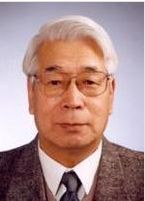 Zhongqi Wang (王仲奇)合作论文数Harbin Institute of Technology14
 Xin Du (杜鑫)合作论文数School of Energy Science and Engineering, Harbin Institute of Technology11
 LongXin Zhang (张龙新)合作论文数8Le Cai合作论文数6
 Shaowen Chen (陈绍文)合作论文数Harbin Institute of Technology, School of Energy6Xun Liu (刘勋)合作论文数4Jiaqi Shen合作论文数3YingJiao Hu (胡应交)合作论文数3Liu Bao合作论文数2Hao Xu合作论文数2JunLi Ge (葛俊礼)合作论文数2Gu Long (龙鹄)合作论文数2YanFei Li (李燕飞)合作论文数2ZhiMing Zhang (张志明)合作论文数2
 Xun Zhou (周逊)合作论文数School of Energy Science and Engineering, Harbin Institute of Technology2Yanjun Guo (郭延军)合作论文数2
 Shijun Sun (孙士珺)合作论文数School of Aerospace Engineering, Beijing Institute of Technology2Shaozhuang Zhang (张少壮)合作论文数2Yizhou Luo合作论文数1Chuansijia Tao合作论文数1Bao-sheng SUN (孙宝生)合作论文数1Zhou Xun合作论文数1WANG Song-tao合作论文数1Hongze Wang (王宏泽)合作论文数1Wei Zhu合作论文数1YongFeng Sui (隋永枫)合作论文数1
 Bin Jiang (姜斌)合作论文数College of Automation Engineering, Nanjing University of Aeronautics and Astronautics1Chunming Hui (惠春明)合作论文数1




