Hard particles are widely used for wheel-rail adhesion enhancement under low adhesion conditions, but it would intensify the wheel-rail damage. In order to achieve the same or better adhesion restoration effect as commonly used particles (e.g., Silica sand, Alumina, etc.) while reducing the wheel-rail damage caused by particles, a novel adhesion-enhancement particle was prepared in this study. The crushing stress of the novel particle with different preparation parameters were studied on a uniaxial compression apparatus. The wheel-rail adhesion restoration effect caused by the novel particles were studied under oil condition by a twin-disc wheel-rail testing machine. Results indicated that when the particle crushing stress increased from 20 MPa to 68 MPa, the adhesion coefficient increased. Then the adhesion coefficient kept stable after particle crushing stress exceeded 68 MPa. The novel adhesion-enhancement particle showed a better performance on wheel-rail adhesion improvement compared to sand and alumina. Considering the adhesion coefficient, wear and damage of wheel-rail, the novel unsintered particles with crushing stress of 20 MPa could be used as a substitute for sand on adhesion coefficient improvement under conditions with low requirements for adhesion enhancement, and the sintered novel adhesion-enhancement particles with crushing stress of 68 MPa could be optimal particles for wheel-rail adhesion restoration under high requirements for adhesion enhancement condition.
Sanding is the most commonly used measure to restore wheel-rail adhesion coefficient when the wheel-rail interface is susceptible to low adhesion condition due to external contaminants. Sanding particle shape characteristics and particle distribution density would affect the particle crushing behavior and the wheel-rail adhesion coefficient. To further investigate the role of hard particles at the wheel-rail rolling-sliding contact interface during sanding, a 1:5 scaled wheel-rail rolling contact simulation testing machine was used to conduct the wheel-rail adhesion restoration tests by using Silica sand with various particle shape characteristics (circularity and solidity) at various particle distribution density. Also, a DEM-FEM co-simulation sanding model was established to study the stress distribution and wear depth of wheel-rail material after sanding. Results indicate that with the increase in the circularity and solidity, the particle loss, the maximum wheel-rail adhesion coefficient, the particle density required to reach the maximum wheel-rail adhesion coefficient, the magnitude of wheel-rail stress and wear depth all increased, while the adhesion restoration duration decreased; With the increase in the particle density, the wheel-rail adhesion coefficient first increased and then decreased, while the adhesion restoration duration increased approximately linearly. Also, when the particle density was low, coarse and irregular Silica sand should be selected for sanding to reduce the usage amount of Silica sand and minimize wheel-rail material damage.
Particle suspension stability is essential for the performance of functional fluids, but sedimentation failure is often induced by thermal fluctuations. In this study, the thermal stability and degradation mechanisms of a water-based suspension comprising water, sodium carboxymethyl cellulose (NaCMC), inorganic particles, and acrylic polymer emulsion are investigated under alternating temperature cycles (80 degrees C and -20 degrees C). Results found that suspension stability is significantly reduced by thermal conditions. The rheological and physical properties, including viscosity, particle content, and density, are altered during this process. The ageing is identified in three stages: i) unaged-no significant changes; microstructure uniformly dispersed; ii) mild ageing-viscosity changed markedly while particle content and density stayed stable, "Flocculent" structures appeared; iii) severe ageing: viscosity changed at a maximum rate, with pronounced variations in particle content and density. The "flocculent" structure developed into "snowflake crystals". It is revealed by mechanism analysis that the long-chain NaCMC network is degraded by thermal cycles. Consequently, the protective polymer network is destroyed, leading to irreversible particle aggregation and sedimentation. These findings provide insights into the thermal degradation of water-based polymer suspensions. A theoretical basis is offered for improving the stability of such a functional suspension.
As high-speed railways expand into steep mountainous regions, the wheel-rail system must not only address low adhesion caused by liquid media (water and oil) in an open environment but also ensure traction and braking capability on steep gradients. Sanding is an effective method to improve wheel-rail adhesion. This study examined the effect of liquid media and sanding particles on wheel-rail adhesion behavior under track ramp conditions using a novel 1:5 scale wheel-rail rolling contact experimental machine. The results indicated that, under dry and water conditions, with the increase in track gradient, the adhesion coefficient decreased. However, under oil conditions, the track gradient had little influence on the adhesion coefficient. At the same track gradient, the adhesion coefficient on the ascent was higher than on the descent conditions. Furthermore, sanding notably increased the adhesion coefficient under low adhesion conditions, but the adhesion improvement effect was affected by the particle distribution density, size, and type. Specifically, under water conditions, at a 0% track gradient, with the increase in the particle distribution density, the adhesion coefficient increased, but it decreased when the distribution density exceeded a threshold; Smaller particle size silica sand showed the best adhesion improvement. When the track gradient increased to 5%, the influence trend of the particle distribution density and particle size on adhesion coefficient under water and oil conditions was consistent with that at 0% track gradient. Furthermore, random forest importance analysis indicated that particle distribution density should be prioritized for adhesion improvement under track ramp conditions when water or oil is present at the wheel-rail interface. Within the tested range of the present 1:5 scaled experiments, S-sized silica sand at 0.2 g/m under water conditions and M-sized silica sand at 1.0 g/m under oil conditions showed better adhesion improvement performance.
Due to the fact that trains operate in a complex environment with the presence of the third-body media (e.g., rain, leaves, oil, and antifreeze for track inspection in winter), low adhesion can occur at the wheel-rail interface, leading to a large slip ratio, which could cause severe wheel and/or rail damage. To help find a solution to this problem, wheel-rail dynamic adhesion characteristic tests were conducted under various third-body media conditions (dry, water, oil, leaves, and antifreeze) using wheel-rail rolling wear and contact fatigue testing machines. The results indicated that the adhesion curve exhibited a double peak in the loading stage under both dry and water conditions. However, under the other conditions (oil, leaves, and antifreeze), the adhesion characteristic curves were all single peak curves. Under the water conditions, the adhesion coefficient in the unloading stage was higher than in the loading stage, and the second peak point in the loading stage was higher than the first peak point. This phenomenon was related to the water volume at the wheel-rail interface, which affected the thickness of the water film. However, under dry conditions, the adhesion coefficient in the unloading stage was lower than in the loading stage, attributed to the formation and removal of oxides on the wheel-rail surface. Additionally, a wheel-rail adhesion model for the large slip ratio range was established, which provided the foundation for theoretical research on wheel-rail adhesion and for the design of locomotive adhesion control methods.
Evaluation and prediction of wheel-rail rolling contact fatigue (RCF) damage can provide important theoretical guarantees for the service safety of wheels and rails and help make maintenance easier to plan. This study aims to develop a novel method for evaluating and predicting RCF damage of the pearlite rail materials with various initial shear yield strengths (ke). Based on the rough set mathematical theory incorporated within the cloud model of the comprehensive evaluation index (P0/ke*mu t), a novel evaluation and prediction method for RCF damage states of various pearlite rail materials was constructed using the shakedown limits for pearlite rail materials with various initial shear yield strengths. To develop this novel prediction method, different evaluation indices for RCF damage states were designed. A comprehensive certainty approach was introduced to quantitatively analyze the actual measured values of distinct evaluation indices that corresponds to different RCF damage states, wherein the maximum value rule was applied. Moreover, the prediction results were confirmed after further verifying using the actual measured value of the P0/ke*mu t. The results indicated that the predicted results were consistent with the test outcomes. The key feature of this prediction method was that it involved both the intrinsic shear yield strength of evaluated pearlite rail materials and wheel-rail rolling contact variables. On the basis of the two-dimensional classical shakedown map, a three-dimensional shakedown limit diagram for rail materials with varying initial shear yield strengths was further constructed using this novel prediction method. The three-dimensional shakedown limit diagram featured an inclined curved surface. As the initial shear yield strength of the pearlite rail materials increased, the curved surface tilted downward, indicating that an increase in the initial ke value of the pearlite rail materials could result in a lower shakedown limit.
During the locomotive traction process, if the tangential force exceeds the maximum adhesion force of the wheelrail interface, wheel-rail adhesion instability occurs, leading to accelerated damage to the contact surface due to severe wear. Therefore, it is important to study the dynamic behavior of wheel-rail adhesion instability to improve the safety and stability of the train operations. A novel wheel-rail rolling contact experiment machine based on torque control was designed and established to investigate the wheel-rail adhesion instability behavior. The results show that: As the torque of the loading motor increased, the slip ratio initially increased steadily, then rapidly rose and fluctuated. With the decrease in torque adjustment rate, the fluctuation of the slip ratio decreased. Meanwhile, the torque increments had an impact on adhesion instability behavior. When the torque increment was less than 0.6 Nm, with the increase in torque increment, the slip ratio initially increased and then decreased, while the wheel-rail adhesion coefficient increased. However, when the torque increment exceeded 0.6 Nm, as the torque increment increased, the maximum slip ratio remained constant, while the adhesion coefficient decreased, leading to the slippage of the wheel-rail roller. In addition, with the axle loads and rotational speeds increased, the maximum slip ratio and adhesion coefficient decreased. Also, the function relationship between the slip ratio and the torque increment after the critical point (adhesion force saturation point) was proposed, which can provide guidance for vehicles to adjust the adhesion coefficient.
Sanding with hard particles is an effective method to improve wheel-rail adhesion under low-adhesion conditions. However, the lack of unified standards for sanding parameters necessitates further investigation into their optimization. This study examined the effects of sanding application parameters on adhesion restoration and surface damage using a twin-disc wheel-rail rolling contact testing machine. The results showed that particle distribution density as the most critical factor influencing adhesion restoration, outweighing the effects of particle size and material. With the increase in particle distribution density, the wheel-rail adhesion coefficient (adhesion restoration amplitude), wear rate and material damage increased sharply at first and then stabilized after surpassing a threshold (approximately 0.607 g/m). Additionally, the restoration duration (adhesion coefficient remained in a proper amplitude) increased almost linearly with an increase in particle distribution density. The influence of particle size on adhesion restoration amplitude depended on particle distribution density, affecting the sensitivity of the adhesion coefficient to density changes. While Alumina exhibited better adhesion restoration effect (restoration amplitude and duration) than Silica sand, it resulted in significantly greater surface damage. Furthermore, to facilitate field applications, an empirical equation was developed to evaluate adhesion restoration amplitude. Based on this equation, a graded control strategy for sanding amounts (0.6-2.2 kg/min) was proposed, related to train operating speeds ranging from 20 to 120 km/h.
Research on factors affecting rolling contact fatigue (RCF) damage of rail materials has become increasingly important since developing effective measures to mitigate RCF damage is crucial. This study focuses on exploring the influence of full slip and partial slip contact modes at the wheel-rail contact patch on the RCF damage behavior and the shakedown limit of the pearlite rail material through wheel-rail RCF rolling-sliding tests. Firstly, based on the wheel-rail adhesion-creep curves in dry, water and oil environments, the creepage required to achieve full slip during the rolling-sliding tests was determined. Then, rolling-sliding tests under full slip contact with different adhesion coefficients were carried out in a dry atmosphere and with the assistance of a third body medium (i.e., oil and water), respectively. Meanwhile, rolling-sliding tests under partial slip contact with the similar contact parameters were performed in a dry atmosphere. The results indicated that RCF damage and wear rates of the rail material under a full slip contact with an adhesion coefficient below the saturation peak on the adhesion-creep curve were significantly less than those under partial slip contact with similar contact parameters. Moreover, under full slip contact with an adhesion coefficient below the saturation peak on the adhesion-creep curve, the pearlite rail materials could exhibit a higher shakedown limit. Furthermore, the influence of full slip and partial slip contact on wheel-rail contact behavior was further analyzed using finite element simulations. Finally, a novel friction modification strategy to mitigate RCF damage and wear of rails was proposed. By applying a specific low-coefficient friction modifier to the wheel-rail interface, the operation of powered wheelsets under controlled creepage conditions that reach the threshold of full slip contact at the wheel-rail contact interface could be employed to achieve the desired adhesion coefficient. Thus, this approach could ensure that the achieved adhesion coefficient met the on-site target adhesion force while reducing RCF damage and wear of rail materials.
With an increase in the axle load of trains, damage to the rails becomes more severe, decreasing their service life. Thus, local repair could be a solution for rail surface damage. Laser cladding is a relatively new additive manufacturing technology that can be used for local damage repair. However, wear and rolling contact fatigue (RCF) damage behaviors, particularly the damage at the boundary between the clad and unclad zones, have not been thoroughly explored. Thus, a pothole is cut off from the U75V rail sample (a roller sample) to simulate the local damage on the rail. Ni-, Fe-, and Co-based self-fluxing alloy powders (F103, Fe-Cr, Fe-58, Stellite 21, Stellite 22, and Stellite 23) are laser cladded at the pothole using a CO2 laser with a rectangular spot size of 7 mm x 1 mm, a laser power of 1.9 kW, a scan speed of 200 mm / min, and a powder feed rate of 15 g / min. The microstructure and hardness of the locally repaired rail materials are analyzed. The wear and RCF behaviors of the laser-repaired rail samples are studied using the twin-disc rolling test with a maximum contact pressure of 1.1 GPa, a slip ratio of 0.75%, and a rotational speed of 500 r / min. The number of cycles for each rolling test is 10(5) . The friction coefficient, wear rate, depth, plastic deformation, and damage morphology are analyzed. The results showed that the cladded sample could be divided into three regions in the depth direction on the cross section or in the rolling direction on the surface: the clad zone, heat-affected zone, and substrate. Fine eutectic and dendritic structures are formed in the laser cladding. The hardness is higher than that of the substrate. The microstructure of the Ni-based clad is coarse, and its hardness is low. The microstructural sizes of the Fe-and Co-based clads are small. The hardness of the Fe-based clads is high and that of the Co-based clads has an intermediate value. During the rolling test, the friction coefficient exhibits an increasing trend during the running-in period and then remains stable. The stable friction coefficient is approximately 0.4 and shows no evident difference for samples with different clads. After the rolling test, the wear rates of the samples with Ni-and Fe-based clads are high, and those of the samples with Co-based clads are low. The wear depth in the clad zone is smaller than that in the unclad zone. The surface hardness of the samples is increased after testing, and plastic deformation of the microstructure is observed in the cross section. Compared with the uncoated zone, the thickness of the plastic deformation layer in the laser cladded zone (that is, clads) is smaller. With an increase in the original hardness of the cladding, the hardness after testing is increased; however, the hardening ratio and plastic deformation layer thickness are decreased. The damage mode of the laser-repaired rail is predominated by fatigue wear. In the unclad zone, the RCF crack length is large whereas the crack angle is small. In the clad zone, the crack length is decreased whereas the crack angle is increased. The RCF damage at the boundary between the clad and unclad zones is the most severe. The crack angle and depth at the boundary are greater than those in the clad and unclad zones. Comparing the six studied clads, notably, the Stellite 21 (Co-based) cladded sample presents a lower friction coefficient, smaller wear depth difference between the cladded and uncladded zones, and better RCF resistance, making it more suitable for laser repair of local rail damage. The research results can provide theoretical and technical guidance for the application and optimization of laser cladding technology for local rail repair.
Friction modifier (FM) in the rail/wheel applications is a special lubrication material that could be applied between the top of rail and the tread of wheel. The application of FM brings many benefits to the wheel-rail interface such as reducing noise, alleviating wheel-rail wear and mitigating corrugation. Viscosity is an important parameter to reflect fluid properties of FM materials. In this study, FM samples with different viscosities were prepared by changing the content of sodium carboxymethyl cellulose (CMC). The tribological and rheological performance of these FM samples were explored using the twin-disc testing machine and rotational rheometer. Furthermore, the relationship between the tribological and rheological results were tried to establish. The results showed that the increase in the content of CMC could increase the viscosity of FM and enhance the solid-like characteristic of FM, which could help FM reduce coefficient of adhesion (COA) level and wheel-rail damage. For the FM material developed in this study, the rational applying amount and the range of viscosity were about 15 mu L/time and 200 Pa.s to 400 Pa.s, respectively, considering the factors of wheel-rail adhesion, wear, potential waste and pumping process in the practical application.
The utilization of friction modifiers (FMs) can reduce the adhesion coefficient of the top-of-rail to a moderate level, yielding a series of benefits. In this study, the influence of the FM application amount on the adhesion coefficient, noise, and braking distance was explored under field conditions. Results showed that when the FM application amount exceeded threshold values, the braking distance of the locomotive was greatly extended and the friction control performance of FM reached saturation. The FM application amount and application frequency were put forward through a simplified calculation process, which gave values of 0.33 mL/axle and 10axles/application, respectively. These application parameters achieve the desired intermediate friction level along with appropriate reductions in the noise and the lateral force.
Top-of-rail friction modifiers are used to manage the friction on the top-of-rail and help alleviate corrugation, reduce noise, decrease material wear, etc. In this paper, five series of FM samples were prepared and tested using a twin-disc testing apparatus to optimize the solid particle parameters in the FM, aiming to achieve an intermediate adhesion level and a positive creep curve at the wheel-rail interface. The roles of every composition were explored and further the mass content of solid particles, the mass content ratio of lubrication to modifying particles, and the hardness and size of modifying particles were optimized. The possible influence mechanism of FM third body layer shear strength on the wheel-rail adhesion behaviour was discussed based on the Coulomb-Mohr theory. The FM sample containing 76.31 wt% of water, 2.77 wt% of carboxymethyl cellulose (CMC), 10.46 wt% of resin, 3.04 wt% of graphite particles, and 9.13 wt% of kaolin particles can reduce adhesion coefficient to 0.129 and generate an obvious positive creep curve in the wheel-rail interface.
Rolling contact fatigue (RCF) of vacuum induction melted–vacuum arc remelted (VIM-VAR) M50 bearing steel under high loads was carried out, using a three-ball-rod RCF tester. Dark etching regions (DER) and butterflies were found in the subsurface region below the raceway of the RCF-tested sample. The DER appeared in the region of maximum shear stress located at a depth of 30 μm to 170 μm below the raceway. Carbon atoms migrated through high-density dislocations, and part of the martensite plates was transformed into cellular ferrites, due to the redistribution of dislocations during the deformation of martensite under the action of cyclic shear stress. Butterflies appeared in the region of maximum shear stress located at a depth of 20 μm to 314 μm below the raceway. Butterflies were initiated in the primary carbides, with length values ranging from 5 μm to 15 μm. The plate martensite in the butterfly wings was transformed into nanocrystalline ferrites, due to the increase in the dislocation density and rearrangement of dislocations during the extension of fatigue cracks from the primary carbides to the matrix under cyclic shear stress.
In order to study the influence of third mediums on the formation and evolution behaviours of rail corrugation, two series of rolling-sliding tests were performed. Firstly, tests under the dry and different third mediums (oil, grease, water, friction modifier and windblown sand) conditions were conducted to study the influence of third mediums on the formation of rail corrugation. Secondly, rail rollers were first rolled under the dry condition until a stable rail corrugation was formed. Then, water and friction modifier were added into the wheel-rail interface to investigate the role of third mediums on the evolution behaviours of rail corrugation. The results indicated that third mediums had a significant influence on the wheel-rail damage and the formation and evolution of rail corrugation. Compared with the dry condition, both the mass losses and the damage of rail rollers were alleviated under third mediums conditions. The continuous application of third mediums at the wheel-rail interface could alleviate the formation of rail corrugation significantly. When non-solid third mediums existed at the wheel-rail interface (oil, grease, water and friction modifier), no corrugation was observed. In the dynamic windblown sand environment, the corrugation was obviously slighter than that under the dry contact condition. After corrugation was formed on the rail roller, the application of water and friction modifier could alleviate the amplitude of rail corrugation. Furthermore, with the increase in the number of cycles, the amplitude of rail corrugation first increased and then remained nearly stable. Under the dry contact condition, the crack length in the trough was larger than that in the crest. When liquid third mediums were applied, the cracks at the crest were ground away. However, some liquid would enter into the pre-existed crack in the trough, resulting in the severe rolling contact fatigue damage of rail.
The shakedown map is one of the key prediction models used in railway engineering to evaluate rolling contact fatigue (RCF) damages of wheels and rails. The objective of this work is to construct the response diagram of RCF and optimize the classical shakedown map based on the rolling-sliding tests. A method based on rolling-sliding tests for constructing the response diagram was presented. Firstly, the traction coefficient (μ) and load factor (P0/ke) were taken as the X-axis coordinate and Y-axis coordinate of the coordinate system of the classical shakedown map, respectively. Then, test parameters (P0 and μ) were designed and obtained using the various X and Y coordinate in four different regions of shakedown map (i.e., different plots of μ versus P0/ke). After that, for various test parameters, the rolling-sliding tests were carried out using a twin-disc testing apparatus under dry condition to investigate the RCF damages of U75V rail steel. The results showed that three types of damage states could be observed after rolling-sliding tests under different test parameters: (I) neither plastic flow of materials nor fatigue cracks, (II) plastic flow, and (III) fatigue cracks with plastic flow. Thus, the response diagram consists of the above three damage regions. Furthermore, with the increase of P0 and μ, all the depth of plastic flow, the length of fatigue cracks and the wear rates were increased. Moreover, materials were work hardened in the damage states of plastic flow and fatigue cracks. The hardness increment was increased with P0 and μ. In addition, the boundary of ratchetting region (i.e., shakedown limit) in the classical shakedown map for partial slip was optimized based on the RCF damages and the new response diagram. The shape of optimized shakedown limit curve was same as that of the classical one, whereas the position of the optimized curve was decreased.
Friction modifier (FM) is widely used in the curve section to suppress the damage and noise between the wheel and rail. This paper compared typical third body materials, including water, oil and FM to explore their influencing mechanism on wheel-rail adhesion and damage. Furthermore, FM samples containing different solid particles were prepared. The tribological performance of these FM samples, water and oil were tested with a twin-disc testing apparatus and a hand-push tribometer. The results indicated that the shear strength of the third body material plays a vital role in the friction. The hardness of solid particles in FM greatly influences the friction control performance of FM. The change in the hardness of the solid particles makes the FM exhibit either "lack of lubrication" or "over lubrication", that both are detrimental to the wheel and rail interface. For FM material, it is necessary to select solid particles according to the adhesion and damage comprehensively. The most suitable particle in this paper was kaolin.
Friction modifier (FM) is a newly developed third medium to control the service performance of wheel/rail. The wheel/rail performance is influenced by the wheel/rail contact conditions and FM application parameters. Therefore, the effects of FM application parameter and the wheel/rail contact parameters on the adhesion and damage behaviors of wheel and rail materials should be explored. In this study, the influences of application amount of FM, the wheel/rail contact stress and the creepage on the adhesion and damage behaviors were studied using a twin-disc machine. Results indicated that the increase in contact stress would reduce the wheel/rail minimum adhesion coefficient and effective holding time of FM. The increase in the creepage would increase the adhesion coefficient and reduce the holding time. Under the wheel/rail contact stresses of 800 and 1100 MPa, the application of FM could reduce wheel/rail wear and damage. But under 1500 MPa, FM could cause serious rail surface damages. Moreover, the surface crack propagation process of rail mainly included three stages: initial stage, transition stage and rapid propagation stage. The “oil wedge effect” was the main mechanism for aggravating the surface damages of rail under 1500 MPa.
Laser cladding is a potential technology for repairing the rail with side wear. The laser processing parameters should be optimized and the wear behaviors of clads should be analyzed before its application. Therefore, single-pass and multi-pass laser cladding experiments of 316L stainless steel powder with different laser powers, scan speeds, scan modes (directions), and numbers of layers are conducted on the U71Mn rail to optimize the processing parameters. After that, sliding wear tests are conducted on different depths in clad to explore the wear behaviors. The results show that with the increase in laser power, the clad width is increased, the height is increased first and then decreased. With the increase in scan speed, both the clad height and width are decreased. Scan mode 1# produces the thinnest clads, the mode 3 produces the thickest ones. The microstructure of clad is composed of dendritic grains. With the increase in depth in clad, the grain size decreases and the hardness increases. The grain size is increased with laser power and decreased with scan speed, and the hardness is increased with the power and speed. Smallest grains and highest hardness are produced using mode 1#, and largest grains and lowest hardness using mode 3#. The Cr and Ni elements from clad permeate into the heat affected zone of U71Mn rail material. Wear depth of clad has a positive relationship with the grain size and a negative relationship with the post hardness. A wear resistance coefficient, Xphv2.55/Xgs1.56,where Xphv refers to the post hardness and Xgs refers to the grain size, is proposed to characterize the inherent anti-wear property of 316L stainless steel clad on U71Mn rail.
Rail rolling contact fatigue (RCF) crack and other rail damage have great impact on the normal operation of the railway system. The detection and evaluation of RCF crack can effectively ensure the running safety of the train. Compared with the traditional non-destructive testing methods, the characteristics of Magnetic Barkhausen Noise (MBN) detection technology such as easier implementation, higher efficiency and faster inspection process etc., make it an ideal choice for non-destructive detection technology of rail RCF crack. Therefore, this paper studied the influence of plastic deformation layer and crack of rail roller on MBN signal. The detection equipment based on MBN signal was built and used to detect and characterize the rail PDL and cracks. The wheel-rail rolling-sliding tests were conducted on a twin-disc tribometer to prefabricate the rail RCF crack and PDL. Experimental results proved that MBN signal decreased with the increase in plastic deformation layer (PDL) thickness. Crack initiation would release the residual compressive stress (RCS) of material surface, resulting in the abnormal increase in MBN signal under the general trend of gradually weakening. The influence mechanism of cracks on MBN signals was analyzed and discussed.
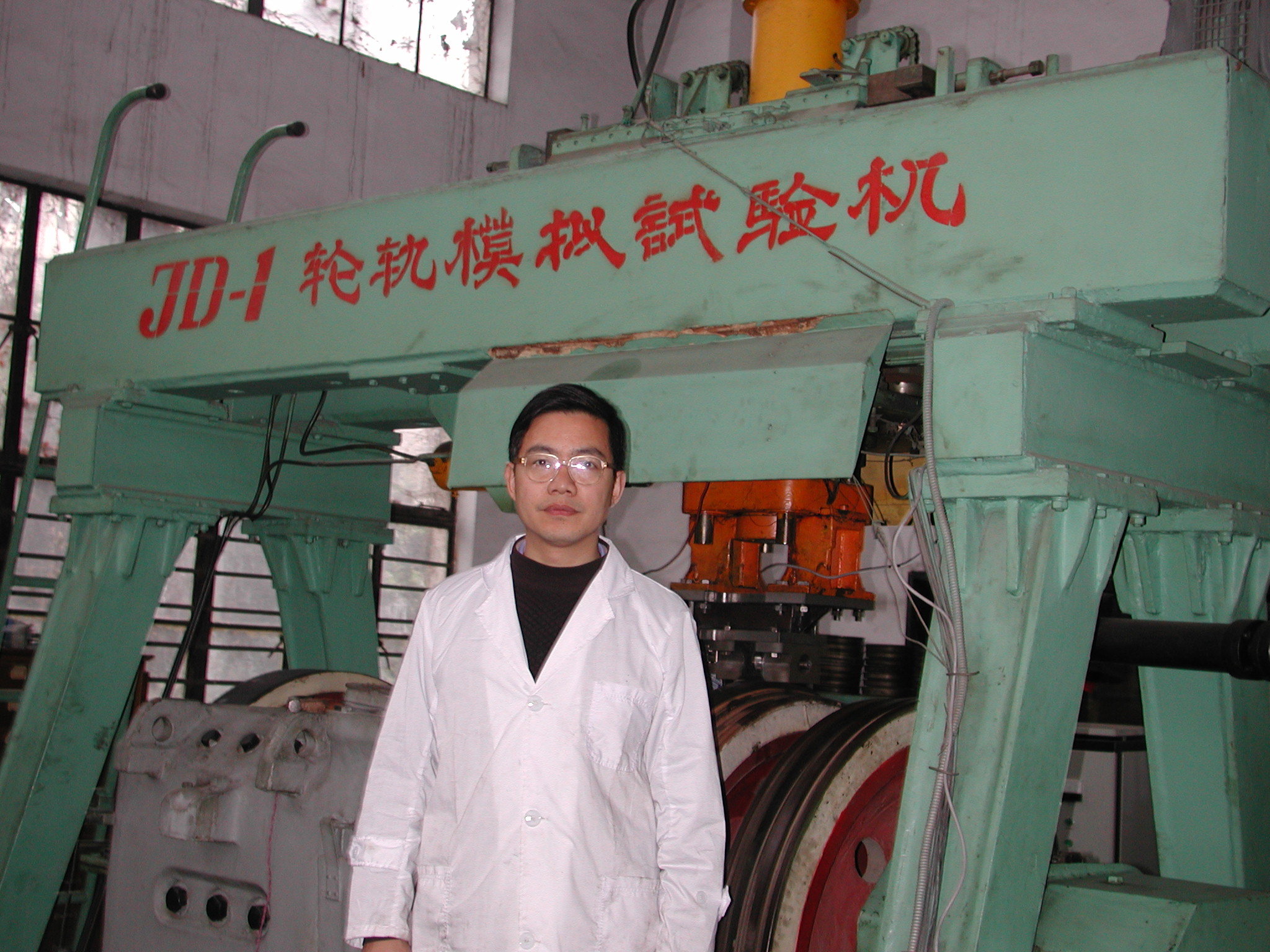 Qiyue Liu (刘启跃)合作论文数Tribology Research Institute, School of Mechanical Engineering, Southwest Jiaotong University120
 Wenjian Wang (王文健)合作论文数School of Mechanical Engineering, Southwest Jiaotong University117
 Haohao Ding (丁昊昊)合作论文数School of Mechanical Engineering, Southwest Jiaotong University50
 Xuesong Jin (金学松)合作论文数State Key Laboratory of Rail Transit Vehicle System, Southwest Jiaotong University16
 Zhongrong Zhou (周仲荣)合作论文数School of Mechanical Engineering, Southwest Jiaotong University12
 Lu-bing Shi合作论文数10
 Zefeng Wen (温泽峰)合作论文数State Key Laboratory of Rail Transit Vehicle System, Southwest Jiaotong University10
 Kun Zhou (周坤)合作论文数College of Mechanical and Vehicle Engineering, Chongqing University;State Key Laboratory of Mechanical Transmissions for Advanced Equipment, Chongqing University9
 Roger Lewis合作论文数Department of Mechanical Engineering, The University of Sheffield9
 Minhao Zhu (朱旻昊)合作论文数School of Materials Science and Engineering, Southwest Jiaotong University8Qiang Lin合作论文数7
 Guangning Wu (吴广宁)合作论文数School of Electrical Engineering, Southwest Jiaotong University;Institute of Future Technology, Southwest Jiaotong University7
 Enrico Meli合作论文数Department of Energetics, University of Florence7Shu-yue Zhang合作论文数6HuoMing Guo (郭火明)合作论文数6Wen Zhong (钟雯)合作论文数6
 Yi Zhu (祝毅)合作论文数School of Mechanical Engineering, Zhejiang University6Wen Shu合作论文数5Peng Shen (申鹏)合作论文数5Lei Ma (马蕾)合作论文数5
 Ping Wang (王平)合作论文数School of Civil Engineering, Southwest Jiaotong University5Bing-nan Wu合作论文数4Liang Zhou合作论文数4zhao xiangji (赵相吉)合作论文数4DU Xing (杜星)合作论文数4CaiYun Wang (王彩芸)合作论文数4
 Hengyu Wang (王衡禹)合作论文数State Key Laboratory of Rail Transit Vehicle System, Southwest Jiaotong University4
 Rong Chen (陈嵘)合作论文数Department of Road and Railway Engineering, Schoole of Civil Engineering, Southwest Jiaotong University4
 Jingmang Xu (徐井芒)合作论文数School of Civil Engineering, Southwest Jiaotong University4Wenjuan Jiang (蒋文娟)合作论文数4Wei Zhang (张伟)合作论文数4Qian Xiao (肖乾)合作论文数4
 Xinbiao Xiao合作论文数4MU Xinpeng合作论文数3
 Dabin Cui合作论文数3Lu Li合作论文数3Jinyu Yang合作论文数3Pengcheng XIANG (向鹏程)合作论文数3Jingdong SONG (宋靖东)合作论文数3lin qiang (林强)合作论文数3Jihua Liu合作论文数3
 Radovan Galas合作论文数Fac Mech Engn, Brno Univ Technol3KeYuan Zhang (张科元)合作论文数3JianHua Song (宋建华)合作论文数3
 Xin Zhao (赵鑫)合作论文数Institute for Wheel-Rail Interaction and Vibration & Noise, State Key Laboratory of Rail Transit Vehicle System, Southwest Jiaotong University3
 Xueqin Zhang (张血琴)合作论文数School of Electrical Engineering, Southwest Jiaotong University3
 Milan Omasta合作论文数Institute of Machine and Industrial Design, Brno University of Technology3
 Kai Wang合作论文数3Zibin Li (李自彬)合作论文数3




