The coated sphere model of Mie's theory was used to calculate the extinction coefficients of aerogel containing water.Dependent scattering was taken into consideration with purpose of improving the results.Finally,the temperature-related radiative conductivity was calculated from the Rosseland average of extinction coefficients.The best prediction comes from independent scattering of coated sphere model,which offers more refined extinction coefficient calculation and slightly better prediction of radiative conductivity than the original Mie's theory.Existing dependent scattering theories help little to improve calculation.
A model based on the augmented Young–Laplace equation and kinetic theory was developed to describe the nanostructured roughness effects on an extended evaporating meniscus in a microchannel for Wenzel and Cassie–Baxter states. The roughness geometries were analytically related to the disjoining pressure, slip length and thermal resistance across the roughness layer. The results show that the equivalent Hamaker constant and adsorbed film thickness increase with nanopillar height for Wenzel state. Thus, the spreading and wetting properties of the evaporating thin film increase with roughness for Wenzel state, leading to an elongated thin film and enhanced heat transfer rate compared to a flat hydrophilic surface. The equivalent Hamaker constant and disjoining pressure effect decrease with increasing nanopillar height for Cassie–Baxter state. The system wettability, thin film length and heat transfer rate increase with increasing slip length and with decreasing roughness for Cassie–Baxter state. A smaller roughness coexisting with a larger slip length on rough surfaces for Cassie–Baxter state results in a much higher heat transfer rate relative to a flat surface.
An inverse model based on the shooting method, Mie theory and the improved Kramers–Kronig (KK) relation was combined with FTIR and Abbe refractometer measurements to calculate the complex refractive indices of various infrared opacifiers. The effects of opacifier sizes, types and shapes were then analyzed based on the Rosseland mean extinction coefficient using Mie theory and anomalous diffraction theory (ADT). This model provides theoretical guidelines for designing materials with optimized parameters, such as size, type and shape of opacifiers, to improve the aerogel thermal insulation at high temperatures. The results show that the optimum diameter of SiC particles to minimize the radiation is 4 μm for T < 400 K and 3 μm for T > 400 K. Carbon black is the optimum opacifier for T < 600 K while SiC is the optimum opacifier to minimize the radiative heat transfer for T > 600 K among the investigated opacifiers of SiC, TiO2, ZrO2, amorphous SiO2 and carbon black. The infrared extinction ability for various shapes is largest for oblate spheroids and decreases for spheres, cubes, cylinders with small length-to-diameter ratios, and then long, thin cylinders.
The parallel proportion factor of solid-gas thermal conductions was presented based on the very realistic aerogel structure. An analytical heat transfer model was then developed with full considerations of the aerogel microstructure and the nanoscale thermal conduction effects. The results show that this model can well predict the total thermal conductivity of aerogels for various pressures, temperatures, densities and microstructures. This model can be used to quickly predict and optimize the relationship between the thermal conductivity and the microstructure. The total thermal conductivity of silica aerogels reaches its minimum at a density of 130 kg·m-3 at ambient conditions. The total thermal conductivity of aerogels decreases with increasing the number of secondary nanoparticles at high temperatures. Thus, the thermal insulating performance of aerogels is mainly affected by the number of secondary nanoparticles at high temperatures.
The silica aerogel is a nanoporous super thermal insulation material with weak mechanical strength. The fibers are usually filled into the aerogel to strengthen the material. A combined conduction and radiation heat transfer model based on the optically thick assumption was developed to investigate the effects of the fiber species effects on the heat transfer through the fiber-loaded aerogel composite. The results show that the silicon glass-b has the largest extinction coefficient for best suppressing the radiation at higher temperatures while the soda lime silica fiber has the smallest extinction coefficient. The selection of proper fiber is important for improving the thermal insulation. The fiber, which has the largest complex refractive index with smallest fluctuations, has the largest extinction coefficient. For the 4 species of fibers in this study, the silicon glass-b is optimum for best reducing the total thermal conductivity for higher temperatures.
Since the opacifier-loaded silica aerogel composites have strong ability to inhibit radiant heat transfer compared to the pure silica aerogel,they can improve effectively the insulation performance at high temperature conditions and have been used extensively as thermal insulation materials in a variety of industrial applications.This paper developed a theoretical model to predict the radiant performance of opacifiers by using the Mie scattering theory,Beer law and a radiant heat transfer equations.The model was used to calculate the radiant performance of carbon black opacifier with various particle diameters and the radiant performance of three opacifiers,carbon black,SiC and ZrO2.The results showed that the opacifier-loaded silica aerogel composites had much higher extinction coefficient than the pure silica aerogel in a range of 3—7.5μm wave band or in medium and high temperature ranges,which significantly improved the insulation performance of composites.With a fixed opacifier mass fraction,the optimal particle diameter was 2—3μm for carbon black opacifier.Among the three opacifiers,carbon black opacifier had better opaque property than that of SiC and ZrO2 opacifiers.Due to poor thermostability for carbon black opacifier at high temperature conditions,the optimal material design for opacifier-loaded silica aerogel composites should be as follows:SiC or ZrO2 are added on high temperature side of aerogel and carbon black is added on low temperature side.
An improved analytical model for the total thermal conductivity of fiber-loaded silica aerogels was developed based on the complex refractive index, size, orientation, volume fraction and morphology of the fibers and silica aerogel. A cubic array of spherical porous secondary nanoparticles and a modified parallel-series model were proposed to model the combined solid and gaseous thermal conductivities. An anomalous diffraction theory (ADT) was used to predict the fiber extinction coefficient. Five common fiber types in the composites were studied including amorphous SiO2 glass, silicon glass, common float glass, soda lime silica glass and borosilicate glass. The results show that the total extinction coefficient of the silica aerogel system is largest by loading with the common float glass fiber and lowest by loading with the soda lime silica glass among the five fiber types. The model provides theoretic guidelines for material designs with optimum parameters, such as the type, inclination angle, volume fraction and diameter of the fibers as well as the aerogel nanoparticle and pore sizes. The optimum fiber for improved thermal insulation should have a large spectral complex refractive index throughout the infrared region.
Silica aerogels are nanoporous super thermal insulators with a weak ability to suppress the radiation at high temperatures.Thus,mineral powers are added as opacifiers into the aerogels to minimize the radiation and improve the thermal insulating properties.This study presented a model based on Mie theory and the improved KK relation to numerically calculate the complex refractive indices of opacifiers.The results show that the type,diameter,volume fraction of opacifiers have great effects on the thermal insulation.The optimum diameter of SiC to suppress radiations is 3μm for higher temperatures.For lower temperatures,carbon black is the optimum opacifier while SiC and TiO2are optimum opacifiers at higher temperatures.The optimum opacifiers must have large spectral complex refractive indices throughout the infrared region.
An analytical model was developed to predict the pressure-dependent gaseous thermal conductivity in aerogels based on the spherical porous secondary particle aggregate structure. The model includes the effects of particle size, pore and particle microstructures, and solid–gas coupling including the quasi lattice vibrations for solid-like vibrating gas molecules in the gaps between adjacent secondary particles that are not included in previous models. The results show that the pressure-dependent effective gaseous thermal conductivities of RF and silica aerogels predicted by the present model agree well with experimental results. The solid–gas coupling significantly increases the effective gaseous thermal conductivity in the aerogels as the quasi lattice vibrating gas molecules in the gaps more effectively bridge adjacent particles. The effects of solid–gas coupling and pore and particle microstructures are significant for particle aggregate structures with mean pore and particle diameters in the range of 100 nm–10 μm while the Knudsen formula and the Zeng’s model have limited applicability in this size range. Micron and millimeter-scale pores that can occur in nanoporous silica aerogel samples due to the mechanical fragility of these nanostructures can be well represented by the present three pore size model.
The radiative properties and heat transfer in fiber-loaded silica aerogel composites were investigated using modified anomalous diffraction theory in a combined heat conduction and radiation model. The randomly parameterized 2-D fiber distribution was generated to simulate a very realistic material structure. The finite volume method was then used to solve a two flux radiation model and the steady-state energy equation to calculate the effective thermal conductivity of the composite. The numerical results provide theoretic guidelines for material designs with optimum parameters, such as the inclination angle, diameter and length-to-diameter ratio of the fibers. The results show that the fiber extinction coefficient increases as the fiber length-to-diameter ratio is reduced or the fiber inclination angle is increased. The effective thermal conductivity of the fiber-loaded aerogel can be reduced by reducing the fiber length-to-diameter ratio and the inclination angle and by moderately increasing the fiber volume fraction. The 4–6μm diameter silicon fibers are optimum for high-temperature thermal insulation.
A 3-D finite volume numerical model based on the porous secondary nanoparticle random aggregate structure was developed to predict the total thermal conductivity of silica aerogels. An improved 3-D diffusion-limited cluster–cluster aggregation (DLCA) method was used to generate an approximately real silica aerogel structure. The model includes the effects of the random and irregular nanoparticle aggregate structure for silica aerogels, solid–gas coupling, combined conduction and radiation, nanoparticle and pore sizes, secondary nanoparticle porosity and contact length between adjacent nanoparticles. The results show that the contact length and porosity of the secondary aerogel nanoparticle significantly affect the aerogel microstructure for a give density and, thus, greatly affect the total thermal conductivity of silica aerogels. The present model is fully validated by experimental results and is much better than the model based on a periodic cubic array of full density primary nanoparticles, especially for higher densities. The minimum total thermal conductivity for various silica aerogel microstructures can be well predicted by the present model for various temperatures, pressures and densities.
The silica aerogels are super thermal insulating materials due to their extremely low thermal conductivities.The gaseous thermal conductivity in aerogels is much smaller than that of the gas in free space since the motions of gas molecules are greatly restricted by the fine solid matrix and extremely fine pore sizes in aerogels.This study presented several models to relate the pore sizes and the nanoscale solid skeleton with the gaseous thermal conductivity.The results show that the gaseous thermal conductivity in the silica aerogels decreases dramatically with reducing the pressure and pore sizes and with increasing the density.Thus,the gaseous thermal conductivity in aerogels at very low pressures is far smaller than that of the free gas at the ambient pressure.The nanoscale solid structure of the silica aerogels has a significant effect on the gaseous thermal conductivity,especially for pressures between 0.01×10⁵ Pa and 100×105Pa.
An analytical heat transfer model based on scanning electron microscopy, Brunauer–Emmett–Teller and pycnometry measurements and a 3D random diffusion-limited cluster–cluster aggregation structure is proposed to calculate the temperature-dependent microstructural parameters and thermal conductivities of silica aerogels. This model is a pure prediction model, which does not need experimentally fitted empirical parameters and only needs four measured structural parameters as input parameters. This model can provide high-temperature microstructural and thermophysical properties as well as theoretical guidelines for material designs with optimum parameters. The results show that three stages occur during the thermal evolution processes of the aerogel structure with increasing temperature from 300 to 1500 K. The current analytical model is fully validated by experimental data. The constant structure assumptions used in previous heat transfer models are found to cause significant errors at higher temperatures as the temperature-dependent structure deformation significantly increases the aerogel thermal conductivity. The conductive and total thermal conductivities of silica aerogels after high-temperature heat treatments are much larger than those with no heat treatment.
A thin film evaporation model based on the augmented Young–Laplace equation and kinetic theories was developed to describe the nanofluid effects on the extended evaporating meniscus in a microchannel. The nanofluid effects include the structural disjoining pressure, a thin porous coating layer at the surface formed by the nanoparticle deposition and the thermophysical property variations compared with the base fluid. The results show that the nanofluid thermal conductivity enhancement mainly due to the Brownian motion tends to greatly increase the liquid film thickness and the thin film heat transfer. The structural disjoining pressure effect tends to enhance the nanofluid spreading capability and the thin film evaporation. The nanoparticle-deposited porous coating layer improves the surface wettability while significantly reducing the thin film evaporation with increasing layer thickness due to the thermal resistance across this layer. The nanofluid thermal conductivity enhancement together with the structural disjoining pressure effect can not counteract the thermal resistance effects of the porous coating layer when the coating layer thickness is sufficiently large.
A model based on the augmented Young–Laplace equation and the Clausius–Clapeyron equation was developed to describe the extended evaporating meniscus in a microchannel. The effects of the adsorbed film thickness, channel height and temperature-dependent thermophysical properties of the fluid are included in the model at wall superheats up to 50K. The liquid flow is coupled with the vapor flow to obtain the mass transport across the liquid–vapor interface. The results show that the constant thermophysical property model greatly overestimates the liquid pressure difference and the total thin film heat transfer rate at higher superheats compared with the variable thermophysical property model. The adsorbed film thickness, which is controlled by the disjoining pressure limit, reaches a minimum near about 20K superheat for water. The maximum film curvature and liquid pressure difference then decrease at superheats larger than 20K. The effects of the capillary pressure limit produced by the channel height can be reduced by increasing the superheat.
Heat transfer and liquid flow near solid-liquid interfaces for evaporating thin films in microchannels were investigated based on the augmented Young-Laplace equation and kinetic theory. A wall-affected nanolayer was used to correlate the Kapitza resistance with the liquid layering and velocity slip for both hydrophilic and hydrophobic surfaces. This nanolayer physical model was developed to show the combined effects of the solid-liquid interfacial temperature slip and the velocity slip on the thin-film evaporation. The results show that the liquid velocity slip elongates the thin-film region and enhances the evaporation. A minimum slip length exists for the extremely wetting case. The Kapitza resistance and nanolayer disordering for hydrophobic surfaces tend to reduce the thin liquid film superheat and overall heat transfer, leading to a larger U-shaped temperature drop. The nanolayer ordering enhances the thin-film evaporation but cannot entirely counteract the Kapitza resistance.
The microscopic liquid flow and heat transfer characteristics near the solidliquid interface in the evaporating thin film region of a mini channel were investigated based on the augmented Young-Laplace equation and kinetic theory. A physical model using the boundary layer approximation and a constant slip length was developed to obtain the solid-liquid interfacial thermal resistances and interfacial temperatures. The results show that the ordered micro layer and micro flow near the wall reduce the effective liquid superheat and the liquid pressure difference mainly due to the reduced capillary pressure gradient. The solid-liquid interfacial thermal resistances and U-shaped temperature drops tend to reduce the thin film spreading and heat transfer. The effects of the solid-liquid interfacial thermal resistances on the thin film evaporation outweigh the effects of the thermal conductivity enhancement due to the liquid ordering. The concepts of the micro flow and ordered adsorbed flowing micro layer are clarified to express the Kapitza resistance analytically in terms of the slip length and micro layer thickness. (C) 2010 Wiley Periodicals, Inc.
 Yuanyuan Duan (段远源)合作论文数Department of Energy and Power Engineering, Tsinghua University16
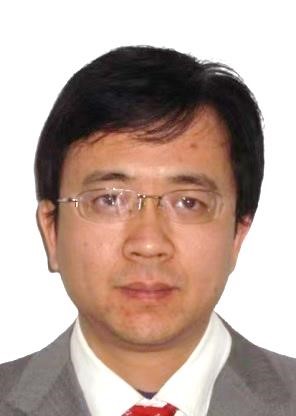 Xiaodong Wang (王晓东)合作论文数Technical Institute of Physics and Chemistry, Chinese Academy of Sciences;University of Chinese Academy of Sciences14
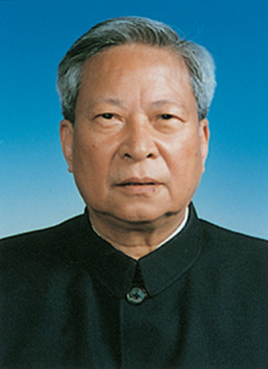 Buxuan Wang (王补宣)合作论文数Department of Energy and Power Engineering, Tsinghua University13
 Haitong yu合作论文数3
 Duo Sun合作论文数1ZhenHua Lv合作论文数1YaBin Gao合作论文数1YunHe Han合作论文数1XueRen Zhang合作论文数1Qi Min (闵琪)合作论文数1
 David M. Christopher (柯道友)合作论文数Department of Energy and Power Engineering, Tsinghua University1
 Mei Huang (黄梅)合作论文数School of Nuclear Science and Technology, University of Chinese Academy of Sciences;Institute of High Energy Physics, Chinese Academy of Sciences1




