Summary Despite the rapid spread of “data-driven” approaches, scholarship on data management and data governance remains fragmented. Studies often examine these areas in isolation and within narrow domains, overlooking their interdependence as parallel constructs in sociotechnical systems. This fragmentation is largely due to the absence of a shared conceptual framework. To address this issue, this article starts with a review of 2,234 Social Sciences Citation Index–indexed publications, which combines bibliometric mapping with targeted qualitative synthesis. The review clarifies conceptual distinctions and complementarities between data-driven management and data-driven governance, while showing how definitions and applications are embedded in varied political, social, managerial, and technological contexts. These contextual dimensions form a recognizable landscape that recurs across domains but is weighted differently in practice. Rather than treating these aspects as external conditions, they are positioned as constitutive foundations that shape both management-oriented and governance-oriented data practices. Building on this review, a sociotechnical synthesis is proposed that aligns fragmented insights through a comparative lens. Rather than prescribing a definitive model, the synthesis points toward integrative frameworks better suited for analyzing cross-sector and cross-level data-driven systems.
In this article, we introduce dis/connective identification to theorize how diasporic actors negotiate belonging, safety, and visibility through strategic forms of digital engagement and disengagement under conditions of transnational repression. Challenging dominant emphases on persistent connectivity in digital migration and diaspora studies, we conceptualize dis/connective identification as a process of modulating symbolic, social, and affective relational distances across hybrid media environments. Drawing on 13 in-depth interviews with organizers of the post-2019 Hong Kong digital diaspora, we identify three specific practices, namely moralizing platform use, calibrating political security and trust, and expressing affective belonging, with which diasporic actors navigate multifaceted uncertainties across contexts within a bounded, risk-aware community. Rather than treating disconnection as failure or absence, we argue that it should be understood as a mode of connective agency that varies in intensity, temporality, and visibility. Our study contributes to digital diaspora studies, disconnection studies, and connective action research by highlighting the relational and contingent nature of diasporic identification under specific sociotechnical conditions.
Framing analysis, an extensively used, multi-disciplinary social science research method, requires substantial manpower and time to code and uncover human-level understanding of story contexts. However, recent advances in deep learning have led to a qualitative jump in algorithm-assisted methods, with large language models (LLMs) like BERT and GPT going beyond surface characteristics to infer the semantic properties of a text. In this study, we explore the application of the BERT for natural language inference (NLI), which leverages bidirectional context and rich embeddings to assist scholars in identifying contextual information in media texts for quantitative framing analysis. More specifically, we investigate the capability of LLMs to identify generic media frames by comparing the results from a zero-shot analysis using BERT-NLI to those from human analysis. We find that the reliability of detecting generic frames varies significantly across different datasets, indicating that even a large LLM like BERT-NLI, trained on millions of texts from diverse sources, cannot be uniformly trusted across different contexts. Nonetheless, LLMs might be employed productively in specific contexts after careful consideration of their agreement with human-generated ratings.
Abstract This study offers new perspectives on the evolving trajectory of state-led nationalist discourses and their engagement with online publics by examining official nationalist propaganda on Chinese social media. The analysis focuses on inward-oriented, outward-oriented, and liberal nationalist discourses, as well as online responses to these narratives. Drawing from a longitudinal data set of 43,259 Weibo posts published by the Communist Party of China’s mouthpiece People’s Daily between January 2019 and December 2021, the study employs a mixed-method computational framework—including latent Dirichlet allocation, sentiment analysis, word frequency analysis, and t-tests—to systematically analyze nationalist discourse. The findings highlight the predominance of inward-oriented nationalist narratives, which are highly adaptable to domestic and international concerns. By contrast, outward-oriented nationalism discourses emerge in response to global events, while liberal nationalist discourses focus more on individual rights and exhibit positive sentiments. Beyond tracking state-driven discourses, this study uncovers patterns of online engagement with nationalist discourse over time. It further reveals how social media users participate in and reinforce China’s assertive positioning on the global stage. This study opens new avenues for future research on nationalism, propaganda, (digital) governance, and state–society interactions in authoritarian contexts, as it provides a fresh perspective on the mechanisms through which official narratives evolve and take shape in an increasingly digitalized information environment.
This study presents one of the first comparative analyses of digital nationalism on social media. Using a computational mixed-method approach-combining supervised, computer-assisted content analysis with network modelling-it analyses 64,541 tweets from Twitter and 91,063 posts from Weibo surrounding a shared geopolitical flashpoint: President Trump's blaming of China during the early stages of the COVID-19 pandemic. The analysis reveals not only divergent manifestations of nationalism over time but also distinct user roles and patterns of discursive engagement that exemplify contrasting sociopolitical contexts. Additionally, we identify less discussed cross-platform dynamics. The study makes three key contributions to the evolving field of digital nationalism. Empirically, it offers a fine-grained, longitudinal mapping of everyday nationalist expressions by diverse actors in specific sociopolitical contexts over a 9-month period (March-December 2020), capturing both temporal dynamics and nonelite perspectives. Methodologically, it advances a context-sensitive, inductive-deductive analytic strategy that supports the identification and comparison of nationalist discourses and the abstraction of the contextual conditions under which they emerge and circulate. Theoretically, the study deepens our understanding of digital nationalism as a contingent phenomenon, co-produced through the interplay of political cultures, user agency and media ecosystems-thus advancing a comparative framework attuned to the sociotechnical dynamics of digital nationalism.
Observers of the Chinese political landscape have noted significant changes with the widespread adoption of the internet. Existing studies on the internet and contentious politics in China often fall into same old tunes like “authoritarianism vs. liberal democracy” and “liberation vs. control.” This reflection reviews selected work on the internet and politics in China and beyond, proposing a more sophisticated and critical examination through (a) a temporal dimension to pinpoint changes introduced by the internet’s adoption, (b) a mundane dimension that recognizes (contentious) politics in broader life contexts, and (c) a cross-demographical dimension that acknowledges the internet’s role as diverse and complex. The three proposals serve as a crucial first step toward achieving more sophisticated explanations and a deeper understanding of the internet in China for Chinese internet scholars in the coming decade.
In this special issue, the authors theoretically, methodologically, and empirically address challenges and opportunities associated with comparative social media analysis in political contention. Actors from civil society, media, and institutional politics use social media to coordinate, mobilise, and communicate, turning public online communication into an arena of conflict that offers researchers valuable windows of observation. In this introduction to the special issue, we systematise comparative perspectives on social media and political contention. We outline the traditional comparative dimensions of space, time, platform, and case; and suggest an approach for comparison within dimensions that are less dependent on the rapidly changing social media environment and more attuned to the interconnection between social media and political contention.
Social media not only changes the traditional communication environment, but also introduces new modifications to agenda setting. With the increasing use of social bots in public opinion manipulation and political election interference, whether they can participate in or influence agenda setting has become an urgent concern. Currently, there is limited literature focusing on engagement in agenda-setting for social bots agenda setting. This paper examines the content of social media discussion related to the South Korean presidential election, identifies the presence of social bots, and explores the relationships between media agenda, bot agenda, and public agenda from the perspective of agenda setting. The study found that although the primary agendas of the media, social bots, and the public are not identical, they are interconnected. Furthermore, the media agenda does not precede the bot agenda and the public agenda in terms of timeliness, and chronological order is only observed between social bots and the public.
Despite the fruitful insights articulated by existing scholarship on internet censorship in China, the lack of a systematic overview of the field not only hinders reciprocal dialogue across different studies, but also prevents a reflective consideration of directions that could shed further light on the topic. To fill the gap, this study introduces the concept of “categorisation” as the analytical lens to scrutinise and synthesise the extant studies on censorship. It proposed two possible ways of categorising the current development of the topic: one is the macro–meso–micro level of analysis, and the other is about data and metadata. Our discussion addresses three contributions to studying internet censorship in China: the emerging computational methods for exploring censorship deletion practices on the micro level, the relevance of hard-to-observe, organisation-specific factors to understand the operationalisation of censorship, and method triangulation to strengthen the validity and reliability of studies of censorship phenomena.
Governance by quantification has a long history in human society. However, two critical issues remain underexplored in the sociology of quantification. First, while the social conditions and consequences of governance by numbers have been widely addressed, the politics of the 'middle ground' - quantification infrastructure itself, particularly with the rise of digitalization - are not fully elaborated. Second, the power dynamics that underpin and shape institutionalized quantification politics remain understudied, as numeracy and statistics are always preceded by political judgments about what to measure and how. This symposium advances discussions on governance by quantification infrastructure by offering a critical, reflective perspective on state quantification infrastructures and shedding new light on contested issues in the sociology of quantification globally.
Abstract Social media not only changes the traditional communication environment, but also brings new changes to agenda setting. The main body of agenda setting has shifted from the traditional media to the politicians, political parties and grassroots people. With the increasing use of social bots in public opinion manipulation and political election interference, whether they can participate in or influence agenda setting has become an urgent concern. So far, there is less literature focusing on engagement in agenda-setting for social bots. This paper studies the social media discussion content of the South Korean presidential election, determines the participation of social bots, and explores the connection between media agenda, bot agenda and public agenda from the perspective of agenda setting. The study found that while the main agendas of media, social bots and the public are not the same, their agendas are relevant. In addition, the media agenda is not timely ahead of the bot agenda and the public agenda, and the time order only appears between the social bots and the public.
Ethnic and racial disparities in the coronavirus (COVID-19) pandemic raise significant concerns. This study analyzes social media discourses toward four ethnic communities in the United States during the pandemic and reveals disparities in pandemic experiences among them. A total of 488,029 tweets mentioning one of the four ethnic communities, that is, Asians, Blacks, Hispanics, and Native Americans, were investigated by a structural topic modeling approach with emotional expressions and time as covariates in the topic model. The results demonstrate that discourses about Asian, Hispanics, and Native American communities were often induced by pandemic-related events, concerning topics beyond one's community, and reflecting an experience of implicit racism and an adoption of technical supports from health systems. Meanwhile, discourses about Blacks were racially related, discussing topics within the community, and reflecting an experience of explicit racism and an adoption of psychological supports from ingroup. We discuss the implications of our findings on ethnic health disparities.
Abstract Social media not only changes the traditional communication environment, but also brings new changes to agenda setting. The main body of agenda setting has shifted from the traditional media to the politicians, political parties and grassroots people. With the increasing use of social bots in public opinion manipulation and political election interference, whether they can participate in or influence agenda setting has become an urgent concern. So far, there is less literature focusing on engagement in agenda-setting for social bots. This paper studies the social media discussion content of the South Korean presidential election, determines the participation of social bots, and explores the connection between media agenda, bot agenda and public agenda from the perspective of agenda setting. The study found that while the main agendas of media, social bots and the public are not the same, their agendas are relevant. In addition, the media agenda is not timely ahead of the bot agenda and the public agenda, and the time order only appears between the social bots and the public.
Who are the prominent actors leading the diffusion of emotional messages in China’s online activism? What roles do they play in this process in an emotion-discouraging context? In this exploratory study, we examine networked patterns of anger diffusion within the Red-Yellow-Blue kindergarten child abuse scandal on the Chinese social media Weibo. Using supervised machine learning for emotion labeling and a social network analysis approach, we identified three types of actors and profiled their distinctive roles in the process of anger contagion. Broadcasters (e.g., verified organization accounts) act as both an information source and a legitimate source to elicit other users’ emotion through emotion-free information. Furthermore, emotion initiators like celebrities instigate and lead other users’ emotions, while emotion brokers like micro-celebrities build bridges between different subgroups to form a massive-scale network of emotion contagion. These actors are indispensable and complement each other for emotion contagion in China. We conclude by discussing the implications of our findings on the understanding of emotion diffusion in online activism.
This chapter advances an original contribution to the understanding of the political use of terms like rumors, fake news, misinformation, and disinformation as what Tilly describes as contentious performance in the authoritarian context, with a case study of rumor phenomena in an authoritarian context like the People's Republic of China. It first demonstrates an ongoing political tendency around the world that utilizes the terms "disinformation," "misinformation," and "fake news" as a rhetorical tool to deliberately undermine dissident views, attack opponents, or discredits media scrutiny. Second, the chapter develops a theoretical discussion on fake news, misinformation, and disinformation that highlight the understudied dimension of contention as an essential part of the spread and communication of such information. Third, the chapter examines the repressive context in which the control of and crackdown against fake news and disinformation have developed into a key part of social control in everyday life. The analysis elaborates spreading fake news and disinformation as a resentment-venting behavior against the dominant discourse. The chapter concludes with a proposal to study the communication aspect of fake news or disinformation, which may facilitate alternative interpretations on its diffusion beyond the narrow focus on the truth or falsity of the content.
 Hui Zhao合作论文数Nat. Key Lab. of Antennas &Microwave Technol., Xidian Univ.;c;Nat. Key Lab. of Antennas & Microwave Technol., Xidian Univ.10
 Chris Chao Su合作论文数6Menghan Zhang合作论文数5
 Ze Chen合作论文数City Univ Hong Kong, Dept Mat Sci & Engn, Kowloon, 83 Tat Chee Ave, Hong Kong 999077, Peoples R China5
 Baohua Zhou (周葆华)合作论文数Shanghai Key Laboratory of Data Science, Fudan University;School of Journalism, Fudan University4Xue Qi合作论文数2
 Klaus Bruhn Jensen合作论文数Department of Communication, Faculty of Humanities, University of Copenhagen2
 Xianwen Kuang合作论文数Xian Jiaotong Liverpool Univ2
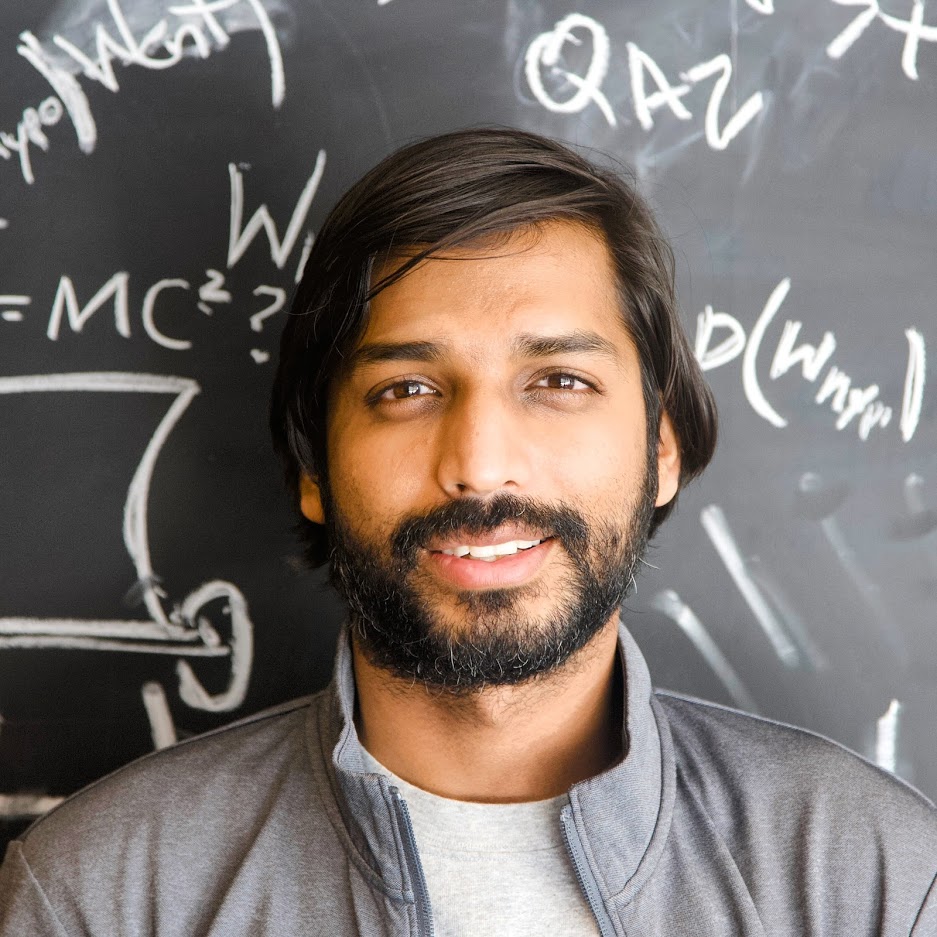 Priyank Chandra合作论文数Faculty of Information, University of Toronto;Socio-Technical ResistancE and Ethical Technologies Lab, University of Toronto2
 Simon Schweighofer合作论文数2
 Jiahui Lu (卢嘉辉)合作论文数School of New Media and Communication, Tianjin University2Margaret C. Jack合作论文数1
 Francesca Pasquali合作论文数1Christian Hviid Mortensen合作论文数1
 Ashique Ali Thuppilikkat合作论文数Socio-Technical Resistance and Ethical Technologies Lab, Faculty of Information, University of Toronto1Jing Wang合作论文数1
 Christina Neumayer合作论文数Department of Communication, Faculty of Humanities, University of Copenhagen1
 Signe Sophus Lai合作论文数Department of Communication, Faculty of Humanities, University of Copenhagen1
 Adrian Petterson合作论文数Socio-Technical ResistancE and Ethical Technologies Lab, Faculty of Information, University of Toronto;Ineedana.com1Fiona Huijie Zeng Skovhøj合作论文数1
 Dechun Zhang (张德淳)合作论文数Leiden Institute for Area Studies, Leiden University1Jesper Pagh合作论文数1Matthias Hoffmann合作论文数Weizenbaum Inst Networked Soc, Free Univ Berlin1
 Shamika Klassen合作论文数1
 Paridhi Gupta合作论文数Ctr Womens Studies, Jawaharlal Nehru Univ1
 Trisha Meyer合作论文数Brussels School of Governance, Vrije Universiteit Brussel1
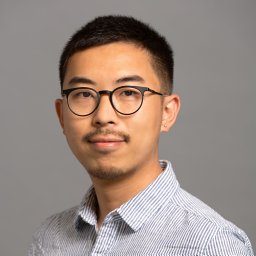 Chuncheng Liu合作论文数Univ Calif San Diego1
 Kjetil Sandvik合作论文数1
 Hua Pang (庞华)合作论文数School of New Media and Communication, Tianjin University;School of Foreign Languages, Tianjin University1Qiong Liu (刘琼)合作论文数1
 Xinchuan Liu (刘新传)合作论文数School of Journalism & Communication, Peking University1
 Piermarco Aroldi合作论文数1
 Roxana Radu合作论文数Jules Stein Eye Institute, UCLA School of Medicine1
 Hans-Jorg Trenz合作论文数university of copenhagen1
 Nicoletta Vittadini合作论文数1
 Nanette Levinson合作论文数School of International Service, American University1Haiyang Zhang (张海洋)合作论文数University of Sheffield1




