Modern radar systems commonly utilize multiple-input multiple-output architectures, which often result in nonrectangular virtual antenna arrays. For these nonrectangular configurations, conventional angle estimation methods based on uniform linear array are suboptimal as they discard partial spatial information. Furthermore, subspace-based and iterative methods are often too computationally demanding for real-time applications. To address these limitations, this article proposes a computationally efficient two-stage angle estimation method, termed monopulse on nonrectangular array, designed to fully exploit the entire virtual aperture. The first stage introduces a unique amplitude-normalized 2-D discrete Fourier transform process to generate a robust coarse angle estimate from the nonrectangular array data. Building on this, the second stage employs a statistically optimized amplitude comparison monopulse technique to achieve off-grid high-precision fine estimation. Theoretical analysis, simulations, and experimental results demonstrate that the proposed method achieves high accuracy, approaching the Cram & eacute;r-Rao lower bound while maintaining a low computational cost.
Conventional parametric modeling with fixed distributions is inadequate for radar target detection in nonstationary background clutter. This letter presents a data-driven, online incremental learning framework integrating background perception and adaptive detection. The perception module performs cumulative-sum change detection with median centering and median absolute deviation standardization, adaptively adjusts the effective-sample window and forgetting weights, and updates the background density using a prequential minimum description length-guided online kernel density estimation method. In detection module, the updated background density is then fed back to recalibrate the detector parameters online. Simulation results demonstrate that the proposed framework achieves low-latency change detection and accurate background density tracking, while maintaining more stable false-alarm control.
Radar weak-target detection in sea clutter faces challenges such as heavy-tailed statistics, background nonstationarity, and scarce target annotations. This paper proposes an unsupervised Detection-oriented Complex-valued Variational Autoencoder with a Student's t likelihood (DoT-CVVAE) within a generative CFAR framework. DoT-CVVAE is characterized by three key design choices: First, radar complex baseband echoes are modeled and inferred in the complex domain, preserving amplitude-phase coupling and reducing representation bias from purely real-valued processing. Second, a complex multivariate Student's t likelihood is adopted to improve tolerance to outliers and enhance robustness under nonstationarity. Third, detection-oriented constraints in the time and Doppler domains are imposed, emphasizing local amplitude deviations and spectral-peak signatures, respectively. During testing, the reconstruction deviation serves as the detection statistic, with a quantile-based threshold calibrated on a validation set to achieve a desired false-alarm rate. Experiments on measured X-band maritime radar data show that DoT-CVVAE outperforms AMF, ANMF, NMF, GLRT-LTD, /i-VAE, /i-CVAE, and GM-CVAE in scanning mode and maintains robust performance in staring mode.
Point-based 3D single-object tracking (SOT) is an important task in the field of computer vision. The earliest appearance matching methods are sensitive to interference factors due to the characteristics of point clouds. Later motion-centric methods only grasp short-term motion information and ignore long-term motion clues. In order to break the boundary between the two methods, we propose a SOT method that uses feature correlation to correct motion offset. This method calculates the similarity of motion features between consecutive frames to correct the long-term historical motion offset, and then accurately locates a single target. We introduced a BMOP module to predict rough long-term historical motion clues, and also introduced IFE and DMFF modules to interact and fuse continuous frame features at multiple scales to obtain dense motion features. Finally, the MCE module corrects the offset to obtain accurate motion estimation of the final box. Extensive experiments show that our method exhibits excellent robustness and surpasses multiple classic methods. The code will be released at https://github.com/wangjie16138/PCtrack .
The radio frequency-based non-contact monitoring method provides a feasible direction for reducing the burden on users and achieving stable health monitoring. Since the chest micro-movement caused by heartbeat and breathing is usually at the millimeter level, this paper uses 77Ghz FMCW millimeter-wave radar to implement vital sign monitoring. Variational mode decomposition (VMD) is used to decompose the breathing, heartbeat information and environmental clutter of the human echo signal. However, the selection of modal decomposition-related parameters will affect the effect of signal decomposition. To this end, this paper proposes a VMD algorithm based on MSO optimization. Simulation experiments illustrate the noise robustness and applicability of MSO-VMD in complex scenarios. In addition, the human echo pulse is obtained and processed in a real environment, and the accuracy of the algorithm is verified by the results of the contact device.
Three-dimensional (3D) object detection plays a pivotal role in autonomous driving and intelligent robots. However, current methods often struggle with false and missing detections, especially for small objects. To address these challenges, this paper introduces PillarBAPI, a high-performance 3D object detection network that improves pillar feature coding and enhances point cloud feature representation. PillarBAPI proposes an Attention-based Point and Pillar Feature Extraction (APFE) module to reduce information loss from maximum pooling and enable the model to focus on local and global features. Additionally, we introduce a Pseudo-Image Feature Extraction Network (PIFE) and a novel neck design, B-ASPP, to enhance pseudo-image feature extraction and promote multiscale feature fusion. Extensive experiments on the KITTI dataset demonstrate that Pillar BAPI achieves significant improvements in both 3D and Bird's Eye View (BEV) benchmarks, particularly for small target detection. The contributions of this work lie in the enhanced pillar feature coding, attentive feature extraction, and efficient multi-scale feature fusion, collectively contributing to improved 3D object detection performance. The code will be released at https://github.com/wangjie16138/PillarBAPI/.
In this paper, we propose a novel efficient approach for direction-of-arrival (DOA) using coprime arrays. Specifically, we derive the equivalent received signals of the sum-difference array using the received input of the conjugate augmented coprime array. Subsequently, we designed an interpolation algorithm to obtain the maximum virtual uniform linear array (ULA) using complete array information. The covariance matrix of the virtual array is restored by re-weighted atomic norm minimization (RNM). Finally, we estimate the DOAs of sources via the MUSIC spectral search algorithm. The proposed method outperforms several existing approaches, as demonstrated through numerical experiments.
The passive radar's excellent concealment and cost advantages make it attractive in various scenarios and specifically effective against drone swarms. This paper investigates time-domain deceptive jamming methods to counter passive radar systems. To achieve TDOA jamming effects, we propose using signal synthesis from drone swarms to mislead the positioning results of passive radar. Through the establishment of theoretical models and simulation experiments, it is demonstrated that the proposed method can effectively achieve TDOA jamming of passive radar by altering signal phase, pulse duty cycle, and retransmission delay. The proposed method can effectively disrupt the precise positioning of passive radar, thereby deceiving enemy systems. This technique can be employed in radar countermeasures and electronic warfare.
Conventional compressed sensing (CS) inverse synthetic aperture radar (ISAR) imaging algorithms convert the ISAR 2D raw echo data and imaging scene into 1D data for processing, or introduce the alternating direction multiplier method (ADMM) for sparse signal recovery. The traditional 1D algorithm is relatively complex, and the proposed 2D -ADMM algorithm significantly reduces the complexity, so a 2D-ADMM algorithm under momentum acceleration is proposed based on the existing 2D-ADMM algorithms by considering the phase error. In complex scenarios, the algorithm has faster convergence speed and higher performance than 2D-ADMM and 2D-SL0 algorithms. The superiority of the algorithm is demonstrated based on simulation data and measured data.
In order to improve the heavy-tailed phenomenon in sea clutter modeling, the WL distribution modeling method and its statistical characteristics are studied. The IPSO (Improved Particle Swarm Optimization ) algorithm is used to estimate the sea clutter modeling parameters that obey the WL distribution, so as to improve the fitting effect of the statistical distribution model on sea clutter data. Based on the measured data of X-band sea clutter, the fitting effect of WL distribution on the measured data of sea clutter under different sea conditions is analyzed. Through the comparison with the goodness of fit test of statistical distribution models such as Rayleigh distribution, Weibull distribution, lognormal distribution and K distribution, it is shown that the WL distribution can well fit the sea clutter data with heavy tailing phenomenon, and has better statistical modeling ability of sea clutter amplitude distribution.
In this paper, we propose an efficient approach for estimating the directions-of-arrival (DOA) of coherent signals using coprime arrays. Specifically, we first generate a virtual uniform linear array (ULA) through coprime array interpolation. Subsequently, we define the virtual equivalent signal derived from the noise-free covariance matrix of the virtual ULA outputs and recover the Hermitian Toeplitz matrix by solving a reweighted atomic norm minimization (RNM) problem. The rank of the Hermitian Toeplitz matrix is only related to the number of sources. Finally, we can use MUSIC spectral search to estimate the DOAs of coherent sources. The simulation results demonstrate that the proposed algorithm offers higher resolution compared to other compressed sensing algorithms and does not have any limitations on the correlation between signal sources.
The complexity of the pore structure of dolomite leads to strong heterogeneity of the reservoir distribution and the inability to accurately describe the rock-electric parameters, which makes it difficult to distinguish the properties of reservoir fluids based on electrical logging. In this paper, fluid identification factors are applied to dolomite reservoirs for the first time, which enriches the methods of non-electric logging to identify reservoir fluid properties. Based on the inductive analysis of existing fluid identification factors, according to the number of times that logging data participates in the calculation, they are divided into three types of fluid identification factors: direct, indirect and composite; composite fluid identification factors can reflect changes in reservoir lithology, and reconstruct composite fluid identification factor H considering the difference between the lateral deformation coefficient of dolomite and other lithologies; the sensitivity of the composite fluid identification factor to gas saturation is tested, and fluid factors used in dolomite reservoirs were optimized. Select the array acoustic logging and density logging data from three wells in the subsalt dolomite in the Tarim Basin, China, calculate the parameters of the compressional wave and shear wave impedances (Ip, Is), λρ, μρ, ρf, F, H and etc., and use the two-dimensional chart method to analyze the effect of the fluid identification factors above, and λρ-μρ, F-σ, ρf-σ, H-μ and other charts are selected to establish logging fluid discriminant curves. The application shows that the fluid identification factor H is more suitable for distinguishing gas layers, and F is more suitable for distinguishing water layers.
To prevent the degradation of the detection performance Dual-Function Radar-Communication (DFRC) system in the presence of clutter, we propose the joint design of a transmit waveform and receiver filter to suppress the clutter and enhance the target detection performance. We use the Signal-to-Interference-plus-Noise Ratio (SINR) as the design criterion. Meanwhile, the Multi-User Interference (MUI) energy of the communication signals is constrained to maintain the quality of service for information transmission via DFRC systems. In addition, a similarity constraint is enforced to enable the transmitted waveform to have a good ambiguity function. To tackle the joint optimization problem, we present an iterative algorithm based on cyclic optimization and Semi-Definite Relaxation (SDR). The convergence of the algorithm is proved by a theoretical analysis. The simulation results show that the designed waveform can improve the target detection performance of a DFRC system in clutter and efficiently realize multi-user communication.
In light of the increasing requirement for the electromagnetic spectrum, the integration of radar and communication is widely concerned because of its miniaturizing equipments and high efficiency of spectrum. To address the issue that the communication information in integration signal for radar and communication affects its detection performance. A novel integration signal is proposed in this paper. Inspired by the high communication efficiency of shaped octal phase-shift keying (S8PSK) and high spectral efficiency of the three-section integration waveform ( k-CPM-LFM), we generate a new type of modulation h-CPM by introduction of a precoding method with low complexity and a time-varying modulation index h, which is used to encode communication data into LFM radar waveform to form a novel integration waveform h-CPM-LFM. Numerical results show that the designed waveform is at least 10 dB less spectrum extension than other integration waveforms when carrying large amounts of communication information and has excellent BER performance under the condition of strong out-of-band interference. Ambiguity function analysis shows that the waveform has excellent detection performance comparable to LFM.
综合射频系统集雷达探测、数据通信和电子干扰等多种功能为一体,显著提升武器平台在复杂战场环境下的生存能力和作战效能,是武器装备的重点发展方向.针对现有综合射频技术难以高效同时实现多功能等不足,提出构建基于多输入多输出(multi-input-multi-output,MIMO)阵列的综合射频系统.研究结果表明,通过充分利用MIMO阵列的空间自由度和波形自由度,基于MIMO阵列的综合射频系统能够同时实现多功能.将系统探测通信性能、反侦察抗干扰能力、兼容性等方面与传统综合射频技术进行对比,表明基于MIMO阵列的综合射频系统具有独特优势.对基于MIMO阵列的综合射频系统关键技术进行了梳理分析和展望.
The radar data association algorithm is one of the most difficult problems in the field of target tracking. Among them, it is easy to cause bug tracking when using the nearest neighbor data association (NNDA) algorithm. Combined with robust Kalman filtering and nearest neighbor ideas, this paper proposes the robust nearest neighbor data association (RNNDA) algorithm. This paper introduces the process of RNNDA. The simulation results show that the target tracking accuracy of RNNDA is high than NNDA. Moreover, the times of target bug tracking are reduced significantly.
Multiple-Input Multiple-Output (MIMO) radar can efficiently improve radar performance by transmitting specific orthogonal waveforms. A novel multi-pulse waveforms design is proposed for MIMO radar in this paper. The polyphase complementary sequences are used as spatial codes and then combined with circulating linear frequency modulated (LFM) signals to enhance range resolution in this method. Both analyses and results show that the designed waveform has better performance than the conventional signals in suppressing sidelobes and range resolution.
In traditional airborne multiple-input multiple-output (MIMO) radar, high correlation of dictionary atoms usually degrades the performance of orthogonal matching pursuit (OMP) algorithm in sparse recovery space-time adaptive processing (SR-STAP). An OMP algorithm based on reduced-dimension dictionary is developed to solve this problem. It divides the dictionary along the clutter ridge and vertical direction of ridge, and eliminates atoms with high correlation by the prior knowledge. The experimental results indicate that the proposed method fully covers the clutter ridge, thus, the performance of clutter spectrum and signal-to-interference-plus-noise-ratio (SINR) are improved under these limitations of high correlation.
 Yingning Peng (彭应宁)合作论文数Department of Electronic Engineering, Tsinghua University75
 Bo Tang合作论文数39
 Zhang Yunlei合作论文数Tsinghua Univ, Dept Elect Engn, Beijing, Peoples R China13XiuTan Wang (王秀坛)合作论文数12
 Guimei Zheng合作论文数Air Force Engineering University12
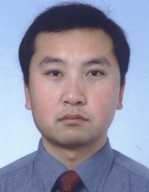 王力合作论文数清华大学机械工程系12
 Shuang Wan合作论文数12TANG Xiao-wei (汤小为)合作论文数11Ning Li (李宁)合作论文数11
 Yong Wu (武永)合作论文数清华大学外文系11Ning Zhang合作论文数10
 Wei Zhu (朱伟)合作论文数School of Mathematics and Statistics, Chongqing University of Posts and Telecommunications9Hua Li (李华)合作论文数9
 Peilin Sun合作论文数8Jian Pan (潘济安)合作论文数State Key Laboratory of Intelligent Deep Metal Mining and Equipment, School of Mechanical Engineering and Automation, Northeastern University6Yongshun Zhang合作论文数5Cunqian Feng合作论文数Air Force Engn Univ, Air & Missile Def Coll, Xian 710051, Shaanxi, Peoples R China5
 Yu Zhang合作论文数nanjing university of aeronautics and astronautics5
 Jun Li (李军)合作论文数School of Electronic Engineering, Xidian University;National Key Laboratory of Radar Signal Processing, Xidian University5Jia Xu (许稼)合作论文数Department of Electronic Engineering, Tsinghua University5
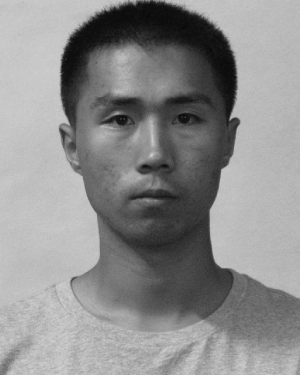 Dong Zhang合作论文数5Mingxin Zhou (周鸣昕)合作论文数4
 Qingmin Liao (廖庆敏)合作论文数Tsinghua University Shenzhen Graduate School4Junqiao Li (李君桥)合作论文数3Qin Zhu合作论文数3Mingkun Ye合作论文数3
 Xuan Yang合作论文数3
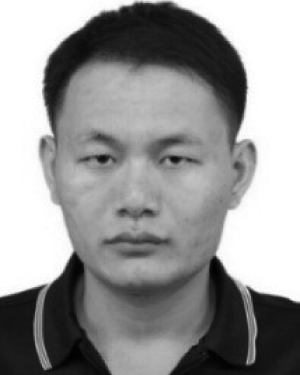 Jinwang Yi合作论文数3Jieli ZHU (朱洁丽)合作论文数3
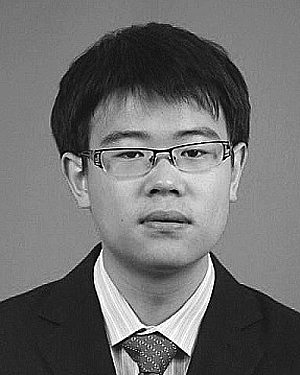 Zhikun Ma合作论文数3
 Jiangnan Yuan (袁江南)合作论文数School of Opto-electronic and Communication Engineering, Xiamen University of Technology3Junjiang Lu (陆俊江)合作论文数3
 Cheng Wang合作论文数Qilu Hospital, Shandong University3Qiuyue Yin合作论文数2Siyuan Ouyang合作论文数2Jinbo Wang合作论文数2Wen Wei合作论文数2Pengcheng Dai合作论文数2Dandan Zhang合作论文数2Wei LIU (刘巍)合作论文数2
 Xiaobo Deng合作论文数AVIC Leihua Elect Technol Res Inst, Wuxi, Jiangsu, Peoples R China2Weijie Zhang合作论文数2ZHANG Xi (张曦)合作论文数2YongQi Jing (景永奇)合作论文数2YuanKui Hu (胡元奎)合作论文数2BaoHua Sun (孙宝华)合作论文数2
 Jinsong Du合作论文数2
 Yaqi Liu合作论文数Zhengzhou University, Zhengzhou University2Jianfeng Xu合作论文数2




