A suction-controlled thermo-mechanical apparatus was developed to measure thermal conductivity of unsaturated sand at different temperatures (5 degrees C to 75 degrees C) and isotropic net normal stresses (35 to 400 kPa). Coupled effects of temperature and stress level on thermal conductivity of unsaturated sand are investigated. Increases in confining stress cause an increase in thermal conductivity of the sand and are hysteretic with loading direction. Thermal conductivity increases appreciably as stress and temperature increase at intermediate degrees of saturation (S similar to 0.3 to 0.75). Maximum thermal conductivity occurs at 75.5 degrees C and 400 kPa when S= 0.54 where the value of thermal conductivity is about twice that at 5 degrees C and 35 kPa. The results indicate that the apparatus has the capability to effectively measure thermal response of near-surface sand under ranges of naturally occurring changes in temperature, stress, and moisture content.
Soil thermal conductivity is a function of pore water saturation, temperature, and stress level. A suction-controlled thermo-mechanical (SCTM) method has been developed to measure thermal conductivity of unsaturated soils at different temperatures (5.5°C to 75.5°C), isotropic normal stresses (35 kPa to 400 kPa), and wetting conditions. The apparatus consists of three main testing systems, including temperature-control, pressure-control, and sensor and data acquisition systems. This method permits quantification of soil thermal conductivity under the influence of stress level and temperature (i.e. construction and environmental conditions). A poorly-graded sand is used to investigate the effects of temperature and stress level on thermal conductivity of unsaturated sands. The thermal conductivity increases appreciably as stress and temperature increases at intermediate saturations (S~0.3 to 0.75). Maximum thermal conductivity occurs at 75.5°C and 400 kPa when S=0.54, where the value of thermal conductivity is about twice that at 5.5°C and 35 kPa. Hysteresis in thermal conductivity with respect to wetting-drying and loading-unloading was also observed.
Thermal conductivity dry out curves (TCDCs) representing the relationship between thermal conductivity and pore water saturation have been measured for two sandy soils under elevated temperatures. Experiments were conducted using an evaporative technique in a temperature-controlled oven at temperatures up to 75 degrees C for concurrent thermal conductivity, temperature, and volumetric water content measurements. Thermal conductivity of both sands at low to intermediate saturations (S similar to 0.1-0.5) increases appreciably at elevated temperature. Maximum thermal conductivity occurs at 75 degrees C and around the point of critical saturation (S-c similar to 0.1-0.13), where thermal conductivity is about twice that at room temperature (similar to 23 degrees C). This is attributed to the influence of latent heat transfer from vapor diffusion at air-water interfaces, which have a maximum surface area within this saturation regime. A new empirical model is proposed for predicting thermal conductivity dry out curves at elevated temperatures. Modeled TCDCs show good agreement with experimental results. Performance of the model is evaluated by comparison with existing models for TCDCs at elevated temperatures.
On the basis of analyzing the cumulative mercury injection curves and SEM photos of dredged silt soildified soil samples,the fractal dimension of pore structure of dredged silt solidified soil is calculated by using the fractal theory,and the relationship between fractal dimension and microstructure parameters, macro mechanical properties and proportion of curing agents is established.The results show that the micro pore structure of dredged silt solidified soil has obvious fractal characteristics,and its fractal dimension is between 2.8-3.2.The fractal dimension of dredged silt solidified soil has a good correlation with average pore diameter,pore surface area,bearing ratio, cohesive force,internal friction angle and the content of mineral powder.With the increasing of the fractal dimension,the average pore diameter of solidified soil and the compression index decrease,and pore surface area,bearing ratio,cohesive force and internal friction angle increase.The fractal dimension increases with the increasing of mineral powder content.The fractal dimension can be used to describe quantitatively the pore structure characteristics and mechanical properties of dredged silt solidified soil.It can also provide data support for the analysis of macro and micro characteristics of dredged silt solidified soil and the establishment of the model.
采用压汞试验、渗透率试验和孔隙度试验等方法,研究疏浚淤泥固化土(DSSS)的孔隙度、微观孔隙结构特征、渗流特征及其相互关系.压汞试验结果显示,DSSS的孔隙体积频率分布曲线均为典型的双峰曲线,存在两个集中的孔喉半径区间:0.02~0.04μm和3~30μm.基于DSSS水化反应生成的致密水化产物和孔隙体积频率分布曲线,将DSSS的孔隙直径进行分组,微孔组和中孔组处于峰值区间,微孔组的最可几孔径随着初始密度和养护龄期的增加逐渐增大,中孔组的最可几孔径随着初始密度和养护龄期的增加逐渐减小.另外,孔隙度和渗透率试验结果显示,DSSS有效孔隙度随养护龄期逐渐减小主要发生在固化28 d前,28 d后DSSS有效孔隙度基本保持不变,而DSSS渗透系数仍在降低,在该阶段50%以上的中孔向小孔和微孔转化.因此,提出采用有效孔隙度作为表征DSSS的宏观孔隙特征参数,采用孔径和体积频率值作为表征微观孔隙特征参数,并采用毛细模型建立宏微观孔隙结构参数和渗透性之间的定量关系.
Experiments were conducted to compare two laboratory techniques for measuring thermal conductivity of unsaturated soils: ( 1) a modified transient plane source (MTPS) method for non-destructive measurements using a planar, interfacial heat reflectance sensor; and (2) a transient line source (TLS) method utilizing a single-probe heat source. Thermal conductivity and thermal conductivity dry out curves (TCDCs) were measured for two sands, including a poorly graded sand, and a well-graded sand with silt. The MTPS sensor resulted in larger thermal conductivity values than the TLS sensor for pore water saturations greater than 50%. At low pore water saturation, the MTPS sensor potentially underestimates thermal conductivity due to poor sensor-soil contact potentially resulting from the absence of water bridges between the sensor and soil surface.
Experiments were conducted to compare two sensing techniques for measuring thermal conductivity of unsaturated soils: (i) a modified transient plane source (MTPS) method for non-destructive measurements using a planar, interfacial heat reflectance sensor, and (ii) a transient line source (TLS-SP) method utilizing an embedded single-probe heat source. Measurement protocols for coarse-grained and fine-grained soils were developed. Thermal conductivity dry-out curves (TCDCs) were measured for five soil types, including poorly graded sand, well-graded sand with silt, silty sand, silt, and clay. The MTPS sensor consistently produced higher thermal conductivity for degrees of saturation greater than about 50 % but lower thermal conductivity for saturations less than 50 %. Saturated thermal conductivity measured using the MTPS sensor ranged from 8 % to 26 % greater than values measured using the TLS-SP sensor. Dry thermal conductivity measurements were comparable (< 5 % difference) for finegrained soils but were consistently and appreciably greater using the TLS-SP for coarse-grained soils. Mechanisms responsible for these differences include thermally induced water migration, latent heat transfer, sensor-soil contact resistance, gravity-induced water migration, and specimen heterogeneity. Secondary experiments indicated that the effects of gravity-induced water migration were insignificant within the short (< 5 min) time frame elapsed between sample preparation and measurement.
Thermal resistivity dry-out curves (TRDCs) are measured for three sandy soils representing a range of grain characteristics and size distribution. Experiments were conducted using an instrumented hanging column apparatus instrumented for automated measurement of specimen thermal resistivity, matric suction, and degree of saturation along an initial drainage path, thereby allowing both the TRDC and soil-water characteristic curve (SWCC) to be obtained concurrently. SWCC and TRDC measurements are compared with independent measurements obtained using a conventional hanging column method and a multiple-specimen method, respectively. Fine-grained sand is shown to have higher thermal resistivity than coarse-grained sand over the complete range of saturation. Results provide information that may be used to estimate thermal properties of unsaturated coarse-grained porous media in applications such as the design of buried high-voltage power cables or near-surface geothermal heat exchange loops.
Water-retention data for a suite of predominantly sandy soils were analyzed to quantify the effects of two constraints commonly applied to the three-parameter model for the soil-water characteristic curve (SWCC). Systematic effects were observed. Constraining either the symmetry parameter (m) to m=1-1/n or residual saturation (Sr) to zero resulted in values for the air-entry parameter that were approximately 25-30% different than if no constraints were applied. The m=1-1/n constraint forced the pore-size distribution parameter n to fall within a narrow range (approximate to 1.5<n<approximate to 4.0), whereas n values using independent m and n were more variable and could be as large as 35. The m=1-1/n constraint produced best-fit residual saturation values that were approximately 0.02 higher than without the constraint. These differences are significant and should be considered when adopting existing or new pedotransfer functions for estimating water-retention behavior of unsaturated soils from more easily measured properties.
Thermal resistivity dryout curves (TRDCs) are measured for twelve sandy soils representing a range of grain characteristics and grain size distribution. Experiments are conducted using three laboratory methods for comparison: (i) an instrumented hanging column apparatus for concurrent measurement of the TRDC and soil-water characteristic curve (SWCC) during drainage, (ii) a staged-drying method involving a single specimen subject to discrete drying increments in a 50°C oven, and (iii) a multiple-specimen method involving compaction of multiple specimens prepared at different water contents for independent thermal resistivity measurements. TRDCs obtained using the three methods were comparable (within ∼10 %). The instrumented hanging column method produces the most robust TRDCs, but potentially overestimates thermal resistivity at relatively high saturations. The staged-drying method may produce slightly lower resistivity due to elevated soil temperature at the time of the measurement. The multiple-specimen and staged-drying methods potentially overestimate thermal resistivity at low saturation due to contact resistance and sample disturbance resulting from probe insertion and removal. TRDCs using the multiple-specimen, staged-drying, and hanging column method were obtained in about 1 day, 10 days, and 23 days, respectively.
 William J Likos合作论文数8Qi SHEN (沈起)合作论文数2James Tinjum合作论文数2Hyunjun Oh合作论文数2
 Tengfei Wang (王腾飞)合作论文数西南交通大学土木工程学院2
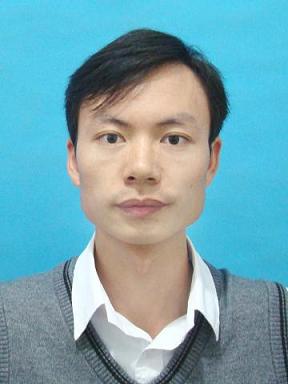 Wenhua Liu (刘文化)合作论文数School of Environment and Civil Engineering, Jiangnan University2
 Xiuli Sun (孙秀丽)合作论文数School of Environment and Civil Engineering, Jiangnan University2Song Biying (宋碧英)合作论文数1
 Tuncer B. Edil合作论文数College of Engineering, University of Wisconsin-Madison1
 Askın Ozocak合作论文数Department of Civil Engineering, Sakarya University1




