AI-generated image detectors deployed in open-world environments inevitably face distribution shifts as new and stronger generative models continue to emerge. Although existing methods improve cross-generator generalization through better representations or training data construction, they typically follow a static train-once-and-deploy paradigm and cannot adapt after deployment. In this work, we study open-set AIGC image detection from a test-time adaptation perspective. We propose Test-Time Curriculum (TTC), a simple and model-agnostic framework that adapts a detector on unlabeled test data through curriculum-based self-training. TTC starts from highly reliable pseudo-labeled samples and progressively incorporates harder yet informative cases, while enforcing class-balanced selection to reduce biased updates under generator shift. To further improve pseudo-label quality, we introduce Cross-Scale Pseudo-Label Refinement, which aggregates complementary evidence across multiple resolutions for more reliable adaptation, and applies noisy-or fusion at inference to strengthen final predictions. In addition, we construct AIGCGuard, a new benchmark containing 3,100 representative real images and 124,000 generated images from 40 of the most advanced open-source and proprietary text-to-image models. Extensive experiments on five benchmarks show that TTC substantially improves overall detection performance under diverse unseen-generator shifts, establishing a practical and effective test-time adaptation framework for open-set generated image detection.
As retrieval-augmented generation prevails in large language models, embedding models are becoming increasingly crucial. Despite the growing number of general embedding models, prior work often overlooks the critical role of training data quality. In this work, we introduce KaLM-Embedding, a general multilingual embedding model that leverages a large quantity of cleaner, more diverse, and domain-specific training data. Our model has been trained with key techniques proven to enhance performance: (1) persona-based synthetic data to create diversified examples distilled from LLMs, (2) ranking consistency filtering to remove less informative samples, and (3) semi-homogeneous task batch sampling to improve training efficacy. Departing from traditional BERT-like architectures, we adopt Qwen2-0.5B as the pre-trained model, facilitating the adaptation of auto-regressive language models for general embedding tasks. Extensive evaluations of the MTEB benchmark across multiple languages show that our model outperforms others of comparable size, setting a new standard for multilingual embedding models with <1B parameters.
Despite significant progress in safety alignment, large language models (LLMs) remain susceptible to jailbreak attacks. Existing defense mechanisms have not fully deleted harmful knowledge in LLMs, which allows such attacks to bypass safeguards and produce harmful outputs. To address this challenge, we propose a novel safety alignment strategy, Constrained Knowledge Unlearning (CKU), which focuses on two primary objectives: knowledge localization and retention, and unlearning harmful knowledge. CKU works by scoring neurons in specific multilayer perceptron (MLP) layers to identify a subset U of neurons associated with useful knowledge. During the unlearning process, CKU prunes the gradients of neurons in U to preserve valuable knowledge while effectively mitigating harmful content. Experimental results demonstrate that CKU significantly enhances model safety without compromising overall performance, offering a superior balance between safety and utility compared to existing methods. Additionally, our analysis of neuron knowledge sensitivity across various MLP layers provides valuable insights into the mechanics of safety alignment and model knowledge editing.
In fault diagnosis tasks, the scarcity of fault samples often leads to insufficient feature information, significantly limiting the improvement of diagnostic performance. Data augmentation techniques alleviate the issue of sample insufficiency by generating synthetic samples. In recent years, diffusion models have demonstrated excellent performance and stable training mechanisms in the field of data augmentation, gradually gaining application in fault diagnosis. However, existing diffusion models are generally based on the assumption of Gaussian noise and rely on small-step, multi-iteration U-shaped convolutional networks structures for reverse denoising, resulting in low sampling efficiency. To address this, this paper proposes a denoising diffusion network that integrates multimodal non-Gaussian modeling and conditional generative adversarial mechanisms. In the forward diffusion process, a large-step noise addition strategy is introduced to reduce the number of iterations, while a multimodal non-Gaussian noise distribution is constructed to enhance data representation. In the reverse generation phase, a conditional generative adversarial network is incorporated to enable efficient denoising and sampling. Experimental results on the two bearing datasets demonstrate that the proposed method outperforms existing approaches in terms of sample fidelity and diversity, and achieves higher accuracy in subsequent fault classification tasks.
The stability and reliability of bearing operation are essential for safe production. Currently, convolutional neural networks (CNNs) are widely used in bearing fault diagnosis. However, traditional convolutional kernels are structurally and parametrically limited, making it difficult to extract complex and subtle fault features. Additionally, conventional CNNs often fail to distinguish the relative importance of features, leading to missed critical information and reduced diagnostic performance. To address these challenges, this paper proposes a bearing fault diagnosis model based on a convolutional network with enhanced feature extraction capability: Kolmogorov Arnold Convolutional Squeeze-and-Excitation Network (KACSEN). The model leverages convolution kernels defined by nonlinear functions with learnable parameters to better capture intricate feature patterns. Additionally, the integrated attention mechanism dynamically reweights feature channels, enhancing the model’s sensitivity to fault features. Experiments conducted on the NEFU bearing dataset and the CWRU bearing dataset achieved accuracy rates of 99.38% and 99.27%, respectively. This study enables accurate identification of bearing faults, which holds significant importance for ensuring production safety.
Purpose The purpose of this paper is to address the multi-objective optimization problem of the interference amount between the sealing ring and the dust cover of automotive transmission shaft bearing. Design/methodology/approach An optimization design method for the interference amount of automobile transmission shaft bearings based on the generalized normal distribution optimization (GNDO) and multi-objective chimp optimization algorithm (MOChOA) is put forward. Findings The average value of the pollutant entry amount of the optimized bearings decreases by 77.78%. Originality/value The digital piecewise linear chaotic map with perturbation is used to initialize the positions of chimp individuals. GNDO is used to select the current best location. MOChOA searches for the Pareto optimal solution set. Peer review The peer review history for this article is available at: https://publons.com/publon/10.1108/ILT-02-2025-0053/
Bearings, being essential to modern industry, demand reliable cross-domain diagnostic methods. We propose a transfer learning method for bearing fault diagnosis based on a multi-channel Transformer model with shift windows. The relationship between segmented patch sequences was modeled through self-attention calculation using non-overlapping shift windows. A new partitioning strategy is employed that shifts windows and alternates between two distinct methods to create cross-window connections. To capture basic signal features while preserving positional details, several convolutional layers are introduced prior to the Transformer block. We propose a multi-channel calibration module to ensure stable optimization of the model. Additionally, we introduce a joint maximum mean discrepancy method to measure the distance between the source and target domains. Experimental results demonstrate that the proposed approach achieves superior diagnostic accuracy and offers reliable support for monitoring and predicting the state of rotating machinery.
To accurately evaluate the remaining life (RUL) of rolling bearings under small sample conditions and strong noise interference, a RUL prediction scheme using adaptive variational mode decomposition (VMD) and double-discriminator conditional CycleGAN (DD-cCycleGAN) is put forward. Combining chimp optimization algorithm (ChOA) with VMD, an adaptive VMD algorithm based on ChOA is presented, which selects effective mode components for reconstruction and reduces interference from strong background noise. A DD-cCycleGAN is developed to generate new samples which not only retain sample information of source domain, but also resemble samples of target one. A LSTM network after training is utilized to predict the bearing RUL in test samples. The performance of this scheme was validated by using the XJTU-SY bearing test dataset. The comparison analyses demonstrate this scheme has strong noise resistance and high accuracy.
With the rapid development of industrialization today, mechanical equipment has undergone significant development and progress in terms of type and quality. Rolling bearings are the key components of mechanical transmission and the most vulnerable mechanical components. Only 10% of rolling bearings can operate as designed. Exploring more scientific and reasonable test methods to predict the remaining service life of rolling bearings can not only reduce operating costs, but also prevent accidents. Life prediction models can be divided into three categories: statistical models, dynamic models, and data-driven prediction models. The existing life prediction models based on statistics, dynamics, etc. continue to increase the workload and difficulty of life prediction in the case of increasingly complex, time-consuming and labor-intensive mechanical equipment. With the rapid development of information technology, industrial process data collection has become efficient and convenient, providing sufficient data resources for data-driven intelligent life prediction technology, and gradually showing great development potential. The remaining life prediction mainly includes two key parts: the feature extraction of bearing vibration data and the construction of life prediction model. Therefore, this paper takes the rolling bearing as the research object, and carries out the remaining life prediction research from the two directions of feature extraction and prediction model construction. In the bearing operation monitoring data, the proportion of the fault data relative to the normal operation data is very small, forming a typical data imbalance phenomenon, and the traditional life prediction is not ideal when dealing with such data. In this paper, a secondary filtering method combining wavelet transform and parameter adaptive variational modal decomposition is used to preprocess the data and enhance the features; and fully consider the influence of unbalanced cluster data, a life prediction based on CycleGAN is proposed. The high amplitude information of the bearing fault signal is retained, and a large number of fault data samples are generated, which improves the accuracy of the bearing remaining life prediction. prediction model.
针对噪声环境和时变转速工况下行星齿轮故障识别率低的问题,提出一种基于堆叠消噪自动编码器(SDAE)和门控循环单元神经网络(GRUNN)的行星齿轮故障识别方法.构建基于SDAE和GRUNN的混合模型,处理前后关联的时序数据,自动地从含噪样本中提取鲁棒故障特征;将行星齿轮故障诊断的训练样本看作该混合模型的输入数据,采用Adam优化算法和dropout技术训练该混合模型,实现多参数的优化,防止过拟合现象的发生;根据训练后的混合模型,利用softmax分类器识别待诊样本中行星齿轮的状态.通过行星齿轮的故障识别实验验证该方法的有效性,实验结果表明该方法具有较强的抗噪能力和时变转速适应能力.
The DNA ploidy analysis which measures the relative content of DNA in cells by image processing has a wide range of applications in cancer diagnosis. However, the measured results of the same cell in different positions are different because of uneven illumination, which may reduce the measurement accuracy and the diagnosis performance. Many methods are proposed to compensate for uneven illumination, but they are generally aimed at image enhancement, segmentation, or recognition and therefore not suitable for cell measurement. To solve this problem, a compensation method without using white-referencing images is proposed in this paper. This method first grabs images with cells and then removes the cells after locating them on the slide by image segmentation. Next, the regions of removed cells are filled by the thin-plate spline interpolation to obtain background images. Then, two methods used for estimating illumination difference from the background images are provided. Finally, the illumination compensation is made by adding the input image and the illumination difference image. Experiments show that the methods proposed can remove uneven illumination without using white-referencing images.
针对流向图分类推理能力较弱、计算成本较高的问题,提出一种基于流向图和非朴素贝叶斯推理的滚柱轴承故障程度识别方法.提取训练样本中滚柱轴承的故障特征构建标准化流向图,用于直观地表示属性间的因果关系;采用基于征兆属性节点重要度的节点约简算法删除冗余的征兆属性节点,以降低分类推理的计算复杂度;利用基于流向图的非朴素贝叶斯推理算法识别待诊样本中滚柱轴承的状态.通过实验验证了所提方法在直观和准确识别滚柱轴承故障程度方面的有效性.
为解决小样本和噪声干扰下滚动轴承剩余寿命(RUL)预测准确率低的问题,提出一种基于信息最小二乘生成对抗网络(information least squares generative adversarial network,InfoLSGAN)和行动者-评论家(actor-critic,AC)算法的滚动轴承剩余寿命预测方法.将堆叠降噪自动编码器、信息生成对抗网络和最小二乘生成对抗网络相结合,构建InfoLSGAN,自动地从噪声数据中提取可解释的鲁棒特征,解决梯度消失问题;采用基于AC的训练算法训练InfoLSGAN,减少训练时间,加快收敛速度;根据训练后的InfoLSGAN,利用softmax分类器预测测试样本中滚动轴承的剩余寿命.通过滚动轴承加速疲劳寿命试验验证该方法的有效性.试验结果证明,当信噪比等于0时,该方法对滚动轴承测试样本的寿命预测准确率至少提高了10%.在小样本情况下,滚动轴承剩余寿命预测的平均准确率达95.84%.
Stacked autoencoder (SAE) is hard to achieve satisfactory performance, when input data are complex and non-stationary. Besides, the identification performance of recurrent neural network (RNN) may decrease rapidly under noisy environment. In order to deal with these problems, a novel hybrid deep neural network (DNN) based on stacked denoising autoencoder (SDAE) and gated recurrent unit neural network (GRUNN) is presented. First, the structure of the presented hybrid DNN is given. The hybrid DNN contains a SDAE, a GRUNN, and a softmax classifier. Then, the training algorithm based on action discovery (AD) is proposed to train the presented hybrid DNN. The experimental studies indicate the presented hybrid DNN processes strong anti-noise ability and adaptability to time-varying signals.
Due to the advantages of high running accuracy, small space requirement and large transmission efficiency, planetary gearboxes have been extensive used in industry. The vibration signal obtained by the vibration acceleration sensor is unstable at high temperature and severe environment. To solve this problem, a fault diagnosis method of planetary gears using CNN and transfer learning is suggested in this paperto transfer fault recognition knowledge of planetary gears. First, source domain datas are used as input to the network in order to obtain training parameters. The training parameters are used as the starting parameters of the target domain. Domain adaptation is used to narrow the domain difference of feature migration. After model training, this method uses softmax classifier to identify states of planetary gear among target domain data. The effectiveness of this method is verified by the results of fault diagnosis experiments.
In order to extract reliable decision rules from an incomplete information system (IIS) that simultaneously contains two kinds of unknown attribute values, an attribute reduction algorithm using characteristic multigranulation model is put forward in this paper. First, characteristic sets that satisfy characteristic relation are determined according to the IIS and the attribute subset. Calculate the attribute dependency of the decision classes with respect to the attribute subset. Then, determine whether all condition attribute values are indispensable respectively in terms of the attribute dependencies. Finally, delete all the redundant condition attribute values, and generate decision rules. So as to validate the effectiveness of the proposed algorithm, two numerical experiments were carried out. The experimental analysis indicates the proposed algorithm is more efficient and accurate.
There are many uncertain factors that may result in incomplete diagnostic information of planetary gearboxes, such as sensor malfunctions, communication lags, and data discretization, etc. Therefore, incomplete diagnostic information of planetary gearboxes may simultaneously contain two categories of unknown attribute values. However, existing fault diagnosis methods of planetary gearboxes are hard to realize fault diagnosis using incomplete diagnostic information that simultaneously contains two categories of unknown attribute values. To overcome this issue, a fault diagnosis method of planetary gearboxes based on data-driven valued characteristic multigranulation model with incomplete diagnostic information is proposed. First, a calculation method of characteristic similarity degrees among cases is introduced, and a data-driven valued characteristic relation is defined. The data-driven valued characteristic relation is used to analyze and process incomplete diagnostic information that simultaneously contains two categories of unknown attribute values. Then, a data-driven valued characteristic multigranulation model is defined according to multigranulation model. An attribute reduction algorithm based on pessimistic data-driven valued characteristic multigranulation model is employed to extract fault diagnosis decision rules. Finally, naive Bayesian classifier is constructed to identify planetary gearbox conditions. The effectiveness of this method is validated and the advantages are investigated using a fault diagnosis experiment of planetary gearbox. Experimental results demonstrate that this method can accurately determine indiscernibility relation among cases, reduce computational complexity, and enhance fault diagnosis accuracy.
In order to reduce computational complexity and increase accuracy, a new diagnosis method of planetary gearbox using wavelet packet transform (WPT) and flexible naive Bayesian classifier (FNBC) is presented. In the method, WPT is used to extract fault features of planetary gearbox. After discretization, these features are regarded as the input of FNBC to identify the planetary gearbox conditions. So as to demonstrate the effectiveness of the presented method, a fault diagnosis experiment of planetary gearbox was conducted. The experimental studies indicate the presented method can acquire reliable diagnosis results.
In order to improve the intuition, efficiency, and accuracy of fault diagnosis of gear box, a novel fault diagnosis method based on flow graphs and normal naive Bayesian classifier is proposed in this paper. In the proposed method, flow graphs are utilized to represent the relationship between fault symptoms and gear conditions. The algorithm of layer reduction is employed to eliminate the redundant and irrelevant attribute layers to obtain the minimal flow graph for reducing the number of input nodes in normal naive Bayesian classifier. The normal naive Bayesian classifier is constructed according to the minimal flow graph to obtain classification results. To verify the proposed method, an experiment is carried out to apply this method to a gear box rig. The experiment results demonstrate that the proposed method combining the advantages of flow graphs and normal naive Bayesian classifier provides a new way to design high-performance models for fault diagnosis of gear box.
It is difficult to discover gearbox diagnosis knowledge while diagnosis information is incomplete. To overcome this problem, a novel knowledge discovery method for gearbox fault diagnosis using flow graph (FG) is presented. In this method, FG is constructed in terms of incomplete fault decision table. The relationship among fault attributes can be represented in a graphical manner. Assignment reduction algorithm is used to remove irrelevant and redundant nodes. Therefore, FG after reduction is acquired according to the minimal reducts. To validate the performance of this method, a gearbox fault diagnosis experiment was performed. The experimental studies indicate the proposed method can be utilized to directly discover gearbox diagnosis knowledge from incomplete information in a graphical and intuitive manner.
 Wentao Huang (黄文涛)合作论文数School of Mechatronics Engineering, Harbin Institute of Technology3
 Guangbin Yu (于广滨)合作论文数School of Mechatronics Engineering, Harbin Institute of Technology3
 Xuezeng Zhao (赵学增)合作论文数School of Mechatronics Engineering, Harbin Institute of Technology3
 Jiangen Tang合作论文数2
 Tianyang Wang (王天杨)合作论文数Department of Mechanical Engineering, Tsinghua University2
 Ke Liu合作论文数2Liwei Deng (邓立为)合作论文数2
 Yongjun He (贺拥军)合作论文数College of Civil Engineering, Hunan University2Yingyong Zou (邹英永)合作论文数2Saleh Alharbi合作论文数1Fangming Liu合作论文数1Yuxin Jin合作论文数1Zesheng Shi合作论文数Harbin Institute of Technology1Xinping Zhao合作论文数1Joo-Ho Choi合作论文数1Zetian Sun合作论文数1Jing Zhao合作论文数1
 Yu Li (李渝)合作论文数College of Integrated Circuits, Zhejiang University1Xinshuo Hu合作论文数1shaodan zhi合作论文数1Guannan Wang合作论文数1Xianjiang Shi合作论文数1Hui-li SHAO (邵慧丽)合作论文数1Yu Lu合作论文数1
 Cheng Shi合作论文数1Shide Xiao合作论文数1Lian-lian GAO (高莲莲)合作论文数1
 Yucheng Zhou (周宇成)合作论文数State Key Laboratory of Internet of Things for Smart City, University of Macau;Tencent1MingYou Bai (白明友)合作论文数1Bo Ding (丁博)合作论文数1ZhenYu Guo (郭振宇)合作论文数1
 Jingui Lu (陆金桂)合作论文数School of Mechanical and Power Engineering, Faculty of Mechanical Control, Nanjing Tech University1
 Haofen Wang (王昊奋)合作论文数College of Design and Innovation, Tongji University1Xiaojun Lu合作论文数1
 Baotian Hu (户保田)合作论文数School of Computer Science and Technology, Harbin Institute of Technology, Shenzhen1
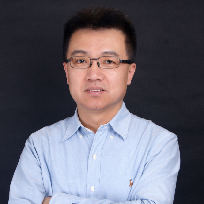 Min Zhang (张民)合作论文数School of Computer Science and Technology, Harbin Institute of Technology, Shenzhen1
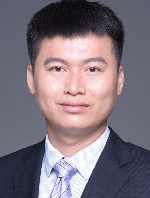 Daojing He (何道敬)合作论文数School of Computer Science and Technology, Faculty of Computing, Harbin Institute of Technology, Shenzhen1
 Jing Li (李晶)合作论文数School of Computer Science snd Technology, Harbin Institute of Technology (Shenzhen)1
 Dongfang Li (李东方)合作论文数Harbin Institute of Technology (Shenzhen)1
 Haikuo Shen (沈海阔)合作论文数School of Mechanical,Electronic and Control Engineering, Beijing Jiaotong University1
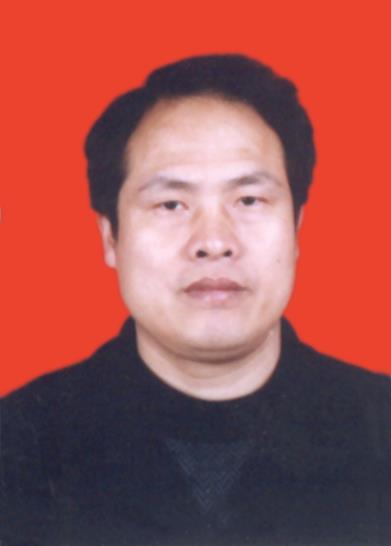 Sier Deng (邓四二)合作论文数School of Mechatronics Engineering,Henan University of Science and Technology1
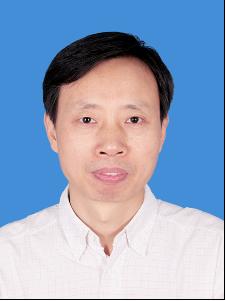 Xindu Chen (陈新度)合作论文数School of Electromechanical, Engineering, Guangdong University of Technology1Chen Qian (钱忱)合作论文数1Ji Zhou (周济)合作论文数1Lifei Liu (刘立飞)合作论文数1
 Lejun Zhang (张乐君)合作论文数College of Information Engineering, Yangzhou Univrsity1
 Zifei Shan合作论文数Peking University1




