Despite the emergence of diffusion large language models (D-LLMs) as an alternative to autoregressive large language models (AR-LLMs), safety monitoring for D-LLMs remains largely unexplored. Unlike AR-LLMs, D-LLMs generate text through a multi-step denoising process, exposing intermediate hidden representations that may contain safety-relevant information unavailable in standard single-step monitoring setups. Motivated by the suitability of lightweight probes for always-on monitoring, we analyze which trajectory-level signals best indicate when such probes are likely to struggle. We find that the most informative signal is safety hesitation: intermediate hidden states repeatedly falling within a small margin of the probe's decision boundary. The number of such hesitation steps in D-LLM's trajectory predicts probe failure effectively, providing a proxy of sample difficulty. Building on this analysis, we propose D^2-Monitor, a bi-level safety monitor for D-LLMs. D^2-Monitor adopts a lightweight probe as an always-on monitor to jointly estimate hesitation and perform base classification. When the hesitation level exceeds a threshold, a more expressive but computationally heavier probe is activated. This dynamic routing mechanism allocates monitoring resources efficiently at test time. Evaluated on 3 datasets (WildguardMix, ToxicChat, OpenAI-Moderation) across 4 D-LLMs, D^2-Monitor achieves state-of-the-art performance with a compact parameter footprint (≤ 0.85M parameters), and exhibits the best trade-off between effectiveness and efficiency relative to 8 baselines.
Retrieval-Augmented Generation (RAG) based on knowledge graphs (KGs) enhances large language models (LLMs) by providing structured and interpretable external knowledge. However, existing KG-based RAG methods struggle to retrieve accurate and diverse information from text-rich KGs for complex real-world queries. Process Reward Models (PRMs) offer a way to align the retrieval process of KG-based RAG with query-specific knowledge requirements, but they heavily rely on process-level supervision signals that are expensive and hard to obtain on KGs. To address this challenge, we propose GraphFlow, a framework that efficiently retrieves accurate and diverse knowledge required for real-world queries from text-rich KGs. GraphFlow employs a transition-based flow matching objective to jointly optimize a retrieval policy and a flow estimator. The flow estimator factorizes the reward of the retrieval outcome into the intermediate retrieval states. Such reward factorization guides the retrieval policy to retrieve candidates from KGs in proportion to their reward. This allows GraphFlow to explore high-quality regions of KGs that yield diverse and relevant results. We evaluate GraphFlow on the STaRK benchmark, which includes real-world queries from multiple domains over text-rich KGs. GraphFlow outperforms strong KG-RAG baselines, including GPT-4o, by 10\% on average in hit rate and recall. It also shows strong generalization to unseen KGs, demonstrating its effectiveness and robustness.
Large Language Models (LLMs) have achieved remarkable success in reasoning tasks with the development of prompting methods. However, existing prompting approaches cannot reuse insights of solving similar problems and suffer from accumulated errors in multi-step reasoning, since they prompt LLMs to reason \textit{from scratch}. To address these issues, we propose \textbf{\textit{Thought Propagation} (TP)}, which explores the analogous problems and leverages their solutions to enhance the complex reasoning ability of LLMs. These analogous problems are related to the input one, with reusable solutions and problem-solving strategies. Thus, it is promising to propagate insights of solving previous analogous problems to inspire new problem-solving. To achieve this, TP first prompts LLMs to propose and solve a set of analogous problems that are related to the input one. Then, TP reuses the results of analogous problems to directly yield a new solution or derive a knowledge-intensive plan for execution to amend the initial solution obtained from scratch. TP is compatible with existing prompting approaches, allowing plug-and-play generalization and enhancement in a wide range of tasks without much labor in task-specific prompt engineering. Experiments across three challenging tasks demonstrate TP enjoys a substantial improvement over the baselines by an average of 12\% absolute increase in finding the optimal solutions in Shortest-path Reasoning, 13\% improvement of human preference in Creative Writing, and 15\% enhancement in the task completion rate of LLM-Agent Planning.
The emergence of Graph Convolutional Network (GCN) has greatly boosted the progress of graph learning. However, two disturbing factors, noise and redundancy in graph data, and lack of interpretation for prediction results, impede further development of GCN. One solution is to recognize a predictive yet compressed subgraph to get rid of the noise and redundancy and obtain the interpretable part of the graph. This setting of subgraph is similar to the information bottleneck (IB) principle, which is less studied on graph-structured data and GCN. Inspired by the IB principle, we propose a novel subgraph information bottleneck (SIB) framework to recognize such subgraphs, named IB-subgraph. However, the intractability of mutual information and the discrete nature of graph data makes the objective of SIB notoriously hard to optimize. To this end, we introduce a bilevel optimization scheme coupled with a mutual information estimator for irregular graphs. Moreover, we propose a continuous relaxation for subgraph selection with a connectivity loss for stabilization. We further theoretically prove the error bound of our estimation scheme for mutual information and the noise-invariant nature of IB-subgraph. Extensive experiments on graph learning and large-scale point cloud tasks demonstrate the superior property of IB-subgraph.
Graph Neural Networks (GNNs) achieve state-of-the-art performance in various graph-related tasks. However, the black-box nature often limits their interpretability and trustworthiness. Numerous explainability methods have been proposed to uncover the decision-making logic of GNNs, by generating underlying explanatory substructures. In this paper, we conduct a comprehensive review of the existing explanation methods for GNNs from the perspective of graph generation. Specifically, we propose a unified optimization objective for generative explanation methods, comprising two sub-objectives: Attribution and Information constraints. We further demonstrate their specific manifestations in various generative model architectures and different explanation scenarios. With the unified objective of the explanation problem, we reveal the shared characteristics and distinctions among current methods, laying the foundation for future methodological advancements. Empirical results demonstrate the advantages and limitations of different explainability approaches in terms of explanation performance, efficiency, and generalizability.
Generative Adversarial Networks (GANs) typically suffer from overfitting when limited training data is available. To facilitate GAN training, current methods propose to use data-specific augmentation techniques. Despite the effectiveness, it is difficult for these methods to scale to practical applications. In this article, we present ScoreMix, a novel and scalable data augmentation approach for various image synthesis tasks. We first produce augmented samples using the convex combinations of the real samples. Then, we optimize the augmented samples by minimizing the norms of the data scores, i.e., the gradients of the log-density functions. This procedure enforces the augmented samples close to the data manifold. To estimate the scores, we train a deep estimation network with multi-scale score matching. For different image synthesis tasks, we train the score estimation network using different data. We do not require the tuning of the hyperparameters or modifications to the network architecture. The ScoreMix method effectively increases the diversity of data and reduces the overfitting problem. Moreover, it can be easily incorporated into existing GAN models with minor modifications. Experimental results on numerous tasks demonstrate that GAN models equipped with the ScoreMix method achieve significant improvements.
The growth in social media has exacerbated the threat of fake news to individuals and communities. This draws increasing attention to developing efficient and timely rumor detection methods. The prevailing approaches resort to graph neural networks (GNNs) to exploit the post-propagation patterns of the rumor-spreading process. However, these methods lack inherent interpretation of rumor detection due to the black-box nature of GNNs. Moreover, these methods suffer from less robust results as they employ all the propagation patterns for rumor detection. In this paper, we address the above issues with the proposed Diverse Counterfactual Evidence framework for Rumor Detection (DCE-RD). Our intuition is to exploit the diverse counterfactual evidence of an event graph to serve as multi-view interpretations, which are further aggregated for robust rumor detection results. Specifically, our method first designs a subgraph generation strategy to efficiently generate different subgraphs of the event graph. We constrain the removal of these subgraphs to cause the change in rumor detection results. Thus, these subgraphs naturally serve as counterfactual evidence for rumor detection. To achieve multi-view interpretation, we design a diversity loss inspired by Determinantal Point Processes (DPP) to encourage diversity among the counterfactual evidence. A GNN-based rumor detection model further aggregates the diverse counterfactual evidence discovered by the proposed DCE-RD to achieve interpretable and robust rumor detection results. Extensive experiments on two real-world datasets show the superior performance of our method. Our code is available at https://github.com/Vicinity111/DCE-RD.
Out-of-distribution (OOD) generalization is an important issue for Graph Neural Networks (GNNs). Recent works employ different graph editions to generate augmented environments and learn an invariant GNN for generalization. However, the label shift usually occurs in augmentation since graph structural edition inevitably alters the graph label. This brings inconsistent predictive relationships among augmented environments, which is harmful to generalization. To address this issue, we propose LiSA, which generates label-invariant augmentations to facilitate graph OOD generalization. Instead of resorting to graph editions, LiSA exploits Label-invariant Subgraphs of the training graphs to construct Augmented environments. Specifically, LiSA first designs the variational subgraph generators to extract locally predictive patterns and construct multiple label-invariant subgraphs efficiently. Then, the subgraphs produced by different generators are collected to build different augmented environments. To promote diversity among augmented environments, LiSA further introduces a tractable energy-based regularization to enlarge pair-wise distances between the distributions of environments. In this manner, LiSA generates diverse augmented environments with a consistent predictive relationship and facilitates learning an invariant GNN. Extensive experiments on node-level and graph-level OOD benchmarks show that LiSA achieves impressive generalization performance with different GNN backbones. Code is available on https://github.com/Samyu0304/LiSA.
This paper focuses on out-of-distribution generalization on graphs where performance drops due to the unseen distribution shift. Previous graph domain generalization works always resort to learning an invariant predictor among different source domains. However, they assume sufficient source domains are available during training, posing huge challenges for realistic applications. By contrast, we propose a new graph domain generalization framework, dubbed as DPS, by constructing multiple populations from the source domains. Specifically, DPS aims to discover multiple \textbf{D}iverse and \textbf{P}redictable \textbf{S}ubgraphs with a set of generators, namely, subgraphs are different from each other but all the them share the same semantics with the input graph. These generated source domains are exploited to learn an \textit{equi-predictive} graph neural network (GNN) across domains, which is expected to generalize well to unseen target domains. Generally, DPS is model-agnostic that can be incorporated with various GNN backbones. Extensive experiments on both node-level and graph-level benchmarks shows that the proposed DPS achieves impressive performance for various graph domain generalization tasks.
Deep graph learning (DGL) has achieved remarkable progress in both business and scientific areas ranging from finance and e-commerce, to drug and advanced material discovery. Despite the progress, how to ensure various DGL algorithms behave in a socially responsible manner and meet regulatory compliance requirements becomes an emerging problem, especially in risk-sensitive domains. Trustworthy graph learning (TwGL) aims to solve the above problems from a technical viewpoint. In contrast to conventional graph learning which mainly cares about model performance, TwGL considers various reliability and safety aspects of DGL, including but not limited to adversarial robustness, explainability, and privacy protection. Whilst several previous tutorials have been made for the introduction of DGL in KDD, seldom is there a special focus on its safety aspects, including reliability, explainability, and privacy protection capability. This tutorial mainly covers the key achievements of trustworthy graph learning in recent years. Specifically, we will discuss three essential topics, that is, the reliability of DGL against inherent noise, distribution shift and adversarial attack, explainability methods, and privacy protection for DGL. Meanwhile, we will introduce some guidelines for applying DGL to risk-sensitive applications (e.g., AI drug discovery) to ensure GNN models behave in a trustworthy way. We hope our tutorial can offer a comprehensive review of recent advances in this area and also provide some useful suggestions to guide the developers to choose appropriate techniques for their applications.
Deep graph learning has achieved remarkable progresses in both business and scientific areas ranging from finance and e-commerce, to drug and advanced material discovery. Despite these progresses, how to ensure various deep graph learning algorithms behave in a socially responsible manner and meet regulatory compliance requirements becomes an emerging problem, especially in risk-sensitive domains. Trustworthy graph learning (TwGL) aims to solve the above problems from a technical viewpoint. In contrast to conventional graph learning research which mainly cares about model performance, TwGL considers various reliability and safety aspects of the graph learning framework including but not limited to robustness, explainability, and privacy. In this survey, we provide a comprehensive review of recent leading approaches in the TwGL field from three dimensions, namely, reliability, explainability, and privacy protection. We give a general categorization for existing work and review typical work for each category. To give further insights for TwGL research, we provide a unified view to inspect previous works and build the connection between them. We also point out some important open problems remaining to be solved in the future developments of TwGL.
Deep graph learning (DGL) has achieved remarkable progress in both business and scientific areas ranging from finance and e-commerce, to drug and advanced material discovery. Despite the progress, how to ensure various DGL algorithms behave in a socially responsible manner and meet regulatory compliance requirements becomes an emerging problem, especially in risk-sensitive domains. Trustworthy graph learning (TwGL) aims to solve the above problems from a technical viewpoint. In contrast to conventional graph learning which mainly cares about model performance, TwGL considers various reliability and safety aspects of DGL, including but not limited to adversarial robustness, explainability, and privacy protection. Whilst several previous tutorials have been made for the introduction of DGL in KDD, seldom is there a special focus on its safety aspects, including reliability, explainability, and privacy protection capability. This tutorial mainly covers the key achievements of trustworthy graph learning in recent years. Specifically, we will discuss three essential topics, that is, the reliability of DGL against inherent noise, distribution shift and adversarial attack, explainability methods, and privacy protection for DGL. Meanwhile, we will introduce some guidelines for applying DGL to risk-sensitive applications (e.g., AI drug discovery) to ensure GNN models behave in a trustworthy way. We hope our tutorial can offer a comprehensive review of recent advances in this area and also provide some useful suggestions to guide the developers to choose appropriate techniques for their applications.
Subgraph recognition aims at discovering a compressed substructure of a graph that is most informative to the graph property. It can be formulated by optimizing Graph Information Bottleneck (GIB) with a mutual information estimator. However, GIB suffers from training instability and degenerated results due to its intrinsic optimization process. To tackle these issues, we reformulate the subgraph recognition problem into two steps: graph perturbation and subgraph selection, leading to a novel Variational Graph Information Bottleneck (VGIB) framework. VGIB first employs the noise injection to modulate the information flow from the input graph to the perturbed graph. Then, the perturbed graph is encouraged to be informative to the graph property. VGIB further obtains the desired subgraph by filtering out the noise in the perturbed graph. With the customized noise prior for each input, the VGIB objective is endowed with a tractable variational upper bound, leading to a superior empirical performance as well as theoretical properties. Extensive experiments on graph interpretation, explainability of Graph Neural Networks, and graph classification show that VGIB finds better subgraphs than existing methods 1 1 Code is avaliable on https://github.com/Samyu0304/VGIB.
The goal of molecule optimization is to optimize molecular properties by modifying molecule structures. Conditional generative models provide a promising way to transfer the input molecules to the ones with better property. However, molecular properties are highly sensitive to small changes in molecular struc-tures. This leads to an interesting thought that we can improve the property of molecules with lim-ited modification in structure. In this paper, we propose a structure-aware conditional Variational Auto-Encoder, namely SCVAE, which exploits the topology of molecules as structure condition and optimizes the molecular properties with constrained structural modification. SCVAE leverages graph alignment of two-level molecule structures in an unsupervised manner to bind the structure conditions between two molecules. Then, this structure condition facilitates the molecule optimization with limited struc-tural modification, namely, constrained molecule optimization, under a novel variational auto-encoder framework. Extensive experimental evaluations demonstrate that structure-aware CVAE generates new molecules with high similarity to the original ones and better molecular properties. (c) 2022 Elsevier Ltd. All rights reserved.
Given the input graph and its label/property, several key problems of graph learning, such as finding interpretable subgraphs, graph denoising and graph compression, can be attributed to the fundamental problem of recognizing a subgraph of the original one. This subgraph shall be as informative as possible, yet contains less redundant and noisy structure. This problem setting is closely related to the well-known information bottleneck (IB) principle, which, however, has less been studied for the irregular graph data and graph neural networks (GNNs). In this paper, we propose a framework of Graph Information Bottleneck (GIB) for the subgraph recognition problem in deep graph learning. Under this framework, one can recognize the maximally informative yet compressive subgraph, named IB-subgraph. However, the GIB objective is notoriously hard to optimize, mostly due to the intractability of the mutual information of irregular graph data and the unstable optimization process. In order to tackle these challenges, we propose: i) a GIB objective based-on a mutual information estimator for the irregular graph data; ii) a bi-level optimization scheme to maximize the GIB objective; iii) a connectivity loss to stabilize the optimization process. We evaluate the properties of the IB-subgraph in three application scenarios: improvement of graph classification, graph interpretation and graph denoising. Extensive experiments demonstrate that the information-theoretic IB-subgraph enjoys superior graph properties.
As Graph Neural Networks (GNNs) are widely adopted in digital pathology, there is increasing attention to developing explanation models (explainers) of GNNs for improved transparency in clinical decisions. Existing explainers discover an explanatory subgraph relevant to the prediction. However, such a subgraph is insufficient to reveal all the critical biological substructures for the prediction because the prediction will remain unchanged after removing that subgraph. Hence, an explanatory subgraph should be not only necessary for prediction, but also sufficient to uncover the most predictive regions for the explanation. Such explanation requires a measurement of information transferred from different input subgraphs to the predictive output, which we define as information flow. In this work, we address these key challenges and propose IFEXPLAINER, which generates a necessary and sufficient explanation for GNNs. To evaluate the information flow within GNN's prediction, we first propose a novel notion of predictiveness, named $f$-information, which is directional and incorporates the realistic capacity of the GNN model. Based on it, IFEXPLAINER generates the explanatory subgraph with maximal information flow to the prediction. Meanwhile, it minimizes the information flow from the input to the predictive result after removing the explanation. Thus, the produced explanation is necessarily important to the prediction and sufficient to reveal the most crucial substructures. We evaluate IFEXPLAINER to interpret GNN's predictions on breast cancer subtyping. Experimental results on the BRACS dataset show the superior performance of the proposed method.
Face verification aims at determining whether a pair of face images belongs to the same identity. Recent studies have revealed the negative impact of facial makeup on the verification performance. With the rapid development of deep generative models, this paper proposes a semanticaware makeup cleanser (SAMC) to remove facial makeup under different poses and expressions and achieve verification via generation. The intuition lies in the fact that makeup is a combined effect of multiple cosmetics and tailored treatments should be imposed on different cosmetic regions. To this end, we present both unsupervised and supervised semantic-aware learning strategies in SAMC. At image level, an unsupervised attention module is jointly learned with the generator to locate cosmetic regions and estimate the degree. At feature level, we resort to the effort of face parsing merely in training phase and design a localized texture loss to serve complements and pursue superior synthetic quality. The experimental results on four makeuprelated datasets verify that SAMC not only produces appealing de-makeup outputs at a resolution of 256*256, but also facilitates makeup-invariant face verification through image generation.
Face verification aims at determining whether a pair of face images belongs to the same identity. Recent studies have revealed the negative impact of facial makeup on the verification performance. With the rapid development of deep generative models, this paper proposes a semantic-aware makeup cleanser (SAMC) to remove facial makeup under different poses and expressions and achieve verification via generation. The intuition lies in the fact that makeup is a combined effect of multiple cosmetics and tailored treatments should be imposed on different cosmetic regions. To this end, we present both unsupervised and supervised semantic-aware learning strategies in SAMC. At image level, an unsupervised attention module is jointly learned with the generator to locate cosmetic regions and estimate the degree. At feature level, we resort to the effort of face parsing merely in training phase and design a localized texture loss to serve complements and pursue superior synthetic quality. The experimental results on four makeup-related datasets verify that SAMC not only produces appealing de-makeup outputs at a resolution of 256 × 256, but also facilitates makeup-invariant face verification through image generation.
To narrow the inherent sensing gap in heterogeneous face recognition (HFR), recent methods have resorted to generative models and explored the ?recognition via generation? framework. Even though, it remains a very challenging task to synthesize photo-realistic visible faces (VIS) from near-infrared (NIR) images especially when paired training data are unavailable. We present an approach to avert the data misalignment problem and faithfully preserve pose, expression and identity information during cross-spectral face hallucination. At the pixel level, we introduce an unsupervised attention mechanism to warping that is jointly learned with the generator to derive pixel-wise correspondence from unaligned data. At the image level, an auxiliary generator is employed to facilitate the learning of mapping from NIR to VIS domain. At the domain level, we first apply the mutual information constraint to explicitly measure the correlation between domains and thus benefit synthesis. Extensive experiments on three heterogeneous face datasets demonstrate that our approach not only outperforms current state-of-the-art HFR methods but also produce visually appealing results at a high resolution.
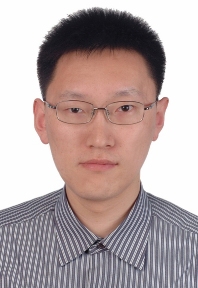 Ran He (赫然)合作论文数National Laboratory of Pattern Recognition, Institute of Automation, Chinese Academy of Sciences;Center for Research on Intelligent Perception and Computing, Institute of Automation, Chinese Academy of Sciences;University of Chinese Academy of Sciences13
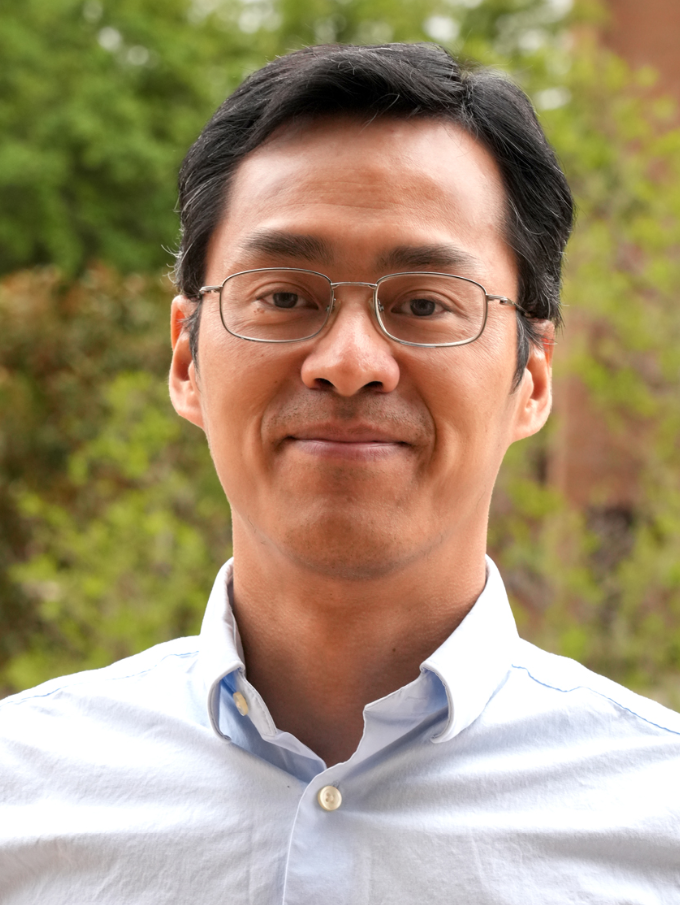 Junzhou Huang合作论文数Scalable Modeling & Imaging & Learning Lab, Department of Computer Science and Engineering, University of Texas at Arlington6
 Tingyang Xu合作论文数Machine Learning Center, Tencent AI Lab5
 Yatao Bian (卞亚涛)合作论文数Tencent AI Lab5
 Yu Rong合作论文数Tencent4
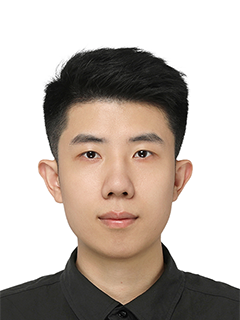 Jintang Li (李金膛)合作论文数Institute of Artificial Intelligence, Xiamen University3
 Bingzhe Wu (吴秉哲)合作论文数School of Artificial Intelligence, Shenzhen University3
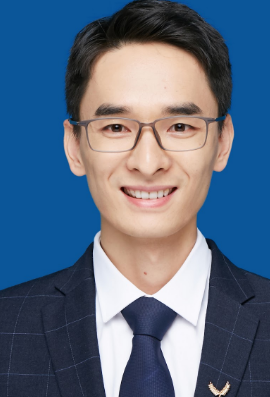 Chaochao Chen (陈超超)合作论文数College of Computer Science and Technology, Zhejiang University3
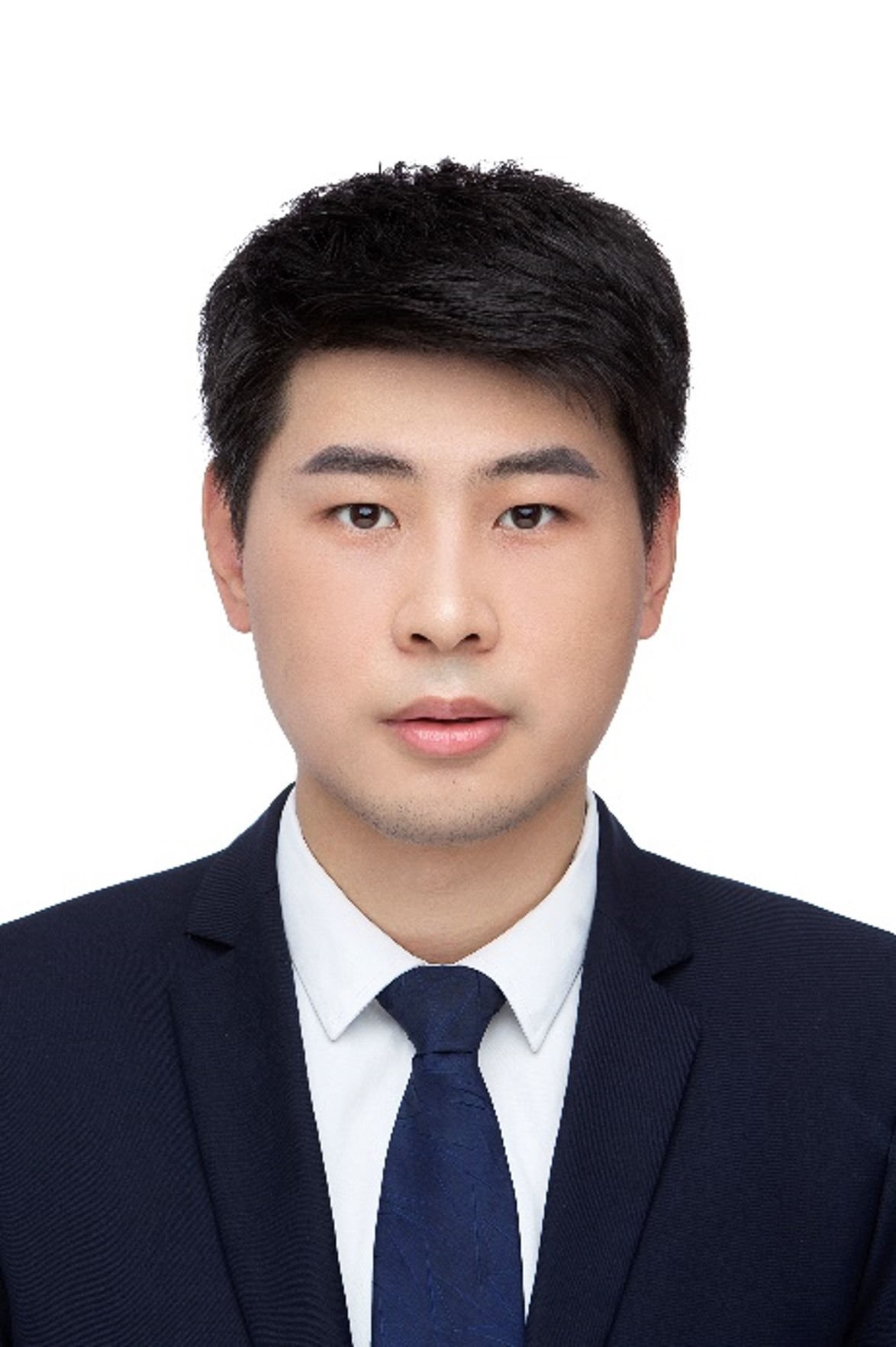 Jian Liang (梁坚)合作论文数State Key Laboratory of Multimodal Artificial Intelligence Systems, Institute of Automation, Chinese Academy of Sciences;National Laboratory of Pattern Recognition, Institute of Automation, Chinese Academy of Sciences;School of Artificial Intelligence, University of Chinese Academy of Sciences3
 Liang Chen (陈亮)合作论文数School of Computer Science and Engineering, Sun Yat-Sen University3
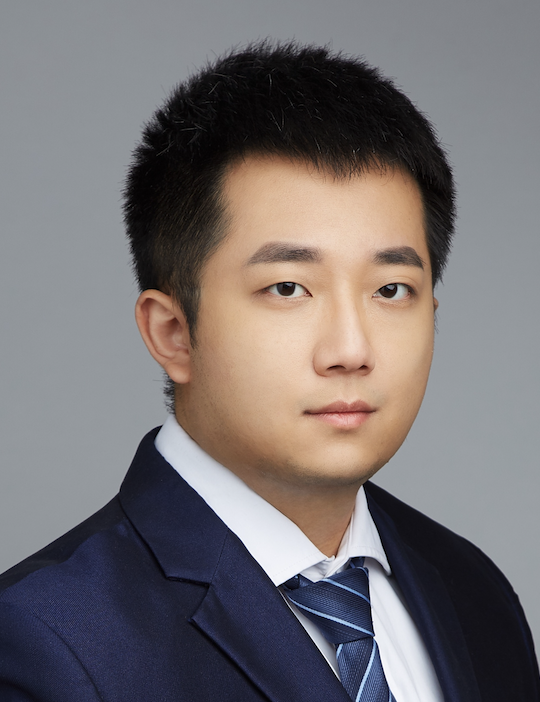 Jie Cao (曹杰)合作论文数State Key Laboratory of Multimodal Artificial Intelligence Systems, Institute of Automation, Chinese Academy of Sciences2
 Yi Li合作论文数Institute of Metal Research, Chinese Academy of Sciences2
 Rex (Zhitao) Ying (应智韬)合作论文数Department of Computer Science, School of Engineering & Applied Science, Yale University2
 Philip H. S. Torr合作论文数Department of Engineering Science, University of Oxford;St Catherine's College, University of Oxford;Orphic2
 Tieniu Tan (谭铁牛)合作论文数New Laboratory of Pattern Recognition, Institute of Automation, Chinese Academy of Sciences;University of Chinese Academy of Sciences;Nanjing University2
 Baoyuan Wu (吴保元)合作论文数School of Data Science, The Chinese University of Hong Kong, Shenzhen2
 Yujie Liu合作论文数1
 Jialin Chen合作论文数Yale University1
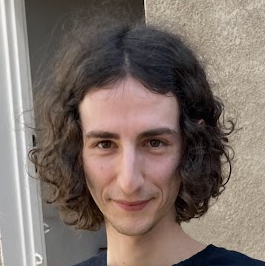 James Oldfield合作论文数University of Oxford1
 Kaiwei Zhang (张凯薇)合作论文数Institute of Information Engineering, Chinese Academy of Sciences;School of Cyber Security, University of Chinese Academy of Sciences1
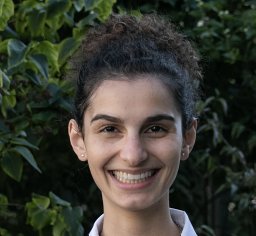 Kenza Amara合作论文数1
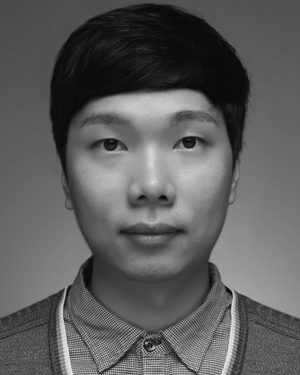 Chengbin Hou合作论文数School of Computer Science, University of Birmingham1
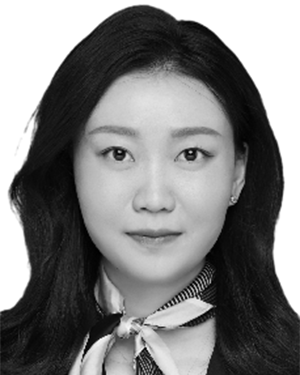 Mandi Luo合作论文数Univ Chinese Acad Sci, Sch Artificial Intelligence, Beijing 101408, Peoples R China1
 Haichao Shi (石海超)合作论文数Institute of Information Engineering, Chinese Academy of Sciences, 19 Shucun Road, Haidian District, Beijing 100085, China1Xiaofei Jia合作论文数1
 Adel Bibi合作论文数Department of Engineering Science, University of Oxford;Kellogg College, University of Oxford;DESAISIV1
 Wei Li (李祎)合作论文数School of Future Technology, Dalian University of Technology1
 Dongzhan Zhou合作论文数Shanghai Artificial Intelligence Laboratory1
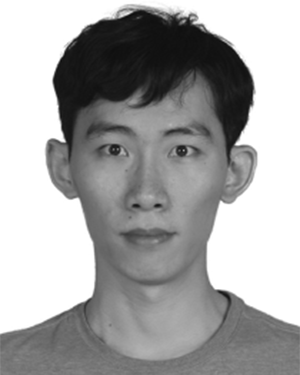 Hengtong Zhang (张恒通)合作论文数Tencent AI Lab1
 Huaibo Huang (黄怀波)合作论文数Institute of Automation, Chinese Academy of Sciences1
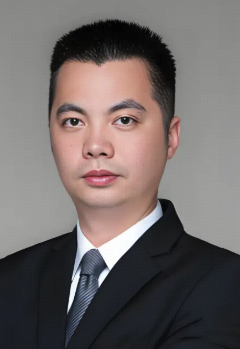 Zibin Zheng (郑子彬)合作论文数School of Software Engineering, Sun Yat-Sen University1
 Peng Cui (崔鹏)合作论文数Lab of Media and Network, Department of Computer Science and Technology, Tsinghua University1
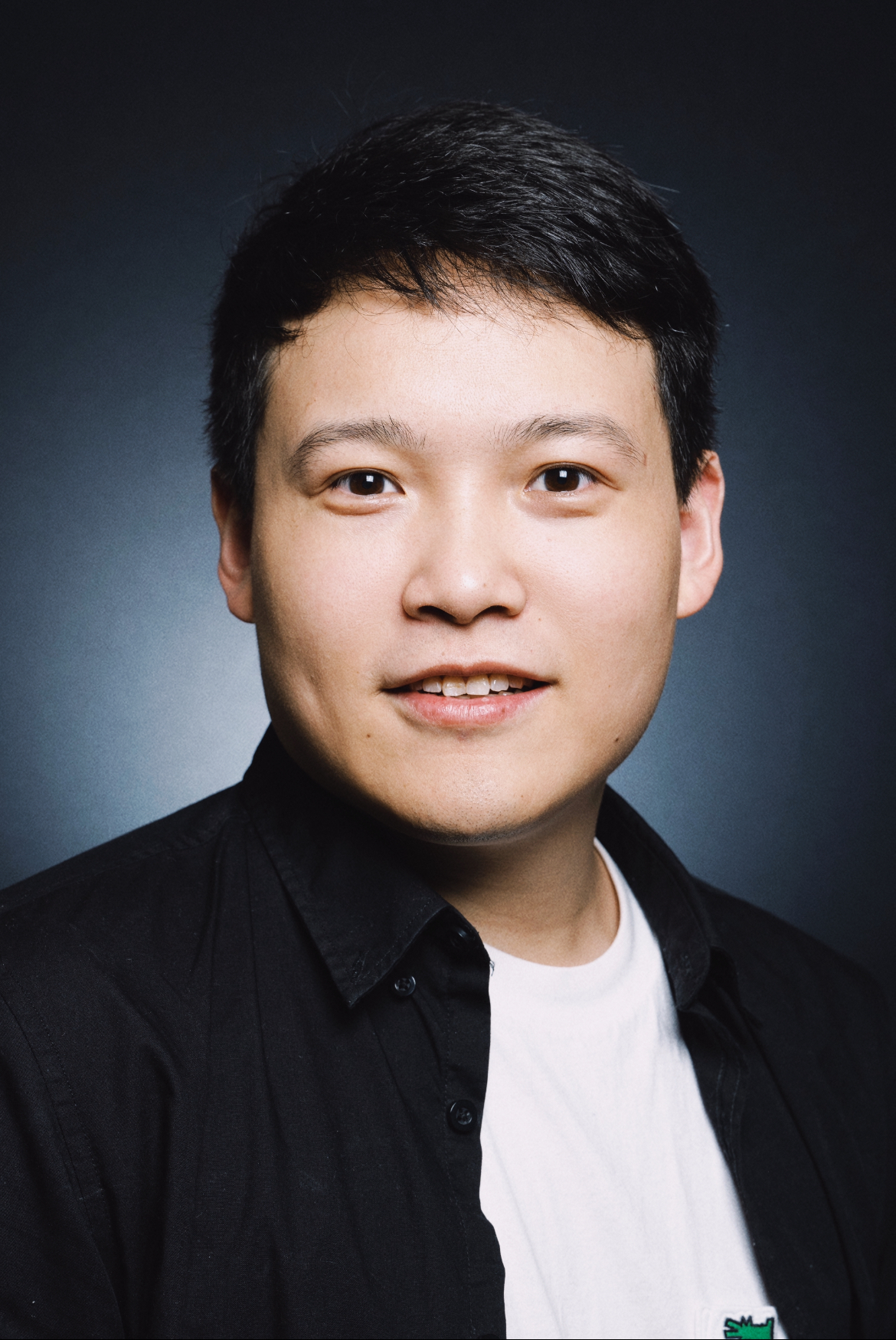 Jindong Gu合作论文数University of Oxford;Google DeepMind1
 Xiaoyu Zhang (张晓宇)合作论文数Institute of Information Engineering, Chinese Academy of Sciences;University of Chinese Academy of Sciences1
 Xiaolin Zheng (郑小林)合作论文数Institute of Artificial Intelligence, College of Computer Science and Technology, Zhejiang University1
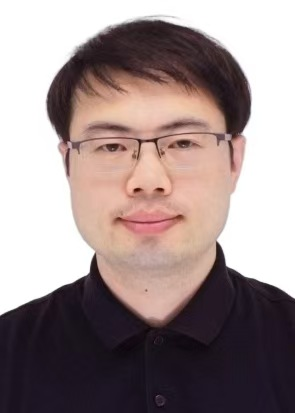 Peilin Zhao (赵沛霖)合作论文数School of Artificial Intelligence, Shanghai Jiao Tong University1
 Ming-Hsuan Yang合作论文数Vision and Learning Lab, University of California, Merced;Google DeepMind1Guoji Fu合作论文数Southern University of Science and Technology1




