As analytic (OLAP) applications move to the cloud, DBMSs have shifted from employing a pure shared-nothing design with locally attached storage to a hybrid design that combines the use of shared-storage (e.g., AWS S3) with the use of shared-nothing query execution mechanisms. This paper sheds light on the resulting tradeoffs, which have not been properly identified in previous work. To this end, it evaluates the TPC-H benchmark across a variety of DBMS offerings running in a cloud environment (AWS) on fast 10Gb+ networks, specifically database-as-a-service offerings (Redshift, Athena), query engines (Presto, Hive), and a traditional cloud agnostic OLAP database (Vertica). While these comparisons cannot be apples-to-apples in all cases due to cloud configuration restrictions, we nonetheless identify patterns and design choices that are advantageous. These include prioritizing low-cost object stores like S3 for data storage, using system agnostic yet still performant columnar formats like ORC that allow easy switching to other systems for different workloads, and making features that benefit subsequent runs like query precompilation and caching remote data to faster storage optional rather than required because they disadvantage ad hoc queries.
Millions of time-based data streams (aka, time series) are being recorded every day in a wide-range of industrial and scientific domains, from healthcare and finance to autonomous driving. Detecting anomalous behavior in such streams has become a common analysis task for which data scientists employ complex machine learning models. Analyzing the behavior and performance of these models is a challenge on its own. While traditional accuracy metrics (eg, precision/recall) are often used in practice to measure and compare the performance of different anomaly detectors, such statistics alone are insufficient to characterize and compare the algorithms in a systematic, human-interpretable way. In this extended abstract, we present Metro-Viz, a visual analysis tool to help data scientists and domain experts reason about commonalities and differences among anomaly detectors, and to identify their strengths and weaknesses.CHI, May 2019, Glasgow, UK© 2019 Copyright held by the owner/author (s). This is the author’s version of the work. It is posted here for your personal use. Not for redistribution. The definitive Version of Record was published in CHI Conference on Human Factors in Computing Systems Extended Abstracts (CHI’19 Extended
Millions of time-based data streams (a.k.a., time series) are being recorded every day in a wide-range of industrial and scientific domains, from healthcare and finance to autonomous driving. Detecting anomalous behavior in such streams has become a common analysis task for which data scientists employ complex machine learning models. Analyzing the behavior and performance of these models is a challenge on its own. While traditional accuracy metrics (e.g., precision/recall) are often used in practice to measure and compare the performance of different anomaly detectors, such statistics alone are insufficient to characterize and compare the algorithms in a systematic, human-interpretable way. In this extended abstract, we present Metro-Viz, a visual analysis tool to help data scientists and domain experts reason about commonalities and differences among anomaly detectors, and to identify their strengths and weaknesses.
This paper discusses the importance of an engineering systems approach to international bioengineering education and how a new educational- research program, the MIT-Portugal Program Bioengineering Systems focus area, aims to develop future global bioengineering leaders. The program, comprising both post-graduate advanced studies and doctoral programs, commences in September 2007. Several other international-collaborative educational and research programs—such as the Cambridge-MIT Institute, the Singapore MIT Alliance, and the Socrates/Erasmus "Erasmus Programme"—offer lessons learned in international collaboration. The MPP Bioengineering Systems program differs from these programs in several respects. The unique collaboration in MPP offers an engineering systems approach, a joint degree offered by three Portuguese universities, and collaborative teaching and research efforts between MIT and Portuguese faculty and students.
We present a framework for understanding product usage context and its impact upon customer needs and product preferences. We conduct customer interviews with two sets of representative products from the functional families of “mobile lighting” and “food boiling” products. Customer interviews lead to identification and characterization of distinct product usage contexts. Interactive surveys measuring customer product choice support the hypothesis that customer product preferences differ for each usage context identified. Further analysis shows that attributes of these chosen products are related to factors of the usage context (e.g. mass is related to transportation mode). These results demonstrate that valuable insight for product design is available through an understanding of usage context, and future work will refine and test methods to formally bring contextual information to bear on product design. These capabilities will be especially important for contexts in which needs assessment has traditionally been difficult, such as with latent needs and frontier design environments.
Working Paper Series Recommendations for the US Federal Government " I am sure that what any of us do, we will be criticized either for doing too much or for doing too little…. If an epidemic does not occur, we will be glad. If it does, then I hope we can say… that we have done everything and made every preparation possible to do the best job within the limits of available scientific knowledge and administrative procedure. " Institute of Medicine for providing us with incredibly thoughtful and generous ideas and feedback throughout the process of developing this report. In addition, we would like to thank for sharing their valuable expertise. The thoughts of all these individuals greatly enhanced the quality of our report. Medical advances in the past century have dramatically increased our ability to contain and prevent disease outbreaks. Concurrently, however, increased globalization and rapid population growth mean that diseases can transmit faster and to more people than ever before. Many experts view avian influenza (AI) as the most likely cause of a human pandemic in the near future. Few studies have focused on analyzing US technology procurement policies from a holistic perspective integrating technological, economic, and social analyses. This type of analysis is critical in designing effective, comprehensive policies to limit the potential impact of an AI pandemic. The objectives of this study are therefore to (1) determine what technologies are available to address an AI pandemic and (2) to determine what policies are already adopted or should be adopted to effectively procure these technologies. By understanding these issues, we hope to allow policymakers to make more informed decisions regarding pre-pandemic preparations. Questions we will address include the following: 1) What technologies are important to procure in order to reduce the impact of pandemic influenza? 2) What has impacted the availability of these technologies? 3) What policies should the US adopt or implement to ensure the availability of the critical technologies needed to reduce the effect of pandemic influenza? a) What challenges face the adoption or implementation of these policies? Many experts fear that an influenza pandemic will occur in the near future. There is currently much debate about how the US should best prepare. Previous US responses give only minimal guidance as the last major influenza pandemic occurred nearly a century ago—before flu viruses had ever been isolated. An influenza pandemic could spread quickly, and working …
Typically, cellular materials are designed for structural applications to provide stiffness or absorb impact via permanent plastic deformation. Alternatively, it is possible to design compliant cellular materials that absorb energy via recoverable elastic deformation, allowing the material to spring back to its original configuration after the load is released. Potential applications include automotive panels or prosthetic applications that require repeated, low-speed impact absorption without permanent deformation. The key is to arrange solid base material in cellular topologies that permit high levels of elastic deformation. To prevent plastic deformation, the topologies are designed for contact between cell walls at predetermined load levels, resulting in customized, graded stiffness profiles. Design techniques are established for synthesizing cellular topologies with customized compliance for static or quasi-static applications. The design techniques account for cell wall contact, large scale deformations, and material nonlinearities. Resulting cellular material designs are fabricated with selective laser sintering, and their properties are experimentally evaluated.
 Katsunobu Sasanuma合作论文数Corresponding author.3
 Bird Sarah合作论文数University of Oxford Medical School, John Radcliffe Hospital3
 Nesime Tatbul合作论文数Computer Science and Artificial Intelligence Laboratory, Massachusetts Institute of Technology;Data Systems and AI Lab, Massachusetts Institute of Technology;Parallel Computing Lab, Intel Labs2
 Stan Zdonik合作论文数Department of Computer Science, Brown University2
 Carolyn Conner Seepersad合作论文数Department of Mechanical Engineering, Cockrell School of Engineering, University of Texas at Austin2
 Xiangyao Yu合作论文数1
 m mota合作论文数Ctr Biol Engn, Univ Minho1
 Matthew Perron合作论文数Microsoft Research1
 Franco Solleza合作论文数1
 Marco Serafini合作论文数Manning College of Information & Computer Sciences, University of Massachusetts Amherst1
 Philipp Eichmann合作论文数Brown University1
 Manuel Nunes da Ponte合作论文数Faculdade de Ciências e Tecnologia, Universidade Nova de Lisboa1Joaquim M. S. Cabral合作论文数1
 Ashraf Aboulnaga合作论文数Department of Computer Science and Engineering, College of Engineering, University of Texas at Arlington1
 David DeWitt合作论文数Department of Electrical Engineering and Computer Science, Massachusetts Institute of Technology1
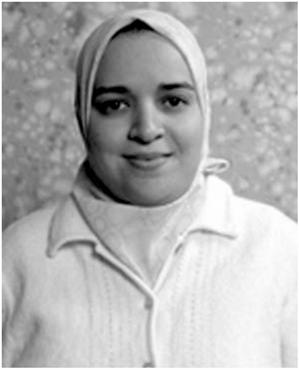 Thanaa M. Ghanem合作论文数Purdue University1
 Matthew G. Green合作论文数1
 Tim Kraska合作论文数Computer Science and Artificial Intelligence Laboratory, Massachusetts Institute of Technology1
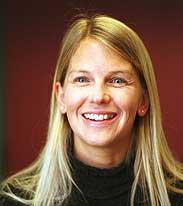 Dava J. Newman合作论文数MIT Institute for Data, Systems, and Society/Institute for Medical Science and Engineering, MIT
1Guarav Gupta合作论文数1
Dava J. Newman合作论文数MIT Institute for Data, Systems, and Society/Institute for Medical Science and Engineering, MIT
1Guarav Gupta合作论文数1 Michael Stonebraker合作论文数Department of Electrical Engineering and Computer Sciences, University of California, Berkeley1
 Kristin L. Wood合作论文数Singapore University of Technology and Design;Department of Mechanical Engineering, College of Engineering, Design and Computing, University of Colorado Denver1
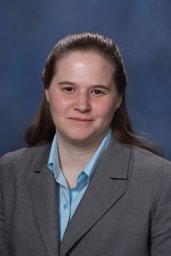 Julie Linsey合作论文数Texas A&M University1




