Human interactions across settings shape young people’s learning and development, and building adult expertise in facilitating productive interactions takes deliberate practice and reflective experience. However, relational practices are not consistently part of adult learning for those who work with youth. We describe a 2-year design study to develop the Simple Interactions Leadership Program, a professional learning workshop focused on relational practices. We refined the program across 3 iterations with library and after-school staff (with a total of 41 participants). Iterative changes included adding participant-driven “try-it-out” projects, adding external accountability features, and combining staff from the library and after-school sectors. Using artifacts and memos from workshops and participants’ reflections, we found that these features incrementally improved participants’ engagement, depth of learning, and sense of professional community—which we suggest are three central goals for related professional development efforts. As a collective youth-serving field, we need effective and scalable ways to help adults recognize and strengthen their relational practices with young people. The Simple Interactions Leadership Program offers a flexible structure for professional learning focused on building expertise in relational practice while sustaining change and improvement through continuous reflection within communities of practice.
A growing movement suggests that social and emotional learning (SEL) should be integrated into educational experiences in and outside schools. Afterschool programs can be particularly well suited for SEL, and afterschool educators can play an important role in skill development. We interviewed 23 experienced afterschool educators in community-based programs to understand how staff encourage SEL and how program directors support staff in doing so. Findings show that afterschool educators describe integrating SEL into their daily interactions with children by creating and catching teachable moments. Program directors served either as compliance enforcers or partners who supported staff’s autonomy to encourage SEL despite top-down mandates. Findings suggest that educators can develop substantial expertise integrating SEL into their professional work. By recognizing and empowering such expertise, program leaders can support implementation and innovation of SEL practices. Allocating resources toward intentional integration of SEL is an important next step for this work.
Family environments are known to usually be better for children's development than institutional care. China has experience with different forms of foster care, but none have been empirically evaluated, especially with respect to children's outcomes. One form of foster care is collective fostering', in which many foster families live in a single apartment building on the grounds of the institution. The goal of this study was to evaluate the effectiveness of such a project operated by a children's institution in a large city in China by examining changes in children's height and weight from before to after entering foster care. Results (n=102, mean age=63months) showed a significant positive quadratic relationship between time and height (p=.002), with height z-scores declining during institutional residency and then increasing after entering foster care. Further analysis on children (n=23) who were enrolled in the fostering project for more than 65months showed that their height and weight z-scores improved significantly while living in foster families compared to the last assessment before the transition. The study concluded that the collective foster care project, like the more widely practiced community foster care, had the potential for improving children's development.
Adult–child relational interactions constitute an essential component of out-of-school-time programs, and training staff to effectively interact with children is key to improving program quality. Efficient staff training, that meets the limited time availability of out-of-school time staff, is particularly needed.
The Similarity is a measure, which is used to measure the strength of the relationship between two objects and their closely degree. According to different object types, similarity calculation method is also different. Similarity calculation is widely used in classifing data, it is the basis of object classification. In this paper, the data objects were divided into three kinds: numerical type, non numeric type and mixed type. And these similarity calculation methods of different types are discussed. Finally, we illustrated the application of similarity in the data classification and data cluster.
Developmental relationships are characterized by reciprocal human interactions that embody an enduring emotional attachment, progressively more complex patterns of joint activity, and a balance of power that gradually shifts from the developed person in favor of the developing person. The working hypothesis of this article is that developmental relationships constitute the active ingredient of effective interventions serving at-risk children and youth across settings. In the absence of developmental relationships, other intervention elements yield diminished or minimal returns. Scaled-up programs and policies serving children and youth often fall short of their potential impact when their designs or implementation drift toward manipulating other "inactive" ingredients (e.g., incentive, accountability, curricula) instead of directly promoting developmental relationships. Using empirical studies as case examples, this study demonstrates that the presence or absence of developmental relationships distinguishes effective and ineffective interventions for diverse populations across developmental settings. The conclusion is that developmental relationships are the foundational metric with which to judge the quality and forecast the impact of interventions for at-risk children and youth. It is both critical and possible to give foremost considerations to whether program, practice, and policy decisions promote or hinder developmental relationships among those who are served and those who serve.
Numerous countries are attempting to reform their child welfare system, especially as it pertains to state care for children without permanent parents. This paper explores using internationally collected indicators to characterize the status and progress a country might make toward reforming their child welfare system. However, it is concluded that such indicators alone are difficult to interpret and provide only very limited information and need to be supplemented with substantial qualitative information obtained in country. Consequently, a generic interview was created to be used with policy makers and relevant professionals to obtain such information, and the interview was field tested in Ukraine. Results of the interview are presented as examples of the kind of information that can be obtained by this process and illustrate many of the issues countries engaged in child welfare reform are likely to face.
Cognitive Science and Student Learning in the Classroom Mari Strand Cary (MariStrandCary@cmu.edu), David Klahr, Stephanie Siler, Cressida Magaro, Junlei Li Elizabeth Albro (elizabeth.albro@ed.gov) Institute of Education Sciences U.S. Department of Education, Washington, DC 20208 John Wagster (john.d.wagster@vanderbilt.edu) 1 , Jason Tan 1 , Yanna Wu 1 , Gautam Biswas 1 , and Dan Schwartz 2 Department of Psychology Carnegie Mellon University Pittsburgh, PA 15213 Department of EECS/ISIS Vanderbilt University, Nashville, TN 37235 School of Education Stanford University, Stanford, CA 94305 Barry Gholson (b.gholson@mail.psyc.memphis.edu), Bent Morgan, Arthur C. Graesser, Josh Brittingham Shana K. Carpenter (scarpenter@ucsd.edu), Hal Pashler, Doris Alvarez Department of Psychology The University of Memphis Memphis, TN 38152 Department of Psychology University of California, San Diego San Diego, CA 92093 turn, the feedback generated by the agent helps them improve their own learning. However, young students may not have the meta-cognitive wherewithal to develop and organize their own learning behaviors, and may not benefit as greatly from learning by teaching. We ran a study to examine how students’ meta-cognitive decisions (with and without support) about their own learning activities correlated with broader learning outcomes. We compared three systems where: (i) students taught a teachable agent and received metacognitive support as they were learning and teaching, (ii) students taught the computer agent but received no metacognitive support, and (iii) students learned by being taught by an agent and did not teach themselves. We captured the students’ activities in log files, and then coded them into behavior sequences using six primary learning activities. We analyzed behavior fragments derived from the behavior sequences and correlated them with student performance. Student performance is measured by the: (i) quality of the students’ concept maps and (ii) post test scores. Our results identify behaviors that correlate well with good performance (and not bad performance). Our results also ask if students who teach and receive metacognitive support exhibit more “good” behaviors than the other two groups. Keywords: Education; Learning How can the cognitive science community take what they have learned from decades of laboratory research and make it useful to shaping instruction as it occurs in school? This question has been of interest over the past thirty years (e.g., Carver & Klahr, 2001), but much of what has been learned by cognitive scientists continues to remain within the cognition community and is not widely applied to student learning in the classroom. The papers presented in this symposium provide cutting-edge examples of research that build on systematic cognitive science research, and are being tested with children in school settings. The talks describe how iterative laboratory and classroom research efforts move our understanding of learning and instruction forward. The symposium papers examine how to use what cognitive science has learned about meta-cognition, spacing, deep explanations, and interactive adaptive tutoring in order to support learning in school-aged students. The moderator and discussant for this symposium is Elizabeth Albro. Do “Learning by Teaching Environments” with Metacognitive Support Help Students Develop Better Learning Behaviors? Applying the Principles of Testing and Spacing to Classroom Learning Adolescent learners often lack both motivation and the self- regulation skills necessary to succeed in school. We (Wagster, Tan, Wu, Biswas, & Schwartz) have developed computer environments using the “learning by teaching” paradigm to help middle school students learn about complex processes. Theoretically, students are motivated to learn so they can help their Teachable Agent, and in There is increasing interest among psychologists in the powerful ways that memory can be enhanced by testing (i.e., retrieval practice) and spacing (i.e., distributed practice). However, there have been few efforts to apply these principles to improving students’ learning in educational contexts. We (Carpenter, Pashler, & Alvarez)
Amongst all instructional issues facing science education, the one that exerts the most substantial impact on the lasting achievement gap is the "mile-wide, inch-deep" curriculum, which is created by superficial alignments among standards, tests, and instructional materials. "If science educators had a dime for every time the phrase 'standards-based' or 'aligned with standards' pops up in science textbooks, instructional product brochures, conference programs, or in-service workshop presentations ..." Diminishing "standards" and "alignment" to overused buzzwords or superficial checklists masks the dire need for truly systemic and operational standards-based alignment in science education. In this article, we report the findings of an ongoing collaborative effort between cognitive researchers and urban science teachers to align everyday teaching with standards, tests, and research-based pedagogy. We begin with an analysis of how the width vs. depth dilemma in science teaching manifested itself in yearly test scores and the achievement gap. We review the problematic issues of alignment among standards, instruction, and assessment. We argue that simply matching standards with so-called "standards-based" materials creates a false sense of comfort in a superficially aligned curriculum. We advocate for schools, districts, even states to undertake the difficult but necessary planning process to create a framework of performance objectives to serve as the critical hinge linking standards, instruction, and assessment. Such curriculum planning must set as its first priority the goals of effectively cutting down the girth of yearly science content while efficiently managing the handoff of students between grade levels. Research Context and Data Collection Our research takes place in three urban parochial schools (> 90% eligible for free and reduced lunch programs and > 95% African American). We use one affluent parochial school as a comparison group ( All schools use the same districtwide curriculum guidelines, though the instructional materials vary from school to school. All science teachers are certified in elementary education with approximately half also certified to teach science at elementary or secondary levels. This teacher profile is comparable to nationwide statistics for science teaching in public schools (National Center for Education Statistics, 2002). All schools are annually assessed using the Terra Nova Comprehensive Test of Basic Skills [CTBS] (CTB/McGraw-Hill, 2001), which includes a 40-item multiple choice assessment for science for each grade level. The parochial district evaluates schools based on the annual tests and exerts administrative pressure on principals and teachers to improve performance. There is no "high-stakes" accountability system (e.g., sanction, merit-pay). The achievement data reported here was collected by obtaining students ' answer sheets for CTBS tests from both the urban schools and the comparison school. We analyze test performance by test item rather than relying on the gross subject-level data reported by CTB/McGraw-Hill. In addition, we were able to collect, through interviews, surveys, and in-class observations, a detailed record of what each teacher taught in each school. We connected test data and everyday teaching through item analyses that categorized items by topic area and by cognitive demand (Bloom, 1956). Science Achievement Gap What follows is a tale of two gaps: 1) The learning gap in particular topic areas, which, through teacher and researcher collaboration and intense instructional investment, can be narrowed or even closed; 2) The test gap across the entire science curriculum, which, despite teacher and researcher collaboration and intense instructional investment and professional development, remain wide open. …
We created a hypothetically "optimal" instructional scenario in which a knowledgeable researcher, under the guidance of an experienced classroom teacher, carried out a set of research-based science instruction in a low-SES urban school. The training group's performance was assessed by standardized test items and compared with that of a high-SES no training comparison group. The results demonstrate that instructional methods based on experimental psychological research have great potential for addressing the achievement gap problem. However, the analyses also reveal a significant discrepancy between low-SES students' performance on standardized test items and on alternative assessments with lower reading and writing demands. We discuss our methodological choices in making basic research more relevant to real world issues. We highlight the critical challenges of test validity, research relevancy, and reform feasibility for researchers and policymakers.
Can cognitive research generate usable knowledge for elementary science instruction? Can issues raised by classroom practice drive the agenda of laboratory cognitive research? Answering yes to both questions, we advocate building a reciprocal interface between basic and applied research. We discuss five studies of the teaching, learning, and transfer of the “Control of Variables Strategy” in elementary school science. Beginning with investigations motivated by basic theoretical questions, we situate subsequent inquiries within authentic educational debates—contrasting hands-on manipulation of physical and virtual materials, evaluating direct instruction and discovery learning, replicating training methods in classroom, and narrowing science achievement gaps. We urge research programs to integrate basic research in “pure” laboratories with field work in “messy” classrooms. Finally, we suggest that those engaged in discussions about implications and applications of educational research focus on clearly defined instructional methods and procedures, rather than vague labels and outmoded “-isms.”
The EventScope program develops publicly accessible "reality browsers" that display both archived and updating representations of remote environments derived from on-site robotic sensors. The interface encourages collaborative work within a community of users. Public exploration of real remote sites presents a variety of interface issues addressed by EventScope, including time delay, public exploration via a single robot and communication between geographically separate users from diverse backgrounds. Merging public interface with educational and contextual information extends the notion of "interface" to "remote reality library." EventScope is a NASA and private foundation funded project based at Carnegie Mellon University.
Abstract In two studies, we examine the relationship between collaborative performance and individual learning outcomes in collaborative discovery. Participants from 4th to 8th grade solved discovery tasks in a computer micro-world. To compare the relative efficacy of co-construction, articulation, and scaffolding, Study 1 set up contrasts among naturalistic peer-to-peer collaboration and two one-on-one prompting conditions (in one, the experimenter prompted the participant to articulate and elaborate on why they generate their experiments and hypotheses; in the other, the experimenter explicitly guided the participant to systematically search for hypotheses, make predictions, and evaluate evidence). Results suggest that collaboratively co-constructing hypotheses and experiments and engaging inexplanatory and interpretive talk contributed to group performance, but did not consistently lead to individual learning. In contrast, systematically searching for hypotheses under explicit guidance produced comparable group performance and significantly greater individual learning. In Study 2, we tested and measured the implications of our Study 1 findings in a realistic classroom instructional setting. We developed whole-classroom procedures to realistically contrast typical classroom collaboration with explicitly scripted collaboration (based on the scaffolding treatment in Study 1). Synthesizing the two studies, we discuss the theoretical and practical implications in bridging collaborative performance and individual learning for science education. Keywords Collaborative discovery, scientific reasoning, cognitive models, computer micro-world, scaffolding. Contact junlei@andrew.cmu.edu, Department of Psychology, Carnegie Mellon University, Pittsburgh, PA 15213, USA
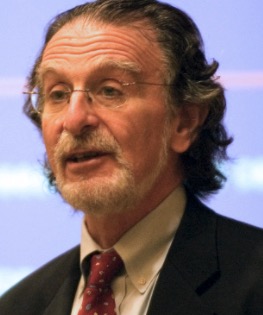 David Klahr合作论文数Department of Psychology, Dietrich College of Humanities and Social Sciences, Carnegie Mellon University5
 Thomas Akiva合作论文数Univ Pittsburgh3
 Annie McNamara White合作论文数St Vincent Coll, 300 Fraser Purchase Rd, Latrobe, PA 15650 USA2
 Stephanie Siler合作论文数2
 Sharon Colvin合作论文数University of Maryland2
 Robert B. Mccall合作论文数Department of Psychology, School of Education, University of Pittsburgh2
 Megan M. Julian合作论文数Infant and Early Childhood Clinic, Department of Psychiatry, Michigan Medicine, University of Michigan2
 Christina J. Groark合作论文数2Dan Schwartz合作论文数1Anne McNamara合作论文数1Zeng Fan-lin合作论文数1Pamela A Jimenez-Etcheverria合作论文数1Peter Wardrip合作论文数1Wen-Chi Wang合作论文数1Maureen Kelly合作论文数1
 Christy Galletta Horner合作论文数Psychology in Education Department, University of Pittsburgh1
 John R. Hayes合作论文数Pacific University Oregon1
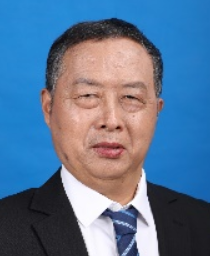 Shaohua Teng (滕少华)合作论文数School of Computer Science and Technology, Guangdong University of Technology1
 Wei Zhang (张巍)合作论文数School of Computer Science and Technology, Guangdong University of Technology1Barry Gholson合作论文数Memphis State University1
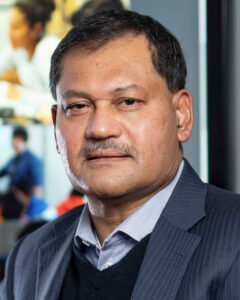 Gautam Biswas合作论文数Department of Computer Science, Vanderbilt University;The Institute for Software Integrated Systems, Vanderbilt University1
 Art Graesser合作论文数Department of Psychology, The University of Memphis;Institute of Intelligent Systems, The University of Memphis1
 Hal Pashler合作论文数Department of Psychology, University of California, San Diego1John Wagster合作论文数1Rigui Li (李日贵)合作论文数1Bent Morgan合作论文数1Josh Brittingham合作论文数1Shana K. Carpenter合作论文数Department of Psychology, University of California, San Diego1
 Michael D. Wagner合作论文数Naval Air Warfare Center Aircraft Division1
 William (Red) L. Whittaker合作论文数The Robotics Institute, Carnegie Mellon University1Cressida Magaro合作论文数1
 Jason Tan合作论文数Department of EECS;Vanderbilt University;Department of EECS, Vanderbilt University1
 Richard Pell合作论文数School of Art, Carnegie Mellon University1Amanda Jabbour合作论文数1Karl Fischer合作论文数Carnegie Mellon U1Doris Alvarez合作论文数1Mari Strand-Cary合作论文数1




