The rapid decline of California's endangered delta smelt Hypomesus transpacificus has called for immediate and effective conservation actions. Since 2021, up to 92000 cultured delta smelt have been released annually into the Sacramento-San Joaquin River Delta, with ecological field surveys capturing both hatchery-produced ('cultured') and wild-spawned ('wild') individuals. Cultured fish now constitute the bulk of the catch, highlighting their critical role in conserving the species. Questions remain, however, regarding differences between cultured and wild individuals, their relative health, and how to accurately classify individuals collected in the field. We applied otolith-based tools to contrast the health and environmental histories of wild and cultured delta smelt collected in situ from 2019-2023. Specifically, we quantified differences in otolith development, otolith-somatic proportionality, ontogenetic growth, and otolith strontium isotope (87Sr/86Sr) geochemistry. We then developed mixture discriminant analysis models to identify cultured and wild individuals based on their geochemical profiles. Cultured and wild fish exhibited similar otolith-somatic proportionality, whereas cultured fish exhibited higher frequencies of abnormal (vateritic) otolith development. Growth varied ontogenetically in both groups; however, growth rates were highest in wild fish during the early life history and higher in cultured fish during later life stages. Geochemical profiles were distinct between groups, resulting in >95% classification success. Together, these results highlight the utility of otolith-based approaches for identifying wild and cultured delta smelt and quantifying differences in their health and environmental histories. Such data are key to understanding population dynamics and for informing the management and conservation of imperiled species.
Salmonids are well known for their natal homing behaviour, meaning they return to breed in the same area where they originated. However, not all individuals return to their natal breeding grounds-a behavioural trait known as straying. The prevalence of straying is difficult to explore and therefore quantitative estimates for straying are seldom reported. In this study, otolith microchemistry and genetics were combined to investigate patterns of straying over ecological and evolutionary time, respectively, between neighbouring rivers flowing into Mariager fjord, Denmark. Otolith microchemistry was used to determine the river of origin for sea trout (Salmo trutta) upon their return to freshwater and 288 SNP markers were used to determine genetic structure among the rivers in the fjord. In this system, where the distance between rivers is short, otolith microchemistry achieved 80% accuracy in assigning juvenile brown trout to their natal river, thus allowing us to determine that approximately 43% of the adult sea trout had returned to non-natal rivers to spawn, with a similar proportion of strayers and natal homers in all of the rivers. Genetic analysis further supported that there was substantial gene flow among individuals originating from different rivers, indicating that sea trout in Mariager fjord make up one population. The findings obtained from otolith microchemistry and genetics complement each other and provide further evidence that sea trout in this system migrate to non-natal rivers and spawn there, which consequently affects the genetic structure of the population.
The Skaergaard intrusion is one of the most thoroughly studied layered mafic intrusions on Earth and an exceptional example of (near) closed-system magmatic differentiation. We report new Fe isotope data for whole rocks, and magnetite and ilmenite separates through the layered series (LS) and upper border series (UBS) of the intrusion. d56Fe values for gabbroic rocks range from 0.033 parts per thousand to 0.151 parts per thousand with an abrupt step increase at the base of Lower Zone c (LZc) within LS with the appearance of cumulus magnetite and subsequent decline accompanying FeTi oxide fractionation. The lowest d56Fe values are found near the Upper Zone b (UZb) to c (UZc) boundary followed by a sharp rise across UZc approaching the Sandwich Horizon. Magnetiteilmenite separates straddle bulk rock compositions with fractionation factors (? 56Fe) of 0.081 parts per thousand to 0.239 parts per thousand, consistent with subsolidus equilibration. Granophyric rocks occurring as pods, sheets and wispy layers from the upper zone and UBS equivalents and having unradiogenic Sr similar to gabbroic rocks of Skaergaard, are isotopically heavier than their host ferrodiorites (? 56Fe?=?0.1 parts per thousand) reaching a maximum d56Fe of 0.217 parts per thousand in UBS. A fused xenolith from UBS has d56Fe ?=?0.372 parts per thousand This range in d56Fe spans much of that reported for terrestrial igneous rocks, and like the global dataset, shows a pronounced increase in d56Fe with inferred silica content of modeled Skaergaard liquids. Forward modeling of closed system fractional solidification was undertaken to account for Fe isotope systematics, first by testing published liquid lines of descent (LLD), and then by exploring improvements and considering the impacts of liquid immiscibility, crustal contamination, fluid exsolution and diffusional processes. Our modeling relies on published Fe+2 and Fe+3 force constants for magmatic minerals and silicate glasses, and the most reliable estimates of the average bulk composition and mass proportions of the well-defined subzones of the intrusion. We show that the increase in d56Fe across the LZbLZc boundary is readily explained by the increased incorporation of Fe+3 into the crystallizing solid including magnetite. We further demonstrate that the classic Fenner LLD, involving strong Fe enrichment at nearly constant silica, does not lead to a rise in d56Fe toward the end stages of evolution, while a Bowen-like LLD, with little Fe enrichment and strong Si enrichment, also underestimates enrichment in heavy Fe isotopes in the ferrodiorites of UZc. A LLD following an intermediate path involving modest Fe and Si enrichment, followed by Fe depletion best explains the observations. We predict similar to 3.5% (by mass) residual liquid after crystallization of UZc having a composition similar to felsic segregations in pegmatitic bodies found in the intrusion. While liquid immiscibility may have been encountered within fractionating mush at the margins of the intrusion, the Fe isotope systematics do not support liquid phase separation of the bulk magma. Crustal contamination, fluid exsolution, hydrothermal alteration and thermal diffusion are also shown to have no resolvable effect on the Fe isotope composition of the gabbroic and granophyric rocks. We conclude that the Fe isotope systematics documented in the Skaergaard intrusion reflect the dominant role of fractionating Fe-rich minerals from gabbroic through ferrodioritic to rhyolitic liquids. The success of our model to account for the observed Fe isotope systematics for Skaergaard demonstrates the utility of Fe+2 and Fe+3 force constants determined at ambient conditions to model magmatic conditions and gives critical insights into plutonic processes fractionating Fe isotopes complementary to the volcanic record.
Conodont microfossils record seawater strontium isotope values (Sr-87/Sr-86), permitting chemostratigraphic correlation for tectonic and climatic reconstructions of the Paleozoic and early Mesozoic (541-201 Ma). Laser ablation multiple collection inductively coupled plasma mass spectrometry (LA MC-ICP-MS) can provide rapid, high spatial resolution Sr-87/Sr-86 analysis of conodont bioapatite but has not been validated by comparison with solution analysis. Validation of LA MC-ICP-MS should be completed in order to use the conodont Sr-87/Sr-86 values for age-correlations and environmental interpretations. Here, for the first time, we compare solution and LA MC-ICP-MS Sr-87/Sr-86 analyses of Carboniferous-age conodonts. Furthermore, we use quadrupole LA ICP-MS to determine concentrations of trace elements potentially responsible for isobaric interferences. Using increased mass resolving power (m/Delta m = similar to 7500) and analyzing conodont tissue with low Rb-85/Sr-88 (< 0.001), we find laser ablation copacetic with solution Sr-87/Sr-86 values. The two-standard-deviation of these LA Sr-87/Sr-86 ratios (average 2SD = 0.00105) are within the two-standard-error uncertainty of solution measurements (average 2SE = 0.00001) on conodonts from the same stratigraphic level. The LA measurements are at a higher spatial resolution and on average 0.00015 higher than solution measurements. Uncertainty of the mean calculations, made on duplicate LA MC-ICP-MS analyses of individual conodonts from the same stratigraphic level, exhibit Sr-87/Sr-86 variability beyond the precision of reference materials (2SE = 0.00001). This finding suggests that solution Sr-87/Sr-86 values determined by dissolving multiple conodonts are homogenizing the conodont Sr-87/Sr-86 signal. As such, the precision of these solution measurements does not capture the geologic variability of conodont Sr-87/Sr-86 within a stratigraphic level, which may originate from differential diagenetic alteration. Conodont Sr-87/Sr-86 measurements that do not account for this variability are at risk of false calibrations with the paleo-seawater Sr-87/Sr-86 curve, which has implications for the timing of geologic events and reconstructions of paleo-environmental changes.
Populations of Chinook Salmon Oncorhynchus tshawytscha in California are in decline due to the combined effects of habitat degradation, water diversions, and climate change. Reduced life history diversity within these populations inhibits their ability to respond to these stressors. Putah Creek, a small creek in California's Central Valley that once supported Chinook Salmon, is undergoing restoration to provide spawning habitats for this imperiled species. Beginning in 2014, increasing numbers of Chinook Salmon spawned throughout the creek, and emigrating juveniles were observed in the following months. Here we used otolith annual growth bands and microchemistry to investigate the age structure and natal origins of the adult spawners. Most individuals were 2 or 3 years old, and they originated from at least seven different natal sources, overwhelmingly from Central Valley hatcheries (similar to 88%). These findings highlight that straying fall-run Central Valley Chinook Salmon can rapidly utilize restored habitats, potentially establishing new populations. However, to facilitate local adaptations, straying rates and gene flow will have to be managed over time. Reconnecting migratory pathways and restoring many small and diverse streams, like Putah Creek, provides an opportunity to increase life history diversity, strengthening the recovery and resilience of Chinook Salmon.
The D” layer at the base of the Earth’s mantle exhibits anomalous seismic properties, which are attributed to heat loss from and chemical interaction with the underlying molten Fe-rich outer core. Here we show that mass transfer due to temperature variations within the D” layer could lead to resolvable fractionation of iron isotopes. We constrain the degree of isotope fractionation by experiments on core-forming Fe alloy liquids at 2100–2300 K and 2 GPa, which demonstrate that heavy Fe isotopes preferentially migrate towards lower temperature and vice versa. We find that this isotope fractionation occurs rapidly due to the high mobility of iron, which reaches 0.013 ± 0.002‰ (2σ) per degree per amu at steady state. Numerical simulations of mantle convection capturing the evolution of a basal thermal boundary layer show that iron isotope fractionation immediately above the core–mantle boundary can reach measurable levels on geologic timescales and that plumes can entrain this fractionated material into the convecting mantle. We suggest that such a process may contribute to the heavy Fe isotope composition of the upper mantle inferred from mantle melts (basalts) and residues (peridotites) relative to chondrites. That being the case, non-traditional stable isotope systems such as Fe may constrain the interactions between the core and mantle. Iron isotopic fractionation at the core–mantle boundary due to thermal diffusion may partly explain the iron isotope composition of the upper mantle, according to high-temperature experiments and numerical simulations.
Circulation of seawater at oceanic spreading centers extracts heat, drives rock alteration, and transports leached metals to shallower levels of the crust, where they may precipitate and form ore deposits. Crystallization of the lower crust, may exsolve and introduce magmatic volatiles into the seawater-dominant system. However, the role of magmatic volatiles added to the hydrothermal system, including pathways of these fluids are lesser known. Here we present coupled in-situ strontium isotope and rare earth element data of distinct domains in epidote, a common hydrothermal mineral throughout the Troodos ophiolite, to track magmatic fluid input and flow. Epidote crystal domains characterize three distinct strontium isotope-rare earth element signatures—suggesting sequential growth from magma-derived fluids (0.704, negative europium anomalies), rock-buffered fluids (0.7055, positive europium anomalies) and seawater-derived fluids (0.7065, negative cerium anomalies). Epidote records episodic fluxing of magmatic fluids from plagiogranites, through epidosites in the upflow zone and into metal ore deposits.
Fall-run Chinook salmon (Oncorhynchus tshawytscha) from the Sacramento–San Joaquin River system form the backbone of California’s salmon fishery and are heavily subsidized through hatchery production. Identifying temporal trends in the relative contribution of hatchery- versus wild-spawned salmon is vital for assessing the status and resiliency of wild salmon populations. Here, we reconstructed the proportion of hatchery fish on natural spawning grounds in the Feather River, a major tributary to the Sacramento River, using strontium isotope (87Sr/86Sr) ratios of otoliths collected during carcass surveys from 2002 to 2010. Our results show that prior to the 2007–2008 salmon stock collapse, 55%–67% of in-river spawners were of hatchery origin; however, hatchery contributions increased drastically (89%) in 2010 following the collapse. Data from a recent hatchery marking program corroborate our results, showing that hatchery fish continued to dominate (∼90%) in 2011–2012. Though the rebound in abundance of salmon in the Feather River suggests recovery of the stock postcollapse, our otolith chemistry data document a persistent decline of wild spawners, likely leading to the erosion of locally adapted Feather River salmon populations.
The IsoFishR application is a data reduction and analysis tool for laser-ablation strontium isotope data, following common best practices and providing reliable and reproducible results. Strontium isotope ratios (87Sr/86Sr) are a powerful geochemical tracer commonly applied in a wide range of scientific fields and laser-ablation inductively coupled mass spectrometry is considered the method of choice to obtain spatially resolved 87Sr/86Sr isotope ratios from a variety of sample materials. However, data reduction and analyses methods are variable between different research groups and research communities limiting reproducibility between studies. IsoFishR provides a platform to standardize these methods and can be used for both spot and time-resolved line transects. Furthermore, it provides advanced data analysis tools and filters for outlier removal, noise reduction, and visualization of time resolved data. The application can be downloaded from GitHub (https://github.com/MalteWillmes/IsoFishR) and the source code is available, encouraging future development and evolution of this software.
Hydrothermal vent fields located in the gap between known sites in Guaymas Basin and 21 degrees N on the East Pacific Rise were discovered on the Alarcon Rise and in southern Pescadero Basin. The Alarcon Rise spreading segment was mapped at 1-m resolution by an autonomous underwater vehicle. Individual chimneys were identified using the bathymetric data. Vent fields were interpreted as active from temperature anomalies in water column data and observed and sampled during remotely operated vehicle dives. The Ja Sit, Pericu, and Meyibo active fields are near the eruptive fissure of an extensive young lava flow. Vent fluids up to 360 degrees C from Meyibo have compositions similar to northern East Pacific Rise vents. The Tzab-ek field is 850m west of the volcanic axis, and active chimneys rise up to 33m above a broad sulfide mound. The inactive field is 10km north-northeast along the rift axis, and most sulfide chimneys are enriched in Zn and associated elements that are transported at lower temperature compared to the more Cu-rich active fields. In southern Pescadero Basin, the Auka field is on the margin of a sediment-filled graben at 3,670-m depth. Discharging fluids are clear, contain hydrocarbons, and have neutral pH, elevated salinity, and temperatures up to 291 degrees C. They have deposited massive mounds of calcite with minor sulfide. The fluids are compositionally similar to those in Guaymas Basin, produced by high-temperature basalt-seawater interaction followed by reaction with sediment. The paucity of sulfide minerals suggests subsurface deposition of metals. Plain Language Summary Hydrothermal chimneys on two previously unexplored spreading ridges, the Alarcon Rise and southern Pescadero Basin, were discovered on Monterey Bay Aquarium Research Institute expeditions to the Gulf of California. Autonomous underwater vehicles were used to map the region, followed by dives with remotely operated vehicles to observe and sample features on the seafloor. Many of the chimneys on the Alarcon Rise were found to be high-temperature black smokers, so-called because of the particles of metal-sulfide that precipitate from the hot fluid as it cools. Deposited precipitates have built chimneys up to 33m tall, composed of iron, copper, and zinc sulfides, and include some precious metals. The venting fluid was seawater that has been heated by, and interacted with, underlying basalt lavas through which it circulated. In the southern Pescadero Basin, hydrothermal fluids are clear and somewhat cooler than at the Alarcon Rise, and the chimneys are composed of calcite with little sulfide. These fluid and deposit compositions are most similar to those at the Guaymas Basin, located farther north in the Gulf of California, where the heated vent fluids pass through, and react with, thick sediments before exiting the seafloor.
Delineating the controls on hydroclimate throughout Brazil is essential to assessing potential impact of global climate change on water resources and biogeography. An increasing number of monsoon reconstructions from δ18O records provide insight into variations in regional monsoon intensity over the last millennium. The strength, however, of δ18O as a proxy of regional climate limits its ability to reflect local conditions, highlighting the need for comparable reconstructions of local moisture conditions. Here, speleothem 87Sr/86Sr values are developed as a paleo-moisture proxy in central Brazil to complement existing δ18O-based reconstructions of regional monsoon intensity. Speleothem 87Sr/86Sr values are resolved using laser ablation and conventional solution mass spectrometry at high resolution relative to existing (non-δ18O-based) paleo-moisture reconstructions to allow comparisons of centennial variability in paleo-monsoon intensity and paleo-moisture conditions. Variations in speleothem 87Sr/86Sr values from Tamboril Cave are interpreted to reflect varying extents of water interaction with the carbonate host rock, with more interaction resulting in greater evolution of water isotope values from those initially acquired from the soil to those of the carbonate bedrock. Increasing speleothem 87Sr/86Sr values over the last millennium suggest progressively less interaction with the carbonate host rock likely resulting from higher infiltration rates, expected under wetter conditions. Increasingly wetter conditions over the last millennium are consistent with an overall trend of increasing monsoon intensity (decreasing δ18O values) preserved in many existing δ18O records from the region. Such a trend, however, is absent in δ18O records from our site (central Brazil) and Cristal Cave (southeast Brazil), suggesting the existence of divergent (relevant to δ18Oprecip) shifts in the climate patterns within and outside the core monsoon region.
Strontium isotope ratios (87Sr/86Sr) in otoliths are a well-established tool to determine origins and movement patterns of fish. However, otolith extraction requires sacrificing fish, and when working with protected or endangered species, the use of nonlethal samples such as scales, spines, and fin rays is preferred. Unlike otoliths that are predominantly aragonite, these tissues are composed of biological apatite. Laser ablation multicollector inductively coupled plasma mass spectrometry (LA-MC-ICP-MS) analysis of biological apatite can induce significant interference on mass 87, causing inaccurate 87Sr/86Sr measurements. To quantify this interference, we applied LA-MC-ICP-MS to three marine samples (white seabass (Atractoscion nobilis) otolith; green sturgeon (Acipenser medirostris) pectoral fin ray; salmon shark (Lamna ditropis) tooth), and freshwater walleye (Sander vitreus) otoliths, scales, and spines). Instrument conditions that maximize signal intensity resulted in elevated 87Sr/86Sr isotope ratios in the bioapatite samples, related to a polyatomic interference (40Ca31P16O, 40Ar31P16O). Retuning instrument conditions to reduce oxide levels removed this interference, resulting in accurate 87Sr/86Sr ratios across all tissue samples. This method provides a novel, nonlethal alternative to otolith analysis to reconstruct fish life histories.
OBJECTIVES:Analysis of a mass burial of seven males at CA-ALA-554, a prehistoric site in the Amador Valley, CA, was undertaken to determine if the individuals were "locals" or "non-locals," and how they were genetically related to one another.METHODS:The study includes osteological, genetic (mtDNA), and stable (C, N, O, S) and radiogenic (Sr) isotope analyses of bone and tooth (first and third molars) samples.RESULTS:Isotopes in first molars, third molars, and bone show they spent the majority of their lives living together. They are not locals to the Amador Valley, but were recently living to the east in the San Joaquin Valley, suggesting intergroup warfare as the cause of death. The men were not maternally related, but represent at least four different matrilines. The men also changed residence as a group between age 16 and adult years.CONCLUSIONS:Isotope data suggest intergroup warfare accounts for the mass burial. Genetic data suggest the raiding party included sets of unrelated men, perhaps from different households. Generalizing from this case and others like it, we hypothesize that competition over territory was a major factor behind ancient warfare in Central California. We present a testable model of demographic expansion, wherein villages in high-population-density areas frequently fissioned, with groups of individuals moving to lower-population-density areas to establish new villages. This model is consistent with previous models of linguistic expansion.
We constrain the physical nature of the magma reservoir and the mechanisms of rhyolite generation at Yellowstone caldera via detailed characterization of zircon and sanidine crystals hosted in three rhyolites erupted during the (c. 170–70 ka) Central Plateau Member eruptive episode—the most recent post-caldera magmatism at Yellowstone. We present 238 U– 230 Th crystallization ages and trace-element compositions of the interiors and surfaces (i.e. unpolished rims) of single zircon crystals from each rhyolite. We compare these zircon data with 238 U– 230 Th crystallization ages of bulk sanidine separates coupled with chemical and isotopic data from single sanidine crystals. Zircon age and trace-element data demonstrate that the magma reservoir that sourced the Central Plateau Member rhyolites was long-lived (150–250 kyr) and genetically related to the preceding episode of magmatism, which occurred c. 256 ka. The interiors of most zircons in each rhyolite were inherited from unerupted material related to older stages of Central Plateau Member magmatism or the preceding late Upper Basin Member magmatism (i.e. are antecrysts). Conversely, most zircon surfaces crystallized near the time of eruption from their host liquids (i.e. are autocrystic). The repeated recycling of zircon interiors from older stages of magmatism demonstrates that sequentially erupted Central Plateau Member rhyolites are genetically related. Sanidine separates from each rhyolite yield 238 U– 230 Th crystallization ages at or near the eruption age of their host magmas, coeval with the coexisting zircon surfaces, but are younger than the coexisting zircon interiors. Chemical and isotopic data from single sanidine crystals demonstrate that the sanidines in each rhyolite are in equilibrium with their host melts, which considered along with their near-eruption crystallization ages suggests that nearly all Central Plateau Member sanidines are autocrystic. The paucity of antecrystic sanidine crystals relative to antecrystic zircons requires a model in which eruptible rhyolites are generated by extracting melt and zircons from a long-lived mush of immobile crystal-rich magma. In this process the larger sanidine crystals remain trapped in the locked crystal network. The extracted melts (plus antecrystic zircon) amalgamate into a liquid-dominated (i.e. eruptible) magma body that is maintained as a physically distinct entity relative to the bulk of the long-lived crystal mush. Zircon surfaces and sanidines in each rhyolite crystallize after melt extraction and amalgamation, and their ages constrain the residence time of eruptible magmas at Yellowstone. Residence times of the large-volume rhyolites (� 40–70 km 3 ) are � 1 kyr (conservatively <6 kyr), which suggests that large volumes of rhyolite can be generated rapidly by extracting melt from a crystal mush. Because the lifespan of the crystal mush that sourced the Central Plateau Member rhyolites is two orders of magnitude longer than the residence time of eruptible magma
 Malte Willmes合作论文数Southwest Fisheries Sci Ctr, Natl Marine Fisheries Serv9
 James A. Hobbs合作论文数Interdisciplinary Center for Plasma Mass Spectrometry, University of California, Davis7
 Isabel P. Montañez合作论文数Department of Earth and Planetary Sciences, University of California, Davis;Institute of the Environment, University of California, Davis5
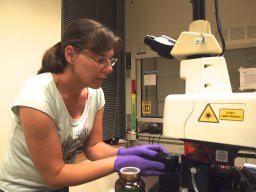 Gry H. Barfod合作论文数Geological Institute, University of Copenhagen5
 Craig Lundstrom合作论文数Department of Geology, School of Earth, Society & Environment, College of Liberal Arts & Sciences, University of Illinois Urbana-Champaign4
 Stephen Fox合作论文数3
 Lucy Schlicht合作论文数3
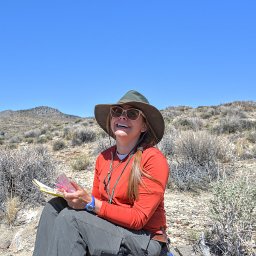 Julie M. Griffin合作论文数Dept Earth & Planetary Sci, Univ Calif Davis3
 Wolfgang Bach合作论文数Fachbereich Geowissenschaften, Universitat Bremen3
 Jitao Chen (陈吉涛)合作论文数Nanjing Institute of Geology and Paleontology, Chinese Academy of Sciences3
 Y. Katzir合作论文数Dept. of Geological and Environmental Sciences, Ben Gurion University of the Negev3
 Kari M. Cooper合作论文数Department of Earth and Planetary Sciences, College of Letters and Science, University of California, Davis;Interdisciplinary Center for Plasma Mass Spectrometry, University of California, Davis3
 Levi Steele Lewis合作论文数Interdisciplinary Center for Plasma Mass Spectrometry, University of California, Davis3
 Charles E. Lesher (Charles Lesher)合作论文数Department of Geoscience, Aarhus University;Department of Geoscience - Earth System Petrology, Aarhus University3Andrew T. Calvert合作论文数2
 Rachel C Johnson合作论文数2George Whitman合作论文数2Niklas Stausberg合作论文数2Jorge A Vazquez合作论文数Department of Earth and Planetary Sciences, Stanford University2Paul C. Gerrity合作论文数2
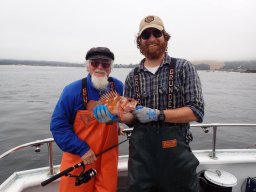 Christian Denney合作论文数Wildlife Fish & Conservat Biol, Univ Calif Davis2
 Zachary Bess合作论文数Dept Wildlife Fish & Conservat Biol, Univ Calif Davis2
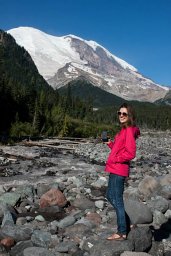 Barbara Wortham合作论文数Corresponding author.2
 Mark E. Stelten合作论文数US Geol Survey2
 James Brenan合作论文数Department of Earth and Environmental Sciences, Faculty of Science, Dalhousie University2
 Anna Sturrock合作论文数National Oceanography Centre Southampton, University of Southampton;Centre for Environment, Fisheries and Aquaculture Science, Lowestoft Laboratory, Lowestoft, Suffolk NR33 0HT, UK.;National Oceanography Centre Southampton, University of Southampton2
 Christian Tegner合作论文数DEPARTMENT OF EARTH SCIENCES;UNIVERSITY OF AARHUS;DEPARTMENT OF EARTH SCIENCES, UNIVERSITY OF AARHUS2Peter Thy合作论文数Department of Geology;University of California , Davis;Department of Geology, University of California , Davis2
 Scott A. Carleton合作论文数2Eric D. Chapman合作论文数1robert w williams合作论文数1Rachel Johnson合作论文数1laurence m ball合作论文数1patrick a longmire合作论文数1thomas h walters合作论文数1
 Katherine M Ransom合作论文数1Miguel A. Santa Rosa-del Río合作论文数1Emily Jacinto合作论文数1tim goering合作论文数1Ramona Garibay合作论文数1
 Lars Peter Salmonsen合作论文数1
 Kristi Källo合作论文数1
 Dillon James Osleger合作论文数1
 Rachel A. Fichman合作论文数University of California, Davis1Ian Courter合作论文数1
 Alexandra M. Greenwald合作论文数Department of Anthropology;University of California Davis;Davis;Department of Anthropology, University of California Davis1Julie Prytulak合作论文数1Mei Ding合作论文数Los Alamos Natl Lab, Earth Syst Observat1
 Kim Birnie-Gauvin合作论文数Natl Inst Aquat Sci, Tech Univ Denmark1




