Uniform-state discrete diffusion models hold the promise of fast text generation due to their inherent ability to self-correct. However, they are typically outperformed by autoregressive models and masked diffusion models. In this work, we narrow this performance gap by leveraging a key insight: Uniform-state diffusion processes naturally emerge from an underlying Gaussian diffusion. Our method, Duo, transfers powerful techniques from Gaussian diffusion to improve both training and sampling. First, we introduce a curriculum learning strategy guided by the Gaussian process, doubling training speed by reducing variance. Models trained with curriculum learning surpass autoregressive models in zero-shot perplexity on 3 of 7 benchmarks. Second, we present Discrete Consistency Distillation, which adapts consistency distillation from the continuous to the discrete setting. This algorithm unlocks few-step generation in diffusion language models by accelerating sampling by two orders of magnitude. We provide the code and model checkpoints on the project page: https://s-sahoo.com/duo.
With the goal of benchmarking generative systems beyond expert software development ability, we introduce Commit0, a benchmark that challenges AI agents to write libraries from scratch. Agents are provided with a specification document outlining the library's API as well as a suite of interactive unit tests, with the goal of producing an implementation of this API accordingly. The implementation is validated through running these unit tests. As a benchmark, Commit0 is designed to move beyond static one-shot code generation towards agents that must process long-form natural language specifications, adapt to multi-stage feedback, and generate code with complex dependencies. Commit0 also offers an interactive environment where models receive static analysis and execution feedback on the code they generate. Our experiments demonstrate that while current agents can pass some unit tests, none can yet fully reproduce full libraries. Results also show that interactive feedback is quite useful for models to generate code that passes more unit tests, validating the benchmarks that facilitate its use.
Diffusion language models offer unique benefits over autoregressive models due to their potential for parallelized generation and controllability, yet they lag in likelihood modeling and are limited to fixed-length generation. In this work, we introduce a class of block diffusion language models that interpolate between discrete denoising diffusion and autoregressive models. Block diffusion overcomes key limitations of both approaches by supporting flexible-length generation and faster inference with KV caching and parallel token sampling. We propose a recipe for building effective block diffusion models that includes an efficient training algorithm, estimators of gradient variance, and data-driven noise schedules to minimize the variance. Block diffusion sets a new state-of-the-art performance among diffusion models on language modeling benchmarks and enables generation of arbitrary-length sequences. We provide the code, along with the model weights and blog post on the project page: https://mariannearriola.github.io/bd3-lms
In this report we describe the development of Command A, a powerful large language model purpose-built to excel at real-world enterprise use cases. Command A is an agent-optimised and multilingual-capable model, with support for 23 languages of global business, and a novel hybrid architecture balancing efficiency with top of the range performance. It offers best-in-class Retrieval Augmented Generation (RAG) capabilities with grounding and tool use to automate sophisticated business processes. These abilities are achieved through a decentralised training approach, including self-refinement algorithms and model merging techniques. We also include results for Command R7B which shares capability and architectural similarities to Command A. Weights for both models have been released for research purposes. This technical report details our original training pipeline and presents an extensive evaluation of our models across a suite of enterprise-relevant tasks and public benchmarks, demonstrating excellent performance and efficiency.
Maintainable and general software allows developers to build robust applications efficiently, yet achieving these qualities often requires refactoring specialized solutions into reusable components. This challenge becomes particularly relevant as code agents become increasingly accurate at solving isolated programming problems. We investigate code agents' capacity to refactor code in ways supporting growth and reusability. We present both a method and a benchmark for refactoring: Librarian, a sample-and-rerank method for generating reusable libraries, and Minicode, a benchmark where code agents must minimize and refactor multiple independent solutions into a joint library. Compared to state-of-the-art code agents, Librarian achieves strong results on both compression and correctness on Minicode, obtaining compression rates 1.6-2x better than coding agents while also improving correctness. We open-source our code and benchmark at https://code-refactor.github.io/.
Understanding long, real-world videos requires modeling of long-range visual dependencies. To this end, we explore video-first architectures, building on the common paradigm of transferring large-scale, image--text models to video via shallow temporal fusion. However, we expose two limitations to the approach: (1) decreased spatial capabilities, likely due to poor video--language alignment in standard video datasets, and (2) higher memory consumption, bottlenecking the number of frames that can be processed. To mitigate the memory bottleneck, we systematically analyze the memory/accuracy trade-off of various efficient methods: factorized attention, parameter-efficient image-to-video adaptation, input masking, and multi-resolution patchification. Surprisingly, simply masking large portions of the video (up to 75%) during contrastive pre-training proves to be one of the most robust ways to scale encoders to videos up to 4.3 minutes at 1 FPS. Our simple approach for training long video-to-text models, which scales to 1B parameters, does not add new architectural complexity and is able to outperform the popular paradigm of using much larger LLMs as an information aggregator over segment-based information on benchmarks with long-range temporal dependencies (YouCook2, EgoSchema).
Broad textual understanding and in-context learning require language models that utilize full document contexts. Due to the implementation challenges associated with directly training long-context models, many methods have been proposed for extending models to handle long contexts. However, owing to differences in data and model classes, it has been challenging to compare these approaches, leading to uncertainty as to how to evaluate long-context performance and whether it differs from standard evaluation. We implement a controlled protocol for extension methods with a standardized evaluation, utilizing consistent base models and extension data. Our study yields several insights into long-context behavior. First, we reaffirm the critical role of perplexity as a general-purpose performance indicator even in longer-context tasks. Second, we find that current approximate attention methods systematically underperform across long-context tasks. Finally, we confirm that exact fine-tuning based methods are generally effective within the range of their extension, whereas extrapolation remains challenging. All codebases, models, and checkpoints will be made available open-source, promoting transparency and facilitating further research in this critical area of AI development.
In this report, we introduce the Gemini 1.5 family of models, representing the next generation of highly compute-efficient multimodal models capable of recalling and reasoning over fine-grained information from millions of tokens of context, including multiple long documents and hours of video and audio. The family includes two new models: (1) an updated Gemini 1.5 Pro, which exceeds the February version on the great majority of capabilities and benchmarks; (2) Gemini 1.5 Flash, a more lightweight variant designed for efficiency with minimal regression in quality. Gemini 1.5 models achieve near-perfect recall on long-context retrieval tasks across modalities, improve the state-of-the-art in long-document QA, long-video QA and long-context ASR, and match or surpass Gemini 1.0 Ultra's state-of-the-art performance across a broad set of benchmarks. Studying the limits of Gemini 1.5's long-context ability, we find continued improvement in next-token prediction and near-perfect retrieval (>99 as Claude 3.0 (200k) and GPT-4 Turbo (128k). Finally, we highlight real-world use cases, such as Gemini 1.5 collaborating with professionals on completing their tasks achieving 26 to 75 categories, as well as surprising new capabilities of large language models at the frontier; when given a grammar manual for Kalamang, a language with fewer than 200 speakers worldwide, the model learns to translate English to Kalamang at a similar level to a person who learned from the same content.
Given a prompt, language models produce a distribution over all possible next tokens; when the prompt is unknown, can we use this distributional information to recover the prompt? We consider the problem of anguage model inversion and show that next-token probabilities contain a surprising amount of information about the preceding text. Often we can recover the text in cases where it is hidden from the user, motivating a method for recovering unknown prompts given only the model's current distribution output. We consider a variety of model access scenarios, and show how even without predictions for every token in the vocabulary we can recover the probability vector through search and reconstruction of the input. On LLAMA-7B, our inversion method reconstructs prompts with a BLEU of $59$ and token-level F1 of $77$ and recovers $23\%$ of prompts exactly
When a model is trying to gather information in an interactive setting, it benefits from asking informative questions. However, in the case of a grounded multi-turn image identification task, previous studies have been constrained to polar yes/no questions, limiting how much information the model can gain in a single turn. We present an approach that formulates more informative, open-ended questions. In doing so, we discover that off-the-shelf visual question answering (VQA) models often make presupposition errors, which standard information gain question selection methods fail to account for. To address this issue, we propose a method that can incorporate presupposition handling into both question selection and belief updates. Specifically, we use a two-stage process, where the model first filters out images which are irrelevant to a given question, then updates its beliefs about which image the user intends. Through self-play and human evaluations, we show that our method is successful in asking informative open-ended questions, increasing accuracy over the past state-of-the-art by 14%, while resulting in 48% more efficient games in human evaluations.
Deep learning using large models have achieved great success in a wide range of domains. However, training these models on billions of parameters is very challenging in terms of the training speed, memory cost, and communication efficiency, especially under the privacy-preserving regime with differential privacy (DP). On the one hand, DP optimization has comparable efficiency to the standard non-private optimization on a single GPU, but on multiple GPUs, existing DP distributed learning (such as pipeline parallel) has suffered from significantly worse efficiency. On the other hand, the Zero Redundancy Optimizer (ZeRO) is a state-of-the-art solution to the standard distributed learning, exhibiting excellent training efficiency on large models, but to work compatibly with DP is technically complicated. In this work, we develop a new systematic solution, DP-ZeRO, (I) to scale up the trainable DP model size, e.g. to GPT-100B, (II) to obtain the same computation and communication efficiency as the standard ZeRO, and (III) to enable mixed-precision DP training. Our DP-ZeRO, like the standard ZeRO, has the potential to train models with arbitrary size and is evaluated on the world's largest DP models in terms of the number of trainable parameters.
This work introduces Gemma, a family of lightweight, state-of-the art open models built from the research and technology used to create Gemini models. Gemma models demonstrate strong performance across academic benchmarks for language understanding, reasoning, and safety. We release two sizes of models (2 billion and 7 billion parameters), and provide both pretrained and fine-tuned checkpoints. Gemma outperforms similarly sized open models on 11 out of 18 text-based tasks, and we present comprehensive evaluations of safety and responsibility aspects of the models, alongside a detailed description of model development. We believe the responsible release of LLMs is critical for improving the safety of frontier models, and for enabling the next wave of LLM innovations.
Language technologies that accurately model the dynamics of events must perform commonsense reasoning. Existing work evaluating commonsense reasoning focuses on making inferences about common, everyday situations. To instead investigate the ability to model unusual, unexpected, and unlikely situations, we explore the task of uncommonsense abductive reasoning. Given a piece of context with an unexpected outcome, this task requires reasoning abductively to generate a natural language explanation that makes the unexpected outcome more likely in the context. To this end, we curate and release a new English language corpus called UNcommonsense. We characterize the differences between the performance of human explainers and the best performing large language models, finding that model-enhanced human-written explanations achieve the highest quality by trading off between specificity and diversity. Finally, we experiment with several online imitation learning algorithms to train open and accessible language models on this task. When compared with the vanilla supervised fine-tuning approach, these methods consistently reduce lose rates on both common and uncommonsense abductive reasoning judged by human evaluators.
While diffusion models excel at generating high-quality images, prior work reports a significant performance gap between diffusion and autoregressive (AR) methods in language modeling. In this work, we show that simple masked discrete diffusion is more performant than previously thought. We apply an effective training recipe that improves the performance of masked diffusion models and derive a simplified, Rao-Blackwellized objective that results in additional improvements. Our objective has a simple form—it is a mixture of classical masked language modeling losses—and can be used to train encoder-only language models that admit efficient samplers, including ones that can generate arbitrary lengths of text semi-autoregressively like a traditional language model. On language modeling benchmarks, a range of masked diffusion models trained with modern engineering practices achieves a new state-of-the-art among diffusion models, and approaches AR perplexity. We provide the code, along with a blog post and video tutorial on the project page: https://s-sahoo.com/mdlm
Product matching is the task of matching a seller-listed item to an appropriate product. It is a critical task for an e-commerce platform, and the approach needs to be efficient to run in a large-scale setting. A dual encoder approach has been a common practice for product matching recently, due to its high performance and computation efficiency. In this paper, we propose a two-stage training for the dual encoder model. Stage 1 trained a dual encoder to identify the more informative training data. Stage 2 then train on the more informative data to get a better dual encoder model. This technique is a learned approach for building training data. We evaluate the retrieval-enhanced training on two different datasets: a publicly available Large-Scale Product Matching dataset and a real-world e-commerce dataset containing 47 million products. Experiment results show that our approach improved by 2% F1 on the public dataset and 9% F1 on the real-world e-commerce dataset.
The rapid expansion of global cloud wide-area networks (WANs) has posed a challenge for commercial optimization engines to efficiently solve network traffic engineering (TE) problems at scale. Existing acceleration strategies decompose TE optimization into concurrent subproblems but realize limited parallelism due to an inherent tradeoff between run time and allocation performance. We present Teal, a learning-based TE algorithm that leverages the parallel processing power of GPUs to accelerate TE control. First, Teal designs a flow-centric graph neural network (GNN) to capture WAN connectivity and network flows, learning flow features as inputs to downstream allocation. Second, to reduce the problem scale and make learning tractable, Teal employs a multi-agent reinforcement learning (RL) algorithm to independently allocate each traffic demand while optimizing a central TE objective. Finally, Teal fine-tunes allocations with ADMM (Alternating Direction Method of Multipliers), a highly parallelizable optimization algorithm for reducing constraint violations such as overutilized links. We evaluate Teal using traffic matrices from Microsoft's WAN. On a large WAN topology with >1,700 nodes, Teal generates near-optimal flow allocations while running several orders of magnitude faster than the production optimization engine. Compared with other TE acceleration schemes, Teal satisfies 6--32% more traffic demand and yields 197--625× speedups.
In this paper, we revisit the problem of product item classification for large-scale e-commerce catalogs. The taxonomy of e-commerce catalogs consists of thousands of genres to which are assigned items that are uploaded by merchants on a continuous basis. The genre assignments by merchants are often wrong but treated as ground truth labels in automatically generated training sets, thus creating a feedback loop that leads to poorer model quality over time. This problem of taxonomy classification becomes highly pronounced due to the unavailability of sizable curated training sets. Under such a scenario it is common to combine multiple classifiers to combat poor generalization performance from a single classifier. We propose an extensible deep learning based classification model framework that benefits from the simplicity and robustness of averaging ensembles and fusion based classifiers. We are also able to use metadata features and low-level feature engineering to boost classification performance. We show these improvements against robust industry standard baseline models that employ hyperparameter optimization. Additionally, due to continuous insertion, deletion and updates to real-world high-volume e-commerce catalogs, assessing model performance for deployment using A/B testing and/or manual annotation becomes a bottleneck. To this end, we also propose a novel way to evaluate model performance using user sessions that provides better insights in addition to traditional measures of precision and recall.
Comparative reasoning plays a crucial role in text preference prediction; however, large language models (LLMs) often demonstrate inconsistencies in their reasoning. While approaches like Chain-of-Thought improve accuracy in many other settings, they struggle to consistently distinguish the similarities and differences of complex texts. We introduce SC, a prompting approach that predicts text preferences by generating structured intermediate comparisons. SC begins by proposing aspects of comparison, followed by generating textual comparisons under each aspect. We select consistent comparisons with a pairwise consistency comparator that ensures each aspect's comparisons clearly distinguish differences between texts, significantly reducing hallucination and improving consistency. Our comprehensive evaluations across various NLP tasks, including summarization, retrieval, and automatic rating, demonstrate that SC equips LLMs to achieve state-of-the-art performance in text preference prediction.
Explainable multi-hop question answering (QA) not only predicts answers but also identifies rationales, i. e. subsets of input sentences used to derive the answers. This problem has been extensively studied under the supervised setting, where both answer and rationale annotations are given. Because rationale annotations are expensive to collect and not always available, recent efforts have been devoted to developing methods that do not rely on supervision for rationales. However, such methods have limited capacities in modeling interactions between sentences, let alone reasoning across multiple documents. This work proposes a principled, probabilistic approach for training explainable multi-hop QA systems without rationale supervision. Our approach performs multi-hop reasoning by explicitly modeling rationales as sets, enabling the model to capture interactions between documents and sentences within a document. Experimental results show that our approach is more accurate at selecting rationales than the previous methods, while maintaining similar accuracy in predicting answers.
Large language models (LLMs) excel at processing and generating both text and code. However, LLMs have had limited applicability in grounded task-oriented dialogue as they are difficult to steer toward task objectives and fail to handle novel grounding. We present a modular and interpretable grounded dialogue system that addresses these shortcomings by composing LLMs with a symbolic planner and grounded code execution. Our system consists of a reader and planner: the reader leverages an LLM to convert partner utterances into executable code, calling functions that perform grounding. The translated code's output is stored to track dialogue state, while a symbolic planner determines the next appropriate response. We evaluate our system's performance on the demanding OneCommon dialogue task, involving collaborative reference resolution on abstract images of scattered dots. Our system substantially outperforms the previous state-of-the-art, including improving task success in human evaluations from 56% to 69% in the most challenging setting.
 Sasha Rush合作论文数Computer Science Department, Cornell University;Cornell Tech, Cornell University;Cursor15
 Wenting Zhao合作论文数Cornell University9
 Subham Sahoo合作论文数Institute of Foundation Models, Mohamed bin Zayed University of Artificial Intelligence3
 Aaron Gokaslan合作论文数Cornell University;MosaicML3
 Yuntian Deng合作论文数Cheriton School of Computer Science, University of Waterloo;NVIDIA;Harvard University;Vector Institute3
 Volodymyr Kuleshov合作论文数Department of Computer Science, Cornell University;Jacobs Technion-Cornell Institute, Cornell Tech3
 Claire Cardie合作论文数Department of Computer Science, Cornell University;Department of Information Science, Cornell University;Ann S. Bowers College of Computing and Information Science, Cornell University3
 Daniel Fried合作论文数Language Technologies Institute, School of Computer Science, Carnegie Mellon University3
 Jack Morris合作论文数Engram2
 Juliette Love合作论文数2Minh Giang合作论文数2Michael Sharman合作论文数2Sholto Douglas合作论文数2Jenny Brennan合作论文数2Anna Bulanova合作论文数2Jeff Stanway合作论文数2Jeremy Chen合作论文数2Eli Collins合作论文数2
 Wojciech Stokowiec合作论文数DeepMind2
 Ramona Comanescu合作论文数Google DeepMind2
 Zafarali Ahmed合作论文数Google DeepMind2
 Ross Mcilroy合作论文数DeepMind2
 Zhitao Gong合作论文数DeepMind2
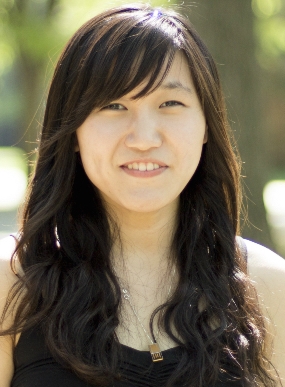 Lisa Lee合作论文数Google DeepMind2
 Eric Ni合作论文数Google DeepMind2
 Christopher A. Choquette-Choo合作论文数OpenAI2
 Siamak Shakeri合作论文数Google DeepMind2Alek Andreev合作论文数2
 Vlad Feinberg合作论文数Google DeepMind2Mateo Wirth合作论文数2
 Charline Le Lan合作论文数Google DeepMind2
 Celine Lee合作论文数Stealth Startup2
 James Keeling合作论文数DeepMind2Ambrose Slone合作论文数2
 Eric Noland合作论文数DeepMind2
 Elena Buchatskaya合作论文数DeepMind2
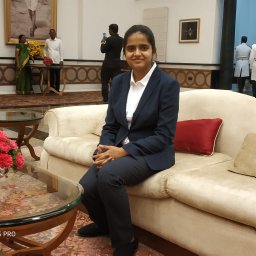 Shreya Pathak合作论文数Department of Computer Science and Engineering, IIT Bombay2
 Kris Cao合作论文数DeepMind2Alex Castro-Ros合作论文数2
 Jacob Austin合作论文数Google Brain2
 Tom Hennigan合作论文数Google DeepMind2
 Katie Millican合作论文数DeepMind2
 Jing Nathan Yan合作论文数Google DeepMind, Google2
 Aditya Barua合作论文数Google2
 Noah Fiedel合作论文数Google DeepMind2
 Demi Guo合作论文数Stanford University;Pika2Jean-Baptiste Lespiau合作论文数DeepMind2
 Rohan Anil合作论文数Meta2
 Demis Hassabis (戴密斯·哈萨比斯)合作论文数DeepMind;Isomorphic Labs2




