Homozygous deletions in Wilms' tumor DNA have been a key step in the identification and isolation of the WT1 gene. Several additional loci are also postulated to contribute to Wilms' tumor formation. To assess the frequency of WT1 alterations we have analyzed the WT1 locus in a panel of 77 Wilms' tumors. Eight tumors showed evidence for large deletions of several hundred or thousand kilobasepairs of DNA, some of which were also cytogenetically detected. Additional intragenic mutations were detected using more sensitive SSCP analyses to scan all 10 WT1 exons. Most of these result in premature stop codons or missense mutations that inactivate the remaining WT1 allele. The overall frequency of WT1 alterations detected with these methods is less than 15%. While some mutations may not be detectable with the methods employed, our results suggest that direct alterations of the WT1 gene are present in only a small fraction of Wilms' tumors. Thus, mutations at other Wilms' tumor loci or disturbance of interactions between these genes likely play an important role in Wilms' tumor development.
Wilms' tumor is a childhood nephroblastoma that is postulated to arise through the inactivation of a tumor suppressor gene by a two-hit mechanism. A candidate 11p13 Wilms' tumor gene, WT1, has been cloned and shown to encode a zinc finger protein. Patients with the WAGR syndrome (Wilms' tumor, aniridia, genitourinary abnormalities, and mental retardation) have a high risk of developing Wilms' tumor and they carry constitutional deletions of one chromosome 11 allele encompassing the WT1 gene. Analysis of the remaining WT1 allele in a Wilms' tumor from a WAGR patient revealed the deletion of a single nucleotide in exon 7. This mutation likely played a key role in tumor formation, as it prevents translation of the DNA-binding zinc finger domain that is essential for the function of the WT1 polypeptide as a transcriptional regulator. (C) 1993 Wiley-Liss, Inc.
Clones were isolated from two flow-sorted chromosome 13 libraries. Twenty-five clones were localized to various regions of chromosome 13, using a well-characterized panel of rodent x human hybrid cell lines. Eight DNA markers were localized to 13q14.2----q22, where the gene for Wilson disease, a recessive disorder of copper metabolism, was previously assigned. The new markers will be useful for the diagnosis of presymptomatic sibs of Wilson disease patients. We isolated six DNA clones proximal to the retinoblastoma gene, a region in which a translocation associated with rhabdomyosarcoma has been observed. Probes for both of these regions will be useful for the cloning of the genes involved in these diseases.
Type 1 hereditary tyrosinemia (HT) is an autosomal recessive disease characterized by a deficiency of the enzyme fumarylacetoacetate hydrolase (FAH; E.C.3.7.1.2). We have isolated human FAH cDNA clones by screening a liver cDNA expression library using specific antibodies and plaque hybridization with a rat FAH cDNA probe. A 1,477-bp cDNA was sequenced and shown to code for FAH by an in vitro transcription-translation assay and sequence homology with tryptic fragments of purified FAH. Transient expression of this FAH cDNA in transfected CV-1 mammalian cells resulted in the synthesis of an immunoreactive protein comigrating with purified human liver FAH on SDS-PAGE and having enzymatic activity as shown by the hydrolysis of the natural substrate fumarylacetoacetate. This indicates that the single polypeptide chain encoded by the FAH gene contains all the genetic information required for functional activity, suggesting that the dimer found in vivo is a homodimer. The human FAH cDNA was used as a probe to determine the gene's chromosomal localization using somatic cell hybrids and in situ hybridization. The human FAH gene maps to the long arm of chromosome 15 in the region q23-q25.
We have previously shown that two alleles of the MET locus are independently rearranged in the chemically-treated human cell line MNNG-HOS. One allele is the TPR-MET oncogene which was activated by fusion of the MET locus on chromosome 7 with the TPR locus on chromosome 1. The second allele is found on a der(7)t(1;7)(q23;q32) chromosome and is characterized by a deletion of the amino-terminus of the MET extracellular ligand binding domain. Here we present a pulsed field gel electrophoresis analysis which reveals that the two MET allele rearrangements in MNNG-HOS cells are more complex than originally thought. The breakpoint in MET on der(7) has been molecularly cloned and, unexpectedly, we found that rearrangement in this allele involves sequences derived from chromosome 2. Moreover, the rearrangement producing der(7) involves an inversion of the MET locus or a more complex alteration. Analysis of hybrid cells containing TPR-MET demonstrated that both the upstream and downstream portions of MET are conserved in this rearrangement and that oncogene activation occurred by an insertion of TPR sequences into the MET locus. These findings illustrate that when examined at the molecular level some chromosome abnormalities can be extremely complex and, thus, are of limited value in gene mapping studies.
 Webster Cavenee (韦伯斯特·卡维尼)合作论文数Ludwig Institute for Cancer Research;University of California, San Diego4
 Manfred Gessler合作论文数Department of Developmental Biochemistry, Medical Faculty, University of Würzburg2
 Anja König合作论文数2Gail Bruns合作论文数2D G Blair合作论文数1JA BUCHANAN合作论文数1C. H. C. M. Buys合作论文数1D.W. Cox合作论文数1GF VANDEWOUDE合作论文数1Steven J. Qualman合作论文数1
 C David James合作论文数Department of Neurological Surgery, Feinberg School of Medicine, Northwestern University1r gagne合作论文数1
 Joseph R. Testa合作论文数Lewis Katz School of Medicine, Temple University;Fox Chase Cancer Center, Temple University Health System, Inc.1
 Dominique Berube合作论文数1
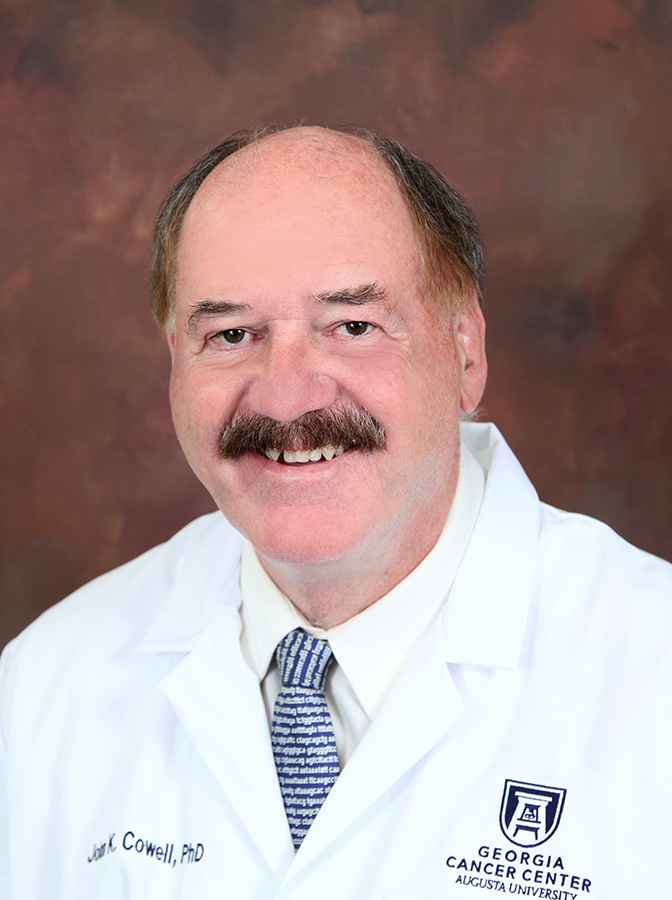 John Kenneth Cowell合作论文数Department of Pathology, Augusta University;Georgia Cancer Center1
 Morag Park合作论文数Department of Biochemistry, School of Biomedical Sciences, Faculty of Medicine and Health Sciences, McGill University;Rosalind and Morris Goodman Cancer Institute, Faculty of Medicine and Health Sciences, McGill University1Daniel Phaneuf合作论文数1Jay Moore合作论文数1Yves Labelle合作论文数1Paul Grundy合作论文数1Craig A. Peters合作论文数1
 Stuart H. Orkin合作论文数Harvard Medical School;Boston Children’s Hospital;Howard Hughes Medical Institute1
 Robert Tanguay合作论文数Département De Biologie Moléculaire, De Biochimie Médicale Et De Pathologie, Université Laval;Institute of Integrative Biology and Systems, Université Laval1J. A. Barwell合作论文数1Scott E Pautler合作论文数1




