Nuclear thermal propulsion (NTP) using hydrogen as propellant in a solid-state fission reactor to reach temperatures of up to 3000K can achieve significantly higher specific impulse than chemical propulsion. A promising fuel that is again considered for NTP is UxZr1-xCy. To reduce the overall mass loss as well as the uranium fuel loss, a range of experiments using additional carbon in hot hydrogen (2600 K, 6 SLPM flow rate) were performed for up to 5-6 h. Both a CH4 addition (0.1 and 0.2 vol%) in the hydrogen stream and the use of sacrificial graphite pieces upstream of the samples were tested, with sample compositions from 5 at% UC to 30 at% UC. The results showed a strong reduction of mass loss, up to a factor of 3, as well as a reduction of surface uranium losses in the presence of additional carbon in the atmosphere. Even with additional carbon in the atmosphere, material with 30 at% UC was not stable, but material with 20 at% UC was stable for up to 6h. The sample surfaces showed texturing after processing, possibly by grain growth on the surface. This led to a separation into grains with high uranium content close to the (100)-orientation, and with low uranium content in grains close to the (111)-orientation.
The use of uranium-zirconium carbide solid solutions in nuclear thermal propulsion (NTP) is promising due to their advantageous material properties. However, due to uranium enrichment limitations, it is crucial to understand how increased uranium content affects these properties. This study investigates the impact of varying uranium content on the thermophysical properties of substoichiometric uranium-zirconium carbide solid solutions, represented as (UyZr1-y)C, where y = 0.05, 0.1, 0.2, and 0.3. These compositions were synthesized through carbothermic reduction and densified using direct current sintering. Our phase characterization and elemental analysis underscore the necessity of using carbon-substoichiometric feedstock powders to accommodate carbon diffusion during processing. We report on the density, specific heat, and thermal diffusivity of these compositions up to 1473 K, revealing consistent trends across the compositional range. Calculated thermal conductivities from these properties, when extrapolated to NTP-relevant temperatures, show a significant decrease with increasing uranium content. This finding has critical implications for NTP fuel technology and underscores the need for further high-temperature studies.
Nuclear fuels able to withstand hydrogen exposure >2227 degrees C with minimal chemical and mechanical changes are required to enable nuclear thermal propulsion reactors for deep space exploration. Previously (U0.2Zr0.8)C was demonstrated to exhibit minimal mass loss, while maintaining structural integrity, when exposed to hydrogen at 2327 degrees C for 3 h. Here, various techniques were implemented for an in-depth characterization of that same sample. X-ray and neutron diffraction were used to assess for formation of secondary phases and to examine lattice parameter changes on the surface and the bulk of the material by probing the full volume of the 8 x 8 x 12 mm sample. In addition, nano-indentation and microstructural characterization were conducted to understand the impact of hydrogen exposure to the mechanical properties and internal microstructure of the material. The results indicate that: 1) no new phases were observed throughout the volume of the hydrogen-exposed sample, nor any lattice parameter evolution was reported suggesting the composition of the sample following hydrogen exposure remained unchanged; 2) the microstructure was not significantly altered, although a small reduction in the grain size (as-fabricated: 12.9 +/- 2.98 mu m, hydrogen exposed: 8.6 +/- 2.71 mu m) and an increase in porosity (as-fabricated: 97.82 % theoretical density (TD), hydrogen exposed: 89.31 % TD) were observed; 3) the hardness of the hydrogen-exposed material did increase by similar to 8.5 % when compared to the as-fabricated material and the hardness of the hydrogen exposed sample was shown to decrease with increasing temperature, as expected based on experience with ZrC. This detailed post-characterization examination, which is the first of its kind for fuels exposed to pure hydrogen at 2327 degrees C, suggests (U0.2Zr0.8)C would be incredibly resistant against chemical, dimensional, and mechanical changes when exposed to high temperature hydrogen during operation of a nuclear thermal propulsion reactor, making it an attractive fuel choice.
Continuing to refine our knowledge of the evolving mechanical properties of nuclear fuel over the entire fuel service cycle is necessary to understand the pellet-clad mechanical interaction that occurs in the fuel rods during the operation. A challenge with measuring the mechanical properties of irradiated fuels is their high levels of radioactivity that usually require the use of hot cells making testing time consuming and expensive. Nanoindentation based techniques can be employed on minute volumes of material to measure mechanical properties, including Young ' s modulus, hardness, and creep stress exponents. Increasing the mixed oxide fuels mechanical properties database through a variety of testing techniques should enhance modelers ' abilities to predict failure mechanisms in the fuel/clad interface. A current challenge to testing mixed oxide fuels is the plutonium component in the fuel. Mixed fluorite type oxides with ceria (CeO 2 ) can be used as a surrogate for mixed oxide fuels. In this study, (U,Ce)O 2 solid solutions samples are used to develop elevated temperature nanoindentation and nanoindentation creep testing methods for use on mixed oxide fuels. Nanoindentation testing was performed on 3 separate (U x-1 ,Ce x )O 2 compounds ranging from x equals 0.1 to 0.3 in equal steps at temperatures up to 800 degrees C: their Young ' s modulus, hardness, and creep stress exponents were evaluated. The Young ' s modulus decreases in the expected linear manner while the hardness decreases in the expected exponential manner. The nanoindentation creep experiments at 800 degrees C give stress exponent values, n = 4.7 - 6.9, that suggests dislocation motion as the deformation mechanism.
Protons from the Los Alamos Neutron Science Center have been used for pulsed radiography in dynamic experiments for the past 25 years. Pulses of protons are imaged on a scintillator, and the light from these images is captured by fast gated cameras. The need for fast, bright scintillators has led to some compromises in image quality due to tiling the scintillators and backgrounds with totally internally reflected light. We show how large-grain scintillator screens, made using a thin plastic binder, solve these problems.
This work presents post-irradiation examination data on UN-U3Si5 and U3Si5 fuels at low burnup (i.e., < 10-15 GWd/tHM) with Kanthal AF (R) cladding. The results suggest good irradiation performance for both the silicide and nitride-silicide composite pellets. Optical microscopy revealed that the pellet-cladding gap is still open, and limited axial cracking was observed only in UN-U3Si5 pellets. Microcracking was isolated to the U3Si5 phase in all cases and was observed in pre-irradiation and depleted pellets, indi-cating that it was not irradiation induced. The fission gas release was minimal for the calculated fission density achieved (2.6 - 3.15 x 10 20 fiss/cm3). No fission gas bubbles were observed in the optical met-allography. These results suggest acceptable swelling and fission gas behavior for both the single phase and composite compositions. (c) 2023 Published by Elsevier B.V.
Scintillators are vital components for nuclear instrumentation and its applications, including plasma diagnostics and imaging. As yields in controlled fusion experiments increase, the radiation tolerance of scintillator candidates for use in instrumentation is of particular importance. High radiation exposure can damage scintillating materials and alter the optical properties. The effects of radiation damage in Ce-doped mixed garnet ceramics over the compositional range (Y,Gd,Lu)3(Al,Ga)5O12 are investigated using optical techniques. The samples were exposed to 200 keV protons to an accumulated fluence of 1016 protons per square centimeter, then characterized using diffuse reflectance spectroscopy (DRS). DRS with visible light can assess the radiation tolerance of opaque poly-crystalline samples, which can be easily sintered from powders and thus offer distinct advantages in characterization compared to single crystals. Qualitative trends in induced absorption are presented as a function of composition, and the ideal cerium dopant concentration for Y2LuAl5O12 is determined to be 0.60-0.75 mol. %.
Uranium-zirconium carbides, (U,Zr)C, have been previously considered for nuclear thermal propulsion (NTP) reactors due to their high melting point, low neutron cross section, and good hydrogen compatibility. Fuel in NTP reactors would operate under extreme environments: high temperatures (∼3000 K) and under H2 exposure. Despite (U,Zr)C fuels showing promise for extreme environment operation, very little is known about their thermal conductivity as a function of temperature and their H2 compatibility at temperatures over 2500 K. In this work, phase pure UyZr1-yCz with y = 0.1, 0.2, 0.3 and z = 0.8, 0.85, 0.93 was synthesized and high density (U0.2Zr0.8)C samples were fabricated via spark plasma sintering. The thermal diffusivity, specific heat, and thermal expansion of (U0.2Zr0.8)C were measured, from which the thermal conductivity up to 1473 K was calculated for the first time. Furthermore, (U0.2Zr0.8)C samples with different geometries were exposed to H2 at 2600 K for 3 h using the compact fuel element environmental test facility at NASA Marshall Space Flight Center. Both samples performed remarkably well under hot hydrogen attack and no macroscopic cracking was identified. The combination of the relatively high thermal conductivity of these fuels, compared to UO2 for example, which increases with temperature, and their remarkable hydrogen compatibility make them excellent candidates for NTP reactors.
The Advanced Fuels Campaign performed a series of irradiation tests of minor actinide-bearing mixed oxide fuel (MA-MOX), the so-called AFC-2C&D experiments, to investigate the transmutation of long-lived transuranic actinide isotopes contained in spent nuclear fuel via fast reactor technology at burnups exceeding 10 % fission of initial metallic atoms. This manuscript reports the test results derived from one of the five MA-MOX rodlets taken to higher burnup in the AFC-2D irradiation. This includes both non-destructive investigations, such as gamma and neutron spectrometry, and destructive investigations, such as fission gas release, ceramography, and chemical burnup analysis. In addition, the microstructure of the fuel was investigated using advanced electron microscopy techniques including electron backscatter diffraction (EBSD) and transmission electron microscopy (TEM). It was observed with EBSD that the pellet had subdivision of the grains and the TEM observed migration of cladding material into the 5 metal precipitates in the fuel which could have been from the higher than desired oxygen/metal ratio. The TEM also showed an enrichment of Cr in fuel clad chemical interaction (FCCI) layer.
Both UN and U3Si2 are potential candidates for accident tolerant fuels due to their high fissile element density and exceptional thermal conductivity. However, they display a high susceptibility to oxidation and corrosion in steam environments. UN and U3Si2 composites were synthesized by conventional vacuum sintering but suffered significant micro-cracks in the silicide phase due to a mismatch in their thermal expansion. In this work, we report promising results of synthesizing UN-U3Si2 composites by spark plasma sintering and the micro-cracks can be significantly mitigated by controlling the cooling. Composite fuel pellets with a density of over 95% theoretical density and a uniform distribution of nitride and silicide phases can be achieved without micro-crack formation. The composite with 50 wt% UN and 50 wt% U3Si2 displays simultaneously-enhanced strength and fracture toughness, and possesses excellent thermal conductivity. The onset temperatures of all composites tested through dynamic oxidation testing are close to 540 ?, suggesting significantly improved oxidation resistance than the monolithic UN. These results demonstrate the potential of synergizing UN and U3Si2 in composites with enhanced fuel properties.
Cr-incorporated UN (Cr-UN) composite fuels with different Cr amounts up to 10 wt% are fabricated by spark plasma sintering, and their microstructure and phase heterogeneity are analyzed. Highly densified microstructure and homogeneous Cr distribution are identified for the Cr-incorporated UN pellets, demonstrating a liquid sintering characteristic with a Cr enriched phase on the UN grain boundaries. A ternary phase U2CrN3 forms in the Cr-UN matrix with Cr amounts of 5 wt% and 10 wt%. The SPS densified Cr-UN composite pellets display greatly-improved thermal conductivity and simultaneously high hardness and fracture toughness. The fracture toughness of the Cr-incorporated UN pellet is similar to 5.5 MPa-m(1/2), representing almost 130% enhancement as compared to that of monolithic UN sintered at the same condition. The Cr-incorporated UN pellets also display enhanced oxidation resistance as evidenced by increased onset temperature for oxidation to 450 ? for the 5 wt% Cr-UN. These results highlight that Cr additive and the formation of a ternary phase can be useful to improve the thermal-mechanical properties and oxidation resistance of UN fuels with well-maintained high fissile element density. (c) 2021 Elsevier B.V. All rights reserved.
Effective models focused on pertinent low-energy degrees of freedom have substantially contributed to our qualitative understanding of quantum materials. An iconic example, the Kondo model, was key to demonstrating that the rich phase diagrams of correlated metals originate from the interplay of localized and itinerant electrons. Modern electronic structure calculations suggest that to achieve quantitative material-specific models, accurate consideration of the crystal field and spin-orbit interactions is imperative. This poses the question of how local high-energy degrees of freedom become incorporated into a collective electronic state. Here, we use resonant inelastic x-ray scattering (RIXS) on CePd3 to clarify the fate of all relevant energy scales. We find that even spin-orbit excited states acquire pronounced momentum-dependence at low temperature-the telltale sign of hybridization with the underlying metallic state. Our results demonstrate how localized electronic degrees of freedom endow correlated metals with new properties, which is critical for a microscopic understanding of superconducting, electronic nematic, and topological states.
Quenching from the melt using an Optical Floating Zone furnace was investigated as a possible highthroughput preparation method in order to screen novel scintillating materials. To validate this method, polycrystalline rare-earth aluminum garnets and yttrium gallium aluminum garnets were synthesized and characterized by X-ray diffraction, photoluminescence and radioluminescence emission spectra as well as radioluminescence imaging and compared to the previously reported properties of those materials. In order to achieve rapid, but quantitative comparison of the materials, pellets fabricated from the synthesized powders were sintered; two different sintering conditions were investigated and compared. A simplistic energy deposition and light absorption model for brightness of opaque samples under X-ray irradiation was developed to estimate the relative scintillation efficiency of the materials. Based on the results, Y3Al5O12, LuY2Al5O12 and GdY2Al5O12 seem to have the highest scintillation efficiency among the prepared samples. (c) 2021 Elsevier B.V. All rights reserved.
Dense uranium mononitride (UN) pellets with controlled microstructures and tailored grain size from large-grained to a few microns are synthesized by spark plasma sintering (SPS) combined with high energy ball milling. The impacts of the sintering conditions on fuel microstructure, grain size, physical density, and phase behavior are systematically investigated, and the thermal-mechanical properties and oxidation behavior of the SPS densified UN pellets are characterized. Higher sintering temperatures and longer ball milling durations and thus finer starting UN powders promote sintering and densification, and dense UN pellets above 95% theoretical density can be achieved by SPS at 1873 K for 10 min. UN phase purity is maintained in the SPS-densified pellets sintered at a lower temperature and short duration. A phase heterogeneity with secondary UO2 or uranium sesquinitride (U2N3) occurs for the UN pellets sintered at higher temperatures using finer UN powders. The hardness and fracture toughness of the SPS-densified UN pellets increase with smaller grain sizes and higher densities to 7.9 GPa and 3.5 MPa m(1/2), respectively. Both small (1-2 mu m) and large grain-sized (30-50 mu m) UN pellets exhibit good thermal conductivity. Dynamic oxidation testing by a thermogravimetric analyzer in air shows that the onset temperature for oxidation varies with microstructure and phase heterogeneity of the SPS densified UN pellets. Particularly, the smaller-grained (micron-sized) UN pellets containing uranium oxides and U2N3 display lower weight gain and significantly-reduced oxidation kinetics, and full oxidation completes at a temperature above 1173 K when tested with a ramp rate of 10 K/min. (C) 2021 Elsevier B.V. All rights reserved.
Single crystals of U3Si2 and U3Si5 were grown using the modified Czochralski tri-arc growth technique in a gettered argon atmosphere. A variety of growth parameters including seed pull rate, seed rotation rate, crystal size, charge size and stoichiometry were evaluated to determine the best growth conditions in an effort to produce high quality single crystals for property measurements and basic studies. The crystals were characterized for quality, phase purity, density, and axial variations in chemistry. Near phase-pure, single crystals 5 mm in diameter and 35 mm in length were grown with minimal variation in stoichiometry and limited cracking using a crystal rotation rate of 30 rpm, a hearth rotation rate of 22 rpm, and a pull rate of 16 mm/h up to solidified fraction of g = 0.75.
 C.R. Stanek合作论文数Los Alamos National Laboratory47Darrin D. Byler合作论文数45
 Pedro Peralta合作论文数30
 Robin W. Grimes合作论文数London Centre for Nanotechnology, Department of Materials, Faculty of Engineering, Imperial College London23
 John Neumeier合作论文数Department of Physics, College of Letters & Science, Montana State University18
 Blas Pedro Uberuaga合作论文数Materials Science and Technology Division, Los Alamos National Laboratory17
 Joshua J White合作论文数14Andrew T. Nelson合作论文数13
 David A Andersson合作论文数Div Mat Sci & Technol, Los Alamos Natl Lab13James A. Valdez合作论文数Materials Science and Technology Division, Los Alamos National Laboratory13E. Kardoulaki合作论文数11
 Eric D. Bauer合作论文数Los Alamos National Laboratory11
 Carlos Rettori合作论文数Instituto de Física “Gleb Wataghin”,, Universidade Estadual de Campinas Caixa Postal 117011
 Damian C. Swift合作论文数Physics Division, Lawrence Livermore National Laboratory;3E Research Inc11Sb Oseroff合作论文数10
 Kurt Sickafus合作论文数Department of Materials Science and Engineering, Tickle College of Engineering, The University of Tennessee, Knoxville10
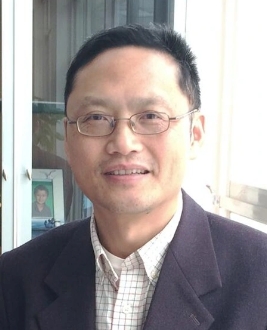 Shengnian Luo (罗胜年)合作论文数School of Materials Science and Engineering, Southwest Jiaotong University10John Tyler Dunwoody合作论文数10Bryan L. Bennett合作论文数10D.W. Cooke合作论文数10
 Sang-Wook Cheong合作论文数Department of Physics and Astronomy, School of Arts and Sciences, Rutgers, The State University of New Jersey;Rutgers Center for Emergent Materials, Rutgers, The State University of New Jersey9M. R. Levy合作论文数8J. M. Roper合作论文数8Jon M. Lawrence合作论文数8Koskelo Aaron C合作论文数8Stewart L. Voit合作论文数8
 Andrew Christianson合作论文数Oak Ridge National Laboratory8Mark R. Levy合作论文数8E. Granado合作论文数Center for Neutron Research, NIST;National Institute of Standards and Technology;NIST Center for Neutron Research, National Institute of Standards and Technology7
 Jeremy N. Mitchell合作论文数Materials Science and Technology Division, Los Alamos National Laboratory7
 Eric Loomis合作论文数Los Alamos National Laboratory Physics Division7J. A. Sanjurjo合作论文数6f chu合作论文数6
 Ross E Muenchausen合作论文数6Safarik Douglas J合作论文数6
 Martin Nikl合作论文数Department of Optical Materials, Institute of Physics of the Czech Academy of Sciences;Czech Technical University6
 Arthur H. Heuer合作论文数Department of Materials Science and Engineering, Case Western Reserve University6Kapil Krishnan合作论文数Ira A. Fulton Schools of Engineering Tempe, Arizona State University6Robert M Dickerson合作论文数6
 Mark T Whittaker合作论文数6Dennis L. Paisley合作论文数6
 Sven C. Vogel合作论文数Los Alamos National Laboratory6Masato Kato合作论文数Nuclear Fuel Cycle Engineering Laboratories, Japan Atomic Energy Agency6
 Sheldon Schultz合作论文数Center for Memory and Recording Research, University of California, San Diego5
 T. E. Mitchell合作论文数Department of Metallurgy and Materials Science, Case Western Reserve University5
 Raymond Osborn合作论文数Materials Science Division, Argonne National Laboratory5Scott R. Greenfield合作论文数5Victor Fanelli合作论文数University of Turin5




