While Max Weber's The Protestant Ethic and the Spirit of Capitalism has received extensive discussion, it is only recently that attention has turned to his later work, The Religion of China, even though for Weber the two studies were intrinsically linked. This article seeks to put the two in dialogue with each other, but the weight of the account is on Weber's analysis of Chinese culture and society, and especially his argument that it was the ethic of Confucianism that was principally responsible for China's failure to develop an indigenous capitalism, despite a promising start. How well does Weber's account stand up to recent work on the subject by Chinese and Western scholars? The article argues that whatever criticisms scholars may have of The Religion of China, it remains an inspiring work for approaching the study of non-Western cultures and civilizations.
The historic Chinese Empire (221 BCE-1911 CE) has frequently been treated in isolation, as something unique and exceptional. It is not often compared with other historic empires. This essay attempts to do just that. It argues that, for all its peculiarities, the Chinese Empire can fruitfully be compared with other empires, to the benefit of our understanding of empire in general across space and time. It considers point by point the case for not treating China as an empire, and answers these again point by point. The essay also argues that, in our present condition where the validity and efficacy of the dominant form of the nation-state have been called into question, and where globalization has also faltered and to some extent retreated, the experience of the historic empires might be a valuable resource to draw upon in considering our future possibilities.
SUMMARY: Krishan Kumar explores the renewed scholarly and public interest in empires, particularly the British Empire, and the often contentious debates surrounding its legacy. These debates are characterized by extreme politicization and suspicion of any attempts at a more balanced appraisal. Kumar argues that it is an aberration to identify criticism of empires with postimperial political moment informed by the fall of the Soviet Union, American interventions after 9/11, and the modern movements addressing historical injustices like slavery. The tradition of extensive self-criticism has historically existed within imperial powers and was an integral part of their functioning. Kumar cites examples from the British Empire and shows how this internal critique has been utilized by anticolonial thinkers. Finally, he considers the challenges to judging empires morally and the ongoing debate about the lasting impact of British rule, especially in India, acknowledging both positive and negative legacies while emphasizing the inherently contested nature of such assessments. Резюме: Кришан Кумар отмечает возобновление научного и общественного интереса к истории империй, в частности к Британской империи, проявляющегося в зачастую ожесточенных спорах вокруг ее наследия. Эти споры отличает крайняя политизация мнений и подозрительность к любым попыткам предложить более сбалансированный подход. Кумар считает ошибочным отождествление критики империй с постимперским политическим моментом, сформированным под влиянием распада Советского Союза, американских военных интервенций после 11 сентября и современными движениями за преодоление исторической несправедливости, такой как рабство. Традиция обширной самокритики была присуща имперским формациям и была неотъемлемой частью их функционирования. Кумар приводит в качестве примера Британскую империю и показывает, как эта самокритика перенималась антиколониальными авторами. В заключение он обращается к проблеме морального осуждения империй и продолжающимся дебатам о долгосрочном влиянии британского правления, особенно в Индии. Кумар отмечает существование как положительного, так и отрицательного имперского наследия, подчеркивая при этом изначально спорный характер таких оценок.
Being a developing country with a large population with high density, India was on high alert for the COVID-19 pandemic. India overcame much difficulty from the first wave, but was soon after smacked by the second wave of the COVID-19 pandemic. Due to its contiguous nature, people were advised to stay in their home, but some people have to continue their work to maintain public health, law and order and provide necessary services. Sanitary workers are one of them; they maintain cleanliness and sanitise public places, communities, towns and cities to control the COVID-19 spread. It is essential to know and understand their situation in such a problematic condition of the COVID-19 pandemic. This paper will elaborate on their social, occupational, and living conditions and possible relation with COVID-19. The author collected quantitative data through a cross-sectional study in four towns (Ladwa, Indri, Thanesar and Radaur) of Haryana in 2017. Quantitative and qualitative data had collected from sanitary workers through structured interview and observation. During fieldwork, the researcher lived with the community and observed closely. Results show that their working conditions are risky, working timings and duration also risky, alcohol and tobacco use is high, protective gears are not available to them, job status primarily contractual, no or low educational standard, health conditions are down and the standard of living is low & living situation are congested. The results indicate that they are at high risk of COVID-19 infection, to develop severe acute illness from COVID-19 and community spread. While their sanitary workers come into contact with different kinds of waste and surfaces, so their chance of infection is high because COVID-19 can survive on any surface. Their occupational, educational, social, health, living standards and living conditions make them vulnerable to developing a severe acute illness, leading to a high death rate and community spread. Therefore we need to take some essential steps in this regard.
Despite the urging of classical sociologists such as Emile Durkheim and Max Weber, history and sociology have largely followed different professional and institutional tracks. The result has been detrimental to both disciplines. The loss is especially apparent in the study of empires. Historians have made great contributions to the study of individual empires but have been reluctant to theorize and generalize about them. Sociologists for their part have followed their founders in largely ignoring empires, though there has been a new interest more recently. A rapprochement, or perhaps a synthesis, between history and sociology is urgently needed if the study of empires is to progress. Especially important is the need for a comparative approach, which sociologists are particularly well placed to offer.
Nations have long since preoccupied historians. Histories of how nations came to be, how they persisted, and how nations were unmade are innumerable. As a political unit of analysis, the nation has fascinated and divided. On the one hand, histories of the nation have traced the origins of particular nation states, analysing how a large body of people becomes united within a geographic territory through a shared language, a shared identity, and a shared culture. On the other hand, such histories have been criticized for reifying the nation-state, stressing the majority over the minority, and ultimately for obfuscating differences. The nation as a structure can indeed serve the needs of the ruling establishment to create a governing society. How then, can historians retain the nation as a unit of analysis without for example valorizing England in histories of the UK? Why is it so often that in histories of Britain, Ireland, Scotland, and Wales are mentioned as a comparable case and not the focus itself? Is it possible to ensure that histories of the British Isles reject and refuse implicit hierarchies that routinely prioritize one nation over other nations? Fundamentally, is it even worthwhile to study the nation instead of, for example, focusing on specific gendered groups, or ethnic communities or labour movements for instance? By focusing on thematic experiences rather than the nation-state can historians avoid inadvertently reproducing structural inequality in twenty-first-century Britain?
All major continental empires proclaimed their desire to rule “the entire world,” investing considerable human and material resources in expanding their territory. Each, however, eventually had to stop expansion and come to terms with a shift to defensive strategy. This volume explores the factors that facilitated Eurasian empires’ expansion and contraction: from ideology to ecology, economic and military considerations to changing composition of the imperial elites. Built around a common set of questions, a team of leading specialists systematically compare a broad set of Eurasian empires – from Achaemenid Iran, the Romans, Qin and Han China, via the Caliphate, the Byzantines and the Mongols to the Ottomans, Safavids, Mughals, Russians, andMing and Qing China. The result is a state-of-the art analysis of the major imperial enterprises in Eurasian history from antiquity to the early modern that discerns both commonalities and differences in the empires’ spatial trajectories.
Nearly every component of the system, including the generators, the transmission and distribution lines, and the loads themselves, contributes either to the production of reactive power or to its consumption. The capacity of an interconnected power system to return to regular or stable functioning after being disrupted in some way is referred to as its stability. It is getting more difficult to maintain synchronism amongst the different components of the power system as linked systems continue to expand in size and spread out across huge geographical areas. In this paper, the capacity of the Custom Power Active Transformer that deliver UPFC services is investigated. These services include power flow management, reactive power compensation, voltage regulation, and the removal of harmonics. A 69kV transmission line American Electric Power system namely IEEE 14 test bus system is considered for dealing the power quality issues like reactive power compensation and harmonic elimination. A modified ANFIS (BA-ANFIS) controller is used to control the UPFC. All the simulations carried out in MATLAB/Simulink.
Manual scavenging is a caste-based occupation (Shahid, 2015, Social Change, 45(2), 242–255). It involves the manual removal of human excreta from dry latrines and septic tanks (using basic tools such as tin boards, buckets and baskets lined with sacking) and then carrying it on the head or shoulder and disposing it away (Kumar, 2014, Scavenger community at the crossroads: Reflection on state intervention). Broadly, these people work in municipal corporation, railways, households, cleaning of open defecation area, industries and hotels where they deal with human and animal excreta. Dealing in sewerage and manholes, garbage loading and caring and cleaning animal carcass is also included in manual scavenging. Historically, the scavenger community is considered to be untouchable (Singh, 2014, Contemporary Voice of Dalit, 7(1), 81–94), because of lowest caste status and lowest occupational status. Their lowest social status made them to face exclusion in almost all domains in society. They are protected through constitutional rights in documents and are provided with some welfare services for their development. This study aims to understand the current status of social exclusion of scavenger community and usefulness of government inclusion policies on social and occupational status of scavenger community. This is a cross-sectional study, following mixed method research design. The study was conducted in four towns of Haryana: Ladwa, Kurukshetra, Indri and Radwar. The safai karamchari (sanitary workers) of municipalities from these four towns were selected as respondents. Data was collected through semi-structured interview and structured tool was used for assessing social exclusion. Here, the results show that all respondents ( safai karamchari) belong to Balmiki caste and all were Hindu by religion. Among them, 62% respondents were illiterate, more than 80% reported that this work was transferred from ancestors or lack of opportunity, and 98% reported no protective gears provided while working. Social exclusion found prevalent in almost all domains, while the face exclusion was in social, cultural, educational, occupational, political domains and accessing social services. The result shows that Indian policies for social inclusion fail in case of scavenger community. Therefore, this is matter of dealing for social work profession.
Abstract Colony and empire, colonialism and imperialism, are often treated as synonyms. This can be acceptable for many purposes. But there may be also good reasons to distinguish between them. This article considers in detail one important attempt in that direction by the classicist Moses Finley. It argues that there is considerable strength in that approach, putting the stress as it does on the distinctiveness of the settler community. It is also valuable in suggesting that early-modern Western colonialism marked a new departure in an older history of imperialism, thus once again suggesting the need for a conceptual separation of the two. But the article concludes that ultimately more may be lost than gained by insisting on the distinction. In particular, it inhibits wide-ranging comparisons between ancient and modern, and Western and non-Western, empires, which can often suggest illuminating connections and parallels. The field of empire studies gains by drawing on the rich store of examples provided by the whole history of empire, from the earliest times to now. Western colonialism is part of that story; to separate it out is to impoverish the field.
The role of soil‐forming factors (time, parent material, climate, biota, and topography) on soil processes has commonly been studied using soil sequences where only one factor varies between sites. However, when multiple factors change, it becomes difficult to partition the importance of different soil‐forming factors for soil formation. We show for an altitudinal gradient how proximal sensing (portable XRF, Fourier‐Transform Infrared [FTIR]), multivariate statistics, and Bayesian mixing modeling can help to quantify the importance of two soil‐forming factors. First, we confirmed the existing qualitative soil‐landscape model of concomitant shifts in parent material (greywacke loess to mafic volcanics) and climate (higher precipitation) with altitude, leading to increases in pedogenic oxides, soil carbon, and soil Fe, while Si concentrations and pH declined. Second, we applied a mixing model using immobile elements as parent material tracers to quantify the parent material contribution in soils across our gradient. Third, we conducted a variation analysis to determine how much variation in the soil FTIR spectra could be explained by parent material and climate. We found that parent material explained a larger proportion of the variation than climate. However, because of the strong spatial correlation between climate and parent material, a large proportion of the variation in the FTIR data could be explained by either parent material or climate, potentially concealing the leading role of parent material. Given that parent material is often omitted in modern digital soil mapping, our results emphasize the importance of parent material as a predictor of spatial soil distribution.
Tariq Modood has for many years been an eloquent and persuasive spokesman for the theory and politics of multiculturalism. As attacks on it have mounted in recent years – ‘multiculturalism is dead’...
 G. Sunita Sundari合作论文数9Kumbhare Ravindra M合作论文数6
 Kosurkar Umesh B合作论文数Fluoroorganic Division, CSIR-Indian Institute of Chemical Technology5natalya shub合作论文数4mark david soll合作论文数4
 Tulshiram Laxman Dadmal合作论文数Fluoroorganics Division, Indian Institute of Chemical Technology4
 Thandu Nagaiah合作论文数3M.C. Shaw合作论文数3
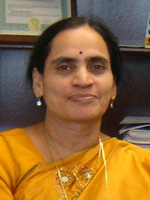 Lakshmi Kantam Mannepalli合作论文数Department of Chemical Engineering, Institute of Chemical Technology3
 Thirumalachari Sundararajan合作论文数Department of Mechanical Engineering, Indian Institute of Technology Madras3T. Srinivas合作论文数3
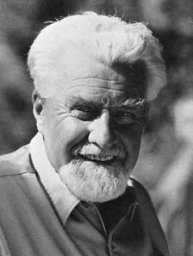 Konrad Z. Lorenz合作论文数Max-Planck-Institut für Verhaltensphysiologie Seewiesen und Erling-Andechs3S. N. C. V. L. Pushpavalli合作论文数2
 Dr Dinesh Kumar合作论文数2
 Debasmita Mukhopadhyay合作论文数Sharjah Inst Med Res, Univ Sharjah2M. Bharath合作论文数2John Offer合作论文数2
 Alan Scott合作论文数University of New England (NSW), University of Innsbruck2Divya B合作论文数2
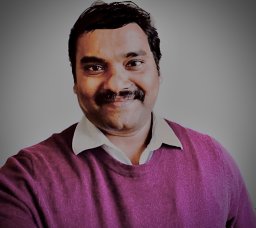 Ramachandra Ra Ka合作论文数Crystal Growth and Nanoscience Research Centre, Government College (A),2
 Michael Kenny合作论文数Centre for Research in Arts, Social Sciences and Humanities, University of Cambridge2Lakkoju Chakrapani合作论文数2
 Satyanarayanan R. Chakravarthy合作论文数Department of Aerospace Engineering, Indian Institute of Technology, Madras2T. H. Ooi合作论文数2
 Nicholas Rengger合作论文数St Andrews University2
 Janaki Ramaiah合作论文数2
 Ben Wellings合作论文数School of Social Sciences, Faculty of Arts, Monash University2Arthur Aughey合作论文数2
 Ricardo Blaug合作论文数University of Leeds Institute of Politics & International Studies2Mike Gane合作论文数2Robert P. Waranis合作论文数2
 A. Naveen Sait合作论文数Department of Production Engineering, National Institute of Technology2
 Anjana Devi Tangutur合作论文数Centre for Chemical Biology, Indian Institute of Chemical Technology2
 Thekkathu Ramani合作论文数Inorganic and Physical Chemistry Division, Indian Institute of Chemical Technology2
 Vasudevan Raghavan合作论文数2
 Boyapati Manoranjan Choudary合作论文数Dept. of Chemical Sciences, Tezpur Universityy2Dl Coombes合作论文数1Bob S. Carter合作论文数1David Chaney合作论文数1Eric Rowe合作论文数1Dominic Strinati合作论文数1Akena Venkatesham合作论文数1monica tejwanimotwani合作论文数1C. P. Neema合作论文数1
 V. Thushara合作论文数1K. W. H. Foulds合作论文数1j venkateshwar rao合作论文数1Peter Hession合作论文数1




