We describe on-going research on a system for extraction and recognition of patron data such as name and address from scanned and binarized images of US checks. Extraction of the region of interest is accomplished by a graph algorithm that operates on connected components. OCR on the region of interest involves separation of connected components into lines, and generation of multiple segmentation hypotheses and character choices for each connected component. Interpretation of the raw OCR results as addresses and names is accomplished using Checkmate, a language-based OCR interpretation engine. A description of the different system components is presented in this paper.
We describe a prototype system for reading IATA flight coupons. The system exploits various characteristics of IATA coupons to determine reliably coupon types and field boundaries, and to minimize the amount of manual keying. In particular, we propose a method for extracting and recognizing fixed-pitch characters on noisy images with a complex background. The method does not require a complete drop-out of background, pre-printed text, or lines before recognition, and allows for recovering partially damaged characters (e.g., overlap with form content, handwritten annotations, etc.).
We introduce three character degradation models in a boosting algorithm for training an ensemble of character classifiers. We also compare the boosting ensemble with the standard ensemble of networks trained independently with character degradation models. An interesting discovery in our comparison is that although the boosting ensemble is slightly more accurate than the standard ensemble at zero reject rate, the advantage of the boosting training over independent training quickly disappears as more patterns are rejected. Eventually the standard ensemble outperforms the boosting ensemble at high reject rates. Explanation of such a phenomenon is provided in the paper.
Numerous advances have been made in developing intelligent programs, some inspired by biological neural networks. Researchers from many scientific disciplines are designing artificial neural networks (ANNs) to solve a variety of problems in pattern recognition, prediction, optimization, associative memory; and control.Although successful conventional applications can be found in certain well-constrained environments, none is flexible enough to perform well outside its domain. ANNs provide exciting alternatives, and many applications could benefit from using them.This article is for those readers with little or no knowledge of ANNs to help them understand the other articles in this issue of Computer. It discusses the motivation behind the development of ANNs; describes the basic biological neuron and the artificial computation model; outlines network architectures and learning processes; and presents multilayer feed-forward networks, Kohonen's self-organizing maps, Carpenter and Grossberg's Adaptive Resonance Theory models, and the Hopfield network. It concludes with character recognition, a successful ANN application.
The system described in this paper applies hidden Markov technology to the task of recognizing the handwritten legal amount on personal checks. We argue that the most significant source of error in handwriting recognition is the segmentation process. In traditional handwriting OCR systems, recognition is performed at the character level, using the output of an independent segmentation step. Using a fixed stepsize series of vertical slices from the image, the HMM system described in this paper avoids taking segmentation decisions early in the recognition process.
In this paper we describe a top-down clustering method consisting of an intra class step and an inter class step. In the intra class step all the samples for each category are initially divided into a small number of clusters, then the largest cluster is split and its members reallocated. The largest cluster is decided based on a new concept, "Volume" of a cluster that is a hybrid of existing two common criteria for splitting: number of members in a cluster, and variance of a cluster. In the inter class step recognition is done for all the training set to assign best radius to each prototype. The radii are used as a normalizing factor in the computation of distance metrics. In our experiments we generated a prototype library by clustering characters written by Americans. When we used another training set written by Japanese only for tuning radii of the American library, the recognition rate of Japanese test set increased from 87.9% to 92.1%. The radii can be tuned even by OCR end users when the application domain is quite different from that of the initial clustering by OCR developers.
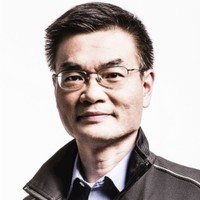 Jianchang (JC) Mao合作论文数Fellows Fund4
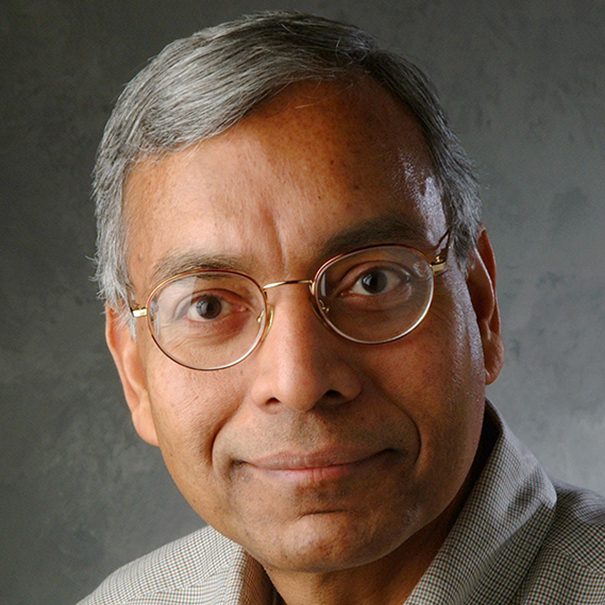 Anil K. Jain (阿尼尔·库马尔·贾恩)合作论文数Department of Computer Science & Engineering, College of Engineering, Michigan State University1
 Sriganesh Madhvanath合作论文数Ebay1
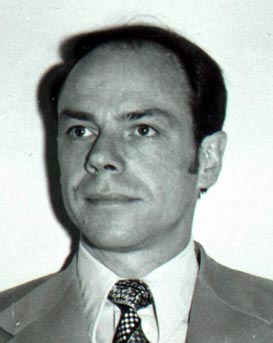 Raymond A. Lorie合作论文数IBM Research Division, Almaden Research Center1
 Scott D. Connell合作论文数1
 S. Mccauliff合作论文数1
 András Kornai合作论文数Second Mind Labs;Budapest Institute of Technology;Computer and Automation Research Institute, Hungarian Academy of Sciences1




