Structured light propagation experiments were carried out in a Rayleigh-Bénard (RB) convective water tank in order to evaluate beam characteristics and susceptibility of several topological charges to optical turbulence conditions spanning several fluid turbulence levels set by the system Rayleigh number. Structured light fields were generated using a spatial light modulator, which imparts a phase change to create light that carries optical orbital angular momentum (OAM). Beams were propagated over a 1.2 m path under weak, moderate, and strong optical turbulence conditions. The flow dynamics, relative to the OAM beam dynamics, are such that a "frozen" state is realized in the R-B tank for set flow conditions. This ensures consistent turbulence across all tested beams, enabling reliable comparisons of beam performance under identical scenarios. The study focuses on observing turbulence dynamics within the structured beam's profile using intensity fluctuation analysis in the temporal and spatial domains, correlations with dynamic masking between consecutive realizations of the beam's intensity, and power spectral densities and histograms. The scintillation index (SI) was evaluated using three methods: (1) at the point of maximum intensity within the annulus, (2) at the centroid within the vortex, and (3) averaged over the region of interest containing all non-zero beam intensities. It was found that a reduction in the SI for OAM-carrying beams with increasing topological charge was independent of the optical turbulence conditions. Since SI represents a normalized variance, this reduction is not simply a result of intensity redistribution associated with higher topological charge; rather it demonstrates that the SI systematically decreases with increasing topological charge under all experimental conditions. In addition, to gain deeper insight into the optical turbulence dynamics, histograms of the annular maximum intensity fluctuations, spectra of the correlation coefficients, and maximum intensity measurements are presented.
We present a comprehensive experimental study investigating orbital angular momentum (OAM) beams for sensing underwater optical turbulence strength using multimodal optical measurements. Synchronized measurements of pupil plane intensity, focal plane intensity, and mode-sorter spectra were collected in a Rayleigh-B & eacute;nard convection tank across three turbulence strengths, ranging from C-n(2) = 1.96 & times; 10(-10) to 2.06 & times; 10(-9) m(-2/3). The pupil plane scintillation index provided the best discrimination between turbulence conditions, with comparable performance across OAM modes. Focal plane beam wander showed a monotonic increase with turbulence strength across all OAM modes. The mode-sorter results varied with the OAM mode, with modes l = 2 and l = 4 yielding greater separation in the mode spreading due to the turbulence. Our results demonstrate that the pupil plane scintillation across all OAM modes tested captures the most relevant information for discriminating between optical turbulence strengths, validating structured light as a versatile probe for environmental sensing. (c) 2026 Optica Publishing Group. All rights, including for text and data mining (TDM), Artificial Intelligence (AI) training, and similar technologies, are reserved.
We study the propagation of structured light through underwater turbulence using a controlled Rayleigh-Bénard setup, comparing Gaussian and OAM beams to extract environmental insights from their degradation.
We experimentally demonstrate a 14% improvement in the signal-to-background power ratio in a laser transmissometer by augmenting a pinhole spatial filter with a vortex phase mask and beam block combination. This study addresses the significant challenge of measuring light transmission through turbid media, where signal loss due to scattering is a common problem. By integrating a vortex phase mask with a pinhole spatial filter, we achieve imaging through greater attenuation lengths than with either filter alone. This advancement has potential applications in underwater imaging, atmospheric optics, and other fields requiring precise optical measurements in scattering environments. The results provide a robust experimental validation of theoretical models and suggest new directions for future research in optical phase element design and transmissometry.
This study introduces a novel approach to detect corrosive defects on metal substrates using infrared (IR) thermal images. Among numerous non-destructive techniques, infrared thermography (IRT) is notable for its effectiveness in identifying invisible surface and subsurface corrosion in materials. Existing methods for corrosion detection from IRT images lack the connection to the physical processes governing the emission of heat by defective areas. This paper proposes a transport-based mathematical model to describe the difference in heat-flow characteristics between the non-corroded and corroded material regions. A novel detection technique is then devised, utilizing the signed cumulative distribution transform (SCDT) and a subspace classifier to classify 1D thermal signals derived from IRT image sequences. Experiments demonstrate that the proposed approach is capable of detecting corrosive regions on metal substrates with high accuracy while being data efficient with respect to a number of machine learning-based detection methods.
Accurate measurement of laser light phase after propagation through underwater optical turbulence is crucial for defense and commercial applications like underwater communications and sensing. Traditional phase-measuring methods, like Shack-Hartmann wavefront sensors, have limited effectiveness in strong optical turbulence. The Gerchberg-Saxton ( GS) method utilizes synchronized intensity images in the image and Fourier planes and retrieves the phase through an iterative algorithm. We evaluate the Gerchberg-Saxton algorithm's accuracy for laser light propagation through simulated Kolmogorov turbulence and experimentally-generated Rayleigh-Benard (RB) natural convection. The results of the phase retrieved from the experimental data recorded in pupil and focal planes are compared with the phase measurements from a Shack-Hartmann sensor. We tested the efficacy of the Gerchberg-Saxton algorithm to estimate the phase of laser light upon propagation through underwater optical turbulence.
We estimate the phase of laser beams using the Gerchberg-Saxton algorithm after propagation through experimental and simulated optical turbulence. Synchronous pupil-plane and focal-plane intensities of Gaussian and Laguerre-Gaussian beams are leveraged.
We generate an alphabet of spatially multiplexed Laguerre-Gaussian beams carrying orbital angular momentum, which are demultiplexed at reception by a convolutional neural network (CNN). In this investigation, a methodology for optimizing alphabet design for best classification rates is proposed, and three 256-symbol alphabets are designed for performance evaluation in optical turbulence. The beams were propagated in three environments: through underwater optical turbulence generated by Rayleigh-Bénard (RB) convection (C n2≅10-11 m -2/3), through a simulated propagation path derived from the Nikishov spectrum (C n2≅10-13 m -2/3), and through optical turbulence from a thermal point source located in a water tank (C n2≅10-10 m -2/3). We report a classification accuracy of 93.1% for the RB environment, 99.99% in simulation, and 48.5% in the point source environment. The project demonstrates that the CNN can classify the complex alphabet symbols in a practical turbulent flow that exhibits strong optical turbulence, provided sufficient training data is available and testing data is representative of the specific environment. We find the most important factor in a high classification accuracy is a diversification in the intensity profiles of the alphabet symbols.
The Rayleigh-Bénard physical model generates well-defined optical turbulence. We demonstrate its characterization and use in various experimental studies, including phase retrieval, structured light, and optical communication systems.
The experimental study of optical turbulence proves difficult due to challenges in generating controllable conditions in a laboratory environment. Confined water tanks that produce Rayleigh-B & eacute;nard (RB) convection are one method to generate optical turbulence using a controllable temperature gradient. It is of utmost concern to quantify the properties of the optical turbulence generated for characterization of other optical applications such as imaging, sensing, or communications. In this experimental study a Gaussian beam is propagated through a RB water tank where two intensity measurements are made at the receiver's pupil and focal plane. The pupil and focal plane results include quantification of the intensity fluctuation distribution, scintillation distribution, and refractive index structure constant at various values of the temperature gradient. The angle of arrival fluctuations is also calculated at the focal plane to obtain a second estimate of Cn2. The pupil plane estimate for Cn2 using scintillation index and focal plane angle of arrival fluctuations is compared to preliminary predictions of Cn2 as a function of RB temperature gradient showing Cn2 similar to A T4/3. The outcomes of the study confirm that the RB process produces intensity fluctuations that follow gamma-gamma and log-normal probability density functions. Estimates of the refractive index structure constant Cn2 produce the same trends with different magnitudes when measured from the pupil and focal plane. (c) 2024 Optica Publishing Group
A model for the structure function constant associated with index of refraction fluctuations in Rayleigh-Benard turbulence is developed. The model is based upon the following assumptions: (1) the turbulence is homogeneous and isotropic at or near the mid-plane, (2) the rate of production is in balance with the rate of dissipation, (3) an inertial region exists, and (4) estimates for the rate of dissipation of temperature fluctuations and of turbulent kinetic energy can be made by assuming that the large-scale turbulence is dissipated in one eddy turnover time. From these assumptions, the dependence of the structure function on the geometry, heat flux, and the properties of the fluid is obtained. The model predicts that the normalized structure function constant is independent of the Rayleigh number. To verify the model, numerical simulations of Rayleigh-Benard turbulence were performed using two different approaches: an in-house code based on a pseudo-spectral method, and a finite volume code which employs a model for the smallest scales of the turbulence. The model was found to agree with the results of the simulations, thereby lending support for the assumptions underlying the theory.
We experimentally apply incoherent Fourier ptychography to enhance the resolution of recorded images by projecting known, uncorrelated, random patterns at high speed onto 3D moving and distant objects. We find that the resolution enhancement factor can be greater than 2, depending on the projection and camera optics.
We experimentally record intensity of laser light at the pupil and focal planes after propagation through underwater optical turbulence. We study the temporal and spatial properties of intensity correlations and angle of arrival fluctuations.
We compare the propagation of a Gaussian beam to the beams that carry OAM in moderate and strong underwater optical turbulence created by Rayleigh Bénard convection. Analysis focuses on scintillation index and frame-to-frame correlations.
Synchronized optical wavefront and intensity measurements are used to characterize the optical turbulence generated by Rayleigh-Bénard convection. We find refractive index structure constant and the shape of the phase structure function at varying temperatures.
Propagation of a laser beam through the Rayleigh-Bénard (RB) convection is experimentally investigated using synchronous optical wavefront and intensity measurements. Experimental results characterize the turbulence strength and length scales, which are used to inform numerical wave optic simulations employing phase screens. Experimentally found parameters are the refractive index structure constant, mean flow rate, kinetic and thermal dissipation rates, Kolmogorov microscale, outer scale, and shape of the refractive index power spectrum using known models. Synchronization of the wavefront and intensity measurements provide statistics of each metric at the same instance in time, allowing for two methods of comparison with numerical simulations. Numerical simulations prove to be within agreement of experimental and published results. Synchronized measurements provided more insight to develop reliable propagation models. It is determined that the RB test bed is applicable for simulating realistic undersea environments.
Characterization of the optical turbulence of complex media is important to designing resilient free-space optical communication systems. Previous studies have used machine learning algorithms to characterize optical turbulence in the atmospheric environment, but we propose to extend this concept to the underwater medium. Our experimental design propagates a Gaussian beam ~1.25 meters through a Rayleigh-Bénard (RB) turbulence tank, which creates realistic optical turbulence that is fully controllable and repeatable. The intensity and phase distortions of the Gaussian beam after propagation will be collected and used to train a convolutional neural network (CNN), for the purpose of the underwater optical turbulence characterization. The CNN will be trained to classify turbulence levels based on both intensity and phase measurements in varied levels of optical turbulence.
A Gaussian beam is propagated through a water tank containing Rayleigh-Bénard convection. The beam wavefront is measured using a Shack-Hartmann sensor to obtain optical wavefront statistics for characterization of the random phase perturbations.
 Watnik Abbie T合作论文数22
 Svetlana Avramov-Zamurovic合作论文数United States Naval Academy;Weapons and Systems;Engineering Department Annapolis;Engineering Department Annapolis, United States Naval Academy18
 Jonathan M. Nichols合作论文数Optical Sciences Division, Naval Research Laboratory17
 Robert A. Handler合作论文数Laboratory for Computational Physics and Fluid Dynamics, Naval Research Laboratory17
 Geoff Smith合作论文数Faculty of Science, University of Technology Sydney16
 J. R. Lindle合作论文数Code 5613, Naval Research Laboratory 20375 Washington, DC 20375 Washington, DC15
 Nathaniel A. Ferlic合作论文数Dept Elect & Comp Engn, Univ Maryland11Colin C. Olson合作论文数10
 Novak Kyle M合作论文数9
 Supathorn (Supy) Phongikaroon合作论文数Naval Research Laboratory9Andrey V. Kanaev合作论文数8Owen O'malley合作论文数7Lebow Paul S合作论文数7Waterman James合作论文数6
 Zvi Rusak合作论文数Rensselaer Polytechnic Institute6
 Silvia Matt合作论文数RSMAS5George O. Marmorino合作论文数5Patrick L. Neary合作论文数4
 Divitt Shawn合作论文数4
 Leslie N. Smith合作论文数4
 Joel M. Esposito合作论文数United States Naval Academy4
 Nicholas Flann合作论文数Department of Computer Science, College of Science, Utah State University4
 Dennis F. Gardner合作论文数3
 Stephen J. Frasier合作论文数Microwave Remote Sensing Laboratory;Department of Electrical Engineering;University of Massachusetts Amherst;Microwave Remote Sensing Laboratory, University of Massachusetts Amherst3
 John R Saylor合作论文数Department of Mechanical Engineering;Clemson University;Department of Mechanical Engineering, Clemson University3
 Jakov V. Toporkov合作论文数3
 Ivan Savelyev合作论文数3
 Dragana Perkovic合作论文数3Matthew B. Hart合作论文数2William A. Jarrett合作论文数2J Kou合作论文数2Heath Gemar合作论文数Jacobs Corp2
 Colin Olson合作论文数2
 Christopher A. Metzler合作论文数Stanford University2
 Steven Douglas Feller合作论文数2
 David J. Brady合作论文数Department of Electrical and Computer Engineering, Duke University2Shixiao Wang合作论文数2
 Linda Mullen合作论文数2
 Christopher C Wilcox合作论文数Naval Research Laboratory;Remote Sensing Division;Remote Sensing Division, Naval Research Laboratory2Freddie Santiago合作论文数2
 Mark A. Sletten合作论文数2
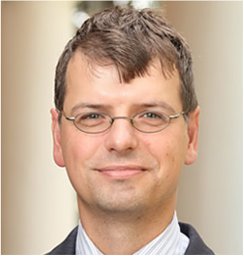 Gustavo Rohde合作论文数Department of Biomedical Engineering, School of Engineering and Applied Science, University of Virginia;Department of Electrical and Computer Engineering, School of Engineering and Applied Science, University of Virginia2
 Sergio R. Restaino合作论文数Naval Research Laboratory;Remote Sensing Division;Remote Sensing Division, Naval Research Laboratory2
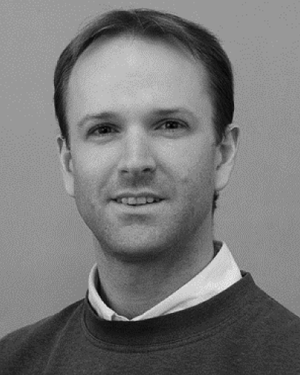 Gordon Farquharson合作论文数2
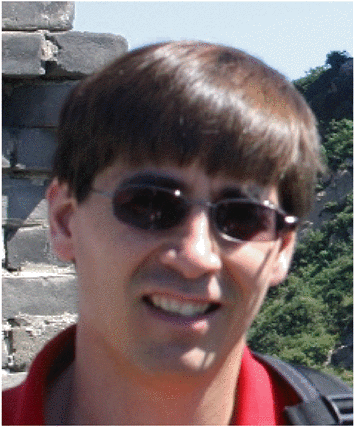 Ty Martinez合作论文数2
 Amir H. Hirsa合作论文数Department of Mechanical Engineering, Aeronautical Engineering, and Mechanics, Rensselaer Polytechnic Institute2
 Vasanthi Sivaprakasam合作论文数US Naval Research Laboratory2MA Sletten合作论文数1Nicholas Makrakis合作论文数1




