Summary form only given. MICHELLE is a new 2D/3D steady-state and time-domain particle-in-cell (PIC) code that employs electrostatic and now magnetostatic finite-element field solvers. Over the past several years the code has been employed successfully by industry to design and analyze a wide variety of devices that include multistage depressed collectors, gridded guns, multibeam guns, annular-beam guns, sheet-beam guns, beam-transport sections, and ion thrusters. Here we present features in MICHELLE that are new since our last report and we highlight some recent applications of MICHELLE. We have added a prototype 3D self magnetic field solver based on the curl-curl finite-element formulation for the magnetic vector potential. The solver employs edge basis functions. Current is accumulated with a new algorithm that takes advantage of the unstructured grid particle tracker employed by MICHELLE. The prototype implementation has worked well to date, and is being applied to moderately relativistic sheet-beam guns while we continue to test and develop the solver. The electrostatic field solver now accommodates dielectric media, and periodic boundary conditions are now functional on all grids, not just structured grids. We have added a global optimization module to the user interface. Both electrical parameters (such as electrode voltages) and geometric parameters can be optimized. We will discuss various approaches to optimizing collectors. The presentation demonstrates this new capability on a generic five-stage depressed collector provided by Boeing EDD. We will also report on our progress on adaptive mesh refinement and implementation of the MICHELLE gun code into the STAR analyst environments
We report on recent developments and tests of a novel particle tracking algorithm. This algorithm tracks particles element by element through the unstructured grid, stopping and then restarting at each element boundary crossing. Within each element the particles are tracked in the element's local coordinate system. Excellent accuracy is achieved with high order Runge-Kutta integrators despite discontinuities arising from the finite element field solution. Tests on a cylindrical coaxial capacitor meshed with linear, quadratic and cubic tetrahedral elements are presented. The results are compared with a Boris push on a structured grid.
We report on recent progress on the particle pushing component of the finite element gun code development program, MICHELLE. Two algorithms have been implemented. In the first algorithm, particles are pushed element by element through an unstructured grid, stopping at each element boundary. In the second algorithm, particles are pushed through smooth structured blocks of hexahedral elements. The structured algorithm is expected to be significantly faster than the unstructured algorithm, with some acceptable sacrifice in accuracy. Both algorithms employ a local coordinate system.
A new finite element gun code is under development. In an effort to improve the gun code model, a concept has been proposed recently that treats fields in a typical way, but includes a unique, formal approach to both particle tracking and source allocation. Being a new approach, there are concerns about the speed, accuracy, and appropriateness of this proposal for the electrostatic, steady-state particle-in-cell (PIC) gun model. In order to resolve some of these issues, a variety of particle tracking and charge deposition schemes are being evaluated with respect to accuracy, speed, robustness, and effect on the model. This includes various methods for computing the electric field at the particle locations. For this study, we are using the SAIC 3D gun code AVGUN as a testbed to incorporate and evaluate these methods. Results of a theoretical analysis of the methods will be presented, and a comparison will be made with the empirical results
We have developed algorithms for designing disk‐loaded traveling‐wave output structures for X‐band klystrons to be used in the SLAC NLC. We use either a four‐ or five‐cell structure in a π/2 mode. The disk radii are tapered to produce an approximately constant gradient. The matching calculation is not performed on the tapered structure, but rather on a coupler whose input and output cells are the same as the final cell of the tapered structure, and whose interior cells are the same as the penultimate cell in the tapered structure. 2‐D calculations using CONDOR model the waveguide as a radial transmission line of adjustable impedance. 3‐D calculations with MAFIA model the actual rectangular waveguide and coupling slot. A good match is obtained by adjusting the impedance of the final cell. In 3‐D, this requires varying both the radius of the cell and the width of the aperture. When the output cell with the best match is inserted in the tapered structure, we obtain excellent cold‐test agreement between the 2‐D and 3‐D models. We use hot‐test simulations with CONDOR to design a structure with maximum efficiency and minimum surface fields. We have designed circuits at 11.424 Ghz for different perveances. At 440 kV, microperveance 1.2, we calculated 81 MW, 53 percent efficiency, with peak surface field 76 MV/m. A microperveance 0.6 design was done using a PPM stack for focusing. At 470 kV, 193 amps, we calculated 58.7 MW, 64.7 percent efficiency, peak surface field 62.3 MV/m. At 500 kV, 212 amps, we calculated 67.1 MW, 63.3 percent efficiency, peak surface field 66.0 MV/m.
Travelling wave output structures can in principle provide higher efficiency and lower surface gradients than a single output cavity. We discuss simulations of TW structures designed for X-band klystrons to be used in the SLAC NLC. The PIC code CONDOR calculated an efficiency of over 50 percent for one such circuit. When the circuit was built in the SLAC XC7 klystron, the match was so poor that it had to be modified. When tested, the tube produced less than half the efficiency calculated. We subsequently found significant differences between the field distribution calculated by CONDOR versus that from the 3-D code MAFIA. We have now developed a procedure which gives much better agreement between the 2-D and 3-D models. We use a /spl pi2 disk-loaded structure, with the waveguide coupling to an output cavity through an iris, rather than directly to the drift tube as in the XC7. The disk radii are tapered to produce an approximately constant gradient. The output coupling is adjusted to match to a uniform structure replicating the cell before the waveguide. The simulations predict 75 MW, 49 percent efficiency, with peak surface fields of 73 MV/m from a 440 kV, 350 amp beam at 11.424 GHz. >
A description is presented of the design of the beam-line from the polarized electron gun to the linac injector in the Stanford Linear Collider (SLC). The polarized electron source is a GaAs photocathode, requiring 10/sup -11/-torr-range pressure for adequate quantum efficiency and longevity. The photocathode is illuminated by 3-ns-long laser pulses. The quality of the optics for the 160-kV beam is crucial since electron-stimulated gas desorption from beam loss in excess of 0.1% of the 20-nC pulses may poison the photocathode. The authors' design for the transport line consists of a differential pumping region isolated by a pair of valves. >
The TeV collider RF source development effort at SLAC is being concentrated on both the high-power conventional klystron followed by some form of RF pulse compression (not necessarily three-stage binary described here) and the CFA. The relativistic klystron provided an excellent experimental source for initial high-gradient accelerator experiments. The induction linac required to make high current relativistic beams for these klystrons appears at present to be too expensive for use in a high pulse rate mode. The 100 MW conventional klystron is promising but requires stable operation at 800 ns with pulse compression to 100 ns. This has yet to be demonstrated. Problems with RF voltage breakdown in cavity gaps, ceramic windows and pulse compression waveguide components must be solved. The CFA development is not as far along as the klystron and will be a serious collider RF source candidate only if stable operation can be achieved above 200 MW. If one of these two approaches emerges as the more feasible, the focus of further effort will be toward producing that source at low cost.
The next generation of linear colliders requires peak power sources of over 200 MW per meter at frequencies above 10 GHz at pulse widths of less than 100 nsec. Several power sources are under active development, including a conventional klystron with rf pulse compression, a relativistic klystron (RK) and a crossed-field amplifier. Power from one of these has energized a 0.5 meter two- section High Gradient Accelerator (HGA) and accelerated a beam at over 80 MeV meter. Results of tests with these experimental devices are presented here.
Experimental work is now under way by collaborators at LLNL, SLAC, and LBL to investigate relativistic klystrons as a possible rf power source for future high- gradient accelerators. We have learned how to overcome our previously reported problem of high-power rf pulse shortening and have achieved peak rf power levels of 290 MW. We have used the rf from a relativistic klystron to power a short, 11.4- GHz high-gradient accelerator. The measured momentum spectrum of the accelerated electron beam corresponds to an accelerating gradient of 84 MVIm.
Experimental work is underway to investigate the feasibility of using relativistic klystrons as a power source for future high-gradient accelerators. The aim is to develop a high-power (500-MW) short-wavelength (2.6-cm) relativistic klystron with beam kinetic energy greater than 1 MeV. Two different relativistic klystron configurations have been built and tested: a high-gain multicavity klystron at 11.4 GHz and a low-gain two-cavity subharmonic buncher driven at 5.7 GHz. In both configurations power is extracted at 11.4 GHz. In order to understand the basic physics issues involved in extracting RF from a high power beam, both a single resonant cavity and a multicell traveling-wave structure were used for energy extraction. A previously reported problem of high-power RF pulse shortening was overcome, and peak RF power levels of 170 MW have been achieved with the RF pulse of the same duration as the beam current pulse.<>
Double output cavities have been used experimentally to increase the efficiency of high-power klystrons. We have used particle-in-cell simulations with the 2 + 1/2 dimensional code MASK to optimize the design of double output cavities for the lasertron under development at SLAC. We discuss design considerations for double output cavities (e.g., optimum choice of voltages and phases, efficiency, wall interception, breakdown). We describe how one calculates the cavity impedance matrix from the gap voltages and phases. Some results of the effect of varying voltage, perveance, and pulse are reported.
The general theory for the stability properties of relativistic Brillouin flow has been developed within the context of planar geometry and cross field propagation of the waves parallel to the equilibrium electron flow. Two important features are considered in the analytical model. They are (1) resistive plasma layers formed in the vicinity of the diode surfaces, and (2) ambient ion flow across the diode gap. Numerical simulations have also been performed to make valid comparisons with the theory. The resulting theory conforms more closely to realistic diode configurations and indicates that the choice of specific diode parameters has a profound influence on stability.
 T. L. Lavine合作论文数8R. S. Callin合作论文数7Fant, K.S.合作论文数6Arnold Vlieks合作论文数6
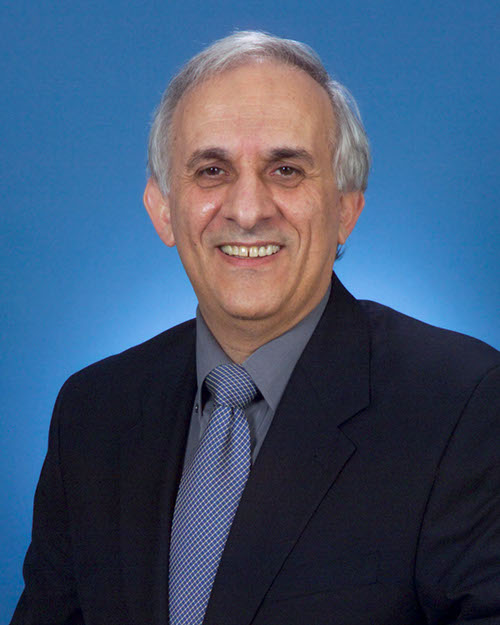 Baruch Levush合作论文数Naval Research Laboratory6RF KOONTZ合作论文数5h deruyter合作论文数5G.A. Westenskow合作论文数5H. A. Hoag合作论文数5W. R. Fowkes合作论文数5W. B. Herrmannsfeldt合作论文数5d b hopkins合作论文数4j haimson合作论文数4
 Ronald Ruth合作论文数4
 John J. Petillo合作论文数4M. A. Allen合作论文数4G. A. Loew合作论文数4J. K. Boyd合作论文数4John J Petillo合作论文数3B. Mecklenburg合作论文数3
 Andrew Marienhoff Sessler合作论文数Lawrence Berkeley National Laboratory, University of California3M. Cattelino合作论文数3G. Caryotakis合作论文数3a d yeremian合作论文数2Ma Allen合作论文数2r b palmer合作论文数2PB WILSON合作论文数2
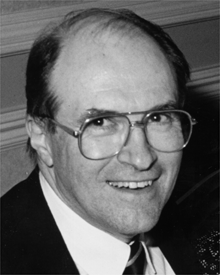 N. Dionne合作论文数2robert d ryne合作论文数2r fowkes合作论文数2
 Dimitrios Panagos合作论文数2
 John F Deford合作论文数2Chernyakova, L.合作论文数2Lee, T.G.合作论文数2
 Nelson Eric M合作论文数2Timothy L Houck合作论文数2
 William A. Barletta合作论文数MIT Department of Physics2
 Sami Gamal-Eldin Tantawi合作论文数Division of Accelerator Technology Research, Department of SLAC National Accelerator Laboratory, Stanford University;Department of Electrical Engineering, Michigan State University;Department of Particle Physics and Astrophysics, Stanford University2R. A. Early合作论文数2
 Khanh Nguyen合作论文数U.S. Naval Research Laboratory;Beam-Wave Research, Inc.2J. W. Wang合作论文数2Rh Miller合作论文数1Arnold E. Vlieks合作论文数1Rasheda Begum合作论文数1edward l wright合作论文数1edward m nelson合作论文数1GA LOEW合作论文数1Ha Hoag合作论文数1




