During operation of the Wendelstein 7-X stellarator, there were discharges with unusually fast plasma decay, which surprisingly triggered the quench detection system of the superconducting field coils, although no actual quench happened. We analyse the design of the field coils in conjunction with the particular technical set-up of the quench detection system and can model and quantitatively reproduce the observed behaviour. Several ways are proposed how the undesired effect could be mitigated. In addition, we discuss how the current and voltage signals of the field coils can be used in turn to derive diamagnetic energy and toroidal plasma current. The application is demonstrated, using signals from the existing machine control electronics, and reasonable agreement with the energy measurement of a diamagnetic loop is demonstrated.
After a long device enhancement phase, scientific operation resumed in 2022. The main new device components are the water cooling of all plasma facing components and the new water-cooled high heat flux divertor units. Water cooling allowed for the first long-pulse operation campaign. A maximum discharge length of 8 min was achieved with a total heating energy of 1.3 GJ. Safe divertor operation was demonstrated in attached and detached mode. Stable detachment is readily achieved in some magnetic configurations but requires impurity seeding in configurations with small magnetic pitch angle within the edge islands. Progress was made in the characterization of transport mechanisms across edge magnetic islands: Measurement of the potential distribution and flow pattern reveals that the islands are associated with a strong poloidal drift, which leads to rapid convection of energy and particles from the last closed flux surface into the scrape-off layer. Using the upgraded plasma heating systems, advanced heating scenarios were developed, which provide improved energy confinement comparable to the scenario, in which the record triple product for stellarators was achieved in the previous operation campaign. However, a magnetic configuration-dependent critical heating power limit of the electron cyclotron resonance heating was observed. Exceeding the respective power limit leads to a degradation of the confinement.
The Wendelstein 7-X stellarator (W7-X), one of the largest stellarator fusion experiments, is in operation since 2015 at the Max Planck Institute for Plasma Physics (IPP) in Greifswald. W7-X has reached the final status in 2022 with actively cooled in-vessel components. The superconducting magnet system consist of 50 non-planar and 20 planar coils. The superconducting coils as well as the connections in between are made of the same NbTi cable-in-conduit conductor (CICC) type. Two plasma breakdowns in the past have induced voltages into the non-planar coils, which triggered the quench detection (QD) system and activated the safety system with a fast discharge of the magnet system. Plasma operation creates toroidal and poloidal currents; a plasma breakdown can change the plasma currents within 100 ms. Especially fast poloidal current changes are able to induce voltages into the superconducting coils. Using the adjustment capabilities of the QD system, new parameter sets for threshold values and shunted capacitor settings were deduced. These parameters prolongs the time until the start of the magnet discharge, which increases the hot spot temperature in the CICC in case of a quench. Thermo-hydraulic calculations with the program THEA from Cryosoft were performed to verify that the 130 K limit for the hot spot temperature is kept with the new QD parameter sets. The analysis were performed by the West Pomeranian University of Technology (ZUT) and by the Henryk Niewodniczanski Institute of Nuclear Physics Polish Academy of Sciences in Poland.
We present recent highlights from the most recent operation phases of Wendelstein 7-X, the most advanced stellarator in the world. Stable detachment with good particle exhaust, low impurity content, and energy confinement times exceeding 100 ms, have been maintained for tens of seconds. Pellet fueling allows for plasma phases with reduced ion-temperature-gradient turbulence, and during such phases, the overall confinement is so good (energy confinement times often exceeding 200 ms) that the attained density and temperature profiles would not have been possible in less optimized devices, since they would have had neoclassical transport losses exceeding the heating applied in W7-X. This provides proof that the reduction of neoclassical transport through magnetic field optimization is successful. W7-X plasmas generally show good impurity screening and high plasma purity, but there is evidence of longer impurity confinement times during turbulence-suppressed phases.
The sophisticated large magnet system of the Wendelstein 7-X (W7-X) stellarator has been operated during first two experimental campaigns at the Max-Planck-Institute for Plasma Physics in Greifswald, Germany, for roughly 13 months. Its 70 superconducting coils (NbTi CCIC) are extraordinary not only due to complex 3D shapes of 50 non-planar coils, but also due to a non-linear support system. In addition, five big resistive coils with the aim to correct W7-X error fields are installed on the outer cryostat and use rubber pads in their supports to compensate thermal expansion of the coils. The structural behavior of the W7-X magnetic system is monitored and evaluated on the basis of the analysis of the signals from the extended set of mechanical and temperature sensors. Several cooldown/warming up and thousands of electromagnetic cycles with different loading patterns and with up to 70% design load magnitude have been performed by the system successfully. The focus of this paper is on the cyclic structural behavior of the W7-X magnet system and the comparison with finite element predictions. Several related issues such as bolts and rubber pads prestress degradation, support slippage development, evolution of mutual coil displacement, loading path dependence of stress levels, sliding weight support (cryoleg) adjustment, and sensor failure are addressed. Lessons learned so far are also briefly summarized.
A hypothetical ground fault in the superconducting (sc) magnet system of Wendelstein 7-X would shift the midpoint of the grounding system and therefore increase the voltage to ground during a fast discharge of the sc magnet system. As this voltage could endanger the high voltage integrity of the sc magnet system, an In-Service-Test system has been developed to monitor the insulation of the sc magnet system during operation especially after changing the loads of the magnets. The system, that is associated to the power supply system, has been designed to lift the electrical potential of non-planar coil system with respect to ground by 1.5 kV and to measure the resulting leak current while the magnets are operated. The leak current is used to evaluate any changes in the insulation resistance and to decide whether a fast discharge can still be done without endangering the sc magnet system. The design of the In-Service-Test was evaluated with computer simulations of the power supply and the magnet system, and a prototype that was tested at one coil group together with the corresponding power supply. In 2014, the system was finally installed for all five non-planar coil groups and commissioning took place for the first experiment campaign in 2015. Operated during the first experimental campaigns of Wendelstein 7-X from 2015 to 2017 the experiences gained led to modifications that already have been implemented and tested during the operation campaigns in 2018 and 2019. The paper describes the implementation of the In-Service-Test system and the associated tests for the commissioning as well as the first operational results and corresponding modifications.
The superconducting stellarator Wendelstein 7-X has completed the first three experimental phases, the first one with a limiter only and two phases with an inertially cooled carbon divertor configuration. The main mission of the latter two phases (the last one with two scraper elements) was to pave the way for the planned steady-state operation with high-power plasmas and a steady-state divertor. Presently, the device is being completed by installing a high-heat-flux (HHF) divertor and the corresponding water-cooling and ten cryo pumps in the divertor chambers. After this completion phase of W7-X, the device is ready for long-pulse divertor operation with heating power beyond 10 MW.
The plasma fusion experiment Wendelstein 7-X (W7-X) uses a system of 50 non-planar and 20 planar superconducting coils. These coils produce the magnetic field that is required to confine the plasma. Magnetic flux densities up to 3 T can be reached in the center of the plasma. Supercritical helium is used to cool down the coils to operating temperatures < 4K The currents in the coils can reach up to > 18 kA. A critical issue in all superconductors is the occurrence of quenches. That are unwanted local transitions from superconductivity to normal conductivity. If that happens, the coil current has to be discharged as fast as possible into a dump resistor. However, the strong current change will produce a self-induced high voltage up to several kV. Therefore, the electrical coil insulation versus ground has to be high-voltage proof to avoid a high-current arc in any circumstance. Worst-case scenario is a quench, that is induced by a loss of thermal insulation after a leak in the helium supply lines, because then Paschen-minimum conditions could be given. This paper describes some high-voltage test procedures and techniques employed to test and qualify the coil system against that scenario. Some techniques are used today for the routine coil tests. Some other turned out as inefficient for daily use. Focus is on the detection of insulation defects, but also on their localization for the sake of a later repair.
The optimized superconducting stellarator device Wendelstein 7-X (with major radius , minor radius , and plasma volume) restarted operation after the assembly of a graphite heat shield and 10 inertially cooled island divertor modules. This paper reports on the results from the first high-performance plasma operation. Glow discharge conditioning and ECRH conditioning discharges in helium turned out to be important for density and edge radiation control. Plasma densities of with central electron temperatures were routinely achieved with hydrogen gas fueling, frequently terminated by a radiative collapse. In a first stage, plasma densities up to were reached with hydrogen pellet injection and helium gas fueling. Here, the ions are indirectly heated, and at a central density of a temperature of with was transiently accomplished, which corresponds to with a peak diamagnetic energy of and volume-averaged normalized plasma pressure . The routine access to high plasma densities was opened with boronization of the first wall. After boronization, the oxygen impurity content was reduced by a factor of 10, the carbon impurity content by a factor of 5. The reduced (edge) plasma radiation level gives routinely access to higher densities without radiation collapse, e.g. well above line integrated density and central temperatures at moderate ECRH power. Both X2 and O2 mode ECRH schemes were successfully applied. Core turbulence was measured with a phase contrast imaging diagnostic and suppression of turbulence during pellet injection was observed.
The Wendelstein 7-X (W7-X) experimental fusion device went into operation in 2015 after intensive commissioning. Meanwhile, the third plasma operation phase started and ran until October 2018. W7-X has three magnet systems. The superconducting magnet system creates the main magnetic field of W7-X. It consists of 70 superconducting coils, divided into seven individual circuits with ten coils each. Seven equal power supplies provide the electrical current to power the magnets. Seven magnet protection systems are also part of the system. A magnet protection system allows fast discharge of the magnets in case of severe failures, e.g., a quench that means a sudden transition from the superconducting to the normal conducting state. A special sensor system, the quench detection system, checks the status of the magnets continuously. During each of the operation phases, the superconducting magnet system is kept under cryogenic conditions at about 4 K. For that, a helium refrigerator with total power of 7?kW at 4.5?K runs steady state 24/7. The second magnet system is the trim coil system, a set of five copper coils, placed at the outer side of the machine cryostat. The coils are powered by five identical power supplies. The third magnet system is the control coil system, a set of ten copper coils, placed inside of the plasma vessel behind the divertor targets. Ten 4-quadrant power supplies power each coil separately. The power supplies can deliver bidirectional direct currents and, as per request by the experimental program, an alternating current with adjustable frequencies between 1 and 20?Hz. An operation phase of W7-X comprises about 20?weeks. During the phase, the magnet systems are normally operated 2 or 3 days per week. The superconducting magnet system is usually switched on in the morning, kept energized during the day, and ramped down in the evening. This paper analyzes the operation phases, reports on the issues during the operation, and names countermeasures and improvements performed during the breaks between the operation phases.
The Wendelstein 7-X stellarator (W7-X), one of the largest stellarator fusion experiments, started the third plasma operation campaign in July 2018 at the Max Planck Institute for Plasma Physics in Greifswald, Germany. The W7-X experiment has a superconducting magnet system with 50 non-planar and 20 planar coils electrically connected in seven circuits. A quench detection system checks permanently the superconducting system regarding the onset of a quench. In case of a quench or a severe failure, the magnet protection system is activated and leads the current into discharge resistors. Based on new requirements and operation experiences, the discharge resistors of the non-planar coils were rearranged and improvements of several components were implemented in the last 12 month. The reconfigured discharge resistors slow down the discharge process, which increases the hot spot temperature in the conductor for about 18 K while the resulting peak voltage is reduced for about 30%. The simulated data for voltages and currents during the discharge process are in good correlation with the measured data from July 2018.
During the first operation phase OP1.1 of Wendelstein 7-X, the magnet systems were not operated up to its maximum capabilities. During the next operation phase OP1.2, a big step in the direction to a full current operation will be taken. The superconducting magnet system consists of the two different coil types: the nonplanar coils (NPCs) and the planar coils (PLCs). With respect to OP1.1, the NPC current in OP1.2 will be increased slightly, but will be doubled in the PLC. Also a reversal of the current direction in the PLC will be required. Tests during and after OP1.1 showed that it might be advantageous to reduce the electrical stress during fast discharges. Therefore, the magnet protection system was optimized. In order to avoid the risk of a quench, the magnet system is being operated with a certain temperature margin with respect to the critical temperature of the superconductor. The safety operation system will be updated to secure automatic observation and reaction. The five trim coils are normal conducting coils mounted at the outer surface of the cryostat. They were operated during OP1.1 up to 2/3 of the maximum current. Therefore, full current operation needs to be tested for the first time. For OP1.2, also measures were studied and installed to minimize the cross-link between the trim coils and the superconducting main field coils.
In 2015, the optimized stellarator Wendelstein 7-X stellarator (W7-X) started with operation. The main objective of W7-X is the demonstration of the integrated reactor potential of the optimized stellarator line. An important element of this mission is the achievement of high heating power and high confinement in the steady-state operation. The approach to this mission is the following three steps. First, plasmas were produced in a limiter configuration [operation phase (OP 1.1)], then a test divertor unit is being installed (temporary divertor unit) for the next campaign, OP 1.2, before the full steady-state capability will be achieved implementing active cooling of all in-vessel components and a steady-state high heat-flux divertor. In December 2015, the first helium plasma was generated using electron cyclotron resonance heating (ECRH), in February 2016, the working gas was switched to hydrogen. The first OP (OP 1.1) was successfully finished in March 2016. At the end of OP 1.1, the discharge duration was close to 6 s, the limit for the integrated heating power was increased to 4 MJ and electron temperatures of ~10 keV were achieved. Due to the low densities in the range of 1019 cm−3 and the pure electron heating by ECRH, the ion temperatures reached only 2 keV. At present, W7-X is undergoing the next completion phase, including the installation of the test divertor unit, the installation of the carbon tiles on the inner plasma vessel wall, an upgrade of existing diagnostics, and the installation of new diagnostics. This paper discusses the first operational phase, lessons learned and implemented, and the status before the start of the second OP (OP 1.2).
Commissioning [1] and the first operational phase of the stellarator Wendelstein 7-X (W7-X) have been accomplished successfully at the Greifswald branch of the Max-Planck-Institut fur Plasma Physik. First helium plasma was achieved on 10th of December 2015 followed by the first hydrogen plasma in February 2016. The plasma is confined by a magnetic field of 2.5 T on the plasma axis created by a superconducting magnet system of 70 coils. The coils are located in a cryostat and protected against thermal radiation by vacuum and a thermal shield. Cooling of the coils and of the shield is provided with a helium refrigerator keeping the magnet system at 4K and the shield at 70K. The paper presents the cooling concept of the thermal shield and the coils with its structures. It describes the results of the first cool down of the cryostat to 4K and the resulting heat loads at the different temperature levels. The experimental data show that the heat loads are well below the plant capacity allowing safe magnet operation. (C) 2017 The Authors. Published by Elsevier B.V.
After completing the main construction phase of Wendelstein 7-X (W7-X) and successfully commissioning the device, first plasma operation started at the end of 2015. Integral commissioning of plasma start-up and operation using electron cyclotron resonance heating (ECRH) and an extensive set of plasma diagnostics have been completed, allowing initial physics studies during the first operational campaign. Both in helium and hydrogen, plasma breakdown was easily achieved. Gaining experience with plasma vessel conditioning, discharge lengths could be extended gradually. Eventually, discharges lasted up to 6 s, reaching an injected energy of 4 MJ, which is twice the limit originally agreed for the limiter configuration employed during the first operational campaign. At power levels of 4 MW central electron densities reached 3 x 10(19) m(-3), central electron temperatures reached values of 7 keV and ion temperatures reached just above 2 keV. Important physics studies during this first operational phase include a first assessment of power balance and energy confinement, ECRH power deposition experiments, 2nd harmonic O-mode ECRH using multi-pass absorption, and current drive experiments using electron cyclotron current drive. As in many plasma discharges the electron temperature exceeds the ion temperature significantly, these plasmas are governed by core electron root confinement showing a strong positive electric field in the plasma centre.
The Wendelstein 7-X stellarator (W7-X), one of the largest stellarator fusion experiments, has accomplished successfully the first operational phase at the Max Planck Institute for Plasma Physics in Greifswald, Germany. To confine 30 m(3) plasma the W7-X machine has a superconducting magnet system with 50 non-planar and 20 planar coils. The magnet commissioning was successfully performed until mid of 2015 with tests of the complete magnet system functionality required for plasma operation, at a magnetic field of 2.5 T. The first operational phase started mid of December 2015 with He plasmas heated by the ECRH (Electron Cyclotron Resonance Heating) system followed by H-2 plasmas in February 2016. The magnet system operation was accompanied by an online monitoring of the mechanical sensors installed on the superconducting coils and their support structure to detect any deviations from the predicted behavior. (C) 2017 The Authors. Published by Elsevier B.V.
The Wendelstein 7-X stellarator (W7-X), one of the largest stellarator fusion experiments, will start the second plasma operation phase in August 2017 at the Max Planck Institute for Plasma Physics in Greifswald, Germany. The main objective of the experiment is to prove the reactor relevance of the stellarator design. Recently the inner wall shielding of the plasma vessel was completed in a 12 month break and a first, inertially cooled divertor has been installed. The coming plasma experiments can be executed with increased ECRH heating power up to 9 MW and a plasma pulse length up to 100 s limited by a total energy input of 80 MJ. The W7-X experiment has a superconducting magnet system with 50 non-planar and 20 planar coils grouped in five equal modules and electrically connected in seven circuits with 10 coils each. Seven power supplies provide individual coil currents in the seven circuits. Two normal conductive copper coil systems can be operated in parallel to the superconducting coils. The paper reports about the experiences with the superconducting magnet system during the first plasma operation phase, about the commissioning for the coming second phase and results from mechanical sensor evaluation.
The magnet system of the stellarator fusion device Wendelstein 7-X (W7-X) is composed of three different groups of coil systems. The main magnetic field is created by a superconducting magnet system that is accompanied by two sets of normal conducting coil groups, the Control Coils inside the plasma vessel and the Trim Coils (TC) positioned outside of the cryostat. The TC system consists of five coils, power supplies, cooling systems, high current connections and superordinated control systems for autonomous remote control. There are four coils (type A) of equal shape; the fifth coil (type B) has a slightly different shape due to space restrictions at the assembly position. Five individual power supply units whose design is based on four-quadrant current converters using Insulated-Gate-Bipolar-Transistors power the TC with individual currents and ramp rates. This allows the correction of error fields and also increases the experimental flexibility by providing a means to balance the divertor heat loads among the five field periods. The TC with its instrumentation and the power supplies including the switchgear to be connected to the coils have been designed and build in collaboration between IPP, Germany and PPPL, USA, funded by the Department of Energy. The design and integration of all auxiliary systems like the grid station, cooling for coils and powers supplies, control system and the associated cabling and piping has been developed, manufactured and accomplished in 2014. This paper describes the results obtained during the integral commissioning of the TC system, the operational experiences during the first experimental campaign of W7-X and its impact on the physics program. (C) 2017 The Authors. Published by Elsevier B.V.
 Thomas Rummel合作论文数37
 H.-S. Bosch合作论文数25
 Victor Bykov合作论文数14
 M. Nagel合作论文数Institut fur Physikalische und Theoretische Chemie, Universitat Tubingen11
 Dirk Naujoks合作论文数10Frank Füllenbach合作论文数10A. Carls合作论文数9Klinger, T.合作论文数9
 Matthias Otte合作论文数Evangelische Kirche in Deutschland9
 Juergen Baldzuhn合作论文数Max-Planck Institute for Plasma Physics9
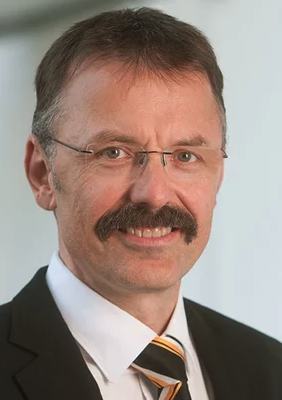 Robert Wolf合作论文数Stellarator Heating and Optimisation Division, Max Planck Institute of Plasma Physics;Greifswald Branch, Max Planck Institute of Plasma Physics8
 Heike Laqua合作论文数Max Planck Institute for Plasma Physics8T. Braeuer合作论文数7Lutz Wegener合作论文数7P. Kornejew合作论文数7Humberto Trimino Mora合作论文数Max Planck Inst Plasma Phys, MV, D-17491 Greifswald, Germany7T. Stange合作论文数7Tamara Andreeva合作论文数7Pedersen T S合作论文数7
 Samuel Aaron Lazerson合作论文数Gauss Fusion GmbH7
 Christoph Biedermann合作论文数7
 Martin Hirsch合作论文数Instituto de Fisica Corpuscular7Stefan Marsen合作论文数7
 D. Hartmann合作论文数7James P. Knauer合作论文数7Rudolf Brakel合作论文数7
 Joris Fellinger合作论文数Max Planck Institute for Plasma Physics7U. Hoefel合作论文数6Thomas Moennich合作论文数6
 Marcin Jakubowski合作论文数6O. Marchuk合作论文数6
 Oliver Schmitz合作论文数Department of Engineering Physics, College of Engineering, University of Wisconsin-Madison6
 Daihong Zhang合作论文数6
 Tamas Szepesi合作论文数6F. Pisano合作论文数6
 Golo Fuchert合作论文数6G. Weir合作论文数6
 Tomasz Fornal合作论文数Inst Plasma Phys & Laser Microfus, Hery 23 St, PL-01497 Warsaw, Poland6C. P. Dhard合作论文数6
 Michael Nagel合作论文数6Kian Rahbarnia合作论文数6
 Novimir Antoniuk Pablant合作论文数Princeton Plasma Physics Laboratory6
 Andreas Langenberg合作论文数Max-Planck-Institute for Plasma Physics6Monika Kubkowska合作论文数6Maciej Krychowiak合作论文数6Alejandro Alonso合作论文数3Shape6
 H. M. Smith合作论文数6
 Glen Wurden合作论文数Los Alamos National Laboratory6Henning Thomsen合作论文数6




