This paper proposes a Task-based Alternating Direction Method of Multipliers unfolded Network (TAMNet) for symbol detection in multiple-input-multiple-output (MIMO) systems with quantized measurements at the receiver. Task-based systems apply pre-processing, to mitigate the effect of quantization nonlinearity, on the incoming signal before it is sent to the quantizer. In this paper, we provide a closed-form expression for a suitable pre-processing block and then modify its structure to let it be trained by the incoming data. The quantized symbol is then sent to an unfolded symbol detector that is based on the Alternating Direction Method of Multipliers (ADMM) iterations. We investigate the significance of the pre-processing block in TAMNet and conclude about its efficacy. We also provide numerical results to demonstrate that TAMNet yields an improvement of upto 3.5 dB over the existing unfolding-based detector DeepHOTML, in terms of the Signal-to-Noise Ratio (SNR), in achieving a symbol error rate (SER) of ≈3×10⁻⁴.
Reconfigurable holographic surfaces (RHS) are intrinsically amalgamated with reconfigurable intelligent surfaces (RIS), for beneficially ameliorating the signal propagation environment. This potent architecture significantly improves the system performance in non-line-of-sight scenarios at a low power consumption. Briefly, the RHS technology integrates ultra-thin, lightweight antennas onto the transceiver, for creating sharp, high-gain directional beams. We formulate a user sum-rate maximization problem for our RHS-RIS-based hybrid beamformer. Explicitly, we jointly design the digital, holographic, and passive beamformers for maximizing the sum-rate of all user equipment (UE). To tackle the resultant nonconvex optimization problem, we propose an alternating maximization (AM) framework for decoupling and iteratively solving the subproblems involved. Specifically, we employ the zero-forcing criterion for the digital beamformer, leverage fractional programming to determine the radiation amplitudes of the RHS and utilize the Riemannian conjugate gradient algorithm for optimizing the RIS phase shift matrix of the passive beamformer. Our simulation results demonstrate that the proposed RHS-RIS-based hybrid beamformer outperforms its conventional counterpart operating without an RIS in multi-UE scenarios. The sum-rate improvement attained ranges from 8 bps/Hz to 13 bps/Hz for various transmit powers at the base station (BS) and at the UEs, which is significant.
When dealing with dual-function Radar and communication systems equipped with multiple antennas and based on orthogonal frequency division multiplexing, the target parameters, i.e., the direction of arrival (DOA), the range and the velocity have to be estimated. In some approaches like those based on the Fourier transform, the estimations of the range and the velocity require the DOA estimates beforehand. This can be problematic if the DOA estimation is not accurate enough. In others like those based on subspace methods, the target parameters can be estimated independently, but a posteriori pairing of the parameter estimates for each target is required along with constraints on the data to be transmitted. In this paper, to avoid the above issues, we suggest analyzing the relevance of the joint estimation of the target parameters by using an evolutionary algorithm like a differential-evolution based method. In that case, various aspects must be addressed such as the definition of the loss function, the selection of the stopping criterion and the tuning of the control parameters. However, a question remains: to what extent can we have confidence in the solution obtained after convergence of the algorithm? For this reason, we selected a loss function allowing us to add a final step to check whether the parameter estimation can be relevant or not. Finally, we present some results of the proposed method and discuss its limitations related to the number of targets in relation to the number of observations available.
Single-shot magnetic resonance (MR) imaging acquires the entire k-space data in a single shot and it has various applications in whole-body imaging. However, the long acquisition time for the entire k-space in single-shot fast spin echo (SSFSE) MR imaging poses a challenge, as it introduces T2-blur in the acquired images. This study aims to enhance the reconstruction quality of SSFSE MR images by (a) optimizing the trajectory for measuring the k-space, (b) acquiring fewer samples to speed up the acquisition process, and (c) reducing the impact of T2-blur. The proposed method adheres to physics constraints due to maximum gradient strength and slew-rate available while optimizing the trajectory within an end-to-end learning framework. Experiments were conducted on publicly available fastMRI multichannel dataset with 8-fold and 16-fold acceleration factors. An experienced radiologist's evaluation on a five-point Likert scale indicates improvements in the reconstruction quality as the ACL fibers are sharper than comparative methods.
Dual-function Radar and communication (DFRC) systems accommodate both Radar and communication function-alities by integrating them into a single hardware and using the same waveform. Recently, index modulation that transmits the information bits by activating fewer transmission entities (antennas, sub-carriers, etc.) during data transmission has been employed to improve the performance of DFRC systems. Considering the modified Cramer-Rao bound (MCRB) of the directions of arrival, ranges and velocities of the targets as the metrics, the Radar performance can be improved by selecting the combinations of the sub-carriers and antennas that can be activated. In this paper, to choose the best combination, we solve the multi-objective problem based on the MCRB of the target parameters using the Pareto front technique. This results in a set of non-dominated solutions. At that stage, depending on the user's priorities and practical considerations, one solution belonging to the Pareto front will be chosen.
We consider the uplink of a Selective User-Forwarded Cell-free massive MIMO (SUF-CF-mMIMO) system, where each access point (AP) forwards the received symbols of only a selected subset of users to the centralized processing unit (CPU) for coherent combining. SUF-CF-mMIMO gives significant savings in fronthaul signaling compared to the conventional CF-mMIMO. This paper investigates the uplink performance of SUF-CF-mMIMO with one-bit quantized symbols sent over the fronthaul to the CPU by each AP. Novel expressions for spectral efficiency (SE) are derived for the uplink in the presence of quantization distortion. Simulation results show that SUF-CF-mMIMO is more robust to quantization effects compared to the conventional CF-mMIMO.
This paper proposes a Joint Channel Estimation and Symbol Detection (JED) scheme for Multiple-Input Multiple-Output (MIMO) wireless communication systems. Our proposed method for JED using Alternating Direction Method of Multipliers (JED-ADMM) and its model-based neural network version JED using Unfolded ADMM (JED-U-ADMM) markedly improve the symbol detection performance over JED using Alternating Minimization (JED-AM) for a range of MIMO antenna configurations. Both proposed algorithms exploit the non-smooth constraint, that occurs as a result of the Quadrature Amplitude Modulation (QAM) data symbols, to effectively improve the performance using the ADMM iterations. The proposed unfolded network JED-U-ADMM consists of a few trainable parameters and requires a small training set. We show the efficacy of the proposed methods for both uncorrelated and correlated MIMO channels. For certain configurations, the gain in SNR for a desired BER of $10^{-2}$ for the proposed JED-ADMM and JED-U-ADMM is upto $4$ dB and is also accompanied by a significant reduction in computational complexity of upto $75\%$, depending on the MIMO configuration, as compared to the complexity of JED-AM.
This paper proposes a Joint Channel Estimation and Symbol Detection (JED) scheme for overloaded multiple-input multiple-output (MIMO) wireless communication systems, with the number of receive antennas being less than or equal to the number of transmit antennas. Our proposed method for JED using Alternating Direction Method of Multipliers (JED-ADMM) markedly improves the symbol detection performance by yielding 12-16 dB gain in signal-to-noise ratio (SNR) for a bit error rate (BER) of 10 −3 over state-of-the-art JED using Alternating Minimization (JED-AM). This gain in BER for the proposed JED-ADMM is also accompanied by a significant reduction in computational complexity (1/4 times) as compared to JED-AM.
Among the approaches used to jointly estimate the directions of arrival (DOAs) of K targets in a multiple-input multiple-output dual-function radar communication system, the method based on the identification of the K largest local maxima of the modulus of the Fourier transform (FT) of the signal received by the antennas has the advantage of having a low computational cost. However, the local maxima do not necessarily correspond to the values of interest. To avoid this problem, we present an operation mode making it possible to address the estimations of the DOAs separately. To this end, we propose to design a waveform reducing the magnitudes of the signals back-scattered by the targets except the one located in a specific zone. Then, this operation mode is extended to address the case of a received signal disturbed by an additive white Gaussian noise. Finally, simulation results confirm that this approach improves the standard approach based on the FT.
Dual-function Radar communication (DFRC) systems implement Radar detection and communication us-ing the same hardware simultaneously. Significant attention has been paid to a multiple-input multiple -output DFRC system based on orthogonal frequency division multiplexing (OFDM). So far, the directions of arrival of the targets have been well estimated using subspace methods. In this paper, the ranges and/or velocities are estimated using the subspace methods. To this end, the Radar waveform must be based on the data symbols that are replicated over a few sub-carriers and/or during a few OFDM symbols. To avoid data replication, the target ranges and velocities can be estimated based on a least-squares (LS) or total LS method. After giving a few practical considerations, simulation results show that the proposed approaches outperform the existing ones based on the Fourier transform and/or Lasso algorithm. The per-formance of the proposed approaches is compared with the Cramer-Rao bound. Moreover, we show how the performance of the DFRC system (in terms of the accuracy of the estimated target parameters and data rate) evolves when modifying the system parameters, such as the number of sub-carriers and the number of OFDM symbols. (c) 2023 Elsevier B.V. All rights reserved.
In a massive multiple-input multiple-output (MIMO) frequency division duplex (FDD) system, it is required to compress the channel state information (CSI) and feed it back to base station (BS). In this paper, we primarily focus on the compressive sensing (CS)-based feedback design and propose a fast dictionary learning (FDL) algorithm to update the singular vectors of matrices in the K-singular value decomposition (K-SVD) algorithm. The proposed FDL algorithm is a variation of the existing K-SVD algorithm with low computational complexity. Simulation results also show that the proposed method’s estimated channel has better normalized mean-squared error (NMSE) performance than the estimated channel using a traditional Discrete Fourier transform (DFT) dictionary. Also, the proposed method’s estimated channel has comparable performance with the K-SVD algorithm but with reduced computational complexity ranging from 18% to 45%, which is significant.
In a transmit preprocessing aided frequency division duplex (FDD) massive multi-user (MU) multiple-input multiple-output (MIMO) scheme assisted orthogonal frequency-division multiplexing (OFDM) system, it is required to feed back the frequency domain channel transfer function (FDCHTF) of each subcarrier at the user equipment (UE) to the base station (BS). The amount of channel state information (CSI) to be fed back to the BS increases linearly with the number of antennas and subcarriers, which may become excessive. Hence we propose a novel CSI feedback compression algorithm based on compressive sensing (CS) by designing a common dictionary (CD) to reduce the CSI feedback of existing algorithms. Most of the prior work on CSI feedback compression considered single-UE systems. Explicitly, we propose a common dictionary learning (CDL) framework for practical frequency-selective channels and design a CD suitable for both single-UE and multi-UE systems. A set of two methods is proposed. Specifically, the first one is the CDL-K singular value decomposition (KSVD) method, which uses the K-SVD algorithm. The second one is the CDL-orthogonal Procrustes (OP) method, which relies on solving the orthogonal Procrustes problem. The CD conceived for exploiting the spatial correlation of channels across all the subcarriers and UEs compresses the CSI at each UE, and upon reception reconstructs it at the BS. Our simulation results show that the proposed dictionary's estimated channel vectors have lower normalized mean-squared error (NMSE) than the traditional fixed Discrete Fourier Transform (DFT) based dictionary. The CSI feedback is reduced by 50%, and the memory reduction at both the UE and BS starts from 50% and increases with the number of subcarriers.
In massive multiple-input-multiple-output (MIMO) systems, a major limiting factor for symbol detection is the amount of computational complexity required. Symbol detection in unquantized massive MIMO systems have been studied in the context of both traditional and machine learning methods. In this paper, we propose a hybrid framework that replaces some neural network layers with simple gradient descent layers to reduce complexity. Simulations showed that a judicious choice of the number of such layers can lead to significant reduction in the range of 35-50%, in computational complexity, with marginal change in performance.
Cell-free massive multiple-input-multiple-output (CF-mMIMO) systems provide spectral efficiency (SE) gains with a more uniform quality-of-service in the network area compared to cellular massive MIMO schemes but at the expense of higher capacity requirements on the fronthaul links. To reduce the signaling overhead on fronthaul links, we propose a selective user forwarding method for uplink data transmissions in CF-mMIMO systems, where each access point (AP) forwards the data of only a selected subset of users to the central processing unit (CPU) for joint processing. The simulation results show that the selective user forwarding scheme achieves nearly the same performance as a CF-mMIMO system with selected number of users, $M$ , being equal to less than one-fourth of the total number of users in the network and resulting in a fronthaul signaling savings of about 75%. We then analytically study the performance of the proposed system in the presence of channel aging by deriving expressions for SE. The numerical evaluation of these expressions is shown to be close to the simulation results.
Series-elastic actuators are mechatronic devices used for force control. They consist of an actuator in series with a spring in conjunction with a sensor for measuring the actuator displacement and another for spring displacement. A controller helps deliver required force profile by driving the actuator in a feedback mode as per the measured displacements and the applied load. We present design, prototyping, and testing of a series-elastic actuator integrated with a slider-rocker linkage. This device is retrofitted to a chair such that the user is assisted while sitting and rising. Multi-body dynamics using Simscape and control system design are discussed.
Advanced air mobility (AAM) is an emerging industry focus as well as a research and development discipline. Innovations and technologies resulting from AAM will change the way that we move cargo and people in and around cities. Industry is moving fast with excitement to deploy AAM solutions. However, there are multiple technical challenges that need to be overcome before AAM becomes a reality. This article takes a closer look at the technology readiness level of AAM solutions in the area of communications, navigation, and surveillance (CNS) and identifies open research problems as well as directions to address them. In particular, we discuss current approaches and future research challenges in air corridor design, air-to-air (AA) communications, 3rd Generation Partnership Project (3GPP) support for navigation, and detect and avoid (DAA)/collision avoidance, among other areas, for supporting future AAM operations.
Reading causes widespread changes in the human brain and it eventually leads to the formation of a specialized region to process text that is popularly known as Visual Word Form Area (VWFA). Writing script systems differ widely across diverse cultures but VWFA can always be mapped out to the same anatomical region in the human brain. However, VWFA response is not specific to a known script and also responds to an unknown script albeit weakly. In this talk, we address the objective of understanding how letters combine to form words. We present the methodology of designing behaviour and functional Magnetic Resonance Imaging (fMRI) brain imaging experiments comparing the visual representation of readers and non-readers of a given script and building the relevant computational models. The effectiveness of the proposed model is studying using statistical measures using the correlation between the signals recorded. Further, we will use the proposed model to explain other reading behaviours like the difficulty in reading jmubeld wrods and answer related questions in children with reading difficulty.
Variable density sampling of the k-space in MRI is an integral part of trajectory design. It has been observed that data-driven trajectory design methods provide a better image reconstruction as compared to trajectories obtained from a fixed or a parametric density function. In this paper, a data-driven strategy has been proposed to obtain non-Cartesian continuous k-space sampling trajectories for MRI under the compressed sensing framework (greedy non-Cartesian (GNC)). A stochas-tic version of the algorithm (stochastic greedy non-Cartesian (SGNC)) is also proposed that reduces the computation time. We compare the proposed trajectory with a traveling salesman problem (TSP)-based trajectory and an echo planar imaging-like trajectory obtained by a greedy method called stochastic greedy-Cartesian (SGC) algorithm. The training images are taken from knee images of the fastMRI dataset. It is observed that the proposed algorithms outperform the TSP-based and the SGC trajectories for similar read-out times.
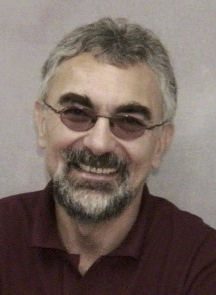 Lajos Hanzo合作论文数University of Southampton29
 Rakshith Rajashekar合作论文数School of Electronics and Computer Science, University of Southampton24
 Sooraj K. Ambat合作论文数16
 Saikat Chatterjee合作论文数Division of Information Science and Engineering, Department of Intelligent Systems, School of Electrical Engineering and Computer Science, KTH Royal Institute of Technology9
 Bhaskar Rao合作论文数Department of Electrical and Computer Engineering, Jacobs School of Engineering, University of California, San Diego9
 Aakash Agrawal合作论文数Ctr Biosyst Sci & Engn, Indian Inst Sci8
 Sripati Panditaradhyula Arun合作论文数Centre for Neuroscience, Indian Institute of Science7
 G. V. Prateek合作论文数7
 Renu Jose合作论文数7Bhogavalli Satwika合作论文数6Swati Bhattacharya合作论文数5
 Shubham Sharma合作论文数Indian Inst Sci, Bangalore 560012, Karnataka, India5Vincent Corretja合作论文数5
 Eric Grivel合作论文数5
 Amit Kumar Dutta合作论文数Department of Physics;Indian Institute of Technology;Department of Physics, Indian Institute of Technology5
 Peter Händel合作论文数Department of Signal Processing, School of Electrical Engineering, KTH - Royal Institute of Technology5
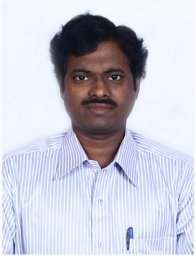 Satya Sudhakar Yedlapalli合作论文数5Dinesh Gaurav合作论文数Microsoft India4
 Isaac Skog合作论文数ACCESS Linnaeus Center, Royal Institute of Technology4
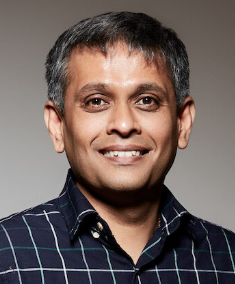 Bhavani Shankar Mysore Rama Rao合作论文数Interdisciplinary Centre for Security, Reliability and Trust, University of Luxembourg4
 John-Olof Nilsson合作论文数Signal Processing Lab;ACCESS Linnaeus Center;Royal Institute of Technology4
 Krishnamurthy Giridhar合作论文数4
 Marco Di Renzo合作论文数Laboratory of Signals and Systems, CentraleSupelec;Center for Telecommunications Research, Department of Engineering, Faculty of Natural, Mathematical & Engineering Sciences, King's College London4Daniel S. Baum合作论文数4
 Shinya Sugiura合作论文数Institute of Industrial Science, The University of Tokyo4
 Pavan Kumar Gadamsetty合作论文数3
 Avik Santra合作论文数Infineon Technologies AG3
 Ismail Guvenc合作论文数Department of Electrical and Computer Engineering, North Carolina State University3A. Vijaya Krishna合作论文数3
 Joby Joseph合作论文数3
 Neelesh B. Mehta合作论文数Department of Electrical Communication Engineering, Indian Institute of Science3
 David W Matolak合作论文数Department of Electrical Engineering, College of Engineering and Computing, University of South Carolina3Jouni Rantakokko合作论文数Swedish Defence Research Agency3
 Yonina Eldar合作论文数Signal Acquisition Modeling Processing and Learning Lab, Department of Computer Science and Applied Mathematics, Faculty of Mathematics and Computer Science, Weizmann Nstitute of Science3
 Kamesh Namuduri合作论文数3
 Lie-Liang Yang合作论文数University of Southampton3
 Uwe-Carsten Fiebig合作论文数Institute for Communication and Navigation3
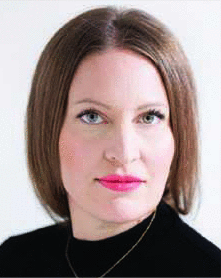 Helka-Liina Määttänen合作论文数3v prasad合作论文数2M. S. Smith合作论文数2Geert Leus合作论文数2
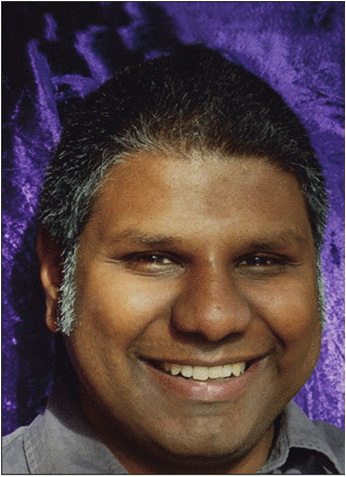 Saleem Bhatti合作论文数2
 Arogyaswami Paulraj (埃罗斯瓦米·波尔拉)合作论文数Department of Electrical Engineering, Stanford University;Indian Institute of Technology2j m costa合作论文数2
 Rohit Nabar合作论文数Apple2
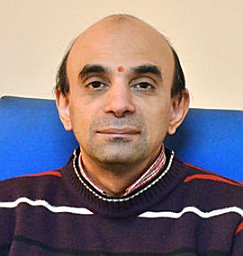 Kasturi Vasudevan合作论文数Dept. of Electr. Eng., Indian Inst. of Technol.;c;Dept. of Electr. Eng., Indian Inst. of Technol.2
 Naoki Ishikawa合作论文数2
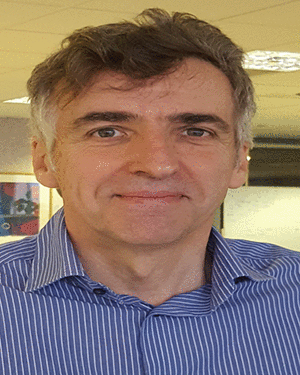 Michael Fitch合作论文数2r schwartz合作论文数2




