2-Cyanoazetidines, easily accessible from β-amino alcohols, undergo ring-cleavage upon reaction with trimethylsilylazide and catalytic amounts of Bu2SnO, to give the corresponding homopropargylamines which are isolated as their N-Boc protected derivatives. The scope of this reaction, which constitutes a new way to access these highly relevant building blocks, is examined in detail. The proposed mechanism involves a tin-catalyzed cycloaddition of the nitrile moiety with the azide to give the corresponding tetrazole, which decomposes with the extrusion of two molecules of dinitrogen to produce an intermediate vinylidene carbene that finally evolves to give the alkyne.
M. Caruso, E. Gatto, A. Palleschi, M. Scarselli, M. De Crescenzi, K. Wright, E. Longo, M. De Zotti, F. Formaggio, C. Toniolo, and M. Venanzi Department of Chemical Sciences and Technologies, University of Rome ‘Tor Vergata’, 00133, Rome, Italy; Department of Physics, University of Rome ‘Tor Vergata’, 00133, Rome, Italy; Institute Lavoisier de Versailles, UMR 8180, University of Versailles, 78035, Versailles, France; Department of Chemistry, University of Padova, 35131, Padova, Italy
ChemInformVolume 46, Issue 44 Preparative Organic Chemistry ChemInform Abstract: Aza-[2,3]-Wittig Sigmatropic Rearrangement of Allylic Tertiary Amines: A Successful Example with High Chirality Transfer. B. Drouillat, B. Drouillat Inst. Lavoisier Versailles, UMR, Univ. Versailles, F-78035 Versailles, Fr.Search for more papers by this authorK. Wright, K. Wright Inst. Lavoisier Versailles, UMR, Univ. Versailles, F-78035 Versailles, Fr.Search for more papers by this authorP. Quinodoz, P. Quinodoz Inst. Lavoisier Versailles, UMR, Univ. Versailles, F-78035 Versailles, Fr.Search for more papers by this authorJ. Marrot, J. Marrot Inst. Lavoisier Versailles, UMR, Univ. Versailles, F-78035 Versailles, Fr.Search for more papers by this authorF. Couty, F. Couty Inst. Lavoisier Versailles, UMR, Univ. Versailles, F-78035 Versailles, Fr.Search for more papers by this author B. Drouillat, B. Drouillat Inst. Lavoisier Versailles, UMR, Univ. Versailles, F-78035 Versailles, Fr.Search for more papers by this authorK. Wright, K. Wright Inst. Lavoisier Versailles, UMR, Univ. Versailles, F-78035 Versailles, Fr.Search for more papers by this authorP. Quinodoz, P. Quinodoz Inst. Lavoisier Versailles, UMR, Univ. Versailles, F-78035 Versailles, Fr.Search for more papers by this authorJ. Marrot, J. Marrot Inst. Lavoisier Versailles, UMR, Univ. Versailles, F-78035 Versailles, Fr.Search for more papers by this authorF. Couty, F. Couty Inst. Lavoisier Versailles, UMR, Univ. Versailles, F-78035 Versailles, Fr.Search for more papers by this author First published: 15 October 2015 https://doi.org/10.1002/chin.201544038Read the full textAboutPDF ToolsRequest permissionExport citationAdd to favoritesTrack citation ShareShare Give accessShare full text accessShare full-text accessPlease review our Terms and Conditions of Use and check box below to share full-text version of article.I have read and accept the Wiley Online Library Terms and Conditions of UseShareable LinkUse the link below to share a full-text version of this article with your friends and colleagues. Learn more.Copy URL Share a linkShare onFacebookTwitterLinkedInRedditWechat No abstract is available for this article. Volume46, Issue44November, 2015 RelatedInformation
We report herein a successful example of an aza-[2,3]-Wittig rearrangement in an allylic tertiary N,N-dibenzyl amine derived from (S)-alaninol or (S)-isoleucinol. This reaction occurs upon metalation at the benzylic position with a mixture of butyllithium/diisopropylamine/potassium t-butoxide and proceeds with a high 1,3 transfer of chirality.
In the search for an extension of the 'Bip, method' for determining the absolute configuration of beta-amino acids and beta-peptides, dipeptides based on beta(2.2)-HBip/L(D)-Ala, Bip/L-beta(3)-HA1a, and p(2,2) -HBip/L-beta(3)-Ha1a were synthesized ill Solution and the induced circular dichroism (ICD) in their biphenyl core evaluated in comparison with the previously investigated Bip/L(D)-A1a series. Weak, poorly informative ICDs were observed in MeOH solution for the linear N-Boc protected dipeptide methyl esters based oil p(2.2)-HBip, as well as for those with A1a/beta(3)-HA1a at the N-terminus of Bip/beta(2,2)-HBip. However, a significant ICD was recorded for Boc-BiP-L-beta(3)-HA1a-OMe. These results were confirmed by low-temperature H-1 NMR spectroscopy Studies of the dipeptides in CDCl3 and CD3OD solutions, showing two diastereoisomeric conformers in significantly different populations for Boc-Bip-L-beta(3)- HA1a-OMe in CD3OD. In general, ICDs were found to be weaker for dipeptides containing beta-amino acids as compared to those of their alpha-amino acid Counterparts. (c) 2006 Elsevier Ltd. All rights reserved.
An induced axial chirality in the biphenyl core of the 2',1':1,2;1'',2'':3,4-dibenzcyclohepta-1,3-diene-6-amino-6-carboxylic acid (Bip) residue, a conformationally labile, atropoisomeric, C(alpha)-tetrasubstituted alpha-amino acid, was observed by CD and (1)H NMR spectroscopic techniques in the linear dipeptides Boc-Bip-Xaa*-OMe where Boc=tert-butoxycarbonyl, OMe=methoxy, and Xaa*=D- and/or L-Ala, -Val, -Leu, -Phe, -(alphaMe)Val and -(alphaMe)Leu. Chiral induction was significantly lower in the isomeric dipeptides Boc-Xaa*-Bip-OMe, with the Xaa* residue located at the N-terminus of Bip, as well as in the cyclic dipeptide cyclo-[Bip-L-Ala]. The results obtained in solution were confirmed by X-ray diffraction analysis of a crystalline sample of Boc-(R)-Bip-D-Ala-OMe.
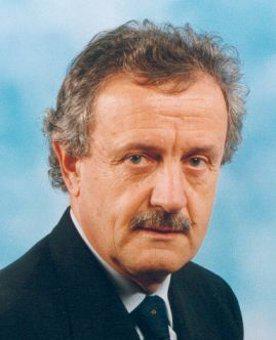 Claudio Toniolo合作论文数Dipartimento di Scienze Chimiche, Universita degli Studi di Padova27
 Fernando Formaggio合作论文数Dipartimento di Scienze Chimiche, University of Padova26
 Michel Wakselman合作论文数23Jean-Paul Mazaleyrat合作论文数20
 Cristina Peggion合作论文数11
 Marco Crisma合作论文数Institute of Biomolecular Chemistry11
 Anne Gaucher合作论文数Bât. Lavoisier, Université de Versailles8
 Simona Oancea合作论文数7
 Antonio Toffoletti合作论文数7B Drouillat合作论文数4L. Dutot合作论文数4
 François Couty合作论文数Institut Lavoisier de Versailles4J Marrot合作论文数3Nathalie Toulemonde合作论文数3P. Quinodoz合作论文数3Roland Török合作论文数3Lohier Jean-François合作论文数3
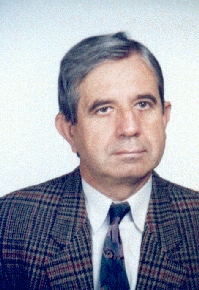 Antal Péter合作论文数Department of Inorganic and Analytical Chemistry, University of Szeged3
 Mariano Venanzi合作论文数Dipartimento di Scienze e Tecnologie Chimiche, Università di Roma Tor Vergata3Carlo Corvaja合作论文数3Marta De Zotti合作论文数Department of Chemistry, Norwegian University of Science and Technology3Vladimír Setnička合作论文数2
 Edoardo Longo合作论文数Department of Chemistry, University of Padova2Matthieu Sarciaux合作论文数2
 Quirinus B Broxterman合作论文数2
 Alessandro Moretto合作论文数Department of Chemistry, University of Padova Institute of Biomolecular Chemistry2Francesca Melandri合作论文数2G Longhi合作论文数1B Orioni合作论文数1
 Mario Caruso合作论文数Dept Biomed & Prevent, Univ Roma Tor Vergata1
 Olivier David合作论文数Inst Lavoisier Versailles1Sergio Abbate合作论文数1
 Lorenzo Stella合作论文数Department of Chemical Sciences and Technologies, University of Rome Tor Vergata1
 Maurizio De Crescenzi合作论文数Università degli Studi di Roma Tor Vergata1Augustin De Castries合作论文数1Caroline Cannizzo合作论文数1
 Manuela Scarselli合作论文数Department of Physics, University of Rome Tor Vergata1Antonio Palleschi合作论文数1Bernard Kaptein合作论文数1Josef Kapitán合作论文数1
 Emanuela Gatto合作论文数Department of Chemical Sciences and Technologies, University of Rome Tor Vergata1
 Lucie Vandromme合作论文数1Wahib Hamchaoui合作论文数1
 Olivier Barbeau合作论文数UMR CNRS 8086, University of Versailles1Maria-Vittoria Azzini合作论文数1




