2-Benzylbenzimidazoles, or "nitazenes", are a class of novel synthetic opioids (NSOs) that are increasingly being detected alongside fentanyl analogs and other opioids in drug overdose cases. Nitazenes can be 20× more potent than fentanyl but are not routinely tested for during postmortem or clinical toxicology drug screens; thus, their prevalence in drug overdose cases may be under-reported. Traditional analytical workflows utilizing liquid chromatography-tandem mass spectrometry (LC-MS/MS) often require additional confirmation with authentic reference standards to identify a novel nitazene. However, additional analytical measurements with ion mobility spectrometry (IMS) may provide a path toward reference-free identification, which would greatly accelerate NSO identification rates in toxicology laboratories. Presented here are the first IMS and collision cross section (CCS) measurements on a set of fourteen nitazene analogs using a structures for lossless ion manipulations (SLIM)-orbitrap MS. All nitazenes exhibited two high intensity baseline-separated IMS distributions, which fentanyls and other drug and druglike compounds also exhibit. Incorporating water into the electrospray ionization (ESI) solution caused the intensities of the higher mobility IMS distributions to increase and the intensities of the lower mobility IMS distributions to decrease. Nitazenes lacking a nitro group at the R1 position exhibited the greatest shifts in signal intensities due to water. Furthermore, IMS-MS/MS experiments showed that the higher mobility IMS distributions of all nitazenes possessing a triethylamine group produced fragment ions with m/z 72, 100, and other low intensity fragments while the lower mobility IMS distributions only produced fragment ions with m/z 72 and 100. The IMS, solvent, and fragmentation studies provide experimental evidence that nitazenes potentially exhibit three gas-phase protomers. The cyclic IMS capability of SLIM was also employed to partially resolve four sets of structurally similar nitazene isomers (e.g., protonitazene/isotonitazene, butonitazene/isobutonitazene/secbutonitazene), showcasing the potential of using high-resolution IMS separations in MS-based workflows for reference-free identification of emerging nitazenes and other NSOs.
In 2020, the Department of Energy established the National Virtual Biotechnology Laboratory (NVBL) to address key challenges associated with COVID-19. As part of that effort, Pacific Northwest National Laboratory (PNNL) established a capability to collect and analyze specimens from employees who self-reported symptoms consistent with the disease. During the spring and fall of 2021, 688 specimens were screened for SARS-CoV-2, with 64 (9.3%) testing positive using reverse-transcriptase quantitative PCR (RT-qPCR). Of these, 36 samples were released for research. All 36 positive samples released for research were sequenced and genotyped. Here, the relationship between patient age and viral load as measured by Ct values was measured and determined to be only weakly significant. Consensus sequences for each sample were placed into a global phylogeny and transmission dynamics were investigated, revealing that the closest relative for many samples was from outside of Washington state, indicating mixing of viral pools within geographic regions.
Since 1997, when the Chemical Weapons Convention (CWC) entered into force and the Organisation for Prohibition of Chemical Weapons (OPCW) was established, >97% of the world's declared stockpile, comprising 70,372 t of chemical warfare agents, has been destroyed. Despite this notable progress, advances in chemical synthesis bring new challenges to preventing chemical weapons production. The development of ethical codes or guidelines such as The Hague Ethical Guidelines and the Global Chemists' Code of Ethics (GCCE) and their voluntary adoption by chemical practitioners worldwide are important steps in strengthening international nonproliferation efforts through their potential to impact the intent of the individual by normalizing ethical behavior. However, the simple act of adopting a code or implementing Responsible Care initiatives does not guarantee ethical behavior. Individuals' decisions often contribute to the seriousness of chemical incidents and accidents, even if the root causes are shortfalls in safety and/or security. History is replete with accounts of chemical incidents that were made worse due to ethics failures at the individual and/or corporate level. The cost associated with response and root cause investigations for such incidents can be massive, but knee-jerk reactions to push for more regulation or to establish more oversight mechanisms following the immediate impact and initial cleanup may require significantly more resources to execute. At their core, ethics failures often arise, at least partially, due to a lack of shared investment in the company's mission. When people are guided by a shared mission, they are more likely to bring a sense of professionalism to their work and to hold each other accountable for ethical behavior. Scenario-based training can provide new employees opportunities to practice acting ethically, but it takes time and money to organize in-person training events. Careful implementation of scenario-based e-leaming to teach behavioral expectations that compel trainees to practice and discuss ethics, however, can provide a meaningful way to ensure employees are provided the necessary opportunities to rehearse ethical behavior, regardless of where they are physically located. As individuals become comfortable identifying and standing up for what is right, they strengthen their resolve to act when issues arise in the future. Company managers and university professors alike have a duty to educate others on the importance of ethical behavior, capitalize on teachable moments to help others understand the principles behind the desired behaviors, encourage others to speak up and act when they see something wrong, and model the behaviors they seek. In so doing, they may actively participate in making the world a better place and minimize the potential for the reemergence of chemical weapons.
Recent advancements in chemistry have led to improvements in personalized medicine, alternative energy, environmental protection, and many other aspects of our daily lives. However, with such advancements come serious challenges to international regulatory systems. An oft-quoted sentiment attributed to Paracelsus puts these challenges in context: "All things are poison and nothing is without poison; only the dose makes a thing not a poison." It also serves as a cogent reminder of the importance of understanding a State's intent with regard to production, possession and use of chemical warfare agents (CWAs). At the heart of these matters is the intent of the individual, which can and does impact national and international nonproliferation and disarmament efforts. Clearly, when considering intent, there are no simple answers. In this chapter, the unique technical and policy challenges associated with chemical issues are highlighted. Real-world examples are presented and discussed.
Scientists at universities across Iraq are actively working to report actual incidents and accidents occurring in their laboratories, as well as structural improvements made to improve safety and security, to raise awareness and encourage openness, leading to widespread adoption of robust Chemical Safety and Security (CSS) practices. This manuscript highlights the importance of periodic maintenance on fume cupboards, and is the fourth in a series of five case studies describing laboratory incidents, accidents, and laboratory improvements. In this study, we describe a situation in which the ventilation capacity of the fume cupboard in the undergraduate chemistry laboratories at Al-Nahrain University had decreased to an unacceptable level. The CSS Committee investigated and found the ducting system had been blocked by plastic sheets and dead birds. All the ducts have since been cleaned, and four extra ventilation fans have been installed to further increase ventilation capacity. By openly sharing what happened along with the lessons learned from the accident, we hope to minimize the possibility of another researcher being injured in a similar incident in the future.
The improvement of students’ awareness of concepts in science and its uses, practical scientific abilities and considerate of how science and scientists effort in laboratory experiences have been considered key aspects of education in science for over 100 years. Facility requirements for the necessary level of safety and security combined with specific requirements relevant to the course to be conducted dictate the fundamental strategy of a specific lab, and the strategy procedure need to address both. This manuscript is the second in a series of five case studies describing laboratory incidents, accidents, and laboratory improvements. We summarize the process used to guide a major renovation of the chemistry instructional laboratory services at Al-Nahrain University and discuss lessons learned from the project
Scientists at universities across Iraq are actively working to report actual incidents and accidents occurring in their laboratories, as well as structural improvements made to improve safety and security, to raise awareness and encourage openness, leading to widespread adoption of robust Chemical Safety and Security (CSS) practices. This manuscript is the fifth in a series of five case studies describing laboratory incidents, accidents, and laboratory improvements. In this study, we summarize unsafe practices involving the improper installation of a Gas Chromatograph (GC) at an Iraqi university which, if not corrected, could have resulted in a dangerous fire and explosion. We outline how the identified infractions were corrected and highlight lessons learned. By openly sharing the experiences at the university involved, we hope to minimize the possibility of another researcher being injured due to similarly unsafe practices in the future. Scientists at universities across Iraq are actively working to report actual incidents and accidents occurring in their laboratories in order to encourage openness and encourage widespread adoption of robust Chemical Safety and Security (CSS) practices. In this manuscript, the fifth of a five case studies, we report safety hazards associated with the improper installation of a gas chromatograph in the postgraduate laboratory at Al-Nahrain University. After the university's CSS committee was formed, representatives from the committee inspected the laboratory and observed a number of fire and explosion hazards. The CSS Committee's findings and associated lessons learned are summarized in this manuscript in order to help other institutions minimize such safety hazards when installing new equipment in the future.
Scientists at universities across Iraq are actively working to report actual incidents and accidents occurring in their laboratories in order to raise awareness and encourage openness, leading to widespread adoption of robust Chemical Safety and Security (CSS) practices. In this study, we describe a serious event that resulted in a postgraduate student sustaining serious injuries when the biological safety cabinet (BSC) she was using exploded. Of particular note, the paper highlights how a combination of failures and deficiencies at many levels within an organization and its technical community (rather than a single piece of faulty equipment or the careless behaviour of one person) can lead to a dangerous, potentially life-threatening incident. By openly sharing what happened along with the lessons learnt from the accident, we hope to minimize the possibility of another researcher being injured in a similar incident in the future.
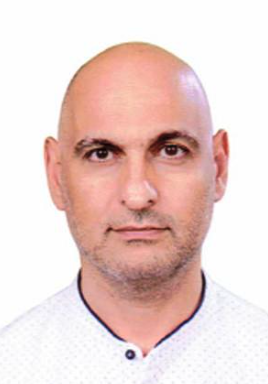 Emad Yousif合作论文数Department of Chemistry, Al-Nahrain University4
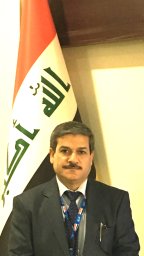 Wedad H. Al-Dahhan合作论文数Dept Chem, Al Nahrain Univ4
 Ali Jassim Al-Zuhairi合作论文数University of Babylon4
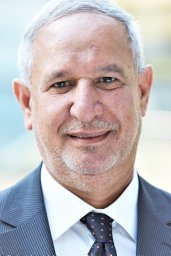 Falah H Hussein合作论文数Department of Chemistry, The University4
 Kristin Omberg合作论文数Pacific Northwest National Laboratory3
 Gretchen Hund合作论文数1
 Kristin D Victry合作论文数1Will Chrisler合作论文数1Erica Bakker合作论文数1Kristin Engbrecht合作论文数1Janine R Hutchison合作论文数1Chelsea M. Hutchinson合作论文数1Deanna Auberry合作论文数1shireen ridha rasool合作论文数1Isabelle O'Bryon合作论文数Chem & Biol Signat Grp, Pacific Northwest Natl Lab1
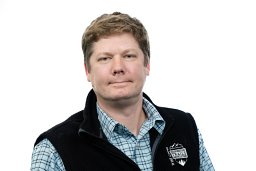 Leiser Owen P合作论文数The Microbial Genetics and Genomics Center, Northern Arizona University1
 Lin Vivian S合作论文数Institute of Biogeochemistry and Pollutant Dynamics, ETH Zurich1Hollerbach Adam合作论文数1Engelmann Heather E合作论文数National Security Directorate, Pacific Northwest National Laboratory Richland1
 Sanford James A合作论文数Department of Medicine, University of California1
 Yehia M. Ibrahim合作论文数Biological Sciences Division, Pacific Northwest National Laboratory1Joshua Hansen合作论文数1
 Mary Lancaster合作论文数University of Illinois Veterinary Biosciences Urbana1Athena A. Schepmoes合作论文数1Sarah J. Fansler合作论文数1Robert G. Ewing合作论文数Chemistry and Biological Sciences Department, Idaho National Engineering and Environmental Laboratory1
 Thomas O Metz合作论文数1
 Jennifer Mobberley合作论文数Kennedy Space Center, University of Florida1Angela M. Melville合作论文数1
 George T. Bonheyo合作论文数Department of Geology;University of Illinois at Urbana-Champaign;Department of Geology, University of Illinois at Urbana-Champaign1




