Emission factors serve as a valuable tool for quantifying the release of pollutants from road vehicles and predicting emissions within a specific time or area. In order to overcome the limitation of the computer program to calculate emissions from the road transport (COPERT) model in directly obtaining precise emission factors from on-board diagnostic (OBD) data, we propose a novel two-stream network that combines time-series features and time-frequency features to enhance the accuracy of the COPERT model. Firstly, for the instantaneous emission factors of NOx from multiple driving segments provided by heavy-duty diesel vehicles in actual driving, we select the monitored attributes with a high correlation to the emission factor of NOx considering the data scale and employing Spearman rank correlation analysis to obtain the final dataset composed of them and emission factors. Subsequently, we construct an information matrix to capture the impact of past data on emission factors. Each attribute of the time series is then converted into a time-frequency matrix using the continuous wavelet transform. These individual time-frequency matrices are combined to create a multi-channel time-frequency matrix, which represents the historical information. Finally, the historical information matrix and the time-frequency matrix are inputted into a two-stream parallel model that consists of ResNet50 and a convolutional block attention module. This model effectively integrates time-series features and time-frequency features, thereby enhancing the representation of emission characteristics. The reliability and accuracy of the proposed method were validated through a comparative analysis with existing mainstream models.
Exposure to air pollution will pose a serious threat to human health. Accurate air pollution forecasting can help people to reduce exposure risks and promote environmental pollution control, and it is also an extremely important part of smart city management. However, the current deep-learning-based models for air pollution forecasting usually focus on prediction accuracy improvement without considering the model interpretability. These models usually fail to explain the complex relationships between prediction targets and external factors (e.g., ozone concentration (O3), wind speed, temperature variation, etc.) The relationships between variables in air pollution time series prediction problems are very complex, with intricate relationships between different types of variables, often with nonlinear multivariate dependencies. To address these problems mentioned above, we proposed a hybrid autoformer network with a genetic algorithm optimization to predict air pollution temporal variation as well as establish interpretable relationships between pollutants and external variables. Furthermore, an elite variable voting operator was designed to better filter out more important external factors such as elite variables, so as to perform a more refined search for elite variables. Moreover, we designed an archive storage operator to reduce the effect of neural network model initialization on the search for external variables. Finally, we conducted comprehensive experiments on the Ma’anshan air pollution dataset to verify the proposed model, where the prediction accuracy was improved by 2–8%, and the selection of model influencing factors was more interpretable.
Route planning have a huge impact on the safe driving and energy efficiency of autonomous vehicle, which is an inevitable part of Internet of Vehicle. In the 5G edge environment, autonomous vehicle needs to communicate with other vehicles and base stations, route planning needs to consider the communication overhead of autonomous vehicle in addition to the driving distance. However, the current route planning methods only consider the shortest path, which cannot comprehensively consider the distance overhead and time cost. To cope with these challenges, this paper proposes an algorithm based on reinforcement learning to solve autonomous vehicle route planning through 5G networks and edge computing(RLVRP), which can obtain the goal of minimizing the driving distance based on minimizing the task processing time and server response time. In addition, we update our route planning strategy according to the dynamic change of network resources. Extensive experimental results show that the proposed algorithm greatly reduces service delay compared with state-of-the-art baselines.
Mobile source pollution has become an important source of air pollution in large and medium cities, and an important cause of fine particulate matter and photochemical smog pollution. There is an urgent need for suitable and effective emissions prediction tools in both scientific research and industry. In recent years, deep learning has outperformed traditional models in many machine learning tasks as the size and dimensionality of data volumes have increased. Many deep neural network models have been successfully applied to solve microscopic and macroscopic emissions modeling. In this paper, we provide a comprehensive review of recent work on mobile source emissions prediction using deep learning methods. Finally, we provide a deeper discussion of the future prospects and ongoing challenges.
A vehicular ad hoc network (VANET) consists of groups of moving/stationary vehicles and roadside units (RSUs) connected by a wireless network. The growing number of networked vehicles makes the traditional deployment of RSU hard to maintain high-efficiency, low-latency task offloading on roads with high traffic flow. Introducing the edge servers into the VANET is a solution for increasing the efficiency. However, how to determine the arrangement of edge servers (ESs) according to the size of traffic flow has become a new challenge. To solve this problem, we propose a collaborative method named DCK for ES quantification and arrangement in the combination with the actual road condition problem. Furthermore, a priority-based K-means algorithm and ES weighted selection strategy are proposed to balance the workload and transmission delay of ESs within the coverage area. We evaluated our mechanism in the real-world data, the experimental results illustrated that our method reduces the latency range of tasks to 3.45ms, while improving the workload balance by 45 % ~ 75 %, which is better than existing works.
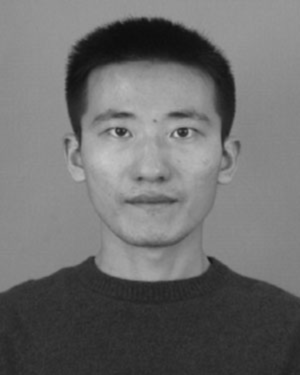 Zhenyi Xu合作论文数Univ Sci & Technol China, Dept Automat, Hefei 230026, Peoples R China3
 Jiaren Li合作论文数2Weibo Kong合作论文数2
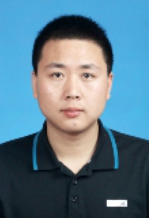 Xing Guo (郭星)合作论文数School of Computer Science and Technology of Anhui University2Xiushan Xia合作论文数1Ruibin Wang合作论文数1
 Haohua Du (杜皓华)合作论文数School of Cyber Science and Technology, Beihang University1
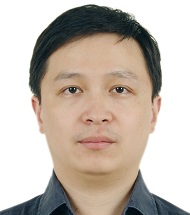 Yu Kang (康宇)合作论文数University of Science and Technology of China1




